
Business
Reps Probe MDAs Over Illegal N600bn Expenditure

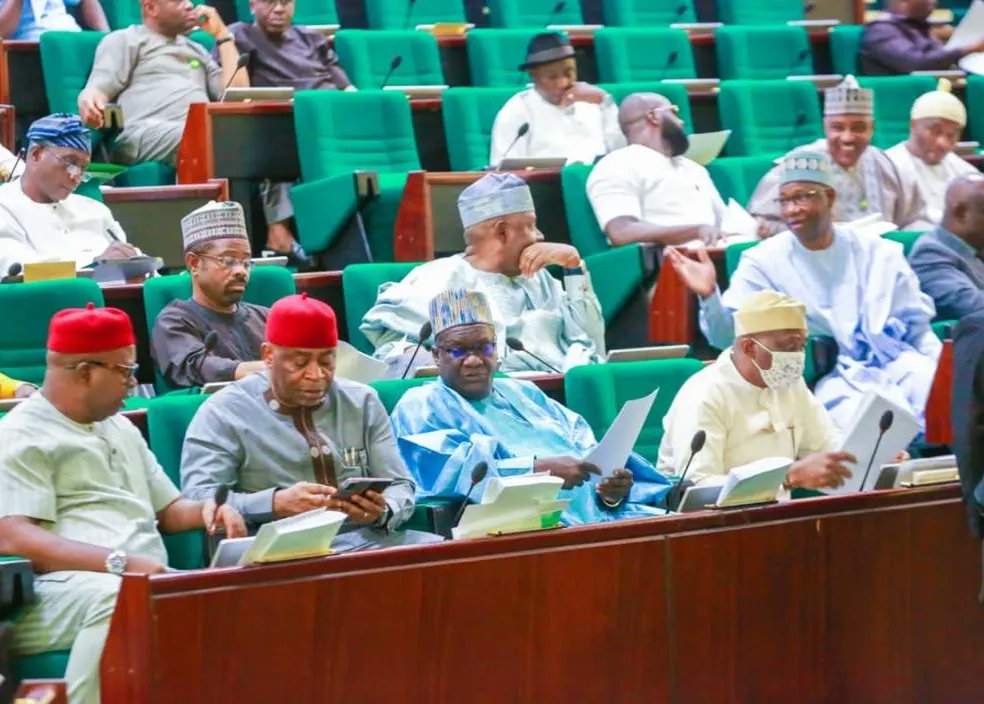
The House of Representatives Committee on Public Accounts has commenced a full-scale investigation of 115 ministries, departments and agencies of the Federal Government for spending over N600billion outside their approved budgets on salaries and allowances.
Office of the Auditor General for the Federation, which issued a query on the illegal expenditure, said the amount was spent between 2018 and 2022.
According to the audit query, “Audit observed that 203 MDAs exceeded their Personnel Cost budget by N641,757,455,172. While 115 MDAs had zero Personnel Cost, even though there was budget allocation for them, the sources of extra funds for salaries and wages in 103 were not disclosed.
“Also, the reasons for zero Personnel budget allocation for the 115 MDAs were not stated, despite the fact that the MDAs under defence had annual budgets approved for them”.
The OAuGF advised the Office of the Accountant General of the Federation to investigate the sources of the extra-budgetary expenditures and reasons for non-compliance with financial regulations.
The office stated that failure to justify the sources and reasons for the expenditures totalling N641.75bn, “the officers in charge should be held pecuniary responsible.”
Acting Accountant General of the Federation, Sylva Okolieaboh, had told the committee that some of the expenditures were made based on existing circulars and directives.
Chairman of the committee, Oluwole Oke, however, said, “This is an aberration of the Constitution of the Federal Republic of Nigeria. It is clear rape of Financial Regulation and Public Procurement Act.
“Nobody has the power to appropriate any money to any MDAs except the National Assembly, through the budget from Mr President. Before the passage of Mr President’s Appropriation Bill, it has to pass through stages, and after the passage, it has to be returned to the Mr President for his assent.
“But we have discovered a situation where some ministers and heads of MDAs are fond of appropriating funds and approving several millions of naira for spending without such coming to the parliament, but relying on circulars and directives. This is illegal and we are going to stop it.”
Oke, consequently, directed the Accountant General of the Federation to make available the list of the 115 MDAs involved in the flagged expenditures to the committee.
The Chairman added that in the spirit of fair hearing, the erring MDAs would be summoned to explain the allegation against them in the audit query.
Earlier, Okolieaboh had expressed appreciation for cooperation being extended to his office by the parliament since he assumed office, while pledging that all invitations from the lawmakers would receive prompt responses from his office in the national interest.


Nkpemenyie Mcdominic
Reports say that the training is designed to equip youths with practical technical skills for employment in the oil and gas and construction sectors, with emphasis on employability, safety, competence and self reliance.
In attendance at the flag-off ceremony this week, at the Petroleum Training Institute (PTI) Conference Hall, Effurun, were stakeholders, dignitaries, and political representatives, among others.
Dafinone, represented by his Chief of Staff, Adelabu Bodjor, said the initiative reflects a deliberate political investment in human capital development across Delta Central.
He explained that the training focuses on rigging and scaffolding, noting that “both are essential technical competencies required in industrial operations, construction projects, and oil and gas installations”.
Bodjor added, “The programme is intended to reduce dependency among youths by providing job-ready skills capable of supporting long-term economic opportunities and self-sufficiency. The initiative aligns with Senator Dafinone’s broader development agenda, which prioritises practical skill acquisition as a pathway to sustainable empowerment.”
Also addressing the participants, the NCDMB, Felix Omatsola Ogbe, represented by Mr. Teddy Bai, commended Dafinone for sponsoring the programme, describing it as “a timely response to critical manpower gaps in the industry”.
Bai explained that rigging and scaffolding remain safety-sensitive skills required across fabrication yards, offshore platforms, and construction sites, stressing that the programme bridges the gap between certification and practical competence.
He also charged the training consultant, OROH Contractors Limited, to maintain strict standards of professionalism, safety, and discipline, while urging participants to remain committed, focused, and disciplined throughout the exercise.
The Senate Liaison Officer for Sapele Local Government Area, Chief Patrick Akamuvba, , described the programme as a major step in strengthening human capital development in Delta Central.
Akamuvba said scaffolding and rigging skills are in high demand across residential, commercial, and industrial construction projects, noting that the training offers real employment opportunities for beneficiaries
He urged participants to prioritise knowledge and certification over short-term material expectations, stressing that discipline and seriousness would determine their long-term success.
He also cautioned youths against social vices and distractions, advising them to remain focused to maximise the opportunities provided by the programme.
-
News2 days ago
Obuah’s Victory Excites Former Lawmaker as APC Primaries Conclude in Rivers West
-

 Politics4 days ago
APC PRIMARIES: FUBARA’S WITHDRAWAL, HISTORIC SACRIFICE FOR NATIONAL STABILITY ……. GROUP
-

 News4 days ago
Court Sentences Seven To Death Over Murder Of Cleric In Rivers
-
News2 days ago
105 Nigerians Killed In S/Africa In Seven Years
-

 Sports4 days ago
PH Arsenal Community Set For Streets Procession, Saturday
-

 Niger Delta2 days ago
Royal Father Endorses PH Arsenal Community, Pledges To Support
-

 Politics4 days ago
IPAC Flays INEC Over Election Guidelines Judgement
-

 Politics4 days ago
NDC To Adopt Electronic Voting For Future Primaries