
Featured
Nigeria Going Through Worst Unemployment Crisis -World Bank

Nigeria is currently going through one of its worst unemployment crises in recent times, a new report by the World Bank has stated.
The multilateral institution also noted that the socio-economic challenges facing Nigerians in the last 10 years have led to an astronomical increase in the number of citizens seeking asylum and refugee status in other countries.
This is as the World Bank, in a separate report, has estimated that about 4,000 Nigerian children were made orphans by the Covid-19 pandemic between March, 2020 and July, 2021.
The report, which expressed concern about the country’s rising unemployment situation, was published by the Washington-based institution with support from the Korea World Bank Partnership Facility (KWPF) and the Rapid Social Response (RSR) trust funds.
In the report titled, ‘Of Roads Less Travelled: Assessing the Potential for Migration to Provide Overseas Jobs for Nigeria’s Youth’, the World Bank further estimated that there were 2.1million Internally Displaced Persons (IDPs) in Nigeria in 2020 alone.
World Bank, however, blamed a combination of rising unemployment, booming demographics, and unfulfilled aspirations as resulting in increasing pressure on young Nigerians to migrate in search of gainful employment overseas.
In addition, the Washington-based institution disclosed that the number of international migrants from Nigeria has increased threefold since 1990, growing from 446,806 in 1990 to 1,438,331 in 2019.
It explained that despite this trend, the share of international migrants as a proportion to Nigeria’s population has remained largely constant, increasingly slightly from 0.5 per cent in 1990 to 0.7 per cent in 2019.
According to the bank, recent rise in irregular migration notwithstanding, the share of international migrants in Nigeria’s population was much lower compared to the shares in Sub-Saharan Africa and globally.
The data showed that the number has risen by over 1,380 per cent in the years between 2010 and 2019, indicating that in comparison, the number of persons coming into Nigeria from outside has been relatively stagnant in the decade under consideration
“An important trend that is observed in the data is the rise in the number of refugees and asylum seekers from Nigeria. The share of refugees and asylum seekers from Nigeria has increased drastically in the last decade, growing from 27,557 in 2010 to 408,078 in 2019,” it stated.
It noted that although the country was reaping dividends from the success of its citizens in the Diaspora, which was put at five per cent of its Gross Domestic Product (GDP) in 2019, when it comes to the discourse on international migration, the narrative has not been palatable.
“Nigeria is facing one of the most acute jobless crises in recent times. Between 2014 and 2020, Nigeria’s working age population grew from 102million to 122million, growing at an average rate of approximately 3 per cent per year.
“Similarly, Nigeria’s active labour force population, that is, those willing and able to work among the working age population, grew from 73million in 2014 to 90million in 2018, adding 17.5million new entrants to Nigeria’s active labour force.
“Since 2018, however, the active labour force population has dramatically decreased to around 70million—lower than the level in 2014— while the number of Nigerians who are in the working-age population but not active in the labour force has increased from 29million to 52million between 2014 and 2020.
“The expanding working-age population combined with scarce domestic employment opportunities is creating high rates of unemployment, particularly for Nigeria’s youth,” the World Bank report noted.
However, between 2010 and 2020, the international financial institution estimated that the unemployment rate rose five-fold, from 6.4 per cent in 2010 to 33.3 per cent in 2020, with the rates being particularly acute since the 2015/2016 economic recession and further worsened as Covid-19 led to the worst recession in four decades in 2020.
Increasingly, it noted that educated Nigerians were struggling to find employment opportunities in the country while unemployment rates increased substantially for Nigerians across all education levels over the years, becoming progressively challenging for educated Nigerians to find employment opportunities.
“Combined with significant demographic changes and increased aspirations of the youth, Nigeria’s unemployment crisis is creating migratory pressure in the economy.
“Unemployment is considered to be a key driver of migration. Consequently, multiple surveys show that the number of Nigerians, who are looking to migrate internationally, is high and increasing,” it pointed out.
In the last few years, the bank stated that the number of persons eager to migrate has increased from 36 per cent in 2014, to 52 per cent in 2018, noting that the desire to migrate remains higher among unemployed (38 per cent), youth (39 per cent), secondary education graduates (39 per cent), urban residents (41 per cent) and post-secondary graduates (45 per cent) in Nigeria.
It maintained that since there has not been an expansion of legal migration routes for youth increasingly eager to find opportunities in the overseas labour market, young Nigerians are opting for irregular migration routes to realise their hopes for a better life.
“What is worrying, however, is the increase in the number of forced and irregular migrants from Nigeria,” it disclosed.
It stressed that to ensure mutual cooperation, the European Trust Fund for Africa (EUTF), which was established in 2015, with the aim to promote areas of mutual development interest between Europe and Africa, has since provided more than €4billion in aid to African countries to address various development-related challenges and priorities in Africa.
Since its inception, the EUTF, the bank stated, has provided more than €770million for migration-related projects in Nigeria, with most of the funds invested in border control measures, awareness campaigns to stop trafficking, and the creation of jobs domestically, including for returned Nigerian migrants.
While predicting that by 2100, Europe’s working age population between the ages of 20 and 64 would decline by 30 per cent owing to low birth-rates and increased longevity, it further projected that at same time, the working age-population in Nigeria could increase by 140 per cent.
“By expanding legal pathways for migration and implementing supporting measures to reap dividends from current migrants in the Diaspora, Nigeria can further benefit from international migration.
“Nigeria’s institutions are well-placed to promote managed migration approaches that help create opportunities for prospective Nigerian jobseekers to find employment internationally and can be supported to help design schemes that increase the returns to human capital investments for Nigerian youth,” the report concluded.
In a related development, the multilateral institution has estimated that 4,000 Nigerian children were made orphans by the Covid-19 between March, 2020 and July, 2021.
The report by the bank’s experts at the Imperial College of London, revealed that over 4,100 Nigerian children lost one or both primary caregivers within the aforementioned period, while 4,300 lost one or both primary and secondary caregivers.
The report posted on the bank’s blog was jointly authored by World Bank’s Lead Economist, Laura Rawlings and a senior technical advisor, Centre for Disease Control (CDC) Covid-19 International Task Force, Susan Hillis, and titled, “For every two Covid-19 deaths, one child loses a caregiver. We must do more to address the orphan crisis.”
The report stated: “The Covid crisis will leave many unwanted legacies. The world has been closely tracking the Covid-19 death toll, with official mortality counts now reaching over four million people, largely concentrated among adults. The children left behind have been practically invisible.
“Our estimates of the toll on children left behind, just released, are that for every two people, who die of Covid, one child is left orphaned, facing the death of a parent or grandparent caregiver, who had been living in their home.
“By the end of June 2021, because of Covid-19, our estimates show that nearly two million children under 18 years had lost a mother, father, and/or grandparent caregiver, who lived in their household.”
According to the experts, countries with primary caregiver death rates of at least one per 1,000 children include Peru (10.2 per 1,000 children), South Africa (5.1), Mexico (3.5), Brazil (2.4), Colombia (2.3), Iran (1.7), the USA (1.5), Argentina (1.1), and Russia (1.0).
They also noted that at the current rate, one child was being orphaned every 12 seconds due to a Covid-19-associated death, adding that the toll was growing.
The authors noted that the Covid-19 related deaths had a wide range of effects on the children from economic, developmental to psychological impacts, which would reverberate across generations.
According to them, children orphaned by Covid face a constellation of risks, which often arrive with rapid and broad consequences.
“The threats of poverty, malnutrition, displacement and separation from siblings or other family members, school dropout, depression, violence and child marriage can emerge suddenly from the Pandora’s box of Covid-19,” they said.
Nigeria had as of July 20, 2021, recorded about 2,128 Covid-19 deaths, suggesting that for every one death in the country, an average of two children become orphans.

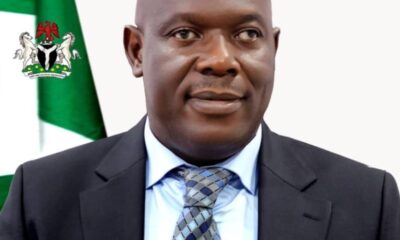


Rivers State Governor, Sir Siminalayi Fubara, has charged the newly appointed Secretary to the State Government (SSG) and Chief of Staff (CoS) to carry out their duties with discipline, loyalty and a firm commitment to the success of the administration and the wellbeing of the people of Rivers State.
The governor warned that any involvement in unauthorised nocturnal meetings or any conduct capable of embarrassing the government will attract immediate dismissal.
Fubara gave the warning yesterday shortly after the newly appointed Secretary to the State Government (SSG), Dr Dagogo S.A. Wokoma and the new Chief of Staff (CoS), Barrister Sunny Ewule, were sworn in at the Executive Council Chambers of Government House, Port Harcourt.
As part of the ceremony, the Chief Registrar of the State High Court, David Ihua-Maduenyi administered the Oath of Allegiance and Oath of Office on the duo before the governor gave his charge.
Addressing the appointees, Fubara reminded them that their elevation to the new positions was a call to service and not a platform for political grandstanding or the pursuit of personal ambition.
He stressed that their foremost responsibility should be to themselves and to the people of Rivers State, stressing that their conduct must always reflect integrity, restraint and dedication to public good.
Speaking directly to Dr. Wokoma, whom he described as an accomplished academic and mathematician, the governor expressed confidence in his intellectual depth and capacity to deliver on the new assignment.
The office of the Secretary to the State Government, Fubara stressed, demands thoroughness, discipline and a deep sense of responsibility. He charged the SSG to represent the State with honour at all times.
“Your duty includes representing the state government. You need to represent us in a way and manner that will bring honour to us.
“What is important to this administration is to see that the good works that we started and the ones that we met, are concluded in a way that will bring progress and development to our dear state,” he stated.
Turning to the new Chief of Staff, the governor explained that he is expected to ensure smooth administrative coordination, managing official engagements effectively and safeguarding the image of the Government House.
He underscored the sensitive and personal nature of the role and emphasised that the position operates strictly under the authority of the governor.
Fubara stressed that the role does not permit independent political engagements or private strategy meetings without his knowledge and consent.
“Let me sound it here very clearly. Your duty is to make sure that you handle the administrative duties and image making roles perfectly well, liaising with whoever is coming for any official assignment here.
“If you involve yourself in nocturnal meetings and all those things, I will sack you. I’m very serious. What is important to me today is peace, progress and prosperity of this state. I’m not going to compromise anything for it,” he said.
The governor cautioned that involvement of the new appointees in any action capable of bringing the government or his office to disrepute would attract appropriate sanctions.
While congratulating the new appointees, Fubara expressed optimism that they would justify the confidence reposed in them.
He called on all public officials to work together in unity, observing that collective success is stronger and more enduring than individual achievement.
The governor who also addressed the Permanent Secretaries present at the ceremony, directed those of them who have reached retirement age to start preparing their handover notes without delay.
The notice, he said, was not intended to scare anybody but to prepare their minds towards the inevitability of exiting the service one day and to pave way for an orderly transition.
He warned against any attempt to engage in financial misconduct or last-minute irregularities, stressing that he was closely monitoring the system to ensure strict enforcement of accountability rules.

Rivers State Governor, Sir Siminialayi Fubara, has dissolved the State Executive Council.
The governor announced the cabinet dissolution yesterday in a statement titled ‘Government Special Announcement’, signed by his new Chief Press Secretary, Onwuka Nzeshi.
Governor Fubara directed all Commissioners and Special Advisers to hand over to the Permanent Secretaries or the most Senior officers in their Ministries with immediate effect.
He thanked the outgoing members of the State Executive Council for their service and wished them the best in their future endeavours.
The three-paragraph special announcement read, “His Excellency, Sir Siminalayi Fubara, GSSRS, Governor of Rivers State, has dissolved the State Executive Council.
“His Excellency, the Governor, has therefore directed all Commissioners and Special Advisers to hand over to the Permanent Secretaries or the most Senior officers in their Ministries with immediate effect.
“His Excellency further expresses his deepest appreciation to the outgoing members of the Executive Council wishing them the best in their future endeavours.”
The Independent National Electoral Commission (INEC) yesterday told the National Assembly that it requires N873.78bn to conduct the 2027 general elections, even as it seeks N171bn to fund its operations in the 2026 fiscal year.
INEC Chairman, Prof Joash Amupitan, made the disclosure while presenting the commission’s 2026 budget proposal and the projected cost for the 2027 general elections before the National Assembly Joint Committee on Electoral Matters in Abuja.
According to Amupitan, the N873.78bn election budget covers the full conduct of national polls in 2027.
An additional N171bn is needed to support INEC’s routine activities in 2026, including bye-elections and off-season elections, the commission stated.
The INEC boss said the proposed election budget does not include a fresh request from the National Youth Service Corps seeking increased allowances for corps members engaged as ad-hoc staff during elections.
He explained that, although the details of specific line items were not exhaustively presented, the almost N1tn election budget is structured across five major components.
“N379.75bn is for operational costs, N92.32bn for administrative costs, N209.21bn for technological costs, N154.91bn for election capital costs and N42.61bn for miscellaneous expenses,” Amupitan said.
The INEC chief noted that the budget was prepared “in line with Section 3(3) of the Electoral Act 2022, which mandates the Commission to prepare its election budget at least one year before the general election.”
On the 2026 fiscal year, Amupitan disclosed that the Ministry of Finance provided an envelope of N140bn, stressing, however, that “INEC is proposing a total expenditure of N171bn.”
The breakdown includes N109bn for personnel costs, N18.7bn for overheads, N42.63bn for election-related activities and N1.4bn for capital expenditure.
He argued that the envelope budgeting system is not suitable for the Commission’s operations, noting that INEC’s activities often require urgent and flexible funding.
Amupitan also identified the lack of a dedicated communications network as a major operational challenge, adding that if the commission develops its own network infrastructure, Nigerians would be in a better position to hold it accountable for any technical glitches.
Speaking at the session, Senator Adams Oshiomhole (APC, Edo North) said external agencies should not dictate the budgeting framework for INEC, given the unique and sensitive nature of its mandate.
He advocated that the envelope budgeting model should be set aside.
He urged the National Assembly to work with INEC’s financial proposal to avoid future instances of possible underfunding.
In the same vein, a member of the House of Representatives from Edo State, Billy Osawaru, called for INEC’s budget to be placed on first-line charge as provided in the Constitution, with funds released in full and on time to enable the Commission to plan early enough for the 2027 general election.
The Joint Committee approved a motion recommending the one-time release of the Commission’s annual budget.
The committee also said it would consider the NYSC’s request for about N32bn to increase allowances for corps members to N125,000 each when engaged for election duties.
The Chairman of the Senate Committee on INEC, Senator Simon Along, assured that the National Assembly would work closely with the Commission to ensure it receives the necessary support for the successful conduct of the 2027 general elections.
Similarly, the Chairman of the House Committee on Electoral Matters, Bayo Balogun, also pledged legislative support, warning INEC to be careful about promises it might be unable to keep.
He recalled that during the 2023 general election, INEC made strong assurances about uploading results to the INEC Result Viewing portal, creating the impression that results could be monitored in real time.
“iREV was not even in the Electoral Act; it was only in INEC regulations. So, be careful how you make promises,” Balogun warned.
The N873.78bn proposed by INEC for next year’s general election is a significant increase from the N313.4bn released to the Commission by the Federal Government for the conduct of the 2023 general election.