
Featured
Nigeria Losing $30bn Annually From Revenue Leakages, Reps Alert

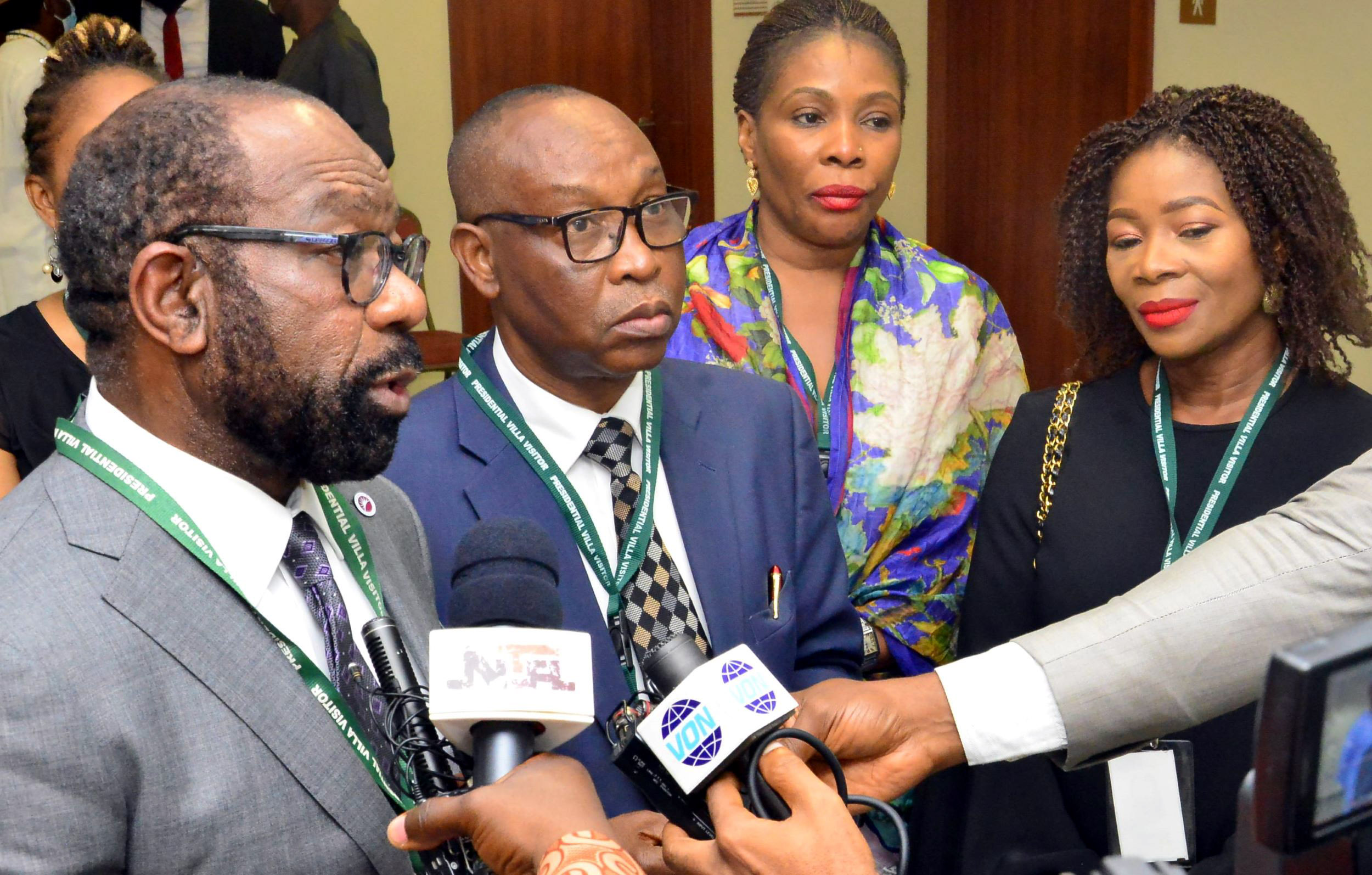
The Joint House of Representatives Committee on Finance, Banking and Currency has said that Nigeria lost about $30billion from 2005 to 2019 annually from revenue leakages.
The leakages were basically from activities of agencies and companies in banking, oil exploration, engineering, procurement, construction, installation, marine transportation, manufacturing and telecommunications.
According to the committee, the country has lost significant foreign exchange and revenue shortfall from the infractions.
Consequently, it grilled the management of two banks over several of the alleged infractions, accusing them of compromises.
The Chairman of House Committee on Finance and Co-Chairman of the Joint Committee, Hon James Faleke, in his remarks at the commencement of the investigative hearing on the allegations, said the House at its sitting on March 5, 2020, resolved to conduct an investigative hearing on revenue leakages in excess of $30billion.
He said, “The necessity and commencement of this investigation was as a result of growing problems in the financial management of all the God-given resources in our country, Nigeria, from our vast natural resources to the value added by these resources in the form of foreign exchange earnings and revenue generation, etc, into these investment environment and opportunities.
“Thus, this committee deemed it imperative to investigate revenue leakages and loopholes in the system, that have contributed to a loss of over $30billion in annual federation tax revenue between 2005 and 2019.
“The investigation, therefore, was premised on the documents received from target agencies and companies in banking, oil exploration, engineering, procurement, construction, installation, marine transportations, manufacturing and telecommunications upon which the committee -noted significant foreign exchange and revenue shortfall infractions against the Federal Republic of Nigeria by these stakeholders.
“This places an imperative need to put an end to, or at best, minimise all attributable infractions that have been instruments in the hands of some stakeholders in bringing economic woes to this country and her people.
“During our documentation compilation and a further look at the economic woes caused the country by some companies, the committee has noted the following major infractions which have multiplier effects on other infractions.
“Lifting of some crude oil and gas by oil exploration companies, that were not wholly and legally allocated to the Consignors in JV, PSC and PSA exploration activities including those whose crude oil Certificates of Quantity were not signed by the Department of Petroleum Resources (DPR) and terminal operators.
“Concealment and non-disclosure of some crude oil liftings that ought to have been subjected to Petroleum Profit Taxation at PPT rates ranging between 50 per cent of profit for PSC and PSA companies, and 85 per cent of profit for JV companies.
“Inflow of foreign investments in the form of equity, foreign cash loans, equipment loans whose utilizations are majorly subject to tax, end up in transactions, foreign transfers that were at variance with the purpose of such inflows.
“Overnight and fictitious disappearance of Naira proceeds of foreign inflows from the bank accounts of Nigerian beneficiaries, and subsequent allocations of foreign exchange by CBN for capital repatriations, principal loan repayments and Interest payments.
“Multiple foreign exchange allocations to holders of foreign inflow Certificates of Capital Importation (CCI) over and above the amount brought into the country, leading to capital flight of the country’s much needed and scarce foreign exchange.
“Loan backed Certificates of Capital Importations without evidence of transfer to the foreign lenders in the form of principal repayment and interest payments.
“Some expected imports that were funded by foreign equipment loans and other direct allocations of foreign exchange for foreign exchange valid transactions were neither translated to imports nor their import duties paid to the Nigerian Customs Service.
“Capital Flight using the Form ‘M’ valid for Forex and Forex obtained by the beneficiary companies without utilization of the forex to reflate the economy and taxes paid.
“The committee shall extensively review all of the above infractions, among others, to ensure that all federally collectible revenues are not only identified and recovered, but also to sanction companies involved in the other non-civil infractions in order to serve as a deterrent to potential classmates of the affected companies.”
Interfacing with the representative of one of the two banks, Ngozi Omoke on the allegations, the committee accused the bank of not making remittances to the federation accounts from certain transactions.
It also picked holes in the presentation made by the representative of the second bank, Hassan Imam, saying there were many irregularities.
“Some of the infractions listed against the banks included outstanding withholding tax collectible on Form A: $2, 544, 973, 484; outstanding VAT collectible on Form A $1, 081, 383, 885; outstanding withholding tax collectible on known Form A bank transfers by customers $927, 556, 300; outstanding VAT collectible on known Form A bank transfers by customers from your bank is $463, 778, 150; breakdown of foreign exchange leakage infractions on Form A transactions filed with CBN as taxation services but not traced to the Federal Inland Revenue Service collection platforms $171, 256, 297 and foreign exchange inflow from capital importation yet to be accounted for in the foreign exchange sales voucher is a $17, 655, 410, 376.
“Others are Form A transfers for loan repayment and interest with no evidence of capital importation and payment of withholding tax on interest $210, 013, 266; Capital importation on loans with no evidence of principal repayment and interest payment $1, 072, 868, 110; Capital importation on equity with no evidence of dividend payment and capital repatriation is $1, 134, 835, 320; Dividend transfers in excess of capital importation on equity without payment of withholding tax is $3, 027, 298, 192; Form A transfers for dividend repatriations with no evidence of capital importation, either foreign equity and payment of withholding tax is $305, 725, 840.
“Also listed are foreign transfers for principal loan repayment and interest payment in excess of capital importation loan without payment of withholding tax on interest in $110, 635, 050; and foreign exchange on Form A transferred payment filed with the committee but not traced to CBN returns without payment of taxes is $510, 816, 573.”
Faleke further stated that the committee discovered that one of the banks had Form A transfer by customer through their bank accounts that were not filed with the CBN and committee, with no evidence of withholding tax amounting to $3,107, 398, 073.
The committee also disagreed with the bank’s position on advertisement, saying it was a taxable item.
Faleke, therefore, directed the bank to make available all the receipts of various transactions, and directed the clerk of the committee to write to the Federal Inland Revenue Services (FIRS), to appear before it to confirm the remittances.
Responding to the allegations, Mrs. Ngozi Omoke said the bank conducted its activities within the Foreign Exchange Monitoring and Miscellaneous Provision Act.
She said, “I will just say in a summary before I go to specifics. Our presentation is that we are guided by the Foreign Exchange Monitoring and Miscellaneous Provision Act and from time to time, the Central Bank of Nigeria as well as issues guidelines to regulate transactions on foreign exchange.
‘’It is in the light of this that we have reviewed all the allegations and the transactions mentioned in the report sent to us and we want to affirm again that we were not in any way in contravention of any of the guidelines in the Act or in the foreign exchange manual.”
“If you permit me, sir, I will just take the items one by one as read before. The first is outstanding withholding tax collectible on form A transaction. The total in this regard is $2,544, 973,484.04. We noticed that the committee or whoever computed this applied the total amount that was remitted and applied certain rate which is either 10 percent or 5 percent to arrive at the potential withholding tax or VAT.
‘’A lot of transactions that were documented or mentioned do not attract withholding tax or VAT. So, if I give some examples which you said here are not subject to VAT or withholding tax: Advertisement, airline remittances, principal loan repayments.
‘’What attracts withholding tax is interest on loan repayment not the principal itself; education, credit card, home remittances, BTA and so on. It should be noted that payments made on the basis of Form A by banks to customers are not payments for services rendered to the bank itself. I am glad that the chairman also mentioned it when he was speaking.
“So, withholding tax for the purposes of this amount that has been alleged here applies only to dividend remittances and interest on loan repayment or sometimes when there are consultancy on related transactions.
‘’Those are the only ones that attract withholding tax as guided by Foreign Exchange Miscellaneous Act and FX manual. So, in total, if I can speak to this amount, only $1.29billion and N357million were eligible for withholding tax and in those cases, they were duly deducted and remitted to appropriate authorities.”
Similarly, Imam, who is the Executive Director, North of the second bank, told the committee when confronted with the allegations that the bank only made transactions and would not be in a position to know what their customers did with their funds.



Governor of Rivers State, Sir Siminalayi Fubara, has reaffirmed the unwavering commitment of his administration to peace, unity, security, and inclusive development as Rivers State marked its 59th anniversary, last Wednesday.
In a goodwill message issued on Wednesday to commemorate the anniversary, Governor Fubara stated that despite the challenges faced over the years, the people of Rivers State have continued to demonstrate resilience, strength, and an enduring spirit of unity that has sustained the state since its creation.
The Governor noted that the strong bond of brotherhood among the various ethnic nationalities of the state, including the Ijaw, Ikwerre, Ogoni, Etche, Ekpeye, Andoni, Kalabari, and others, remains one of Rivers State’s greatest strengths and a critical foundation for peace, stability, and progress.
He further observed that Rivers State has remained a major driver of Nigeria’s economy for decades, not only because of its abundant oil and gas resources, but also because of the exceptional contributions of its people across diverse sectors including academia, jurisprudence, business, entertainment, public service, and sports.
Governor Fubara assured the people that his administration will continue to prioritize policies and programmes that promote peace, protect lives and property, and expand development across all parts of the state. He emphasized that governance must be people centered and impactful, with equal attention given to every Local Government Area of the state.
The Governor also paid tribute to the elders and founding leaders of the state for preserving the spirit of unity and coexistence over the years, while urging the youths to remain hopeful, responsible, and actively committed to building a greater Rivers State through innovation, hard work, and patriotism.
He equally acknowledged the invaluable role of women in strengthening families, communities, and society, describing them as indispensable partners in the continued growth and stability of the state.
Governor Fubara called on all Rivers people to use the occasion of the anniversary as a moment of reflection and renewed commitment to peaceful coexistence, mutual respect, dialogue, and collective progress, stressing that the unity and future of Rivers State must always rise above personal interests and political differences.
Rivers State was created on May 27, 1967, by General Yakubu Gowon.


The Rivers State Government has distributed science equipment and materials to all senior secondary schools across the state to support students during the ongoing West African Examinations Council exams and to strengthen practical learning.
Flagging off the distribution at the Rivers State Senior Secondary Schools Board premises in Port Harcourt, on Monday, the State Commissioner for Education, Dr. Peters Nwagor, said the move demonstrates Governor Siminalayi Fubara’s commitment to improving education standards in the State.
Nwagor said the materials were approved and provided by the state government specifically to boost the teaching and learning of science subjects, describing science education as the foundation for technological advancement, innovation, and national development.
“No society can compete globally without deliberate investment in science and technology,” the Commissioner stated.
He commended the governor for consistently prioritising the education sector by providing tools needed for effective teaching and hands-on learning.
The Commissioner directed principals to ensure that the equipment are used strictly for practical lessons in their schools, warning that any principal or administrator found diverting, hoarding, or selling the materials wil face disciplinary action under public service regulations.
Nwagor also warned against examination malpractice, saying any principal found aiding or encouraging malpractices will be decisively sanctioned.
“We must collectively restore the dignity and credibility of our educational system,” he said.
Also speaking, Chairman, Rivers State Senior Secondary Schools Board, Tony Egwurugwu, urged school heads to make judicious use of the materials for students’ benefit.
He thanked the State Government for providing the resources, and assured that monitoring mechanisms would be put in place to ensure the materials serve their intended purpose.
In his own remarks, a Board Member for Technical Education, Nwisabari Bani Samuel, expressed appreciation to the governor for prioritising education and acknowledged the Commissioner’s role in advancing education development in the State.
He said the distribution covers all senior secondary schools in the State and is intended to improve students’ performance in both internal and external science examinations.
Akujobi Amadi
-
News3 days ago
Obuah’s Victory Excites Former Lawmaker as APC Primaries Conclude in Rivers West
-

 Politics5 days ago
APC PRIMARIES: FUBARA’S WITHDRAWAL, HISTORIC SACRIFICE FOR NATIONAL STABILITY ……. GROUP
-
News3 days ago
105 Nigerians Killed In S/Africa In Seven Years
-

 Sports5 days ago
PH Arsenal Community Set For Streets Procession, Saturday
-

 Niger Delta3 days ago
Royal Father Endorses PH Arsenal Community, Pledges To Support
-

 Politics5 days ago
IPAC Flays INEC Over Election Guidelines Judgement
-

 Politics5 days ago
NDC To Adopt Electronic Voting For Future Primaries
-

 Politics5 days ago
Ex-IGP Defects To SDP After APC Primary Fiasco