
News
Insecurity: We’ll Crush Insurgents, Bandits Soon, FG Assures

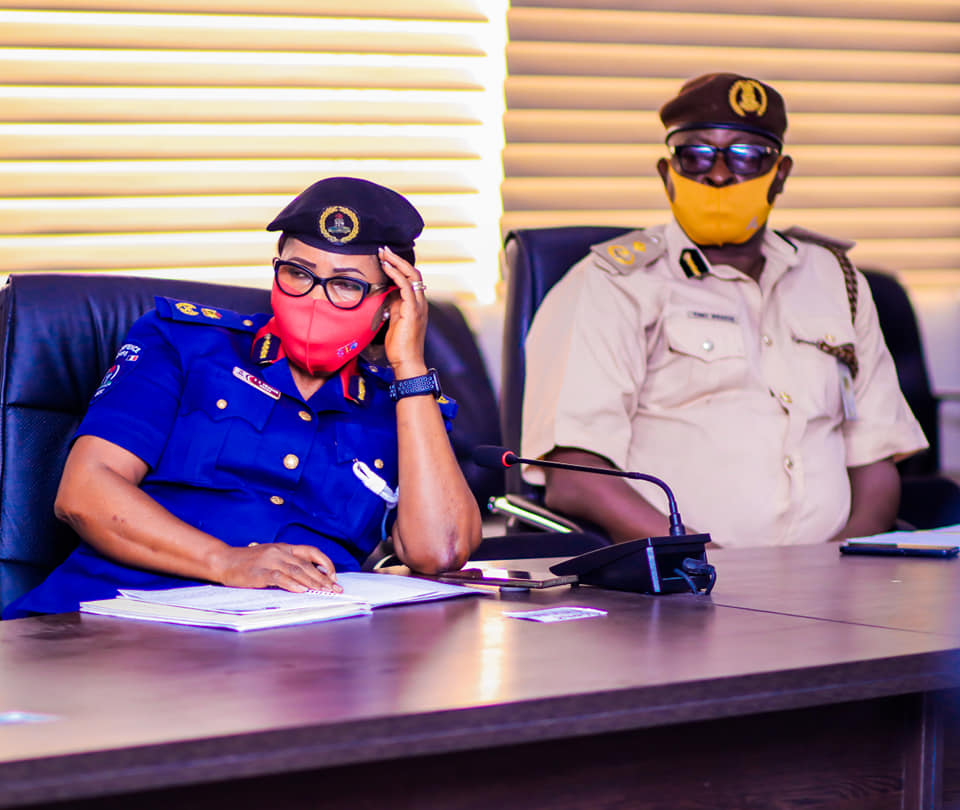
The Federal Government, yesterday, said that the current service chiefs would deploy all necessary force to deal with terrorists and bandits terrorizing some parts of the country.
The National Security Adviser (NSA), Major Gen. Babagana Monguno (rtd), stated this at the weekly presidential media briefing at the Council Chamber, State House, Abuja.
He also ruled out the possibility of government negotiating with the criminals, saying that doing that will suggest weakness and incapacity on the part of government.
He said the government would not succumb to blackmail and the use of criminals by proxies to harass innocent citizens.
He said, “While the government is not averse to talking, it must apply the necessary force because you can’t trust these people.
“Government wants to use military assets to eliminate them but if along the line, they come out, good. It paints the picture of weakness, incapacity.”
The NSA further declared that the Federal Government will not engage mercenaries in its fight against insurgents and other forms of insecurity in the country.
While responding to a question on renewed calls by North-East governors on the Federal Government to engage foreign mercenaries in routing Boko Haram terrorists in Sambisa forest and other insurgents’ enclaves, he said, “The President’s view and directive is that we will not engage mercenaries when we have our own people to deal with these problems. We have the personnel and resources, and the President has given a new lease of life to the Armed Forces.”
He said the government would not succumb to blackmail and the use of criminals by proxies to harass innocent citizens.
According to him, “While government is not averse to talking with these entities, it also has to fully apply its weight. You can’t (negotiate) with people who are unreliable and who will continue to hurt society. We will apply the full weight of the government to deal with these criminals.
“These are not people looking for anything that is genuine or legitimate, they’re just out to take calculated measures to inflict pain and violence on innocent people. We must deal with them the way they need to be dealt with. We will fully assert the government’s will.
“We are also focusing on the associated dimensions of the banditry and terrorism: Illegal Drugs, the flow of small arms and light weapons, and Illegal mining in places like Zamfara. These are some of the scenarios fuelling the violence, and we are already tackling them decisively.”
The NSA also disclosed that between March and December, 2020, the military successfully took out 2,403 insurgents in the North-East.
On why the government was silent on Ahmad Gumi, an Islamic cleric, who has been calling on government to grant insurgents amnesty, Monguno, he has met and interacted with him briefly in Kaduna at the zonal town hall meeting with service chiefs but that he was still waiting for the cleric to come forth as he promised to help.
He also said the recent changes made by President Buhari to the security architecture “gives us a ray of hope that things will be adjusted, so that whatever we do as regards securing Nigeria will be in conformity with the aspirations of the people.
On external support, the NSA said, “There’s a Regional Intelligence Fusion Unit, comprising US, UK, France working with us and our neighbours. They’ve been supporting us with intelligence. For us what’s most important is acting on the intelligence—that’s why we’re investing in equipment and assets.”
On the new service chiefs, Monguno said, “The new direction of government is to come out with full force. Government will not allow itself to be blackmailed by any group or any individual who thinks he can hide under the surface and use proxies to deal a fatal blow on innocent people.
”That I want to assure you categorically and unequivocally, government is going to apply full weight to deal with these criminals until such a time that they vacate the shores of this country.
”In dealing with this issue, government realizes the tangential, auxiliary organizations to key in both the issue of drugs coming in and smuggling of arms and light weapons.
”As a result of what I said about delivering maximum force, the weight of our security organizations, does that obviate the need for us to use soft approach.
“We are ready to dialogue with these people but for us, it’s not a priority.
“We can’t be singing the same song everyday and these people are unreliable. They are ignoble, they are ready to undermine whatever agreement we have had, so, because of that, if the opportunity avails itself, of course, we will talk with responsible people from the side of those people.
“I don’t even know how to categorize them because it’s not as if they are looking for something you can point a finger at, it’s not some kind of nationalistic situation, and something you can actually identify and relate to.
“These are just a murderous group of individuals who are keyed up on drugs and I don’t know what anybody wants to negotiate with these people.
“And the people who have been negotiating with them in the first place, don’t you think they should actually, if there is that sincerity of purpose talk with the right people in government? So, for negotiations, it is there, we would see what happens if it happens.”



The Rivers State chapter of the All Progressives Congress Christian Leaders Forum has expressed strong confidence in the capacity of All Progressives Congress (All Progressives Congress) candidates in the state to deliver effective governance if elected into office in the coming elections.
The State Coordinator of the forum, Archbishop Lucky Aroh, made this known during a breakfast and thanksgiving meeting held in Port Harcourt, where leaders gathered to pray for the stability of the party and the safety of its candidates ahead of the 2027 general elections.According to him, the meeting was convened to seek divine intervention for peace, unity, and security among APC candidates across Rivers State.
“Today we are praying for APC stability in Rivers State and the security of our candidates that have been elected to contest the 2027 elections. It is a breakfast meeting,” Aroh said.
He further expressed optimism that the party’s candidates would not disappoint the people if entrusted with leadership responsibilities.
“They will not fail when elected into office. We are here as fathers of the land to let them know, and I must tell you the truth that these are the authentic people that will do well in Rivers State,” he added.
Speaking earlier, the National Chairman of the forum, Professor Olanrewaju Abraham, commended the Rivers State chapter for organizing the programme, noting that the national body of the forum believes strongly in the power of prayer.
He stated that political leadership provides an opportunity to influence society positively, including advancing moral and spiritual values, while expressing confidence that APC candidates at all levels would emerge victorious in the upcoming elections.
Also speaking, the Rivers State Women Leader of the APC, Hon. Darling Amadi, praised the forum for its commitment to prayers for peace, stability, and the protection of party candidates.
Represented by the Deputy Women Leader of the party in the state, she described the initiative as commendable and urged other political and support groups within the party to emulate the gesture in promoting unity and stability.
By: John Bibor, Menebe Emmanuel & Fortune Paibi
Prominent businessman and philanthropist, Elder Anthony Osagwe-Ogo, was celebrated in grand style as he marked his 70th birthday anniversary, with distinguished Nigerians, business leaders, and golf enthusiasts gathering to honour his remarkable contributions to society.
The colourful celebration took place at the Port Harcourt Golf Club, where friends, associates, and well-wishers converged to pay tribute to the revered elder statesman.
Chairman of the occasion, High Chief (Dr.) Ikenna Okafor, described the celebrant as a detribalised Nigerian whose generosity, humility, and commitment to humanity have earned him admiration across different communities and backgrounds.
According to Dr. Okafor, Pa Osagwe-Ogo’s impact on society and the development of his community remains unparalleled. He noted that members of the golfing community are proud to be associated with a father figure who consistently promotes the welfare and well-being of those around him.
He further stated that the history and growth of the Port Harcourt Golf Club cannot be told without acknowledging the significant role played by the celebrant, whose wisdom, encouragement, and leadership have helped sustain the club over the years.
“We are here to celebrate a man who has impacted humanity positively, a peace-loving individual and an epitome of hope for the younger generation. We pray to emulate his virtues. Today, we celebrate a bridge-builder, a trailblazer, and an iconic leader whose life continues to inspire many,” Dr. Okafor said.
He expressed delight at the large turnout of guests from various walks of life, describing it as a testament to the respect and affection Pa Osagwe-Ogo commands within and beyond Rivers State.
In his response, the celebrant, Pa Anthony Osagwe-Ogo, expressed profound gratitude to God for preserving his life and granting him the privilege of attaining the milestone age of 70.
He also thanked members of the Port Harcourt Golf Club, family members, friends, and associates for identifying with him during the celebration and for their unwavering support over the years.
The event featured the cutting of the birthday cake, presentation of awards to deserving members of the club, goodwill messages, and moments of celebration among guests.
The ceremony was attended by notable personalities from the business community, the golfing fraternity, and other sectors, all of whom joined in celebrating the life and legacy of the respected elder statesman.
Rivers State Governor, Sir Siminalayi Fubara, and the Permanent Secretary of the Rivers State Ministry of Information and Communications, Dr. Honour Kuru Sirawoo, have been honoured with awards of recognition in connection with the 2026 Democracy Day celebrations held in Port Harcourt.
The awards, which formed part of activities marking Nigeria’s Democracy Day on June 12, were formally presented on Tuesday at the Ministry of Information and Communications in Port Harcourt.
Presenting the awards was Hon. Abdul Hameed Oladipupo Alli, popularly known as “Mr. Nigeria,” Publisher of Asiwaju Trumpet Magazine and Achievers World International Magazine.
Governor Fubara was recognised for his efforts in sustaining peace, stability, and a conducive political atmospherJohn Bibor / Menebe Emmanuel / Fortune Paibie in Rivers State. The organisers noted that his administration has fostered harmony and strengthened civic participation across the state.
Dr. Sirawoo, on the other hand, was honoured for his exemplary administrative leadership and significant contributions to effective information management within the Ministry of Information and Communications.
Representing Dr. Sirawoo at the presentation ceremony, Dr. Christian Davies received the award on his behalf and expressed gratitude for the recognition. He described the honour as a reflection of Dr. Sirawoo’s unwavering commitment to professionalism, excellence, and dedicated public service.
Dr. Davies assured the organisers that the award would be formally conveyed to the Permanent Secretary.
The event also featured the presentation of commemorative publications highlighting major governance and civic milestones in Rivers State, including Easter celebrations, Workers’ Day activities, the Governor’s third anniversary in office, and Democracy Day programmes.
Organisers of the awards commended the Rivers State administration for what they described as sustained peace, political stability, and improved civic engagement, noting that these achievements have contributed significantly to the state’s continued development.
By: Jessica Sambol