
Featured
No Going Back: Labour Insists On Reversal Of Fuel, Electricity Tariff Hike

The organised labour, yesterday, insisted that the Federal Government should revert back to the old prices of petrol and electricity tariff, if not the strike will stand.
This is as the Minister of Labour and Employment, Senator Chris Ngige, and the President of Trade Union Congress (TUC), Comrade Quadri Olaleye, had a hot altercation over the letter to President Muhammadu Buhari to reverse the prices of petrol and electricity tariff.
Meantime, Secretary to the Federal Government (SGF), Boss Mustapha said that deregulation of the petroleum sector was long overdue, but the TUC President maintained its previous position that government should revert to the old prices before any discussion would continue.
The meeting, which took place at the Old Banquet Hall of the Presidential Villa, had in attendance the Minister of State for Petroleum, Timipre Sylva; the Minister of Power, the Minister of State, Labour and Employment, Festus Keyamo, SAN; and some relevant agencies and parastatals.
Sources at the technical session which was under closed-door said that the labour has not changed from its previous position that the government should go back to the old prices of petrol and electricity tariff.
In his presentation, the TUC President had told Ngige to withdraw the statement that the centre was not right to write to President Muhammadu Buhari, arguing that as the President of the country all the economic decisions end on his table.
Besides, Olaleye during his presentation insisted that the TUC stood on its earlier submission that the government should reverse the increases before they would resolve on anything.
He had said, “The most important thing to us today is that we are here, we are engaging with you. Like I mentioned in the last meeting we had here that if we have been having constructive engagement in the past, maybe we would have been able to solve some of these problems.
“But the government turned a deaf ear to us even before the arrival of the world enemy Covid-19, we have written to the government suggesting an alternative way to run the economy, but nobody ever listened.
“And I can send to you many communications from Labour movement suggesting solutions and now we have found ourselves in this situation but the truth of the matter is that Nigerians are suffering and it is our responsibility as Labour centres to fight for their rights, to protect their interest.
“N30, 000 minimum wage was agreed last year and now there is an increase in PMS price, increase in tariff of electricity, the introduction of stamp duty and some other hardship on the workers and their families. We live in a country where a worker is responsible for more than 12 people.
“At least, eight from his family and the other six from the in-law’s house. I wonder how N30, 000 will be able to cater for all these but instead of the government to look at a better way to increase our lot, we are the sacrificial animal to make the economy better for few people.
“I heard when the minister mentioned that the country belongs to all of us, I as a person except you change my impression, I believe the country belongs to the few politicians that take decisions and make policies that are very hard for us to live in this country.
“If the country belongs to all of us, the question is why are people running out of this country, our youths are running out of this country despite all the dangerous obstacles on the road, many have lost their lives.
“Can somebody run out of his father’s house when nothing is pursuing him? So definitely the answer is now. Let’s make the country to belong to all of us so that we can be a bona fide owner of our country.
“Democracy is all about the people, we voted a few people who represent us at the government level and when decisions and policies are to be formed, we are the first to be considered.
“The politicians have scrapped the middle class that we used to have, they have taken away our hope, it’s either you are rich in this country now or you are poor. No more middle class and these are the things we need people to look into if we actually want peace in the country.
“Nigerian workers are suffering, a lot of people have lost their jobs especially during this COVID-19 and the only solution government could bring to their doorstep is that they should pay more for electricity, they should pay more to buy petrol.
“This hardship is getting too much, so whatever solution we are bringing, must be holistic, something that everybody will feel that the country belongs to all of us sir.
“Be that may, the Honorable Minister I wish to call your attention to your regular statement that TUC that TUC did not address the letter to you. I want to disagree with you due respect to your office, we honour your office and we will not do anything to undermine your office.
“But this issue is the issue that Mr President himself has to handle, we are not talking about the minimum wage, increase or any price with government, we are talking about economic issues and we have elected Mr President to lead and that is why we have addressed that issue to him.
“But if you want to insist sir, that because the letter is not referred to you, then TUC can excuse you I know it’s a statement of divide and rule which will not be acceptable to this congress sir.
“But I have to retreat that the submission of TUC as at last week still remains, that you reverse all those increases then you can come up with economic recovery solutions that you have.
“I know many times we have advised you to diversify the economy and we even mentioned the introduction of the issue of modular refineries and we have never had any feedback from the government”.
But reacting to the call for the withdrawal of his statement, Ngige said, “I have been the Minister of Labour and Employment for five years plus. I have attended all International Labour Organisation (ILO) sessions, Governing Board and General Assembly, I have not missed any.
“The competent authority of every country is the Minister of Labour. In many climes, it’s Minister of Labour and Social Welfare, Minister of Labour and Public Civil Service Affairs and Minister of Labour and Social Investment.
“The Minister of Labour is the competent authority of any country. In those countries too, labour matters are first addressed to the Minister of Labour.
“We have not tried to enforce this rigidly as it should be but in other climes, all labour and industrial matters and social security are channelled to the government to Head of State through the Minister of Labour.
“I don’t want this to continue. I have raised it with the TUC President before. The TUC President after being elected did not see his Minister of Labour, he did not correspond to Minister of Labour about the election, he went ahead to book an appointment to see Mr President and Mr Vice President.
“I will not sit on this seat and allow this to continue. All correspondence to government, President should come to the Ministry of Labour, that is the channel. If I don’t react, you can report me by doing a reportage to a higher authority but as far as Nigeria is a concern, I’m the competent authority here on labour matters.”
Speaking earlier in his opening remarks, Secretary to the Government of the Federation (SGF), Boss Mustapha said that deregulation of the Petroleum sector was long overdue.
He said that the policy was not to inflict hardship on the masses, adding that at the end of the day the people will be better for it.
He said, “The president has said that no government decision taken is intended cause any pain or harm ”.
President of NLC, Comrade Ayuba Wabba said that Labour was the only organisation that is pan-Nigeria and that the best way to address challenges, whether social economy or labour issues was to try to proactively engage Labour and have its perspective.
He said, “We are here to continue with the dialogue that started last week. As you are aware, after the dialogue, we were able to update all our members.
“We are here to find a lasting solution to the perennial issue of the twin challenges of the increase in pump price in the name of deregulation and also the issue electricity tariff increase, which we have explained the impact on Nigerian workers, but importantly the larger Nigerian society.
“I think the argument has been the same – people want to see a reduction in those prices which will then improve the lives of Nigerians, particularly workers.
“Clearly, part of the challenges is that this new increase has also reduced our purchasing power and eroded the gains that we have been able to make with the minimum wage, whereas we speak, many states are yet to implement.”















Rivers State, Sir Siminalayi Fubara, has assured members of the National Youth Service Corps (NYSC) of his administration’s commitment to supporting and strengthening the scheme in the State.
Fubara gave the assurance last Friday at the NYSC permanent orientation camp, Nonwa-Gbam, Tai Local Government Area in the State, during the swearing-in ceremony of 2026 Batch B Stream II orientation course.
Represented by the Permanent Secretary, Cabinet Bureau, Office of the Secretary to the State Government, Dr. Promise Oguzie, the governor said the State Government would remain intentional in providing the necessary support to improve the NYSC scheme and enhance the experiences of corps members deployed to the state.
He charged the corps members to be role models and quality nation-builders in their service to the good people of Rivers State in particular, and Nigeria at large.
“I charge you to be exemplary, dedicated and committed in all you do. Take full advantage of all the camp programmes and activities to enrich yourselves”, he said.
In his welcome address, the State Coordinator of NYSC in Rivers State, Mr. Moses Oleghe, urged corps members to see their deployment to Rivers State as a “veritable opportunity to make meaningful contribution to the growth of the State in particular and Nigeria at large.”
He further charged them to serve with all sense of “integrity, discipline, and the fear of God, especially when they will be engaged as INEC ad-hoc staff that will conduct the 2027 general elections.”
A total of 3,584 corps members composed of 1,421 males and 2,163 females were sworn in by the Chief Judge of Rivers State, who was represented by Justice Godspower Aguma.

Governor of Rivers State, Sir Siminalayi Fubara, says Nigeria needs God-fearing leaders for the nation to move in the right direction and make meaningful progress.
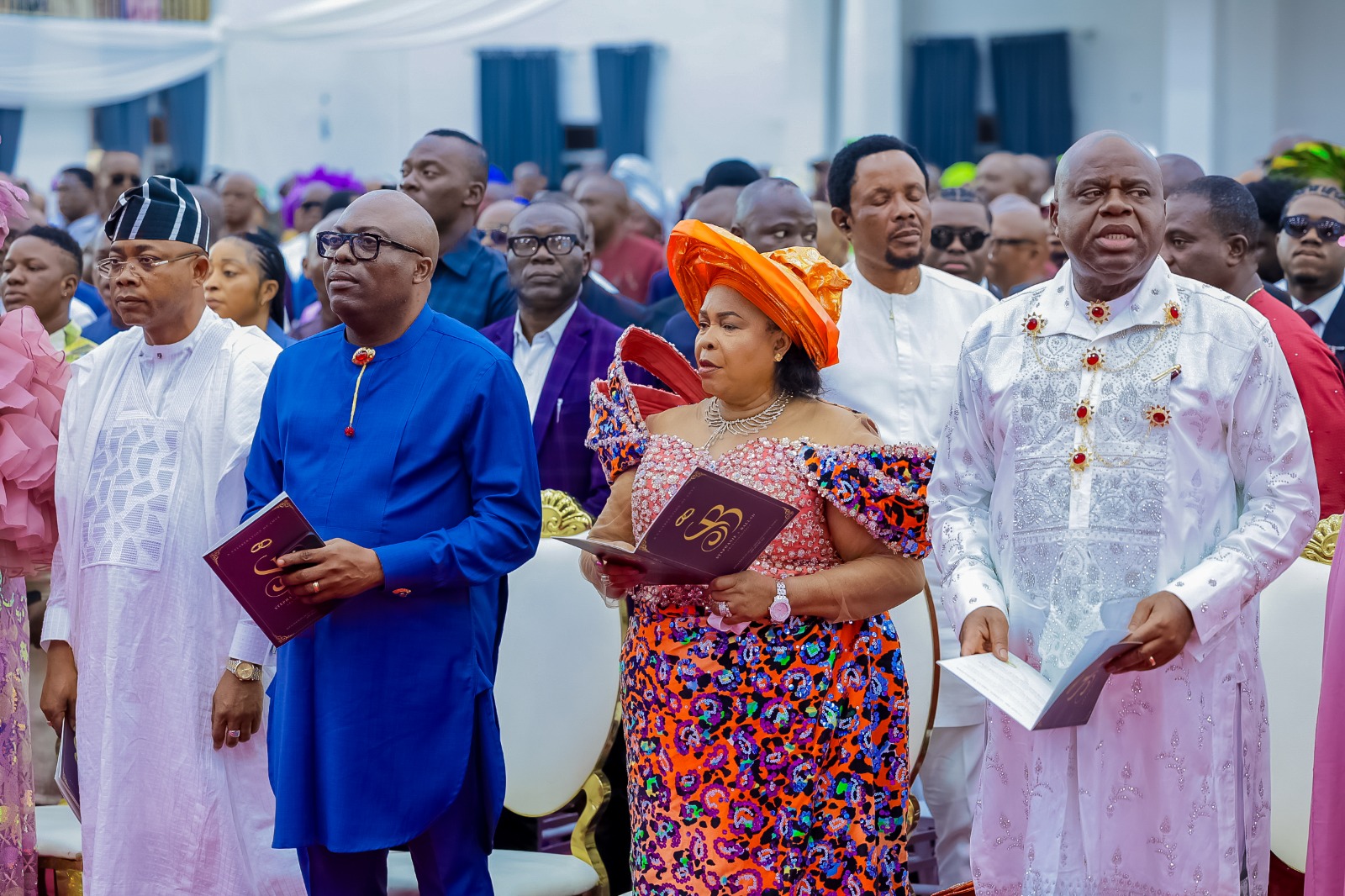
The Governor stated this yesterday when he received in audience, the World President of the Seventh Day Adventist Church, Pastor Erton Kohler; his wife, Andriene Marques Kohler; daughter Mariana Marques Kohler and a retinue of ministers of the church at Government House, Port Harcourt.
Fubara who hailed the Seventh Day Adventist Church for its contributions to education and the grooming of future leaders in Nigeria, expressed delight that the Church had over the years, been investing in education at various levels and currently runs two universities in the country.
He commended the church for not only using its institutions to spread the gospel of Christianity but to groom future leaders for the country.
According to him, religion should not be just about defending one’s faith, but also making meaningful impact on the lives of the people.
He said that by floating these educational institutions, the church has demonstrated capacity to support Nigeria in the task of producing not only educated people but a breed of God-fearing leaders.
“Our country is where it is today because we lack the fear of God. If you have the fear of God, there should be a limit to what you can do because you understand the supremacy of God. But when God is not in your equation, you’ll go beyond the line and that is what has brought us to where we are today.
“So, I feel very happy that you are contributing to the development of our future leaders in this country. We need the right people being in the right place; prepared properly with good minds; that is what we need, not just in Nigeria but round the whole world.,” he said.
Governor Fubara further observed that the absence of God-fearing people in high places to take the right decisions that could impact positively on the society, has also given rise to other problems such as social inequality, poverty, corruption and criminality. According to him, Nigeria needs a system where the average parent could afford quality education for their children and a guarantee that upon graduation, the average child will have the capacity to compete favourably with anybody, anywhere in the world.
“If we have a situation where the little money that you’re being paid as wage can also afford you quality healthcare and after working at least for 15-20 years, you have a roof over your head, tell me why you should be involved in any kind of crime? At that point, you’ll feel secured and this attitude of insecurity about the future that leads to all the social vices we have today won’t be there,” he said.
Governor Fubara expressed appreciation to the delegation for the visit and for their prayers for Rivers State, assuring them of his continued support for their programmes in the state.
Leader of the delegation and World President of the Seventh Day Adventist Church, Pastor Erton Kohler said he was in Nigeria for a special conference of the church during which thousands of the church’s ministers will be undergoing an empowerment programme to further equip them for the task of herding their flocks and serving the society.
He expressed gratitude to the Governor for the warm reception accorded his entourage, saying the memory of the visit will linger in his mind for a lifetime.
Kohler disclosed that the Church has over twenty -four million (24,000,000) members and more than 182,000 places of worship, spread across 212 countries of the world.

The Rivers State House of Assembly has approved the 2026–2028 Medium Term Expenditure Framework (MTEF) submitted by Governor Siminalayi Fubara.
This reaffirms the lawmakers’ commitment to enacting laws and taking legislative actions geared towards the overall development of the State.
The Assembly gave the approval during its Second Legislative Sitting of the Fourth Session held last Friday.
Speaking on the MTEF document during plenary, the House Speaker, Rt. Hon. Martin Amaewhule, noted that by the provision of Section 10(1)(b) of the Rivers State Fiscal Responsibility Law No. 8 of 2010, the MTEF ought to have been laid before the House in September 2025.
Amaewhule explained that traditionally, the document is expected to be presented four months before the commencement of the next financial year and immediately after the expiration of every three-year fiscal cycle.
He, however, stated that in the interest of the State and its people, the House considered it necessary to deliberate on the document, describing it as a precursor to the 2026 Budget Estimates.
The Speaker expressed concern that the year had already progressed significantly before the presentation of the framework.
During deliberations on the document, members examined the assumptions and projections contained in the MTEF and observed that strict adherence to the outlined fiscal parameters would ultimately serve the interest of Rivers people.
The lawmakers maintained that effective implementation of the framework would promote prudent financial management and enhance developmental planning across the State.
Following the debate and positive consideration by members, the Speaker put the question to the House and members voted overwhelmingly in support of the approval of the MTEF.
Meanwhile, during the same sitting last Friday, the House also received a petition from the Chairman of Obio/Akpor Local Government Council, Dr. Gift Worlu.
The petition was presented by the member representing Obio/Akpor Constituency II, Hon. Emilia Amadi.
According to the petition, concerns were raised over an imminent security breach, threats to lives, destruction of property and alleged forceful takeover of property by some lawless persons within parts of the Local Government Area.
Presenting the petition before the House, Hon. Amadi appealed to the lawmakers to revisit the matter and take necessary steps aimed at safeguarding lives and property in the affected communities.
The House is expected to further deliberate on the petition and consider measures to address the concerns raised in order to sustain peace and security in the area.
King Onunwor
-

 News4 days ago
RSG Targets Nine Million Residents in Mosquito Net Distribution Campaign
-

 Oil & Energy4 days ago
Aiyedatiwa Signs New Electricity Bill
-

 Oil & Energy4 days ago
NLNG Commissions Research And Innovation Centre In RSU
-

 Maritime4 days ago
Marine Minister Commends President Tinubu On NPERA Bill Assent
-

 News4 days ago
KenPoly Holds Eight Convocations, August 29
-

 News4 days ago
RMAFC Completes Revenue Sharing Review, Proposes New Pay
-

 News4 days ago
RSG Begins Another Phase of Projects Commissioning Today
-

 Maritime4 days ago
NAGAFF Petitions IGP Over Alleged Maritime Police Harassment