
Politics
Of Civil Demonstrations, Democracy And The Law

The Federal Government of Nigeria is a state based on the principles of democracy and social justice, where sovereignty belongs to the people.
Civil demonstrations cannot be over emphasised in any state based on the principles of democracy and social justice.
The theory and practice of civil governance all over the world have endorsed and accepted civil demonstration as capstone in civil governance, and as such, ought to be protected and guided jealously. As a non-violent approach used as a feedback from the governed, over the impact of government policies and programmes on the lives of the masses characterise democracy in civilized societies.
Civil demonstrations as it were have suffered tremendous setback in recent times. We shall take a chronicle of different occasions were this important component of democracy was abused and as a result threatened the rule of law in Nigerian evolving democracy.
The Nigerian state have had several cases where the Nigerian police force disrupted the political rallies, for instance on the 22nd day of September, 2003, the police disrupted the rally conveyed by the defunct All Nigerian People’s Party (ANPP) which they justified the disruption by claiming that the organizers of the rally did not obtain police permit.
This reason was not genuine enough for General Mohammadu Buhari as he then was, and other leaders of the party as they quickly seek for justice in a court of competent jurisdiction over the perceived denial of their groups Fundamental right for Assembly and expression in a suit filed at the Federal High Court Abuja, against the then Inspector General of Police, the claimants challenged the provision of the constitutionality of the public order Act relating to police permit. In a thorough examined judgment, the learned trial judge (Justice Chinyere J.) held that the police permit was inconsistent with sections 39 and 40 of the African charter on Human and peoples Right Act (Cap A9) Laws of the federation of Nigeria, 2004.
The appeal filed against the judgment was dismissed. In affirming the decision of the lower court, Olufunmilayo Adekeye (JCA) as he then was, after a critical examination, observed that “A rally or placard carrying demonstration has become a medium of expression of views in current issues with regards to government and the governed in any given sovereign state, that it is the trend recognised and deeply entrenched in the system of governance in civilized societies and that it will not only be primitive but debasing and retrogressive if Nigerians continue to require a police permit before rallies and the civil demonstrations can be held”.
With respect to the epochal judgment of the court of Appeal and the expansion of the democratic space the National Assembly was compelled to amend the electoral Act to facilitate the observance of the people fundamental rights to Freedoms of expression and Assembly. Thus, section 94(4) of electoral Amendment Act, 2001 stipulated that notwithstanding any order or any regulations made there under, or any other law to the contrary, the role of the Nigerian Police Force in political rallies and other nonviolent civil processions shall be limited to the provision of adequate security for the protesters.
Another case of violation of the rights of protesters is the disruption and violent attack on the peaceful rally of “Our Mumu don do group” led by Charley Oputa. It was a violation of section 42 of the federation constitution which has prohibited discrimination on the grounds of public opinions. As democracy admits of freedoms of expression. Therefore, the incessant disruption of public meetings and other forms of civil demonstrations by the police and other security agencies is illegal and unconstitutional and against the progress of any developing democracy, such as the Nigerian state.
Furthermore, in a society where the rule of law is supreme, orders of court are obeyed and adhered to until set aside, for instance, recently in England, the supreme court held that the suspension of parliament was unlawful and the prime minister and other agencies of government complied with the order for parliament to resume, despite country opinions. In the contrary, the Nigerian state has continued to wave or even defy the courts. A typical example is the case of Mr. Omoyele Sowore, the revolutionNow convener, who called for a civil revolution as he could not sit down and watch any longer as the nation continues to fall off in almost all its key areas of survival; such as insecurity, banditry, poverty, unemployment, anti people’s policies and unending terrorism.
Mr. Sowere was detained and charged for treason, in spite of a court order from the Federal High Court, Abuja, which on September 24, 2019 ordered his release. The Department of State Security (D.S.S) insisted and appealed for a higher court to grant him further detention and arraignment, it is unfortunate that the present administration has thrown caution to the wind in disrespecting the rule of law.
In conclusion, may I remind the presidency as well as the Nigerian Police Force that the president of Nigeria, President Mohammadu Buhari had in the recent past taken part in peaceful demonstrations to protest against alleged manipulations of election results and perceived areas of failures of government in the country, and as such, using State Security Agencies to clamp down on peaceful demonstrations such as protests/people revolutions only amounts to adopting military principles into a civil government such as ours, thereby backsliding our democratic progress.
Going forward, Nigerians hope to see the Nigerian State compete with other growing nations and seek to uphold true democratic tenants.
Nigerians hope to see where the rule of law and the fundamental rights of citizens are guaranteed.
Nigerians hope that the security agencies will understand transparency as against impunity in the discharge of executive powers.
In the same vein, the Nigerian police should know that it is a creation of the law and cannot act above the law that created it and cannot therefore, reenact through the back door decree No. 2 and 4 of the Dark Military Era restraining democratic voices.
Oguzie is a civil rights agitator.
Kingdom Oguzie

Politics
Alleged Coup: Protests Rock N’Assembly As Detained Officers’ Children, Wives Demand Justice

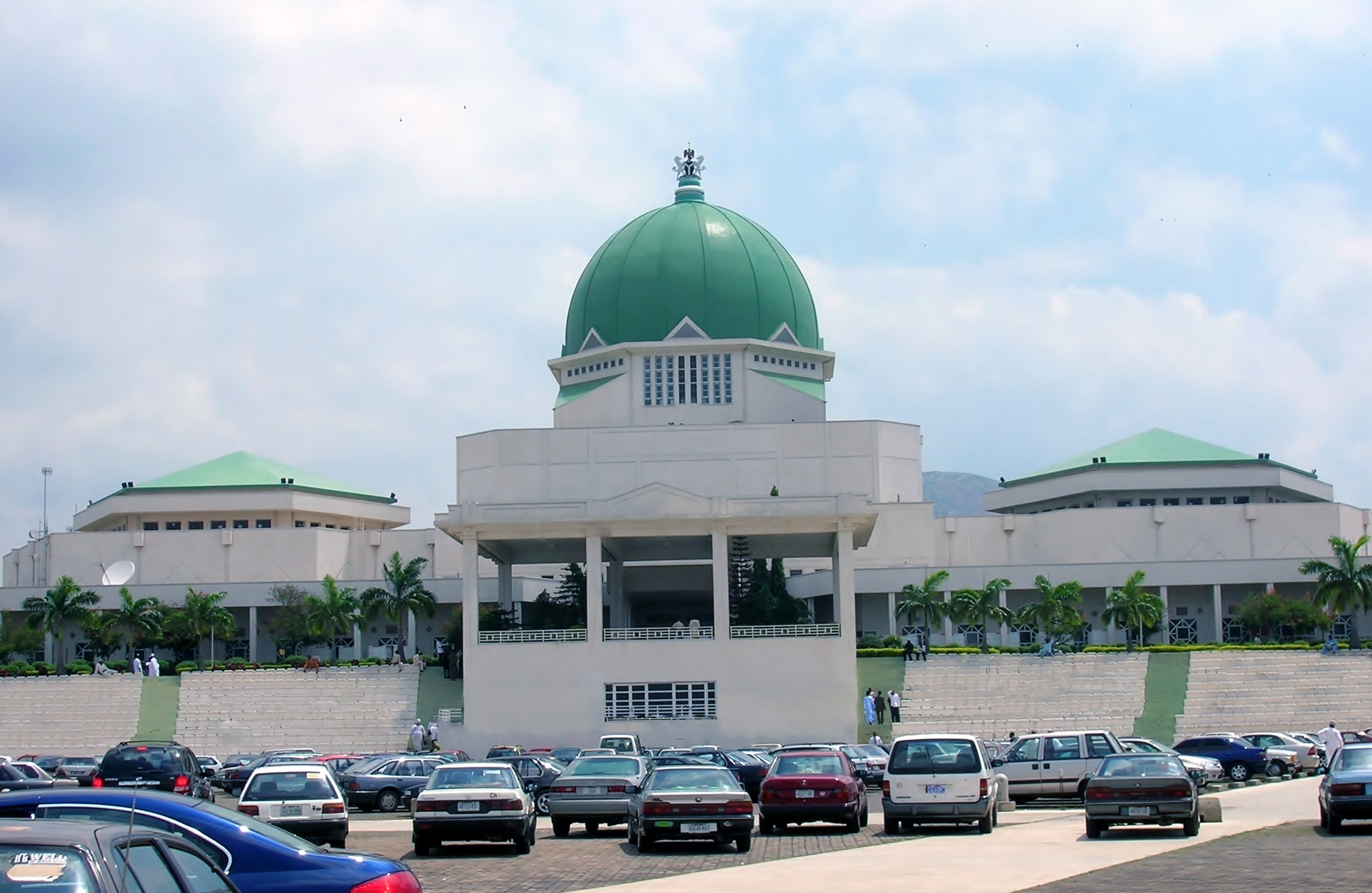
Scores of children and wives of military officers detained over an alleged coup plot yesterday staged a peaceful protest at the National Assembly, demanding a speedy trial and the release of the accused officials.
The protesters who gathered at the entrance of the National Assembly complex, moved in a slow procession while clutching placards with inscriptions such as “Don’t Kill Our Daddies,” “Detention Without Trial is Injustice,” and “Six Months of Torture: Enough Is Enough.”
Amid tears and trembling voices, the children appealed for justice and access to their detained fathers, many of whom they said they had not seen for months.
The appeal was made during a press briefing in Abuja attended by no fewer than 20 wives and several children of the detained officers, including a two-month-old baby.
The families were accompanied by human rights lawyer, Deji Adeyanju and activist Omoyele Sowore.
At the briefing, the families lamented that the officers had been held for over 160 days without trial or contact with their relatives, describing the situation as a violation of their fundamental rights.
Speaking on behalf of the families, Memuna Bashiru said the prolonged detention had thrown their households into uncertainty and emotional distress, noting that while allegations had been widely publicised, families remained in the dark about the fate of their loved ones.
The arrest of the indicted officers was first announced on October 4, 2025, by the then Director of Defense Information, Brigadier General Tukur Gusau, who disclosed that 16 officers were taken into custody for alleged breaches of military regulations and acts of indiscipline.
However, an interim investigation later suggested the existence of a clandestine network of officers, allegedly coordinated by a senior Army officer, which had begun preliminary planning for a coup.
According to the report, the alleged plot involved surveillance of key national assets, including the Presidential Villa, Armed Forces Complex, Niger Barracks in Abuja, and major international airports, with October 25, 2025, cited as the planned date for the operation.
Those reportedly in custody include Brig Gen M. A. Sadiq, Col M. A. Maaji, Lt Col S. Bappah, Lt Col A. A. Hayatu, Lt Col P. Dangnap, Lt Col M. Almakura, Maj A. J. Ibrahim, Maj M. M. Jiddah, Maj M. A. Usman, Maj D. Yusuf, Capt I. Bello, Capt A. A. Yusuf, Lt S. S. Felix, Lt Cdr D. B. Abdullahi, Sqn Ldr S. B. Adamu and Maj I. Dauda.
The alleged plot, according to findings, targeted senior government officials, including President Tinubu and Vice President Kashim Shettima.

In a statement issued yesterday, the party’s National Publicity Secretary, Mr Felix Morka, said the exercise would take place in all wards and designated centres nationwide.
He called on existing members to update their records, while encouraging new entrants to join the party through the digital platform.
“As the electronic membership registration exercise resumes in all wards and designated locations nationwide, we urge existing members to validate their membership while new members are encouraged to register and join the progressive family,” Mr Morka said.
According to him, eligibility for registration is limited to individuals aged 18 and above who possess a valid National Identification Number (NIN).
The party said the initiative is part of efforts to modernise its operations by transitioning to a digital database that would enhance record accuracy and accessibility.
Mr Morka noted that the e-registration would “digitise the party’s membership register, ensure the integrity of records, and enhance efficient access to membership data for planning and management decisions.”
He added that the move is also aimed at promoting internal democracy within the party and strengthening its commitment to democratic innovation.
The APC had previously introduced electronic registration as part of broader reforms to streamline its membership system and improve organisational efficiency.
-
 Editorial3 days ago
Domesticate FG’s Exit Benefit Scheme
-

 News3 days ago
RSU Unveils Five-Year Strategic Dev Plan …Calls For Collective Commitment To Institutional Excellence
-

 News3 days ago
DHQ Confirms Deaths Of Terrorists, Soldiers In Borno Attack
-

 News3 days ago
Tinubu Commissions Bayelsa Gas Turbine, Other Projects Today
-
Business3 days ago
Niger Delta Investment Summit Targets $5bn Inflows, 500,000 Jobs
-
Nation3 days ago
Rumuji Youth Leader Condemns Protest, Disowns Alleged Government Empowerment Claim
-
Sports3 days ago
Full Draw For 2026 U-17 AFCON
-
Rivers3 days ago
Dep Gov Seeks Collaboration, Transparency Between RIVCHPP, PHCMB