
Politics
Still On Security Votes

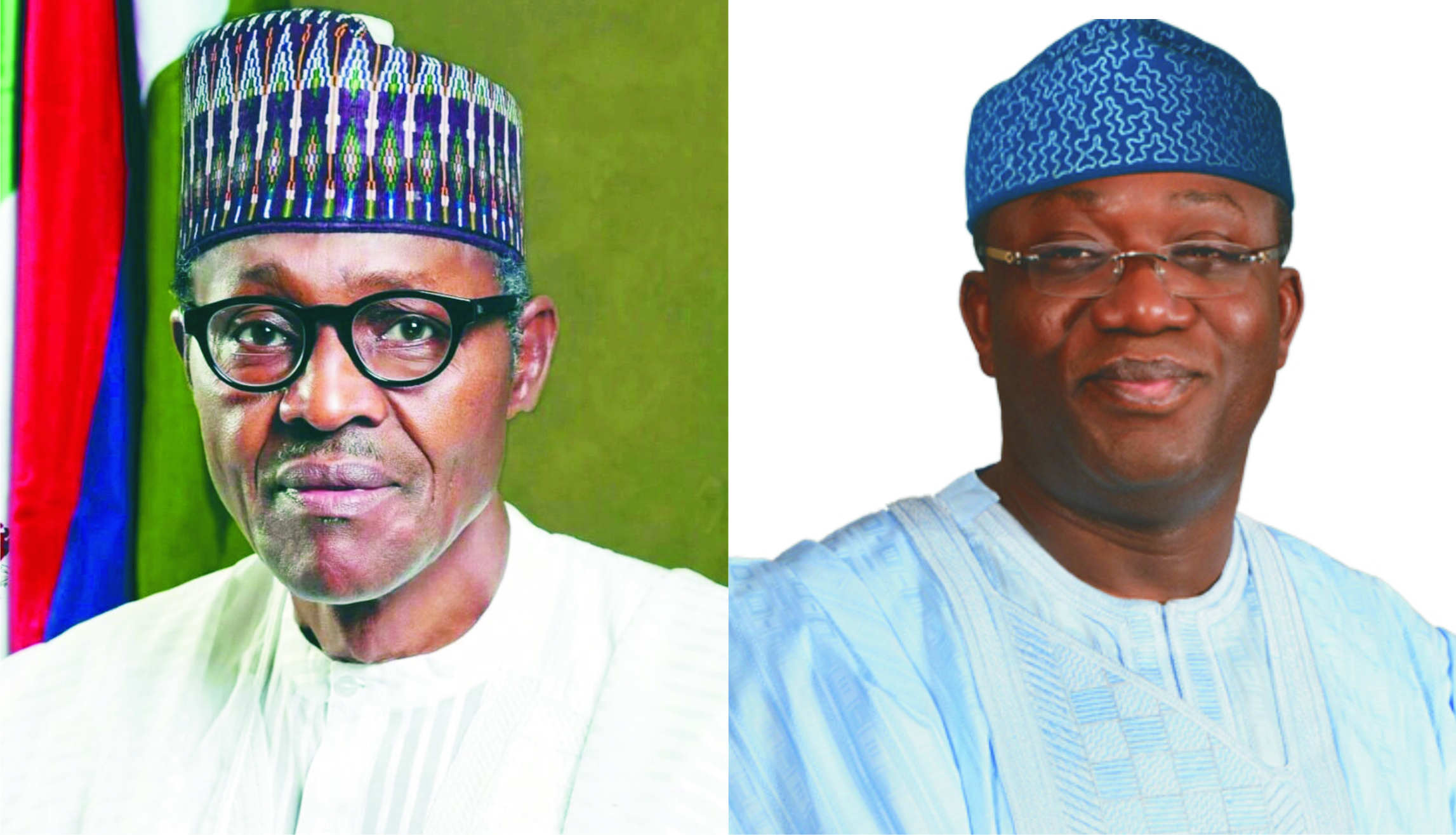
When Mr Ibrahim Magu, the Acting Chairman, Economic and Financial Crimes Commission (EFCC), spoke at the induction programme for returning and newly-elected governors, he did not mince words in accusing governors of misusing security votes.
He alleged that some governors deliberately fuelled insecurity in their states just to collect more money as security votes.
He noted that some of the governors “now covertly promote insecurity as justification to inflate their security votes.”
Magu also alleged that there was a link between corruption, banditry and terrorism.
His allegations were contained in a paper, titled, “Imperative of Fighting Corruption/Terrorism Financing in Nigeria.’’
Magu told the session that a debate on the legality of security votes enjoyed by the governors was ongoing.
“We have also seen evidence of theft of public resources by some state governors, cashing in on the insecurity in their states.
“Insecurity has also offered the required oxygen for corruption to thrive as evident in the $2.1bn arms procurement scandal involving top military commanders both serving and retired.”
A study carried out by the University of Nigeria, agreed with Magu on the abuse of security votes.
The study is titled “Legitimising Corruption in Government: Security Votes in Nigeria.’’
It was authored by Obiamaka Egbo, Ifeoma Nwakoby, Josaphat Onwumere and Chibuike Uche, of the Department of Banking and Finance, University of Nigeria.
“The tendency among Nigerian politicians, particularly the executive arm at the various levels of government, to manipulate security issues for political and economic gains is widespread.
“This has been fuelled by the abuse of security votes, an ‘opaque fund’ reserved for the executive which is not appropriated, accounted for or audited through the legislature.
“ Sometimes, a state governor could (mis)appropriate as much as N100 million monthly as security vote.
“Such slush funds are channelled into the secret funding of militias and gangs of government enforcers.’’
The appropriateness or otherwise of security votes was at the centre of discourse at the Independent Corrupt Practices and Other Related Offences Commission (ICPC) second Quarterly Anti-Corruption Policy Dialogue Series.
The dialogue focused on Accountability for Security Votes.
ICPC Chairman, Prof. Bolaji Owasanoye, who spoke, agreed with Magu that security vote is an easy and attractive route for stealing public funds.
According to him, it is also a veritable avenue for abuse of public trust, escalation of poverty and underdevelopment and ironically the escalation of insecurity.
“It has pushed up insecurity somehow, that is not to say we do not need security vote.
“In the 2019 budget as appropriated, for example, 162 Ministries, Departments and Agencies (MDAs) had money appropriated for them as security votes.
“These MDAs span boards, centres, committees, ministries, commissions, councils, hospitals, schools, law enforcement agencies, obviously the armed forces and intelligence offices.”
Owasanoye said that the number and categories of MDAs given security votes, suggest that something was wrong with the parameters for determining those who are entitled to security votes.
“This then provokes some question as which MDAs are entitled to security votes and how should security votes be accounted for?
“It is clear from our present approach, that we do not have any rational principle being followed at the moment.
“If there is one, I will be happy that my ignorance will be diminished and removed,” he said.
The chairman explained that it was clear from the current approach to budgeting for security votes, that no principle was being followed.
He said that this is clear from the quantum and range of sums appropriated in the 2019 budget for MDAs, where the lowest amount for security vote was N3,600, while the highest amount was N4.20 billion.
“What on earth can anyone do with N3, 600, and I am not talking of an individual.
“If the N3, 600 is the security vote of an individual, most likely it will take him from somewhere to his house. That is the safest place to be.
“But what on earth can an agency do with N3, 600 as security vote, as appropriated?”
With this disparity, what then should security votes be used for?
Owasanoye opined that it was pertinent because MDAs with budgets for security votes also have separate budgets for other security related matters, such as the production or procurement for security or defence equipment.
“In the case of defence and core security and law enforcement agencies, some of these items and the votes are undoubtedly justified. But the quantum and use is open to scrutiny,” he said.
He, however, explained that it was apparent that security vote was not for any of those other security items mentioned, because they were often separately covered in the budget.
“There is the erroneous impression that security votes are not being accounted for with our recent experience as a country, that almost lost a geo-political zone to insurgency.
“Whereas billions of dollars were appropriated for security, but diverted by corruption to matters like engaging prayer warriors demands that we reflect very closely and ask ourselves whether we can afford to continue on the same trajectory of lack of accountability for security votes.
“We need security votes; we should give the votes to those who deserve to have security votes and we should demand some framework for accountability,” he said.
On his part, Chief of Army Staff, Lt.-Gen. Tukur Buratai, said that security vote was subject to audit and “if it is not done, it is wrong”.
He said that the votes were not votes for defence and were also not meant for the armed forces.
“Strictly speaking, if you look at security votes in the true context, it is not meant to tackle insecurity.
“We have funding for Ministry of Defence and the Armed Forces. If you have budget lines for these services and organisations, then why security votes?
“However, it can be used for security; but it is not meant to solve insecurity,
“There are other votes which are constitutional which include the contingency fund,” he said.
Buratai explained that even though there was security vote that was generally applied, it must follow the Public Procurement Act 2007.
The chief of army staff said that if security vote was made constitutional and proper guidelines set out on utilisation, the issue will be laid to rest
Governor Kayode Fayemi of Ekiti State, described security vote as the budgetary or extra budgetary allocation ostensibly for security, received by the President, Governors and Local Government Chairmen.
This allocation he said, is spent without legal obligation to account for how it is spent.
Fayemi said that security votes have not been widely accepted by citizens, because of the assumption that such funds are being abused by state governments.
He said that the problem really is not about the security vote but about its usages and the character of the people administering it.
“Security votes attract more attention because of the seemingly non accountable nature of the expenditure under the budgetary provision.
“There is widespread belief that the appropriation of security votes in Nigeria is unconstitutional and thus illegal.
“This is not correct because in the Nigerian constitution, the executive is entrusted with the responsibility of preparing a budget which is then sent to the legislature for ratification.
“The fact that huge amount of monies are routinely being budgeted and expended in the name of security vote does not make it an illegal practice
“The act of approving any sum allocated to such a heading, covert or overt, legalises the concept. The insinuation that such money is not budgeted for is not true,” Fayemi said.
Like Magu said, the legality or otherwise of security vote is ongoing, and must continue until it properly defined. The earlier the better to avoid misuse and diversion of public funds in the guise of security vote.
Sharang writes for the News Agency of Nigeria (NAN).
Naomi Sharang



The Independent National Electoral Commission (INEC) has extended the deadline for political parties to submit the list of candidates for the 2027 governorship and state Houses of Assembly elections from Saturday, August 8, to Tuesday, August 11, 2026.
The commission announced the extension in a statement issued on Saturday and signed by the National Commissioner and Chairman of its Information and Voter Education Committee, Mohammed Haruna.
According to INEC, the decision followed appeals by political parties for additional time to complete the submission process through the dedicated online portal.
“The submission window, which according to the revised Timetable and Schedule of Activities for the General Election was originally scheduled to close on Saturday, 8th August, 2026, has been extended to Tuesday, 11th August, 2026,” the commission said.
In a a related development, INEC announced the suspension of PVC collection in Osun State ahead of the August 15 governorship election.
The commission said voters who applied for replacement of lost, damaged or defaced Permanent Voter Cards would have until midnight on Sunday, August 9, to print downloadable copies of their cards.
The electoral body explained that the deadline was necessary to enable it compile data on downloaded PVCs and produce final statistics on the total number of cards collected ahead of the election.
INEC said PVC collection in Osun commenced at the Registration Area level from July 22 to 28, 2026, but was extended to July 31 following complaints about large crowds and difficulties experienced by voters at collection centres.
The exercise subsequently moved to the local government level and ran from August 1 to 7.
The commission also disclosed that replacement downloadable PVCs had been made available to voters in Odo-Otin and Ife Central Local Government Areas following the theft of cards during attacks on the two collection centres.
It stressed that the stolen cards could not be used to vote.
INEC reassured Osun residents of its preparedness for the August 15 governorship election.
“The commission reiterates that the stolen cards cannot be used to vote.
“INEC reassures the people of Osun State of its readiness to conduct a free, fair, credible and inclusive governorship election on 15th August, 2026,” the statement said.
The commission said the deadline, initially set for Saturday, 8 August, has been extended to Tuesday, 11 August 2026, following appeals from political parties for more time.
INEC also announced that the window for voters who applied to replace lost, damaged or defaced PVCs to download their replacement cards will close at midnight on Sunday, 9 August.
The move is to enable the commission compile final PVC collection figures ahead of the 15 August Osun governorship election.
INEC said replacement downloadable PVCs have also been provided to affected voters in Odo-Otin and Ife Central Local Government Areas after hoodlums carted away cards from two collection centres, stressing that the stolen cards cannot be used to vote.
The commission reaffirmed its readiness to conduct a free, fair, credible and inclusive election in Osun State.
Gov. Kefas made the remarks over the weekend at the Federal Medical Centre (FMC), Jalingo, during the flag-off of the second phase of the Renewed Hope Medical Outreach in Taraba State, organised as part of activities marking Prof. Yilwatda’s 58th birthday.
The governor commended Prof. Yilwatda for choosing to mark his birthday by providing medical care to people in need.
“What Professor Nentawe did is a powerful demonstration of what leadership should be,” Gov. Kefas said.
He assured that his administration would continue to support initiatives that complement government efforts to improve healthcare delivery and the wellbeing of residents.
Speaking at the event, Prof. Yilwatda called on Nigerian leaders to embrace the culture of giving and use their positions to touch the lives of the less privileged.
He said his decision to celebrate his 58th birthday in Taraba State was deliberate and informed by the needs of underserved communities, particularly people who face difficulties accessing healthcare because of distance and financial constraints.
According to him, the intervention followed a needs assessment and was extended across the three senatorial districts of the state.
He said the exercise commenced on August 3 at Takum General Hospital and covered the Federal University Teaching Hospital, Wukari; First Referral Hospital, Sunkani, Ardo-Kola Local Government Area; General Hospital, Bali; General Hospital, Gembu; and FMC Jalingo.
Prof. Yilwatda said the intervention provided medical services to thousands of beneficiaries, including people who required surgical procedures.
He said sustainable national development could only be achieved when strong institutions placed Nigerians at the centre of development.
“Leadership is about service,” he said, urging political and public leaders to make giving back to society an important part of their responsibilities.
He reaffirmed his commitment to serving Nigeria and its people, saying his personal vision was to make every day of his life useful to humanity.
“Every day that I live, the vision is: let it be useful to humanity,” he said.
The Taraba State Commissioner for Health, Dr. Bordiya Buma, commended the initiative, saying it was consistent with the Renewed Hope agenda and efforts to strengthen healthcare delivery in the state.
Dr Buma said the second phase followed the successful completion of the first phase, which was conducted simultaneously in six local government areas, with two LGAs selected from each of the three senatorial districts.
According to him, more than 10,000 patients were attended to during the first phase, including people with medical and surgical conditions.
He disclosed that 327 general surgeries, 71 eye surgeries and 575 dental procedures were carried out during the exercise.
The commissioner expressed appreciation to President Bola Tinubu for the Renewed Hope Medical Outreach and thanked Prof. Yilwatda for supporting the initiative and choosing Taraba State as a beneficiary.
The Minister of Health and Social Welfare, Prof. Muhammad Ali Pate, also commended Prof. Yilwatda for choosing Taraba State to mark his 58th birthday through a medical outreach.
Prof. Pate said making healthcare the centrepiece of the birthday celebration was significant because health affects everyone.
-

 News1 day ago
RSG Targets Nine Million Residents in Mosquito Net Distribution Campaign
-

 Oil & Energy1 day ago
Aiyedatiwa Signs New Electricity Bill
-

 Oil & Energy1 day ago
NLNG Commissions Research And Innovation Centre In RSU
-

 Maritime1 day ago
Marine Minister Commends President Tinubu On NPERA Bill Assent
-

 News1 day ago
KenPoly Holds Eight Convocations, August 29
-

 News1 day ago
RSG Begins Another Phase of Projects Commissioning Today
-

 News1 day ago
RMAFC Completes Revenue Sharing Review, Proposes New Pay
-

 Maritime1 day ago
NAGAFF Petitions IGP Over Alleged Maritime Police Harassment