
News
Kwara Gov Appoints 26-Year-Old NYSC Member Commissioner

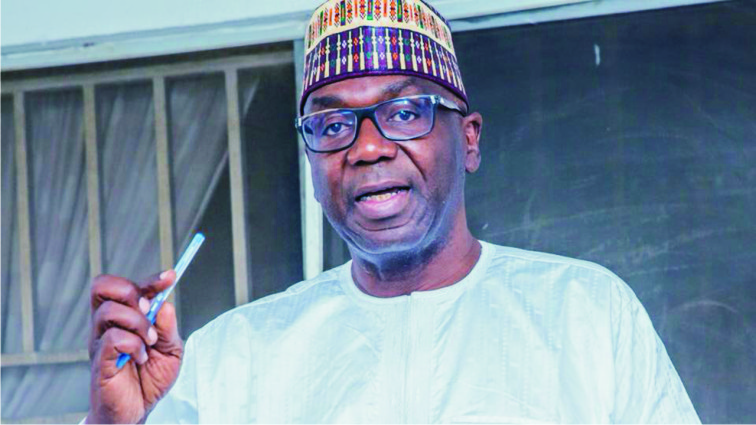
Kwara State Governor, Abdul Rahman Abdul Razaq has forwarded the names of four women to the State House of Assembly as commissioner-nominees, including a 26-year-old Joana Nnazua Kolo from Edu Local Government Area of the state.
Rafiu Ajakaye, Chief Press Secretary to the Governor, made the announcement in a statement yesterday afternoon.
Abdul Razaq also nominated a former Managing Director and Chief Executive Officer of the FBN Mortgages Limited, a subsidiary of the First Bank, Mrs. Folashade Omoniyi, as the new Chairperson of the Kwara State Internal Revenue Service (KW-IRS). She would succeed Prof. Murtala Awodun whose tenure expires soon.
Omoniyi, who holds a bachelor of engineering from the University of Ilorin and Masters of Business Administration from Obafemi Awolowo University, has many years of leadership experience in the banking sector, marketing, information communication technology, and business management.
She has executive education in positive leadership from Michigan Ross Executive Education (USA); Market Driving Strategies from London Business School (UK); Strategic Uses of Information Technology from Stanford Business School (USA); and Senior Management Programme (SMP18) from the Lagos Business School (Nigeria).
Omoniyi is from Irepodun local government area of the state.
Miss Kolo, the youngest commissioner-nominee in the state’s history, is a 2018 graduate of Library Science from the Kwara State University (KWASU). A grassroots mobiliser, Miss Kolo is an ardent advocate of community development.
If confirmed, she would be Nigeria’s youngest commissioner, taking the trophy from Oyo State’s 27-year-old Oluwaseun Fakorede.
Miss Kolo is still participating in the National Youth Service Corps (NYSC)programme in Jigawa, where she is teaching at Model Boarding Junior Secondary School Guri. Her screening for the cabinet seat would hold after she rounds off her NYSC service in the next two weeks.
The three other nominees are professionals and grassroots politicians: Mrs Sa’adatu Modibbo-Kawu; Arinola Fatimoh Lawal; and Aisha Ahman Pategi, according to a correspondence Abdul Razaq forwarded to the House and read at the Tuesday plenary by the Speaker, Rt. Honourable Salihu Yakubu Danladi.
A 1997 graduate of Economics from the Usmanu Danfodiyo University Sokoto, Mrs Modibbo-Kawu also holds a Masters in Business Administration from the University of Ilorin and various certificates from Penn Foster Career School Scranton in the United States and Metropolitan School of Business and Management in Dubai, United Arab Emirates. A member of several professional bodies like the Institute of Chartered Economists of Nigeria and Nigeria Institute of Management, she is a co-founder of a number of schools and learning centres.
She is married to the Director General of the National Broadcasting Commission, Ishaq Modibbo-Kawu and would be representing Ilorin South in the cabinet if her nomination scales through the House of Assembly.
Arinola Fatimoh Lawal, a 1993 graduate of Catering and Hotel Management from the Kwara State Polytechnic, is a top-rated player in Nigeria’s hospitality industry with experience as chief executive officer of several firms including Batool Nigeria Limited, Mohbalamira Nigeria Limited and MirMira Enterprise.
Hajia Lawal, who was a member of the Kwara State Transition Committee in 2019, is a daughter of former Kwara State Governor Mohammed Lawal from Ilorin East local government. Her skills cover project management, tourism and hospitality, change management, and Risk Management. A grassroots mobiliser with effective leadership skills and emotional intelligence, the nominee is a chieftain of the All Progressives Congress in Kwara State.
A scion of one of Kwara’s oldest political families, nominee Aisha Ahman-Pategi is a professional business manager with over 20 years’ experience in communication strategy, investment/financial consulting, and marketing and motivational leadership. She is a serial entrepreneur known for a contagious passion for excellence and innovation with great resource skills in research, government and relations.
Ms Ahman-Pategi was educated at the School of Remedial Studies and FASS-International Relations in Ahmadu Bello University, Zaria, Kaduna State in 1996; Agent and Broker License Barney Fletcher School, in Atlanta GA, USA in 2004; Capstone Institute of Mortgage Finance, also in Atlanta in 2006; Stanford University, Stanford California where she obtained a certificate in Political Science (Data Analysis) in 2013; Bachelor of Art – Mass Communication from Oklahoma City University, Oklahoma; and MBA Business Administration from American Inter-Continental University, Dunwoody GA.
Aisha was Sales Manager for J&S Auto Sales Decatur, GA 30082 before founding A-Line Realty SMYRNA, GA 30082 in 2004 as the President and Managing Broker. The agency serves more than 300 clients by providing financial planning, asset management, commercial and residential real estate transactions.


The Rivers State Government has commended the Church of Nigeria (Anglican Communion) for its outstanding contributions to the development of Rivers State, particularly in the areas of peacebuilding, education, healthcare, and moral development.
Governor of Rivers State, Siminalayi Fubara, stated that the Church has remained a dependable partner in promoting peace, unity, justice, moral discipline, and social harmony across society.
The Governor, who was represented by the Secretary to the State Government, Dr. Dagogo Wokoma, made the remarks during the thanksgiving service marking the 30th Anniversary and First Session of the 11th Synod of the Diocese of Niger Delta North, held at St. Peter’s Anglican Church on Sunday.
Governor Fubara described the Synod’s theme, “Kingdom Advancement: The Priority of Every Believer,” as timely and relevant, considering the prevailing realities in society.
According to him, the Church continues to play a vital role in shaping societal values and inspiring hope among citizens.
“The Church remains a vital partner in promoting peace, unity, justice, and moral discipline. Its role in shaping values and inspiring hope cannot be overemphasized,” he stated.
The Governor further acknowledged the Anglican Communion’s contributions in education, healthcare delivery, youth empowerment, humanitarian services, and spiritual guidance across communities in Rivers State.
“The Rivers State Government appreciates the invaluable contributions of the Anglican Communion in education, healthcare, youth development, humanitarian support, and spiritual guidance. Your impact across communities in Rivers State continues to strengthen families and promote peaceful coexistence among our people,” he added.
Governor Fubara reaffirmed his administration’s commitment to building a peaceful, united, and prosperous Rivers State where all citizens can thrive irrespective of religion, ethnicity, or social background.
He also urged the Synod to continue praying for sustainable development and progress in Rivers State and Nigeria at large.
Earlier in his sermon, the Guest Minister, Joseph Olushola, spoke on the topic, “Kingdom Investment and Internal Rewards,” urging Christians to remain faithful stewards of God’s blessings and committed to advancing God’s kingdom through service and generosity.
The cleric emphasized that believers are custodians of the virtues and resources entrusted to them by God, stressing that divine rewards are based on faithfulness and impact rather than material possessions.
The Shell Nigeria Gas Limited, in partnership with the Manufacturers Association of Nigeria (MAN), has reaffirmed support for efforts to expand gas distribution infrastructure in Rivers State as part of initiatives aimed at improving access to affordable, cleaner and more reliable energy for industries across the South-South region.
The commitment was highlighted during the SNG–MAN Business Forum held in Port Harcourt, where stakeholders from the industrial and public sectors examined the role of natural gas in driving industrialisation, boosting local production and strengthening energy security.
Speaking at the forum on behalf of the Managing Director of Shell Nigeria Gas Limited, the company’s Head of Gas Distribution, Mr. Chukwuka Amos Ejesi, described natural gas as a critical component of Nigeria’s energy mix and a key driver of sustainable industrial growth.
According to him, Nigeria’s gas development agenda has reached a stage where policy direction must be matched with practical implementation capable of addressing the energy challenges confronting manufacturers.
He noted that pipeline gas offers industries a cleaner, more dependable and cost-effective energy alternative capable of supporting uninterrupted operations, reducing emissions and improving production efficiency.
“Gas is the backbone of manufacturing, and we are encouraged by the growing recognition among stakeholders of the need for cleaner and more reliable energy solutions,” he said.
Ejesi stressed the need for sustained collaboration among energy providers, government institutions and industrial stakeholders to maximise the country’s gas resources for economic development.
He added that improved gas infrastructure would strengthen manufacturing value chains, enhance productivity and promote more competitive industrial operations across Rivers State and the wider South-South region.
Participants at the forum also emphasised the importance of expanding energy infrastructure as a pathway to unlocking industrial capacity, reducing operating costs and promoting sustainable industrial development.
Representing Governor Siminalayi Fubara, the Director-General of the Rivers State Investment Promotion Agency, Dr. Chamberlain Peterside, reaffirmed the state government’s commitment to partnering with private sector investors to revitalise industrial activities in the state.
He identified key projects targeted under the initiative to include the revival of the Ahoada Industrial Park, the New Port City project and the proposed Bonny Industrial Park, all aimed at stimulating economic growth and expanding industrial opportunities along the Bonny corridor.
According to the governor, the long-term vision is to position Rivers State as a leading manufacturing hub in Southern Nigeria through strategic public-private partnerships.
Governor Fubara also commended Shell Nigeria Gas and MAN for sustaining engagements geared towards improving industrial energy access, noting that gas infrastructure development remains central to the state’s economic recovery plans.
He further observed that the gas sector presents enormous opportunities for economic growth, especially as global energy systems continue to shift towards cleaner energy sources.
The governor called on stakeholders to work collectively towards developing a practical and sustainable gas framework capable of supporting the state’s industrial and energy development objectives.
By; Kevin Nengia
Rivers State Deputy Governor, Prof. Ngozi Nma Odu, has charged newlywed couples to build their marriages on the virtues of love and submission as taught in the Word of God.
Prof. Odu gave the charge at the wedding ceremony of Amblessed Favour Sunny-Cookey and Samson Jesuganji at Lifegate Power Ministries, Dominion Cathedral, in Port Harcourt on Saturday, 16th May 2026.
The Deputy Governor congratulated the couple on beginning a new phase of life together and prayed for God’s blessings upon their union, noting that the couple had been raised by godly parents and encouraged them to uphold the Christian values instilled in them.
Referring to the sermon delivered during the ceremony, Prof. Odu emphasized that the principles of love and submission remain fundamental to a successful marriage.
According to her, genuine love reflects the nature of God, stressing that love should remain the foundation of the couple’s relationship as they journey through life together.
Prof. Odu further prayed for enduring peace, happiness, and progress in the home, expressing confidence that the marriage would continue to flourish under God’s guidance.
The Deputy Governor also commended the families of the couple for their support and upbringing, while urging the newlyweds to always remember the significance of the day and the commitment they had made before God and witnesses.
In his sermon at the wedding, the Founder and Presiding Pastor of Salvation Ministries, Pastor David Ibiyeomie, stated that marriage did not originate from Western culture, traditions, or human ideas, but from God, whom he described as the “manufacturer” of marriage.
According to the cleric, couples seeking lasting and peaceful homes must rely on biblical principles rather than societal trends or assumptions.
He explained that many marital crises and rising divorce rates stem from ignorance and failure to apply scriptural teachings in family life.
Drawing from the biblical parable of building a house on a rock, Pastor Ibiyeomie said the Word of God remains the only solid foundation capable of sustaining marriages through challenges and difficult times.
He noted that marriage naturally comes with unexpected realities and pressures, stressing that religious ceremonies or cultural practices alone are not enough to sustain a home without proper understanding of God’s instructions.
The pastor further warned that ignorance of scripture remains one of the greatest weapons against believers, urging Christians to study and practice the Word of God rather than merely attending church services.
It would be recalled that the bride is the daughter of Pastor Sunny Cookey the Founder and Presiding Pastor of Lifegate Ministries. The Ceremony had lots of Ministers in attendance which includes Apostle Zilly Aggrey, Pastor George Izunwa, and Bishop Winston Iwo
-

 Editorial4 days ago
Enough Of Xenophobic Attacks On Nigerians
-

 Education4 days ago
UNIPort Senate Grants Two-Year Amnesty to U2010–U2018 Students
-

 Sports4 days ago
Oparaodu Urges Rivers United To Win Katsina United
-

 Nation4 days ago
RSU, Otonti Nduka Foundation Holds Centenary Conference, Unveil Book on Values in Nigeria
-

 Oil & Energy4 days ago
Rivers PETROAN Elects 12-Member Executive
-
Politics4 days ago
APC Group Protests Ex–Presidential Aspirant’s Disqualification From Rivers Senatorial Race
-

 Sports4 days ago
” Nigeria’s best domestic players are not in NPFL”
-
Politics4 days ago
Reps Speaker Secures APC Return Ticket For Fifth Term