
News
10 States, FCT Have 8m Out-Of-School Children -UNICEF

Ten states of the federation and the Federal Capital Territory are home to about eight million out-of-school children, the United Nations Children’s Fund (UNICEF) has disclosed.
UNICEF, in a statement by its Communications Specialist, Mr Geoffery Njoku, yesterday, said about 2,000 youth across the ten states and Abuja presented petitions to their governors, parliamentarians, policy makers and other influential persons in a mass effort to draw attention to the need to act on commitments to increasing access to safe, quality education for all children, especially girls.
The statement noted that the mass action which occurred, yesterday with the support of UNICEF, comes as the world celebrates the Day of the African Child, commemorating the day in 1976 that hundreds of students were shot in Soweto, South Africa, while demonstrating for their right to quality education.
“The 10 states where the mass actions are taking place are, Bauchi, Niger, Katsina, Kano, Sokoto, Zamfara, Kebbi, Gombe, Adamawa, Taraba and the FCT, have about eight million children not in school and, an average enrolment rate of only 57 per cent.
“The Nigerian campaign for access to quality education will hold the newly-elected government officials at all levels accountable for their campaign promises to provide equitable access to free, safe and quality education for every child, especially the girl child, in Nigeria.
“The global theme for this year’s Day of the African child is child rights in all situations, including during humanitarian crises,” the statement read.
According to the fund, over 10.5 million children are unable to access safe and quality education in Nigeria today because of the ongoing crisis in the north-east, which has left schools destroyed, adding that teachers were unavailable, and parents were terrified to send their children to school due to insecurity.
The statement quoted UNICEF’s Representative in Nigeria, Peter Kawkins, as saying: “Schools should be a safe place for children – one in which they can get a quality education that will put them on the path to a secure future,”.
“Sadly, the demand for quality education by children in Soweto, South Africa in 1976, is still valid today, in too many countries around the world. The youth actions we are seeing today across several states is a wakeup call for leaders to act on their commitments to provide quality education for all children, in all situations.”
“The engagement seeks to secure commitments from national and state governments to prioritise children’s rights to education in their governance agenda, including through budgeting, in their states and at the national level.
“This engagement creates an opportunity for Nigerian youth to advocate to policy and decision makers and urge them to commit resources to education, without which the substantial number of out-of-school children in Nigeria will not be reduced.
The fund noted that the mass action is calling for improved school infrastructure, a massive enrolment campaign to bring all children to school, and targeted investments to ensure an uninterrupted 12 years of schooling for girls.
“In addition, it hopes to extract a commitment for a 10% increase in budgetary allocation and release of funds for education, with 50 percent of the total budget to basic education, recruitment, deployment and provision of incentives for 1000 female teachers per year and recruitment and deployment of 1000 qualified teachers per year, especially to rural areas, where they are most needed”.
UNICEF further disclosed that the action comes as the world celebrates the 30th anniversary of the Convention on the Rights of the Child (CRC).
“The Convention is the most widely-ratified human rights treaty in history, and stipulates that every child has the right to education. It has helped to transform children’s lives; inspiring legislative changes to protect children and enabling them to participate actively in their societies. Nigeria ratified the CRC in 1991.
“As part of the commemoration, UNICEF has released a “Passport to Your Rights” – a copy of the CRC in child-friendly language, in pocket format. UNICEF aims that every child in Nigeria has a copy by 2030 – the deadline for achievement of the Sustainable Development Goals.
“The CRC ‘passport’ is also available in Hausa, Igbo, Yoruba and Pidgin languages, helping to ensure access by millions of Nigerians,” it said.
Meanwhile, the United Nations High Commission for Refugees (UNHCR) has said that no fewer than 25 million refuges across the world travel two billion kilometres yearly to get to their first point of safety.
The Head of Sub-office of UNHCR in Cross River, Mr Mulugeta Zewdie, disclosed this, yesterday, during a one kilometre walk in collaboration with Cross River State Emergency Management Agency and other partners in solidarity with the suffering refugees around the world.
The walk, which took place yesterday at Ogoja local government area of Cross River, had the theme, “Step with refugees”, while banners with the inscription such as ‘I stand with refugees’ were displayed.
Zewdie said that it was in view of the trekking that UNHCR announced a new global campaign, calling on people all over the world to cover the distance traveled by refugees every year.
According to him, UNHCR traced the journeys of refugees around the world and calculated that collectively, people forced to flee travel very far every year to reach the first point of safety.
He recalled that in 2016, Kenyan refugees traveled 240 kilometres to reach Turkey, while South Sudan refugees traveled more than 640 kilometres to reach Kenya and Rohingya refuges in Myanmar traveled approximately 80 kilometres to reach Bangladesh.
Zewdie explained that the walk was held in Ogoja because the local government hosted the highest number of Cameroonian refugees in Cross River.
“These acts, when taken together acknowledge the resilience and strength of refugees,’’ he said.
Also, the Acting Director-General of SEMA, Mr Princewill Ayim, said the one kilometre walk was held in solidarity with the long distance trekking undertaken by refugees in search for safety in other countries.
Ayim added that most refugees were displaced as a result of violence or crises which had driven them from their ancestral homes.
He said that Cross River State was currently hosting over 27,000 refugees, adding that the state was among those hosting the largest number of refugees in the world.


Rivers State Deputy Governor, Prof. Ngozi Odu, has called for renewed commitment, transparency, and collaboration among stakeholders in the health sector in the State.
The deputy governor particularly urged synergy between the Rivers State Contributory Health Protection Programme (RIVCHPP) and the Primary Health Care Management Board towards improved healthcare delivery in the State.
?Prof. Odu made this call during the 2026 First Quarter Review Meeting of the Task Force on Primary Health Care at the Government House, Port Harcourt, on Wednesday.
?She stressed the importance of honesty and urged all parties to be truthful and open in addressing challenges within the system.
?According to her, transparency remains critical to identifying and resolving underlying issues affecting healthcare delivery, noting that “if we are not truthful, we will not cure the disease, but merely cover it up.”
The deputy governor recounted a personal experience at a Primary Health Center where a patient, despite being duly registered under the RIVCIPP scheme with completed biometric capture, was still asked to make payment for services.
According to her, intervention by relevant authorities later confirmed the patient’s eligibility, exposing a communication gap between the scheme and healthcare providers.
Odu warned that such incidents could discourage community members from enrolling in the scheme, thereby undermining its objectives.
“When this happens, we are disenfranchising our people. The message that goes back to the community is that even when you register, you are still made to pay,” she stressed.
?While commending the leadership and staff of the Primary Health Care Management Board, Ministry of Health, Development Partners as well as other supporting units, for their efforts, ty deputy governor stressed that performance should not lead to complacency.
She urged stakeholders to continuously strive for improvement, raise standards, and leave lasting positive impacts within the system.
?
?
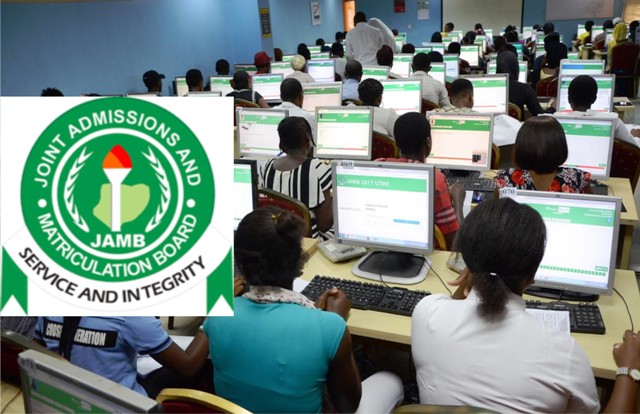
The Joint Admissions and Matriculation Board (JAMB) has announced the opening of examination slip printing for candidates registered for the 2026 Unified Tertiary Matriculation Examination (UTME).
JAMB made the announcement yesterday, urging candidates to visit its website to download their slips ahead of the examination.
“Examination Slip Printing is now available. The slip contains details of the venue, date and time of your examination and gives you access to the examination hall,” the board said.
Candidates are to visit jamb.gov.ng and click on “2026 Slip Printing” to print their slips.
The development comes after JAMB dismissed a viral press release falsely claiming the examination had been postponed.
The board described the notice as “malicious and fake” and urged candidates to disregard it.
The 2026 UTME is scheduled to hold from Thursday, April 16, to Saturday, April 25, 2026.
The examination follows a mock test conducted on Saturday, March 28, which recorded technical difficulties at some Computer-Based Test centres.
Of the 224,597 candidates who registered for the mock, 152,586 sat for the test across 989 CBT centres nationwide.
JAMB said over 20 centres were delisted for technical inadequacies.
The board also warned candidates against fraudsters on WhatsApp claiming to facilitate score inflation, describing such claims as “false and criminal”, and threatening cancellation of registration or withholding of results for any candidate found involved.
Over two million candidates, according to JAMB Registrar, Prof. Ishaq Oloyede, registered for this year’s UTME.
News
RSU Unveils Five-Year Strategic Dev Plan …Calls For Collective Commitment To Institutional Excellence


In a decisive step towards redefining its future, the Rivers State University, Port Harcourt, has formally unveiled its Third Five-Year (2026-2030) Strategic Development Plan.
The development plan is a comprehensive roadmap designed to strengthen the university’s position as a leading institution in Nigeria and beyond.
The unveiling took place during a high-level engagement with the Governing Council, Principal Officers and the university congregation, at the Convocation Arena, recently.
Delivering his remarks at the unveiling ceremony, the Pro-Chancellor of the university and Chairman of Council, Hon. Okey Wali, SAN, charged all members of the university community to align their activities with the strategic direction of the institution, emphasizing that the success of the plan depends on collective commitment.
He noted that the plan is not merely a document, but a working framework that requires discipline, accountability and unity of purpose.
According to the Pro-Chancellor, only through coordinated efforts from all stakeholders can the university fully realize its vision.
“I hereby invite the Visitor to the University, donor agencies, friends and well-wishers, and all stakeholders to support and fund the implementation of this strategic plan. We are confident that this plan will take RSU to greater heights in the comity of higher institutions,” he said.
The Vice-Chancellor of the University, Prof. Isaac Zeb-Obipi, described the Strategic Development Plan as a document that would enhance the university’s corporate strengths, mitigate current weaknesses, leverage its corporate opportunities and address perceived existential threats.
“This Five-Year Strategic Plan sets out RSU’s goals, strategic objectives, expected outcomes and impact, including intervention strategies,” he said.
On his part, the Chairman of the Strategic Development Planning Committee, Prof. Emeritus Joseph A. Ajienka, noted that the 2026-2030 Strategic Development Plan represents a bold reaffirmation of the university’s founding ideals of excellence, creativity, innovation and inclusivity, aimed at positioning the institution to respond effectively to contemporary challenges in higher education.
Prof. Ajienka, who is also a member of the Governing Council, disclosed that the plan was developed through an extensive and inclusive consultative process, which he said reflects contributions from Faculties, Departments, Satellite Campuses and Administrative Units.
At its core, the plan seeks to advance the university’s vision of becoming a “unique and uncommon” institution that is structurally and philosophically oriented towards solving practical societal problems and ranking among the top ten universities in Nigeria.
The strategic framework identifies six key challenges confronting the university, including funding constraints, infrastructure deficits, limited research collaboration, and service delivery inefficiencies.
A statement by the university’s Acting Director, Corporate Affairs, Victor G. Banigo, further stated that the university has articulated four broad strategic goals supported by eight targeted objectives.
A central priority of the plan, according to him, is the strengthening of governance and administrative systems, alongside deliberate efforts to expand the university’s funding base. Others include enhanced alumni engagement, strategic partnerships and innovative fundraising initiatives aimed at ensuring long-term financial sustainability.
“Equally significant is the commitment to upgrading physical infrastructure across all campuses. Plans are underway to modernize lecture halls and laboratories, expand student accommodation, improve campus security and deploy advanced ICT systems to support teaching, learning and research.
“Recognizing that human capital is the backbone of institutional success, the university has placed strong emphasis on staff development, recruitment and productivity enhancement. Through targeted training programmes, mentorship initiatives and performance management systems, the plan aims to foster a highly skilled and motivated workforce.
“In addition, the university is poised to deepen its focus on research, innovation and entrepreneurship. By reviewing academic curricula, strengthening industry partnerships and establishing innovation incubation centers, Rivers State University seeks to translate research outputs into practical solutions that address societal needs and drive economic growth,” he said.
The PRO disclosed that the implementation of the strategic plan is projected at ?110 billion, reflecting the scale of transformation envisioned.
“While the university is committed to funding a significant portion internally, additional resources will be mobilized through government support, donor agencies, alumni contributions, and public-private partnerships.
“This multi-channel funding strategy aligns with the university’s broader goal of building a resilient and self-sustaining financial model capable of supporting long-term development,” he explained.
To ensure effective implementation, he said, “the plan incorporates a comprehensive monitoring and evaluation framework, complete with performance and impact indicators. A mid-term review is scheduled within the first two years to assess progress and make necessary adjustments.
“Furthermore, the establishment of a dedicated Strategic Planning Office will provide oversight, coordination and accountability in executing the plan across all units of the university.”
According to the statement, “As the university embarks on this transformative journey, the message from leadership is clear: the Strategic Development Plan is a collective mandate.
“For staff, students, alumni and stakeholders, it represents an opportunity to contribute meaningfully to the growth and advancement of the institution. For the university, it is a pathway to consolidating its legacy while embracing innovation and global relevance.
“With a clear vision, defined priorities and a united community, Rivers State University stands poised to translate this strategic blueprint into measurable progress, advancing knowledge, empowering people and shaping the future of higher education in Nigeria.”
-

 Editorial2 days ago
Domesticate FG’s Exit Benefit Scheme
-

 News2 days ago
RSU Unveils Five-Year Strategic Dev Plan …Calls For Collective Commitment To Institutional Excellence
-

 News2 days ago
DHQ Confirms Deaths Of Terrorists, Soldiers In Borno Attack
-

 News2 days ago
Tinubu Commissions Bayelsa Gas Turbine, Other Projects Today
-
Rivers2 days ago
Dep Gov Seeks Collaboration, Transparency Between RIVCHPP, PHCMB
-
Business2 days ago
Niger Delta Investment Summit Targets $5bn Inflows, 500,000 Jobs
-
Nation2 days ago
Rumuji Youth Leader Condemns Protest, Disowns Alleged Government Empowerment Claim
-

 Nation2 days ago
Haniel Jack Foundation Awards Five Rivers Indigenes Scholarship