
Sports
Basketball Excels Amidst Crisis

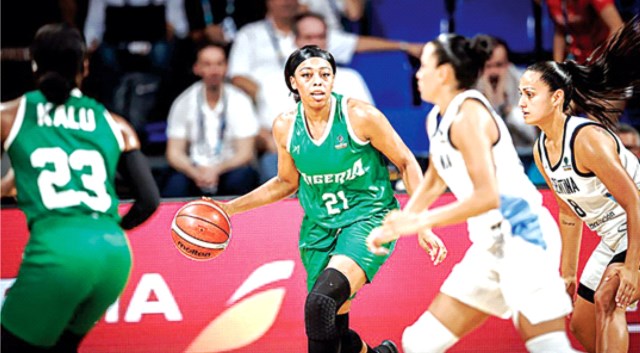
Despite the leadership crisis that engulfed Nigeria Basketball Federation (NBBF) after the elections that held in June 2017, the country still excelled in the year under review.
The basketball family was fractionalized because of Tijani Umar’s refusal to acknowledge the result of the election that held in Abuja, a day after he organized an orchestrated election in Kano that returned him to power.
With the Sports Ministry and the Nigeria Olympic Committee recognizing the Abuja election, all the shenanigans at the instance of Umar faction fell flat when FIBA acknowledged in a letter affirming the Abuja election won by Musa Kida.
The letter affirmation letter became inevitable when the NOC electoral committee contented that none of the factions would be recognized at the NOC election that held last week in Yola.
FIBA in a letter dated December 18, 2018 and addressed to the Secretary General of the Nigeria Olympics Committee (NOC), Chief Tunde Popoola, who had written FIBA on the need to name the “eligible representative of the NBBF, who will be at the NOC elective Annual General Meeting (AGM) and to vote” in Yola, Adamawa State.
FIBA Secretary General, Andreas Zaglis, replied, “FIBA has communicated with the board of Kida concerning the affairs of the NBBF since July 2017 and has organized FIBA events with the same board’s assistance.
“Besides, FIBA notes that good progress is being made in regularizing fully the NBBF-FIBA relationship, which remains an internal matter of the basketball family, since the NBBF is not suspended and enjoy full rights as a member,” FIBA continued.
FIBA explained that having earlier received a letter from the NOC recognizing the board elected on the 13th of June 2017 in Abuja and the recent memo of the Federal Ministry of Youth Sports Development revalidating Kida and his board, the international body has deemed it fit to accord the board all the necessary recognition.
The latest letter, put paid to insinuations in different quarters over who is in charge of basketball administration in Nigeria expressly named Kida who recently bagged a Doctorate Degree in Credit Management as president.
The letter granting Kida (or a validly nominated delegate of his) therefore nullified the earlier erroneous pronouncement of the NOC electoral committee chaired by Alhaji Ibrahim Galadima that no board had been recognized by FIBA as the legitimate basketball federation.
With FIBA’s position clearly stated on who is in charge of basketball administration in Nigeria, Musa Kida called on all basketball stakeholders to join hands and contribute meaningfully to basketball growth.
He said despite the recent landmark achievements recorded by the board since its assumption of office, more ground could have been covered especially at the home front if not the incessant distractions.
The year began with the Commonwealth Basketball event in Australia. A home based team represented the country at the Commonwealth losing all games as expected. The team finished the competition with four straight losses. D’Tigers scored 248 points but conceded 355; with the team’s captain, Ikechukwu Diogu, posting 84 points. Nigeria however placed sixth at the end of the Games.
However, Kida desired to take the game to the next level ensured that the team got all the support needed in their bid to qualify for the 2019 FIBA World Cup in China.
D’Tigers became the first Africa team to qualify for the FIBA Men’s World Cup after winning their first two qualifying tournaments in style.
However, D’t igress participation at the FIBA Women’s Championship was the icing in the cake in a year the country recorded excellent successes internationally.
At the Women’s World Cup, Nigeria became the first African team reached the quarterfinal of any FIBA tournament and were also the first African team to win more than one game in a single World Cup tournament.
Before the tournament, D’Tigress ranked 34th now emerged as the 2nd best team in Africa, replacing Angola.
Head Coach, Hughley Otis Jr. guided the team to a record of 3-4; including straight wins over Turkey, Argentina and Greece.
D’Tigress progress did not go unnoticed by FIBA president, Horacio Muratore.
In an interview granted to the official FIBA blog, Muratore spoke among others, on the performance of Nigeria and Senegal, paying glowing tributes to the D’Tigress, especially.
“One of the best story lines of this Women’s World Cup without a doubt will be that Africa proved it has some very good teams in Nigeria and Senegal.
“These are teams that can play against anyone and I congratulate both of them for their campaigns.
“Senegal had a historic win (against Latvia) and a great game against Spain (in quarterfinal qualifications). They made the tournament hosts tremble a bit. It would have been amazing for both African teams to reach the quarterfinals.
“Nigeria outplayed the USA – the reigning world champions – in the first half of their quarterfinal and got wins over Turkey, Argentina and Greece.
“This is extremely positive for African basketball and for the sport in general.”
At the club level, Rivers Hoopers, Nigeria champions, described the year as the best ever in the history of the club.
Hoopers for the first time won the FIBA Africa Zone 3 Championship early in December in Cotonou finishing with a 5-0 record.
Looking back on 2018, Ifie Ozaka, General Manager of the club labelled it a bitter-sweet experience for the Zone 3 Champions who played only two games all year, before the competition in Cotonou.
“I will describe 2018 as turbulent for the team. We didn’t play any competitive basketball till November where we had only two competitive matches, which qualified us for the FIBA qualifiers in Zone 3. From the turbulence of 2018 we are ending the season on a high. A turbulent season turned out to be our best season and highest point ever in the history of the club.”
Ozaka continued, “Playing a long league where players have to play many matches, where players get more allowances, where the fans of the team come out and watch the team play week in, week out that’s what I would have loved to do this season.
“Not playing a long league and not just the Kwese league wasn’t too good for my team and also fans of basketball in Port Harcourt.”
“I was very impressed with my boys. At the beginning of 2018 when we went out to recruit the couple of players we wanted I think we made very good choices in the transfer market.
“The players we brought in filled the gaps properly. I told them it’s been a long time I had a bunch of talented young men together as a team. A team I believe that can hold their own against any team in Nigeria so I was very impressed with their play judging that they have not had a long time together.
“They played a lot of physical sides and I say kudos to them and if we can keep them together for another season I am sure they will go on to do great things.”
Tonye Orabere


Pics 1: Fencing in action.
President of the Nigeria Fencing Federation, Adeyinka Samuel, has said the country will host a unique 2026 Commonwealth Fencing Championships as the first sub-Saharan nation to stage the tournament, Tidesports source reports.
The championship will be held in Lagos from August 9 to 14, with the federation announcing that Rugby School Nigeria will host the event.
The Commonwealth Fencing Federation formally awarded the hosting rights for the 2026 championships to Nigeria in March 2025.
“It is the third international tournament the country will host, having also become the first to stage a junior épée World Cup, which was held in Lagos in December 2024. Nigeria also hosted the 23rd African Fencing Championships last year.
Nigeria’s hosting will be unique in several ways. First, it will be the inaugural edition on African soil, giving it historic significance. Second, we are integrating development initiatives such as an international training camp to foster technical exchange. Finally, the event will showcase African hospitality, culture, and energy, offering athletes a rich experience beyond the competition,” Samuel said on Wednesday.
“Preparations have advanced steadily across competition planning, venue readiness, logistics, athlete services, and partnerships.”
He also noted that over 24 Commonwealth nations have already registered.
“We are organising a pre-championship international training camp in Lagos to unite athletes ahead of the competition. Everything is moving in the right direction, and our focus is on delivering a world-class event that reflects Nigeria’s ability to host major international tournaments.”
The last two tournaments hosted by Nigeria were held at Charterhouse Lagos, and Samuel explained the choice of Rugby School Nigeria for this championship.
“The venue was selected for its modern, state-of-the-art facilities and its proximity to hospitality, tourism, and entertainment hubs. This ensures athletes and officials will enjoy excellent accommodation, transport, and leisure options during their stay.”
While thanking the private sector for its support in organising the championship, the president also called for greater government intervention in the fast-growing sport.
“The private sector has shown encouraging support, with institutions like Rugby School Nigeria and companies such as Flour Mills of Nigeria backing the championships. However, stronger government involvement is needed. Hosting the 2026 Commonwealth Fencing Championships is a milestone achievement, and we believe institutional support will help Nigeria maximise the opportunity and deliver a truly memorable event.”
The final draw was concluded at CAF Headquarters in Cairo, Egypt, on Wednesday and posted on the body’s website.
Notably, hosts Morocco will face a North African showdown in Group A, drawn alongside Tunisia, Egypt, and Ethiopia.
Only the top two teams from each group will advance to the quarter-finals, making Group A particularly competitive.
Group B features former champions Côte d’Ivoire and Cameroon, alongside Uganda and debutants DR Congo.
In Group C, 2015 and 2017 champions and last year’s runners-up, Mali, will meet Angola, Mozambique, and Tanzania.
Group D is led by 2023 champions Senegal, who will face South Africa (2015 runners-up),
The eight quarter-finalists from the tournament will automatically qualify for the 2026 FIFA U-17 World Cup in Qatar.
The teams finishing third in each group will contest two play-off matches to determine the final two qualifiers, bringing the total number of African representatives at the global finals to ten nations.
2026 CAF U-17 Africa Cup of Nations – Groups:
- Group A: Morocco, Tunisia, Egypt, Ethiopia
- Group B: Côte d’Ivoire, Cameroon, Uganda, DR Congo
- Group C: Mali, Angola, Tanzania, Mozambique
- Group D: Senegal, South Africa, Algeria, Ghana
Tidesports source reports that Nigeria will not feature at the tournament for the second consecutive edition.
The Golden Eaglets suffered a 2-0 defeat to rivals Ghana in the semi-finals of the WAFU Zone B qualifiers in September 2025, dashing their hopes of advancing to the finals.
The Super Eagles of Nigeria will begin their title defence at the 2026 Unity Cup with a semi-final clash against Zimbabwe on May 26 at The Valley in South London, Tidesports source reports.
The four-nation tournament, which also features Jamaica and India, returns to its historic venue after the success of the 2025 edition in Brentford, where Nigeria emerged champions.
The competition, scheduled to run from May 26 to 30, blends elite football with cultural celebration, bringing together Afrocentric and global diaspora communities.
Nigeria’s opening fixture against Zimbabwe serves as a rematch of their recent encounters in the 2026 FIFA World Cup qualifiers, setting the stage for a highly competitive contest.
The winner will progress to the final on May 30, while the second semi-final between Jamaica and India will be played a day later.
President of the Nigeria Football Federation, Ibrahim Gusau, expressed confidence in the Super Eagles’ chances while acknowledging the quality of the opposition.
“The Nigeria Football Federation is pleased with another opportunity to see the Super Eagles compete at the highly exciting and entertaining Unity Cup Tournament,” Gusau said.
“As perennial champions, the Super Eagles will look to retain their title again this summer, even as they will not underrate the other participating teams viz India, Jamaica and Zimbabwe. The tournament promises to be explosive and that is the setting in which the Super Eagles thrive best.”
The Unity Cup will culminate in a finals day featuring both the third-place play-off and the final, alongside a festival atmosphere that includes cultural showcases, food exhibitions, and live performances.
Zimbabwe Football Association president Nqobile Magwizi described his nation’s participation as a landmark moment, highlighting the opportunity to compete on an international stage in England for the first time.
“The Unity Cup represents far more than a celebration of football and culture, it is a powerful platform that reflects Zimbabwe football’s growing ambition to compete, perform, and excel on the global stage,” Magwizi said.
With Nigeria seeking to retain their crown and rivals eager to make their mark, the opening clash against Zimbabwe is expected to set the tone for what promises to be a fiercely contested and culturally vibrant tournament.
-
 Editorial4 days ago
Domesticate FG’s Exit Benefit Scheme
-

 News4 days ago
RSU Unveils Five-Year Strategic Dev Plan …Calls For Collective Commitment To Institutional Excellence
-
 News4 days ago
DHQ Confirms Deaths Of Terrorists, Soldiers In Borno Attack
-

 News4 days ago
Tinubu Commissions Bayelsa Gas Turbine, Other Projects Today
-
Business4 days ago
Niger Delta Investment Summit Targets $5bn Inflows, 500,000 Jobs
-
Sports4 days ago
Full Draw For 2026 U-17 AFCON
-
Nation4 days ago
Rumuji Youth Leader Condemns Protest, Disowns Alleged Government Empowerment Claim
-

 Nation4 days ago
Haniel Jack Foundation Awards Five Rivers Indigenes Scholarship