
Sports
Giwa, NFF: Greed Or Love For The Game?

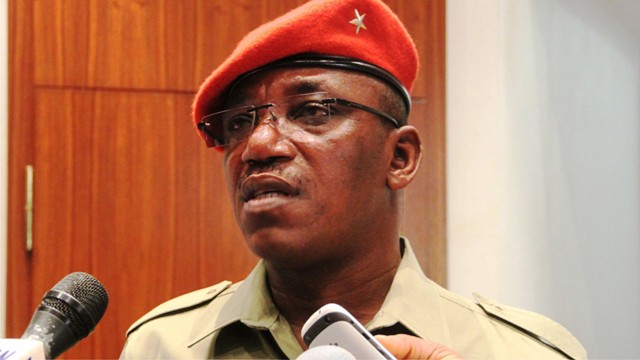
On the morning of Monday, July 2, 2018, Nigerians arose to the news of Ambassador Christopher Giwa, the supposed factional President of Nigeria Football Federation (NFF), control of the glass house.
He relied on the Supreme Court ruling of April 27, 2018, which allegedly set aside the election of the Amaju Pinnick board of the NFF of September 30, 2014, stormed the football secretariat with policemen, claiming the end of the Pinnick-led board, and the birth of a new era.
“I am here to claim my mandate as the substantive chairman elected on August 26, 2014. We waited for the other board to finish the preparations for World Cup so that we can assume office. For four years I fought this battle, I went the extra mile to get justice. This is to tell you I am particular about the development of football in Nigeria. You have nothing to fear because I am not here to witch-hunt anybody but to make sure Nigerian football moves forward”, he was quoted as saying.
Ambassador Giwa is a man having many ambitions on several positions. He was popularly quoted as being a “politician par excellence and sports administrator of high repute” having overseen the birth and eventual rise of his club, Giwa FC since its inception in 2012. He is a man highly regarded as an intense politician by many in his state, Plateau.
In 2011, he contested the governorship election of Plateau State under the umbrella of the former Action Congress of Nigeria (ACN) but was defeated in the party primaries. The fact that he was defeated did not deter him from expressing his ambition contesting again in 2013 for the Plateau North Secretarial seat under the same political party which he lost.
It will be recalled that Giwa was made chairman of Mighty Jets Football Club of Jos, in the late 1990’s. He also served as the chairman of Plateau United before going into full time politics in his state.
On August 26, 2014 he was elected as the president of the NFF in an election that was seen as not official since it was only 29 out of the 44 members that protest in the process which he ended up defeating the former NFF vice president Mike Umeh, and the election was endorsed by the then Sports Minister, Tammy Danagogo.
Meanwhile, another election was conducted by the Maigari-led board in Warri about a month later in which Amaju Pinnick won and this was supposedly given the thumbs up by the former president of the World Football governing body FIFA, Sepp Blatter.
But the crux of the matter is that FIFA who control all football related matters in the world have before now confirmed the worldwide extension of five-year sanctions imposed by the NFF disciplinary committee on May 12, 2016 on Christopher Giwa, Muazu Suleyman, Yahaya Adamu, Sanni Ferma and Johnson Effiong for breaking the NFF statutes and the FIFA Code of Ethics.
The main issue for the ban of Giwa and the four others is that they took their dispute with federation to a civil court, knowing fully well that all football related issues are not allowed to be taken to a civil court but the Court of Arbitration for Sports.
So what is quite astonishing is the fact that someone who is banned and not recognised as an eligible candidate for any election is claiming a foothold on the football of the country.
According to Giwa, he was rightly elected on August 26, 2014 as the President of the NFF and in attendance were; chairman Senate Committee on Sports, Senator Obinna Ogba, board member representing North West, Shehu Adamu, also for the North East, Sanni Fermi and John Effiong for the South-South, while the duo of Sunday Ajayi and Yahaya Adamu representing South West and North Central respectively were also present. But according to FIFA the “purported election that allegedly brought Giwa to office was not even recognised by them since they approved the election of Amaju Pinnick.
Giwa in defence has said that he is fighting to become the number one person in Nigerian football because of his love for the game. But the fact remains that if he is really fighting for the “love” as he calls it for four years now, why not leave the Pinnick administration to complete it’s tenure since it’s just a few weeks to the proposed NFF elections to elect new officials and especially now that Nigerian football seems to be heading towards the right direction both on and off the pitch.
In April 2017, a oil company Aiteo Group signed a N2.5bn sponsorship deal with the NFF as it concerns the Federations Cup now known as the Aiteo Cup. In the same vein, a mega deal was also signed between the NFF and American sportswear company, Nike concerning the kits of the male and female national teams in the country. Another bumpeer deal was also done with Nigerian Breweries, maker of the official beverage of the National teams. Also not forgetting the contract signed on October 6, 2017, with Tropical General Investments (TGI), the parent body that produce Chivita and Hollandia yoghurt among others, making them the official food of the Eagles and also the $4m five year deal with coca-cola bottling company.
Nigeria have performed relatively well on many age grade competitions. Taking a look at the U-17 level, the country has not performed badly for the duration of this current NFF board, although there have been the never ending case of not having enough money to sponsor the different age grade teams to go for tournaments. This has also affected even the female national team, the Super Falcons who have seemingly not getting enough support as their male counterparts. The Super Eagles, who are like the pride of Nigeria football on terms of getting support, seem to also be on the rise since the appointment of Gernot Rohr as the coach. In terms of result, they performed fairly well in a quite difficult group in the just concluded FIFA World Cup.
The recent wrinkle in Nigerian football whereby the league ended in an abrupt manner was due to the deadline given by CAF for the submission of names of all companies that qualified from the different African leagues.
This can be traced to the struggle for power between Pinnick and Giwa that led to the delay in the commencement of the second phase of the league after it was suspended due to the world cup that came up in the months of June and July. This issue can also be traced to Giwa as it was as a result of his taking over the Glass House that the League Management Company (LMC) had to postpone the Nigerian professional football league indefinitely.
Although the administration of Amaju Pinnick has not been a bed of roses for Nigerian football, there have been a considerable rise when compared to when he, Pinnick, took over. This makes one wonder why someone like Amb. Chris Giwa wants to disrupt the work going on in different angles of Nigerian football, even though the Pinnick board has just a few days to the end of their tenure.
It leaves one wondering whether he is really doing all this for the “Love of the Game” or for personal interest, as all the issues of his involvement in Nigerian football has further plunged our football into crisis and making the nation a laughing stock in the eyes of the footballing world.


Pics 1: Fencing in action.
President of the Nigeria Fencing Federation, Adeyinka Samuel, has said the country will host a unique 2026 Commonwealth Fencing Championships as the first sub-Saharan nation to stage the tournament, Tidesports source reports.
The championship will be held in Lagos from August 9 to 14, with the federation announcing that Rugby School Nigeria will host the event.
The Commonwealth Fencing Federation formally awarded the hosting rights for the 2026 championships to Nigeria in March 2025.
“It is the third international tournament the country will host, having also become the first to stage a junior épée World Cup, which was held in Lagos in December 2024. Nigeria also hosted the 23rd African Fencing Championships last year.
Nigeria’s hosting will be unique in several ways. First, it will be the inaugural edition on African soil, giving it historic significance. Second, we are integrating development initiatives such as an international training camp to foster technical exchange. Finally, the event will showcase African hospitality, culture, and energy, offering athletes a rich experience beyond the competition,” Samuel said on Wednesday.
“Preparations have advanced steadily across competition planning, venue readiness, logistics, athlete services, and partnerships.”
He also noted that over 24 Commonwealth nations have already registered.
“We are organising a pre-championship international training camp in Lagos to unite athletes ahead of the competition. Everything is moving in the right direction, and our focus is on delivering a world-class event that reflects Nigeria’s ability to host major international tournaments.”
The last two tournaments hosted by Nigeria were held at Charterhouse Lagos, and Samuel explained the choice of Rugby School Nigeria for this championship.
“The venue was selected for its modern, state-of-the-art facilities and its proximity to hospitality, tourism, and entertainment hubs. This ensures athletes and officials will enjoy excellent accommodation, transport, and leisure options during their stay.”
While thanking the private sector for its support in organising the championship, the president also called for greater government intervention in the fast-growing sport.
“The private sector has shown encouraging support, with institutions like Rugby School Nigeria and companies such as Flour Mills of Nigeria backing the championships. However, stronger government involvement is needed. Hosting the 2026 Commonwealth Fencing Championships is a milestone achievement, and we believe institutional support will help Nigeria maximise the opportunity and deliver a truly memorable event.”
The final draw was concluded at CAF Headquarters in Cairo, Egypt, on Wednesday and posted on the body’s website.
Notably, hosts Morocco will face a North African showdown in Group A, drawn alongside Tunisia, Egypt, and Ethiopia.
Only the top two teams from each group will advance to the quarter-finals, making Group A particularly competitive.
Group B features former champions Côte d’Ivoire and Cameroon, alongside Uganda and debutants DR Congo.
In Group C, 2015 and 2017 champions and last year’s runners-up, Mali, will meet Angola, Mozambique, and Tanzania.
Group D is led by 2023 champions Senegal, who will face South Africa (2015 runners-up),
The eight quarter-finalists from the tournament will automatically qualify for the 2026 FIFA U-17 World Cup in Qatar.
The teams finishing third in each group will contest two play-off matches to determine the final two qualifiers, bringing the total number of African representatives at the global finals to ten nations.
2026 CAF U-17 Africa Cup of Nations – Groups:
- Group A: Morocco, Tunisia, Egypt, Ethiopia
- Group B: Côte d’Ivoire, Cameroon, Uganda, DR Congo
- Group C: Mali, Angola, Tanzania, Mozambique
- Group D: Senegal, South Africa, Algeria, Ghana
Tidesports source reports that Nigeria will not feature at the tournament for the second consecutive edition.
The Golden Eaglets suffered a 2-0 defeat to rivals Ghana in the semi-finals of the WAFU Zone B qualifiers in September 2025, dashing their hopes of advancing to the finals.
The Super Eagles of Nigeria will begin their title defence at the 2026 Unity Cup with a semi-final clash against Zimbabwe on May 26 at The Valley in South London, Tidesports source reports.
The four-nation tournament, which also features Jamaica and India, returns to its historic venue after the success of the 2025 edition in Brentford, where Nigeria emerged champions.
The competition, scheduled to run from May 26 to 30, blends elite football with cultural celebration, bringing together Afrocentric and global diaspora communities.
Nigeria’s opening fixture against Zimbabwe serves as a rematch of their recent encounters in the 2026 FIFA World Cup qualifiers, setting the stage for a highly competitive contest.
The winner will progress to the final on May 30, while the second semi-final between Jamaica and India will be played a day later.
President of the Nigeria Football Federation, Ibrahim Gusau, expressed confidence in the Super Eagles’ chances while acknowledging the quality of the opposition.
“The Nigeria Football Federation is pleased with another opportunity to see the Super Eagles compete at the highly exciting and entertaining Unity Cup Tournament,” Gusau said.
“As perennial champions, the Super Eagles will look to retain their title again this summer, even as they will not underrate the other participating teams viz India, Jamaica and Zimbabwe. The tournament promises to be explosive and that is the setting in which the Super Eagles thrive best.”
The Unity Cup will culminate in a finals day featuring both the third-place play-off and the final, alongside a festival atmosphere that includes cultural showcases, food exhibitions, and live performances.
Zimbabwe Football Association president Nqobile Magwizi described his nation’s participation as a landmark moment, highlighting the opportunity to compete on an international stage in England for the first time.
“The Unity Cup represents far more than a celebration of football and culture, it is a powerful platform that reflects Zimbabwe football’s growing ambition to compete, perform, and excel on the global stage,” Magwizi said.
With Nigeria seeking to retain their crown and rivals eager to make their mark, the opening clash against Zimbabwe is expected to set the tone for what promises to be a fiercely contested and culturally vibrant tournament.
-
 Editorial21 hours ago
Domesticate FG’s Exit Benefit Scheme
-
 News22 hours ago
DHQ Confirms Deaths Of Terrorists, Soldiers In Borno Attack
-

 News18 hours ago
RSU Unveils Five-Year Strategic Dev Plan …Calls For Collective Commitment To Institutional Excellence
-

 News19 hours ago
Tinubu Commissions Bayelsa Gas Turbine, Other Projects Today
-
Rivers21 hours ago
Dep Gov Seeks Collaboration, Transparency Between RIVCHPP, PHCMB
-
Nation18 hours ago
Rumuji Youth Leader Condemns Protest, Disowns Alleged Government Empowerment Claim
-
 Featured20 hours ago
FG Reaffirms Nigeria’s Stability As US Embassy Suspends Visa Appointments In Abuja Office
-
Sports22 hours ago
Full Draw For 2026 U-17 AFCON