
Nation
THE STATES

Adamawa
Supporter of President-elect Muhammadu Buhari,
identified as Abubakar Duduwale , has set for a walk from Yola in Adamawa to Abuja.
He told newsmen in Yola on Saturday at the onset of the walk that the adventure was to express his joy over the emergence of Buhari as president-elect.
Duduwale, from Yola North Local Government Area of Adamawa and Chamba by tribe, reportedly began the journey at Yola Gate on Yola-Numan highway at about 6:30 a.m.
He said he had wanted to start the journey a day after the Independent National Electoral Commission announced Buhari as a winner but somebody from Lagos pre-empted him.
“The reason why I am trekking from Yola to Abuja is to express my joy and solidarity with President -elect Muhammadu Buhari.
“I want to trek from Yola to Abuja to witness the inauguration ceremony of President elect, Duduwale said.
Borno
The Borno State Government has warned residents
in the state capital to desist from tapping electricity from street lights using generators.
The warning is contained in a statement signed by Alhaji Baba Sanda, the Permanent Secretary in the state Ministry of Works.
The statement described the spate of vandalism and illegal connection of electricity in Maiduguri as disturbing and called on the people of the state to stop the trend.
“In spite of the concerted efforts being made to stop the illegal act, it has continued.
“That is why we have intensified efforts and patrol to ensure that anyone caught in the act faces the wrath of the law,’’ the statement said.
It also said that measures had been put in place to deal with persons caught tampering with all government facilities in the state.
FCT
The Nigeria Immigration Service (NIS) on Friday
said it would take stringent measures to check the activities of scammers that were swindling unsuspecting job seekers of large sums of money.
Mr Gboyega Fola-Kayode, Special Assistant to the Comptroller-General of the service, Mr David Parradang, said this during an interview with newsmen in Abuja.
Fola-Kayode, who spoke for the comptroller-general, was reacting to a case of job scam reported by one of the 2015 recruitment applicants.
He said Parradang condemned the incident, saying that a lot of Nigerians had been swindled of large sums of money by scammers with promise of fake employment into various agencies and parastatals of government.
Kano
Kano State Task Force Sanitation Committee, has
shut down the Unguwa Uku slaughter house in Kano due to very poor sanitary condition.
Chairman of the committee, Alhaji Abdullahi Abbas, told newsmen that the action was taken after “several warnings over the past few months”.
Abbas who doubled as the State Commissioner for Environment said two local governments were responsible for the slaughter house.
Abbas, who was represented by the Permanent Secretary of the Ministry, Alhaji Bello Bari, explained that the committee had written to Kumbotso and Tarauni local councils to reconstruct drainage at the abattoir but were yet to comply.
He said that the present drainage was done without expert advice.
The committee said that the slaughter house was closed to safeguard the lives of residents.
Katsina
Katsina State Governor-elect, Aminu Masari has
promised to provide free education and healthcare services for the benefit of orphans in the state.
Masari made the promise in Katsina on Saturday while donating food items to the Katsina Orphanage Home.
He said that his administration would continue to feed the orphans free of charge on a daily basis.
The governor-elect said that the gesture was part of his efforts to improve the living condition of people in the state, particularly the less privileged in the society.
“My administration will do everything possible to cater for the need of such children so that they will grow up to be responsible people in the society.
Kebbi
Members of the Nigerian Labour Congress (NLC)
in Kebbi State on Friday elected Malam Murtala Usman, as the new Chairman at its triennial delegates conference held in Birnin Kebbi.
The Returning Officer for the conference, Mr Kafas Dogonyaro, said that Usman polled 603 votes against the incumbent Chairman, Alhaji Sadiq Kao’je, who garnered 437 votes.
The other officials elected as ex-officio included Malam Samaila Sawwa, Malam Aminu Kangiwa and Malam Abubakar Danladi.
Dogonyaro also announced that other officials of the NLC that were returned unopposed included Malam Yunusa Musa,Vice Chairman; Malam Tasiu Lawal,Vice Chairman; Malam Umar Kalidu, Treasurer and, Malam Abubakar Umar, Auditor.
Kaduna
The Ahmadu Bello Memorial Foundation, has advised
the President-elect, Gen. Muhammadu Buhari to strengthen anti corruption laws in the country to make it easier to prosecute offenders.
The Managing Director of the foundation, Justice Mamman Nasir, made the appeal at a news conference in Kaduna.
Nasir said fighting corruption would require laws that would make it difficult for people to be corrupt and easier to prosecute.
Nasir, who is also a former president, Court of Appeal said, “Our laws must make corruption difficult to perpetuate but easy to logically prosecute persons accused of corruption.”
He also called for the strengthening of the nation’s security forces to make them well informed and committed to protecting the country’s constitution.
Lagos
The Lagos State Government on Friday said it res
cued no fewer than 62 babies abandoned across the state in the last one year.
The Permanent Secretary in the Office of Youths and Social Development, Dr. Adesegun Oshinyinka, gave the figure at a news conference in Ikeja.
He said that 34 of the babies were male, while 28 were female.
The permanent secretary said that the babies had been taken to some registered orphanages where they were being given adequate care.
Ondo
The Ondo Government has banned the production
and consumption of locally-made gin, commonly called ‘ogogoro‘ in the state.
The state Commissioner for Health, Dr Dayo Akinyanju, announced this at a news conference in Akure on Saturday.
The commissioner attributed the ban to the outbreak of an unknown disease two weeks ago in Irele Local Government Area of the state.
“Our clinical analysis reveals the fact that there were no known viruses, while toxicology reports have confirmed our prime suspicion of methanol poisoning.
“We have reviewed our strategies and embarked on sensitisation to let people know that locally-made gin is prohibited.
Osun
Assemblyman Busola Adeyeni representing Ife-East
in Osun has pleaded with Nigerians who are living in other countries to invest in their country.
He made the plea in an interview news on Saturday in Ile-Ife.
Adeyeni expressed concerns about the attitudes of some Nigerians abroad who, somewhat, abandoned and neglected their home country just for mere luxury of living.
He also urged them to always come home to celebrate annual festivals which he said could give them the opportunity to interact and make investment plans.
“It is not a crime to be a sojourner in a foreign land but it is a crime not to have a foresight for the future,’’ he said.
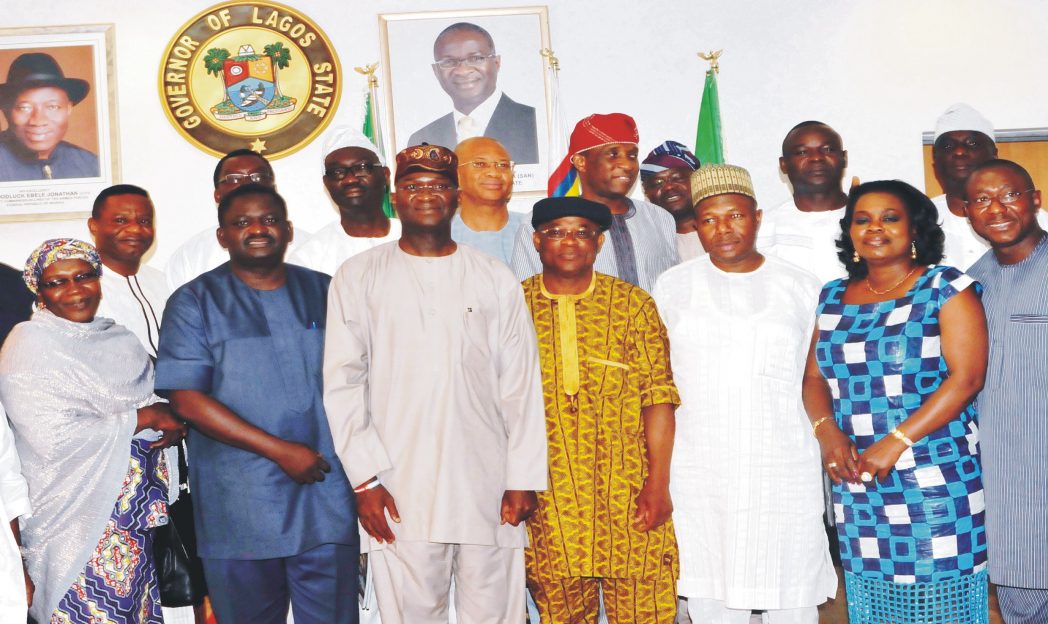
Governor Babatunde Fashola of Lagos State (3rd left), President, Guild of Editors, Mr Femi Adesina (2nd left), General Secretary, Mr Isaac Ighure(4th right), and others during the Guild of Editors visit to Governor Fashola in Lagos last Friday.



The Hydrocarbon Pollution Remediation Project (HYPREP) has announced that the mangrove wetlands in Ogoniland have been officially designated a Ramsar Site of International Importance by the Secretariat of the Ramsar Convention on Wetlands.
The designation, according to HYPREP, underscores the global ecological significance of Ogoniland’s mangrove wetlands and highlights ongoing restoration efforts aimed at addressing environmental degradation in the area.
In a press statement issued by the Project Coordinator of HYPREP, Prof Nenibarini Zabbey, the recognition was described as a major milestone for the agency, the people of Ogoni and other stakeholders working towards environmental restoration in the region.
Zabbey explained that the mangrove wetlands, which cover more than 31,700 hectares, consist of islands, tidal creeks, mudflats and mangrove forests that support a wide range of biodiversity. The ecosystem provides habitat for several species including fin fish, shellfish, crustaceans, crocodiles, turtles and the endangered grey parrot.
He noted that beyond biodiversity conservation, the wetland also provides essential ecosystem services such as fisheries production, flood control, water purification and carbon storage. According to him, the international recognition will further support local livelihoods, promote ecotourism and bring global attention to the region.
The HYPREP coordinator disclosed that the designation followed a meticulous process that began in 2024 when the project submitted a memorandum to the National Council on Environment seeking support for the recognition of the Ogoni wetlands as a Ramsar site.
Following the council’s review and approval, the Honourable Minister of Environment and Chairman of HYPREP’s Governing Council, Balarabe Abbas Lawal, formally wrote to the Ramsar Convention Secretariat requesting international recognition of the wetlands.
After a comprehensive ecological assessment, the Ramsar Secretariat granted the designation, officially recognising the Ogoniland wetlands as one of the world’s sites of international importance.
Zabbey said the recognition would strengthen ongoing environmental restoration efforts in the area and encourage stronger conservation measures and sustainable management of the wetlands for the benefit of present and future generations.
He added that the designation also fulfils a key recommendation of the United Nations Environment Programme (UNEP) Environmental Assessment Report on Ogoniland, marking another significant step in the implementation of the report’s recommendations.
The HYPREP project coordinator reaffirmed the agency’s commitment to restoring the Ogoni environment through the remediation of oil-polluted land, shorelines and mangrove ecosystems.
He also called for collective responsibility and stakeholder support to sustain the progress of the Ogoni cleanup programme and facilitate the development of a comprehensive and sustainable management plan for the Ogoni mangrove wetlands.

The Permanent Secretary, Rivers State Ministry of Social Welfare and Rehabilitation, Mrs Lauretta Davies-Dimkpa, has attributed the successes of the 12-day programme organised for adolescent girls aimed at eliminating Female Genital Mutilation(FGM) in some parts of the State to the ability of the respective stakeholders to take ownership of the programme.
Mrs Davies-Dimkpa, who dropped the hint in an interview at the end of the programme in Elele-Alimini Community in Emohua Local Government Area on Saturday, said the event had a buy-in component, an ownership mentality, whereby facilitators, staff, and everyone involved took ownership of the project.
She explained that the Rivers State Ministry of Social Welfare and Rehabilitation, in collaboration with the United Nations Children’s Fund (UNICEF) and the United Nations Population Fund (UNFPA) had packaged a series of training sessions for adolescent girls aimed at ending the practice of Female Genital Mutilation (FGM) in some communities across the State.
According to her, the initiative was designed to educate young girls on the harmful effects of the practice and empower them to become advocates against it within their communities.
She noted that the programme, which lasted for several weeks, targeted adolescent girls from different local government areas where the practice is still prevalent, stressing that
data collected by UNICEF and the Ministry revealed that Female Genital Mutilation is still practised in some parts of the State, prompting the need for intensified sensitisation and community engagement.
Mrs Davies-Dimkpa explained that the programme adopted a “train-the-trainer” approach where adolescent girls were educated on the dangers of the practice and encouraged to share the knowledge with their peers, families and communities.
“This is a programme by the Rivers State Ministry of Social Welfare and Rehabilitation with support from UNICEF and UNFPA to train adolescent girls towards ending Female Genital Mutilation, which is still practised in some local government areas,” she said.
She further explained that each participating local government area had a three-day training session, with the exercise running for a total of 12 days.
The local government areas, where the programme took place, she noted, included Ahoada West, Abua-Odual, and Emohua, adding that the initiative is part of broader efforts by the state government and development partners to eliminate harmful traditional practices and protect the rights and wellbeing of girls.
She revealed that prior to the training of the adolescent girls, the Ministry and its partners had also engaged community facilitators, including older women and men, to sensitise them on the dangers associated with Female Genital Mutilation.
According to her, the involvement of community leaders and adults is essential in addressing the cultural and social factors that sustain the practice.
Speaking on the response of the participants, the permanent secretary expressed satisfaction with the level of engagement and enthusiasm shown by the girls throughout the training sessions.
She noted that many of the participants said they were learning about the harmful effects of Female Genital Mutilation for the first time.
“The girls are between the ages of 12 and 17 and from the interactions we had with them, they were very excited. Some of them are hearing these things for the first time and never knew that the practice is harmful,” she said.
She expressed optimism that the knowledge gained from the training would enable the girls to serve as advocates for change within their communities.
She added that the Rivers State Government, alongside its partners, would continue to intensify efforts and expand community-based interventions aimed at ending the practice across the State.
Meanwhile, the participants for Emohua Local Government Area were drawn from Elele-Alimini, Egbeda, Rumuji, Ibaa, Rumuekpe, Rumuakunde, Eligbarada, and Ogbakiri Communities.
The participants,who spoke in separate interviews described the training as eye-opening, noting that it helped them better understand issues surrounding adolescent health, personal hygiene, reproductive health, and the harmful consequences of Female Genital Mutilation.
Favour Azukwu from Rumuekpe community, said the programme provided a deeper understanding of the dangers associated with the practice, particularly its impact on the health and wellbeing of girls and women.
She explained that the training sessions exposed participants to the medical, social and psychological effects of Female Genital Mutilation, including severe bleeding, infections and complications during childbirth.
She revealed that she personally experienced the practice at the age of 12 and suffered heavy bleeding afterwards, an experience that has strengthened her determination to advocate for its eradication.
According to her, many communities still practise Female Genital Mutilation because it is perceived as a cultural tradition, despite the dangers associated with it.
“I do not support Female Genital Mutilation because there are many dangers involved. I experienced severe bleeding when it was done to me as a child.
Another participant, Glory Ken, a 16-year-old secondary school student from Rumuji community, said the programme broadened her understanding of several important topics affecting adolescents.
She explained that beyond the discussion on Female Genital Mutilation, the training also focused on issues such as personal hygiene, reproductive health, peer education, and self-care.
According to her, the sessions helped participants understand the importance of making informed health decisions and supporting one another as peer educators.
“I learned about many things that affect young people in society and how to take care of myself. I also learned that Female Genital Mutilation is harmful to our health. The message I am taking back to my community is that this practice should stop,” she said.
Also speaking, Goodness Kenjika Nyeche described the programme as very impactful.
She noted that the training equipped participants with the skills and confidence to educate others about the harmful effects of Female Genital Mutilation.
She said she plans to organise sensitisation among adolescents in her community, particularly girls between the ages of 10 and 19, to ensure they understand the dangers associated with the practice.
“I learned many things from this programme and I feel very good about it. I will educate other young girls in my community and help them understand why Female Genital Mutilation should not continue,” she said.
For Queen Dike from Ibaa community, the programme helped clarify misconceptions surrounding the practice.
She explained that in some communities, the practice is still referred to as circumcision and is viewed as part of cultural identity.
She said the training helped participants understand that Female Genital Mutilation involves the cutting or removal of parts of the female genital organs and that it has serious health consequences.
She stressed that awareness and education are key to ending the practice, especially among communities that continue to uphold it as tradition.
“I think the programme is very helpful because many people still believe it is part of culture. More awareness is needed so people can understand why it should stop,” she said.
Another participant, MyJoy Echika Amadi, said the programme provided critical information about adolescent health and the dangers associated with Female Genital Mutilation.
She described the initiative as enlightening and said it encouraged young people to become advocates for change in their communities.
According to her, participants were encouraged to use various platforms such as churches, peer groups, schools and community gatherings to spread awareness about the harmful effects of the practice.
“This programme has enlightened us about the dangers of Female Genital Mutilation. I will do my best to create awareness in my community and encourage people to stop the practice,” she said.
Many of the participants emphasised that the knowledge gained during the programme has empowered them to challenge harmful traditions and promote healthier practices among young people.
They also called on the Rivers State Government, development partners and civil society organisations to sustain the sensitisation campaigns and extend the training to more communities across the State.
According to them, empowering young people with the right information will play a critical role in eliminating Female Genital Mutilation and protecting the rights, health and dignity of girls in Rivers State.
The participants expressed appreciation to the Rivers State Ministry of Social Welfare and Rehabilitation, UNICEF and UNFPA for organising the programme and for investing in the wellbeing and future of adolescent girls in the State.

-

 News5 days ago
Don Savours Inaugural Lecture Presentation, Commends VC
-

 News16 hours ago
Police Arrest Nigerian, Two Others For Kidnapping In Edo
-

 Business7 hours ago
Nigeria, AFC sign $1.3 billion deal to build alumina refinery
-

 Nation18 hours ago
Perm Sec Explains Success Of FGM Elimination Programme In Rivers
-

 News16 hours ago
NDLEA Arrests Ex-Councillor With 40kg Skunk, Recovers Drugs In Diapers
-

 Rivers6 hours ago
LGSC Boss Commits To Better Service Delivery
-

 Rivers6 hours ago
KENPOLY Rector Promises To Prioritise Students’ Welfare
-

 Rivers6 hours ago
ADIAFRICA Flags-off Free Eye Screening Outreach In PH