
Opinion
2015 Polls: The Media And CSOs (11)

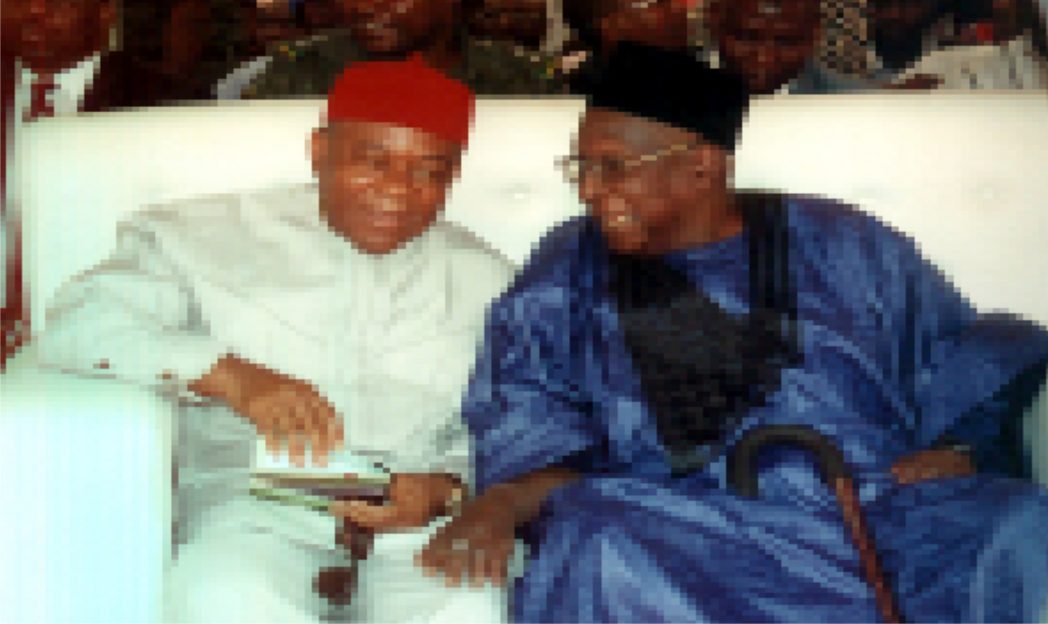
Board Chairman, Nigeria Railway Corporation, Alhaji Bamanga Turkur (right) with Abia State Governor, Theodore Orji, during the official commissioning of Nigeria Railway Corporation in Port Harcourt, recently.
In Akwa Ibom, violence resulted in the killing of a police
officer just as in Anambra State, a person was killed, in Calabar metropolis, students went on rampage upon discovering that their names were not on the voters register. In other cases, polling officers and election observers were held at gun-point for the purpose of carrying out election malpractices. Another challenge witnessed during the 1998/99 elections was the lack of effective communication, which made it difficult for security operatives to request for reinforcement in the event of breakdown of law and order. These problems must be redressed as a means for improving the conduct of the 2015 elections. INEC must ensure adequate preparation by providing adequate electoral materials such as the Permanent Voter Cards (PVCs), ballot papers resulting in the disenfranchisement of some voters, adequate transportation, counting and announcement of results during which malpractices may spark off disputes.
Although some Nigerians are kicking against the militarization of the 2015 elections, but some see it as being appropriate in view of the way and manner some politicians and their followers are going about the exercise. Their utterances stimulate doubts in the minds of Nigerians as to whether we are sure of peaceful, free, fair and credible polls. One thing that agitated my mind while writing this piece was whether the peace accord signed by the political actors of 11 parties is just for the fun of it. No, one would not think so because Nigerians have over-grown the level of deceit.
But that soon after the restriction orders were signed and several attacks unleashed at rally arenas, including President Jonathan’s campaign convoy is quite amazing . This means that the party leaders are not communicating their decisions to their supporters sincerely.
They should be able to investigate any violent action linking their followers to enable them identify manifestations of violence and to slam the necessary sanctions on perpetrators in the interest and credibility of their parties and themselves, the contestants.
In pre-colonial Africa, the democratic idea was an element of the political order of which representation and accountability were prominent features in the system of government.
There were various checks and balances on the exercise of power reinforced by social structures such as the traditional rulers, age grade associations, warrior bands, religious institutions, civil societies, professional organizations as well as the media, among others. They constituted the political institutions that regulated governance and electoral behaviour.
There is the need to restructure and energize the entire political system of Nigeria so as to stimulate effective response to the democratic process and elections in particular. In doing this, the whole of civil society, the media, religious bodies, social organizations, youth bodies, the traditional institution and other relevant stakeholders should be mobilized to monitor the 2015 elections towards ensuring peaceful, free, fair and credible exercise. These groups should be dynamic in their activities as watchdogs of the electoral process. They should investigate past electoral processes to enable them identify areas of possible violence and to provide appropriate interventions for this year’s elections, and also expose any traits of malpractices.
It is also pertinent to organize massive campaigns to create awareness on the threat this 2015 elections are posing to the survival of the entire democratic process, just as civic education for Nigerians, particularly the youths, to re-orientate and re-educate them on this election and other democracy related areas is necessary. There is need for a generational change in the current body polity. The political scene in Nigeria has been dominated by a particular age group, so it is important to re-organise towards effecting the transfer of power to a new breed of political actors.
Observations have shown that the country’s democratic institutions are weak and therefore lack adequate capability to pursue the interests of the people. Election violence, poverty, monetized politics, gender insensitivity and lack of moral values have characterised our electoral process and this calls for the reinvigoration of the civil society organizations (CSOs) and the formation of other movements that will effectively check the activities of both opposition and ruling parties in Nigerian politics. Political office seekers and holders should be held in dialogue to present a political agenda for the nation during elections. CSOs, the media and other organizations must not relent in checking authoritarian tendencies of governments and the manipulation of state resources and institutions for election activities by incumbent political office holders.
While we encourage opposition politics in the current polity, such exercise of political right should not be made to endanger the growth of our democracy. No vacuum should be allowed for ethnic nationalism and religious fanaticism or fundamentalism which could produce anarchy. The type of opposition which smacks of violence is not for genuine reasons, but for selfish motives to be bribed or settled by the ruling government. In the past polity of Nigeria, there existed intolerance for opposition, so the emergency of several political parties now should not be a framework or platform for the exhibition of unruly behaviours and utterances capable of triggering off violence. It should be for the purpose of acquiring political power that will be of general interest instead of personal benefits.
The current political gladiators have signed a pact to ensure violence-free elections, it is, therefore, expected that they abide by the rules and uphold their integrity while there should be an inclusive government that should address the real yearnings of the citizenry.
Opposition is recognised in politics not for the purposes of heating up the polity nor to destroy the ruling government, but to bring about corrective ideas that would restructure or transform the nation.
Civil society organizations and the media must continue to act as checks and balances on the actions of political parties and their members and constitute themselves as watch-dogs for the programmes and activities of government to ensure that it is responsible to the people. They should also educate political parties, including the opposition to play by the rules of the game and organize debates for political groups towards facilitating the development of an agenda.
This is why the election debate arranged by the Rivers State NUJ, NAWOJ, the Nigerian Institute of Public Relations, Civil Society Organisations, Silverbird Communications, among others penultimate week is commendable, as it was aimed at driving a message of violence-free election and provided a forum for all parties candidates to reel out their agenda for Rivers people.
Concluded.
Shedie Okpara



Quote: “No oil vessel, commercial contract or operational deadline is worth the loss of innocent lives; where environmental grievances are ignored and dialogue gives way to confrontation, the entire society pays a price that no compensation can adequately erase.”
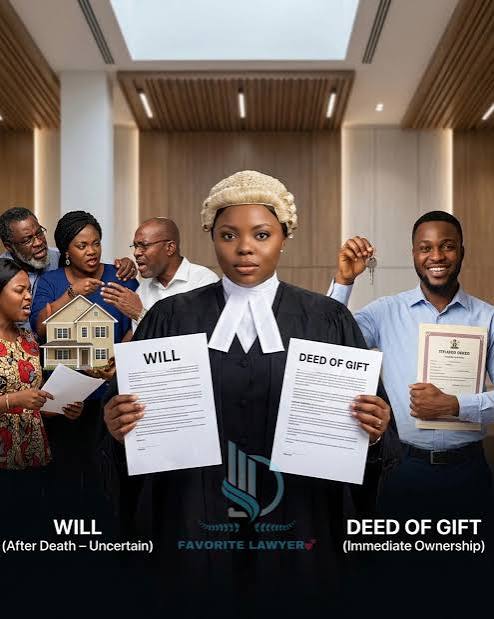
Quote:”The value of wealth is
Will and gifts are subjects
A Will is an important legal
Where documentation is
This does not mean every
Properly completed lifetime
Property owners must also
My appeal is simple: let us
-

 Education2 days ago
FCE Yola Graduates 3,555 Teachers , Seeks Upgrade to University
-

 Sports2 days ago
Nigerian Trio Target Titles At PFL Africa Finals
-

 Niger Delta2 days ago
Diri Restates Stance On Lagos-Calabar Coastal Highway
-

 Niger Delta2 days ago
C’River, NUJ Pay Tribute To Late Guardian Editor
-

 News2 days ago
NDLEA Recovers Tons Of Illicit Drug Consignments In Nine States
-

 Opinion2 days ago
Checking Voter Apathy In Nigeria’s Electoral Process
-

 Politics2 days ago
2027: DICKSON’S EX-ALLY VOWS TO WORK AGAINST NDC INTEREST IN BAYELSA
-

 Politics2 days ago
2027: GROUP PLEDGES 40,000 SUPPORTERS FOR COALITION CANDIDATES IN RIVERS