
Nation
THE STATES

Borno
The Borno State Police Command said it had put in place
all necessary machinery for peaceful conduct of the February general elections in the state.
The Police Commissioner in the state, Mr Clement Adoda, stated at a sensitisation meeting with officials of political parties in the state that the command was also looking at possibilities of seeking additional personnel from other states to beef up security during the polls.
The commissioner also said that the military could be drafted to provide additional support should the situation degenerate.
“The military is always on standby in every situation. “But if there is the need for the military assistance to civil authority during the elections, be rest assured of our preparedness to invite them,” Adoda said.
He said that the meeting was aimed at enlightening politicians on the need to avoid violence during the polls.
FCT
Civil Society Organisations (CSOs) have frowned at the
monumental fraud and looting of the oil treasury without significant action to identify, prosecute and punish culprits.
Convener of Protest To Power Movement (P2PM), Mr Jaye Gaskia, made this known in Abuja at a news conference recently.
The conference was jointly organised by the Civil Society Legislative Advocacy Centre (CISLAC), P2PM and State of the Union Coalition (SOTU) to mark three years of fuel subsidy protest.
He said treasury looting could not have happened without the collaboration and protection of highly placed political officials.
According to Gaskia, the NNPC, Department of Petroleum Resources (DPR), Petroleum Product Pricing Regulation Agency (PPPRA), Federal ministries of Petroleum and Finance were not left out of the looting.
He said that no official had been implicated or disciplined on this issue.
He said any claim paid on subsidy since the downturn of oil prices in the international market would be regarded as fraudulent payment because the landing cost of fuel had reduced.
According to him, Nigeria is sufficient in producing refined oil in the country but our crude oil is being refined overseas due to corruption.
Kaduna
The Federal Government has said it had released N3
billion for disbursement to victims of 2011 post-election violence in Kaduna State.
The Vice President, Namadi Sambo made the disclosure at the 40th anniversary of Emir of Zazzau, Alhaji Shehu Idris, on the throne held at the Emir’s palace, Zaria, Kaduna State.
Sambo, who was represented by Governor Muktar Yero of Kaduna State, said the money which was already in the coffers of the state government would be disbursed to the affected victims accordingly.
He stressed the need for people to live in peace with one another to enable government at all levels to provide the dividend of democracy to the electorate.
While congratulating the Emir for attaining 40 years on the throne, Sambo attributed the success recorded by the Emirate to patience, fairness, justice and truthfulness.
Kano
The Kano State Government has approved over N17 mil
lion for the purchase of JAMB forms and training of candidates who will benefit from the forms, the Commissioner for Justice, Mr Maliki Umar, said.
Umar made the disclosure in Kano while briefing newsmen on the outcome of the state’s Executive Council Meeting.
He said the council had also approved over N186 million for the upkeep of public and voluntary schools in the state.
He added that “the council also approved N2.1 million for renovation of dental centre and eye clinic at Murtala Muhammed Specialist Hospital.’’
Katsina
The Katsina State Inter-faith Committee has denied the
destruction of a Church in Matazu Local Government Area by the Katsina Urban and Regional Planning Development Authority (KURPDA).
The Chairman of the committee, Alhaji Isah Dodo stated this in Matazu during a visit to the area.
He said that the committee was mandated by the state government to investigate and ascertain the true picture of the matter.
He explained that the affected area was a pathway between a school and staff quarters of the church.
Dodo further explained that the church decided to fence the school and the staff quarters, thereby, blocking the pathway which had been in existence for more than 20 years.
Kebbi
The Kebbi State branch of the Miyetti Allah Cattle Breed
ers Association of Nigeria (MACBAN) has commended the Kebbi Government for the establishment of the Ministry of Animal Husbandry and Fisheries.
In a statement issued in Birnin Kebbi the Chairman of the association, Alhaji Muhammad Gwandu said that the new ministry would go a long way to boost livestock and fisheries production in the state.
The statement added that the new ministry would also boost family’s income, generate employment and improve nutrition in-take of the people of the state.
Ondo
The new Vice-Chancellor of the Adekunle Ajasin
University, Akungba Akoko (AAUA), Ondo State, Prof. Igbekele Ajibefun, has assumed duty.
The Deputy Vice-Chancellor (Administration), Prof. Francis Oyabade, led other principal officers and students of the institution to receive Ajibefun at the Senate Chambers where prayers were offered for a successful tenure.
The vice-chancellor, who was accompanied by his wife, Bosede, expressed gratitude to God for the appointmen,t and thanked Governor Olusegun Mimiko for appointing him to serve the state at another level after completing his tenure as the rector of the state polytechnic.
Ajibefun promised to justify the confidence reposed in him by driving the university toward fulfilling the vision and mission of its founding fathers.
Plateau
The Plateau State Head of Service (HOS) Ezekiel Dalyop
has described the biometric of the state workforce as ‘a huge success.’
Speaking with newsmen in Jos, Dalyop said the exercise which commenced in 2012 was tasking.
He said: “As a pioneering exercise, the biometric has not been easy but it has been a huge success in the sense that we have been able to identify clearly those who are genuine workers. “As at the state level, we have almost concluded the entire exercise.
“The report of the appeal panel on the exercise had been reviewed by another committee and has been submitted to the government.
Dalyop said the exercise was aimed at sanitising the state workforce, leave a legacy behind by identifying genuine workers.
“At the first count, we arrived at 11,000 workers certified as genuine, leaving about 6,000 plus workers who needed to answer questions raised by the committee.
Sokoto
The Sokoto State police command in has warned politi
cal parties against the illegal use of sirens.
Spokesman for the Command, DSP Al-Mustapha Sani, gave the warning in a statement in Sokoto on Wednesday, following complaints about the use of sirens by some candidates.
The statement stated that “ in Sokoto State, only the governor, his deputy, the speaker of the state House of Assembly, CP, AIG, the Brigade Commander and the Sultan are legally allowed to use the sirens while on movement. Anyone outside this exclusive list who uses sirens does so illegally and stands to face the consequences according to the laws of the land.”
The statement also warned political parties against moving with youths wielding various types of weapons during their activities
Zamfara
The Zamfara State Universal Basic Education Board
(SUBEB) has commenced training of 150 teachers on Information and Communication Technology (ICT) and its applications to education.
Public Relations Officer of the board, Alhaji Kabir Mayanchi, who made the disclosure in Gusau, said the training was to assist the primary and junior secondary school teachers to improve their knowledge of ICT.
He added that the training became necessary considering the fact that majority of primary school teachers in the state lacked basic requirement of computer literacy.
The image maker expressed optimism that the training would enhance the quality of education and boost the acquisition of basic ICT skills by teachers.
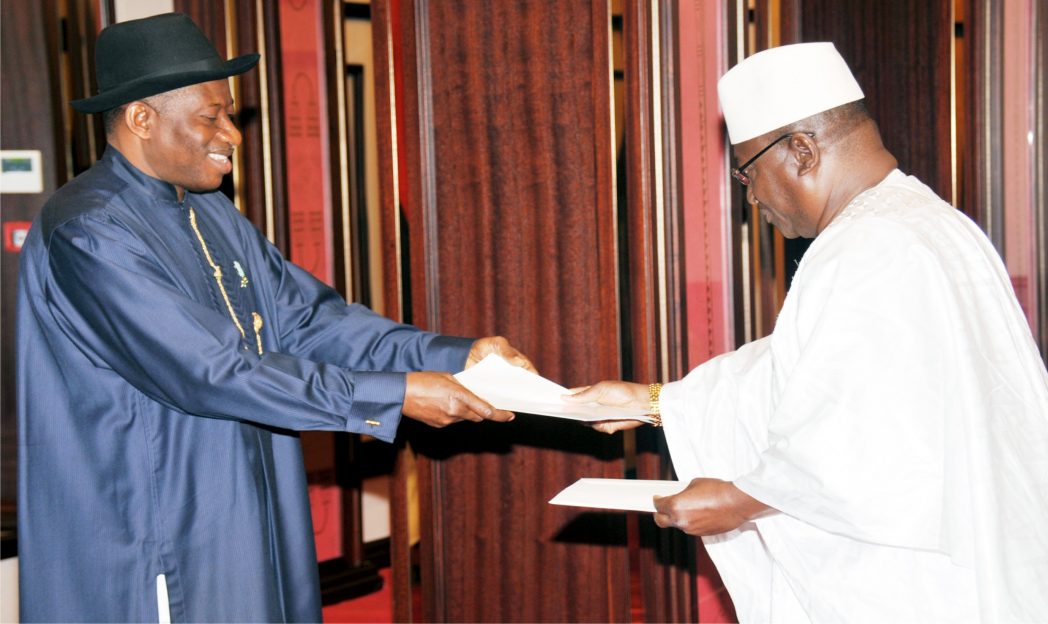
President Goodluck Jonathan (left) receiving letter of credence from the new Ambassador of Guinea Conakry, Mr Gaoussou Toure, in Abuja recently

Nation
Zabbey Emerges Social Impact Man Of The Year 2025 …Reaffirms Commitment To Ogoni Transformation


The Project Coordinator of the Hydrocarbon Pollution Remediation Project (HYPREP), Prof. Nenibarini Zabbey, has been named Social Impact Man of the Year 2025 by Daily Independent Newspapers.
The award was presented at the Independent Awards 2025 Silver Jubilee Edition held at Eko Hotels and Suites, Lagos, as part of activities marking the organisation’s 25th anniversary of editorial excellence.
Managing Director and Editor-in-Chief of Independent Newspapers, Steve Omanufeme, said the award recognises individuals who have demonstrated exceptional leadership and transformative impact in their respective fields. He explained that recipients emerged through a rigorous process involving public voting, editorial board scrutiny, and assessment by a panel of judges.
Omanufeme noted that Zabbey’s selection reflects his outstanding contributions to environmental restoration and community development in Ogoniland through the Ogoni cleanup project.
With over two decades of experience spanning research, advocacy, capacity development, and administration, Zabbey has, within three years of leading HYPREP, implemented people-focused initiatives aimed at improving livelihoods and restoring degraded ecosystems.
Under his leadership, the project has reportedly created more than 7,000 direct jobs and facilitated the training of thousands of youths and women in high-demand skills, including mechatronics, cybersecurity, commercial diving, underwater welding, and data analytics.
HYPREP has also trained over 5,000 beneficiaries across 21 vocational skill areas, providing start-up kits to support entrepreneurship and economic empowerment.
In the area of environmental sustainability, the agency has established 31 environmental clubs in secondary schools and trained 2,500 youths with International Maritime Organization (IMO) certification to support shoreline cleanup and mangrove restoration efforts.
The project has recorded significant ecological milestones, including the cleanup of over 1,000 hectares of shoreline and restoration of 560 hectares of mangroves. This progress contributed to the designation of Ogoni mangrove wetlands as a Ramsar Site of international importance.
Beyond environmental remediation, HYPREP has expanded its social intervention programmes to include educational grants and scholarships for over 1,000 students, support for small and medium-scale enterprises, and skills training for persons living with special needs.
Infrastructure and healthcare development have also featured prominently, with ongoing projects such as the Ogoni Specialist Hospital, a Cottage Hospital, the Ogoni Power Project, and the Centre of Excellence for Environmental Restoration. The agency has further strengthened emergency healthcare delivery by donating five ambulances to medical facilities in the region.
Additionally, potable water has been provided to more than 40 communities, alongside the construction of wind-powered water systems in underserved areas.
Speaking on the award, Zabbey described it as a validation of HYPREP’s integrated approach to environmental restoration, healthcare improvement, and economic empowerment.
“We remain committed to delivering a cleanup that not only restores the environment but also improves livelihoods in line with the Renewed Hope Agenda of President Bola Ahmed Tinubu,” he said.
HYPREP, in a statement, expressed appreciation to the management of Independent Newspapers for the recognition, the Federal Ministry of Environment for its oversight role, and the Ogoni communities for their continued support and collaboration.
The agency was established by the Federal Government of Nigeria to implement the recommendations of the United Nations Environment Programme (UNEP) report on Ogoniland and restore areas impacted by oil pollution.
Nation
Rivers State Judiciary Counters NBA National Position over Contempt Ruling, Says Judge Acted Within the Law

The Rivers State Judiciary has faulted the Nigerian Bar Association National over its March 26, 2026 press release condemning the jailing of a lawyer for contempt, insisting the trial judge acted lawfully to protect the court’s integrity.
In a rejoinder issued by Chief Registrar High Court,David D. Ihua-Maduenyi, Esq., the judiciary said it was necessary to “set the records straight” following reactions to the NBA’s statement on the contempt conviction of Mrs. Lovinah Ugbana Benjamin.
Titled: “JUDGES MUST NOT BULLY LAWYERS OR
ABUSE POWER TO PUNISH FOR CONTEMPT AS A TOOL
FOR INTIMIDATION OF LAWYERS”
RE: IN THE MATTER OF CONTEMPT OF COURT BY MRS.
LOVINAH UGBANA BENJAMIN
IN SUIT NO.
PHC/301/2016 CORAM C. NWOGU J., OF THE HIGH
COURT OF RIVERS STATE.
The state judiciary explained that case in question is Suit No. PHC/301/2016 before Justice Chinwendu Nwogu of the Rivers State High Court, where Mrs. Benjamin served as defence counsel.
The statement read thus
“We are compelled to make this rejoinder regarding the
incident of the conviction for contempt and subsequent
unconditional discharge of Mrs. Lovinah Ugbana Benjamin,
Learned Counsel for the Defendants in the above suit by Hon.
Justice Chinwendu Nwogu of the High Court of Rivers State in
order to set the records straight, and not allow the
misinformation, misconception and reactions arising from the
NBA National Press Release in the matter to fester as reality or
truth.”
In the suit under reference wherein the said Learned
Counsel appeared for the Defendants, the Learned Counsel
attempted to mislead the Court by her signed and filed final
written address, by knowingly and falsely presenting non-
existent facts and evidence of a witness. When confronted by the
Court, she admitted that what she stated in her final written
the address was not true and she was unapologetic.”
“The to uphold the dignity and integrity of the Court, which the
said Learned Counsel treated with clear and brazen contempt, the
Court after following due process, convicted her for contempt and
sentenced her to prison for 3 days only, instead of the 3 months
statutory term due to passionate plea from the Bar.”
“According to the statement the suggestion of the NBA National in paragraph 10 of the
Press Release under reference that “where a court considers
counsel’s conduct improper, the proper course is to invoke
recognised disciplinary mechanisms, including referring
counsel to the Legal Practitioners Disciplinary Committee
(LPDC), rather than resorting to summary punitive measures”,
is not an invariable rule because the act of the Defence Counsel
constitutes contempt in facie curiae which the Court can punish
instantly, hence the action of the Judge is not an abuse of power
or an act of intimidation.”
“Nevertheless, due to the numerous calls from respected
members of the Bar to the offices of the Chief Registrar and the
Honourable Chief Judge for the release of the said Learned
Counsel, and the intervention of the NBA Port Harcourt Branch
delegation led by its Chairman, Mrs. Cordelia U. Eke to the Judge.
in his Chambers in the morning of 26/03/2026 where the
delegation upon learning the true facts of the incident, apologised
and pleaded for the release of the said Learned Counsel.
“The Judge
having accepted the apology signed a production warrant and
upon her production in court and oral application by Mrs. Cordelia
U. Eke, discharged her unconditionally that same morning.”
The statement further stated that It is therefore shocking to read later that day the NBA
National Press Release signed by its President and Secretary, Mazi
Afam Joseph Osigwe (SAN) and Dr. Mobolaji Ojibara respectively,
fiercely threatening and hastily advocated the following ultimata and
the immediate release of the affected
Counsel.
:That the Hon. Chief Judge of Rivers State
immediately investigate the circumstances
surrounding this incident and take
appropriate administrative action.
That appropriate disciplinary steps be taken
by the National Judicial Council, where
necessary.
That the remand of Mrs. Lovinah Ugbana
Benjamin under the circumstances be
condemned and set aside”
“That all NBA branches in Port Harcourt and
its environs and all legal practitioners
boycott the proceedings before the Court of
Hon. Justice Nwogu for a period of 7 days if
Mrs. Lovinah Ugbana Benjamin is not
released within 24 hours.
“It seems to us that it is either the NBA Port Harcourt Branch
leadership did not relate the true position to the NBA National or
if they did, the NBA National decided to speak daggers, not peace
to impugn the Judge as a villain.
“We find the position of the NBA National on this subject very
offensive and embarrassingly raising a feeling of acrimony against
the Judge in particular, and the High Court bench of Rivers State
in general. We categorically state that the Hon. Justice Chinwendu
Nwogu is one of our respected and respectful Judges with
unblemished integrity.
We view this Press Release as an isolated departure from the
enterprising and amiable leadership of the NBA National,
especially its President, whom we hold in high esteem and
admiration.”
“Whilst we appreciate the concern of the NBA National in
bringing attention to the event of 25th March 2026, we assure that
the Bench and the Bar in Rivers State remain veritable partners
in the administration of justice.
“We firmly restate that the Bench in Rivers State holds the Bar
in high esteem and this event would not disrupt the cordial
relationship between the Bench and the Bar.”
-

 Maritime5 days ago
Customs Deploys Seven Patrol Vessels, Boost Waterway Anti-smuggling
-

 Sports5 days ago
Financial Issues Stall Chelle’s Eagles Contract Talks
-

 Sports5 days ago
NFF mourns ex-Eagles striker Eneramo
-

 Sports5 days ago
European Giants Circle For Osimhen
-
Sports5 days ago
Four Private Clubs Gain Promotion To NPFL
-

 Sports5 days ago
W/Cup Qualifier: Flamingos In Impressive Opener
-

 Sports5 days ago
Tennis Event Boosts Grassroots Development Push
-

 Sports5 days ago
Chelle Confirms Financial Issues in Eagles Contract Discussion