
News
5% Nigerians Pocket N37.665 trn Of Nation’s Funds

Less than 5 per cent of Nigeria’s estimated population of 170million consume close to 80 per cent of the country’s annual public finances of about N37.665trillion, according to a study by the International Society for Civil Liberties and the Rule of Law (Intersociety).
The group made the disclosure in Part Two of its public statement entitled: “ASUU Strike and Socio-economic Consequences of Industrial Disputes in Nigeria”, released yesterday from its Onitsha base in Anambra State.
This less than 5 per cent, according to Intersociety, is “made up of 17,500 top public office holders in Nigeria and public industrial unions and their members such as ASUU, NMA, NUT, TUC, NLC, etc.”
Intersociety said in yesterday’s statement signed by its board Chairman, Emeka Umeagbalasi and Head, Publicity Desk, Comrade Justus Uche Ijeoma, that “Our main concern is to expose and bring to the attention of the world how less than 5 per cent of Nigeria’s estimated population of 170million, made up of 17,500 top public office holders and public industrial unions and their members such as ASUU, NMA, NUT, TUC, NLC, etc, have continued to corner and pocket close to 80 per cent of the country’s annual public finances at the monumental expense of other 170million Nigerians. This, they do by allocating to themselves scandalous sums in the form of “allowances” and “overheads”, using the instruments of “Appropriation Acts of the Federation”, “Appropriation Laws of the States” and “Industrial Actions or Strikes.
“The socio-economic consequences of the foregoing are totally incalculable. Since 1997 when Nigeria recorded her last budget surplus, it had been budget deficits all through. Simply put, budget is in deficit when its expenditure is greater than its generated revenues and money is borrowed in cash or in kind to finance it…
“From the foregoing, therefore, Nigerian budgets since 1999 have been deeply debt-ridden and consumptive. They are also static and highly centralized. Between June 1999 and now (2013), the Federal Government had budgeted a total of N37.665trillion (about $221billion using N160.00 per $USD), out of which, N21.7trillion went for recurrent expenditures; N4,5trillion or about $28billion went for debts servicing; and only N11.3trillion or about $70billion went for capital expenditures.”
“Also, between June 1999 and December, 2012, a total of N80trillion or about $500billion was shared by Nigeria’s three tiers of government – federal, states and LGAs – from the country’s Federation Account,” the body said.
Intersociety also quoted former World Bank Vice President for Africa, Oby Ezekwesili’s remarks that, “Nigeria’s total domestic and external debts, including those owed by states, LGAs and government parastatals and ministries have skyrocketed since May 2007, from about $18 billion, including $6billion of foreign and N1.8trillion of domestic debts; to about $100billion or N16trillion in 2013 with a staggering difference of $88billion borrowed locally and internationally by relevant public borrowing establishments. In 2012 alone, Nigeria paid a whopping sum of N699billion or about $4.4billion to banks and other lending institutions within and outside the country in the form of “debts or loans’ interests.”
According to the body, “critical look at the foregoing clearly indicates that close to 80 per cent of such huge expenditures and loans were expended and borrowed to service 17,500 Nigerian top public office holders, and members and leaders of public industrial unions such as ASUU, under the guise of “allowances” and “overheads,” adding that, the major challenge facing the growth and development of the Nigerian economy is institutionalization, with reckless abandon, of spurious allowances and overheads.
“As we have earlier stated, out of N592billion spent annually to service the wage entitlements of 12,788 LGAs’ executives and councillors, N550billion goes into payment of allowances. Only N42billion is spent on their salaries. Out of N300billion spent on about 2,664 state executives in the 36 states, N272billion is spent on allowances and only N28billion is spent on salaries. Out of N60.4billion spent on 469 federal lawmakers annually, N54.2billion is spent on allowances and only N6.1billion is spent on salaries.
“Out of N92.3billion spent annually on 472 federal executives in the country, N89.7billion is for allowances and only N8.6billion is for their salaries. Out of N40.9billion spent on 1,152 state lawmakers, N35.8billion is spent on allowances and only N5.09billion is spent on their salaries. Out of N18.5billion spent on 792 state judges, N15.4billion is spent on allowances and only N3.1billion is spent on their salaries; and out of N14.8billion spent on 142 federal judges annually, N13.1billion is spent on allowances and only N1.7billion is spent on their salaries,” Intersociety said.
Intersociety added that “the forgoing does not capture spurious overheads and extraneous allowances annually smuggled into the Appropriation Acts of the Federation and the Appropriation Laws of the 36 states in the country.”


Rivers State Deputy Governor, Prof. Ngozi Odu, has called for renewed commitment, transparency, and collaboration among stakeholders in the health sector in the State.
The deputy governor particularly urged synergy between the Rivers State Contributory Health Protection Programme (RIVCHPP) and the Primary Health Care Management Board towards improved healthcare delivery in the State.
?Prof. Odu made this call during the 2026 First Quarter Review Meeting of the Task Force on Primary Health Care at the Government House, Port Harcourt, on Wednesday.
?She stressed the importance of honesty and urged all parties to be truthful and open in addressing challenges within the system.
?According to her, transparency remains critical to identifying and resolving underlying issues affecting healthcare delivery, noting that “if we are not truthful, we will not cure the disease, but merely cover it up.”
The deputy governor recounted a personal experience at a Primary Health Center where a patient, despite being duly registered under the RIVCIPP scheme with completed biometric capture, was still asked to make payment for services.
According to her, intervention by relevant authorities later confirmed the patient’s eligibility, exposing a communication gap between the scheme and healthcare providers.
Odu warned that such incidents could discourage community members from enrolling in the scheme, thereby undermining its objectives.
“When this happens, we are disenfranchising our people. The message that goes back to the community is that even when you register, you are still made to pay,” she stressed.
?While commending the leadership and staff of the Primary Health Care Management Board, Ministry of Health, Development Partners as well as other supporting units, for their efforts, ty deputy governor stressed that performance should not lead to complacency.
She urged stakeholders to continuously strive for improvement, raise standards, and leave lasting positive impacts within the system.
?
?
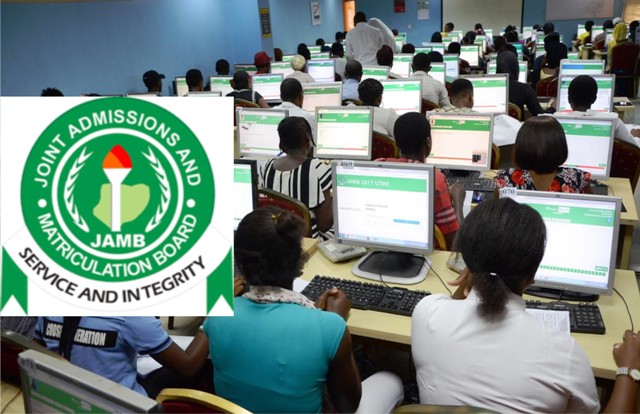
The Joint Admissions and Matriculation Board (JAMB) has announced the opening of examination slip printing for candidates registered for the 2026 Unified Tertiary Matriculation Examination (UTME).
JAMB made the announcement yesterday, urging candidates to visit its website to download their slips ahead of the examination.
“Examination Slip Printing is now available. The slip contains details of the venue, date and time of your examination and gives you access to the examination hall,” the board said.
Candidates are to visit jamb.gov.ng and click on “2026 Slip Printing” to print their slips.
The development comes after JAMB dismissed a viral press release falsely claiming the examination had been postponed.
The board described the notice as “malicious and fake” and urged candidates to disregard it.
The 2026 UTME is scheduled to hold from Thursday, April 16, to Saturday, April 25, 2026.
The examination follows a mock test conducted on Saturday, March 28, which recorded technical difficulties at some Computer-Based Test centres.
Of the 224,597 candidates who registered for the mock, 152,586 sat for the test across 989 CBT centres nationwide.
JAMB said over 20 centres were delisted for technical inadequacies.
The board also warned candidates against fraudsters on WhatsApp claiming to facilitate score inflation, describing such claims as “false and criminal”, and threatening cancellation of registration or withholding of results for any candidate found involved.
Over two million candidates, according to JAMB Registrar, Prof. Ishaq Oloyede, registered for this year’s UTME.
News
RSU Unveils Five-Year Strategic Dev Plan …Calls For Collective Commitment To Institutional Excellence


In a decisive step towards redefining its future, the Rivers State University, Port Harcourt, has formally unveiled its Third Five-Year (2026-2030) Strategic Development Plan.
The development plan is a comprehensive roadmap designed to strengthen the university’s position as a leading institution in Nigeria and beyond.
The unveiling took place during a high-level engagement with the Governing Council, Principal Officers and the university congregation, at the Convocation Arena, recently.
Delivering his remarks at the unveiling ceremony, the Pro-Chancellor of the university and Chairman of Council, Hon. Okey Wali, SAN, charged all members of the university community to align their activities with the strategic direction of the institution, emphasizing that the success of the plan depends on collective commitment.
He noted that the plan is not merely a document, but a working framework that requires discipline, accountability and unity of purpose.
According to the Pro-Chancellor, only through coordinated efforts from all stakeholders can the university fully realize its vision.
“I hereby invite the Visitor to the University, donor agencies, friends and well-wishers, and all stakeholders to support and fund the implementation of this strategic plan. We are confident that this plan will take RSU to greater heights in the comity of higher institutions,” he said.
The Vice-Chancellor of the University, Prof. Isaac Zeb-Obipi, described the Strategic Development Plan as a document that would enhance the university’s corporate strengths, mitigate current weaknesses, leverage its corporate opportunities and address perceived existential threats.
“This Five-Year Strategic Plan sets out RSU’s goals, strategic objectives, expected outcomes and impact, including intervention strategies,” he said.
On his part, the Chairman of the Strategic Development Planning Committee, Prof. Emeritus Joseph A. Ajienka, noted that the 2026-2030 Strategic Development Plan represents a bold reaffirmation of the university’s founding ideals of excellence, creativity, innovation and inclusivity, aimed at positioning the institution to respond effectively to contemporary challenges in higher education.
Prof. Ajienka, who is also a member of the Governing Council, disclosed that the plan was developed through an extensive and inclusive consultative process, which he said reflects contributions from Faculties, Departments, Satellite Campuses and Administrative Units.
At its core, the plan seeks to advance the university’s vision of becoming a “unique and uncommon” institution that is structurally and philosophically oriented towards solving practical societal problems and ranking among the top ten universities in Nigeria.
The strategic framework identifies six key challenges confronting the university, including funding constraints, infrastructure deficits, limited research collaboration, and service delivery inefficiencies.
A statement by the university’s Acting Director, Corporate Affairs, Victor G. Banigo, further stated that the university has articulated four broad strategic goals supported by eight targeted objectives.
A central priority of the plan, according to him, is the strengthening of governance and administrative systems, alongside deliberate efforts to expand the university’s funding base. Others include enhanced alumni engagement, strategic partnerships and innovative fundraising initiatives aimed at ensuring long-term financial sustainability.
“Equally significant is the commitment to upgrading physical infrastructure across all campuses. Plans are underway to modernize lecture halls and laboratories, expand student accommodation, improve campus security and deploy advanced ICT systems to support teaching, learning and research.
“Recognizing that human capital is the backbone of institutional success, the university has placed strong emphasis on staff development, recruitment and productivity enhancement. Through targeted training programmes, mentorship initiatives and performance management systems, the plan aims to foster a highly skilled and motivated workforce.
“In addition, the university is poised to deepen its focus on research, innovation and entrepreneurship. By reviewing academic curricula, strengthening industry partnerships and establishing innovation incubation centers, Rivers State University seeks to translate research outputs into practical solutions that address societal needs and drive economic growth,” he said.
The PRO disclosed that the implementation of the strategic plan is projected at ?110 billion, reflecting the scale of transformation envisioned.
“While the university is committed to funding a significant portion internally, additional resources will be mobilized through government support, donor agencies, alumni contributions, and public-private partnerships.
“This multi-channel funding strategy aligns with the university’s broader goal of building a resilient and self-sustaining financial model capable of supporting long-term development,” he explained.
To ensure effective implementation, he said, “the plan incorporates a comprehensive monitoring and evaluation framework, complete with performance and impact indicators. A mid-term review is scheduled within the first two years to assess progress and make necessary adjustments.
“Furthermore, the establishment of a dedicated Strategic Planning Office will provide oversight, coordination and accountability in executing the plan across all units of the university.”
According to the statement, “As the university embarks on this transformative journey, the message from leadership is clear: the Strategic Development Plan is a collective mandate.
“For staff, students, alumni and stakeholders, it represents an opportunity to contribute meaningfully to the growth and advancement of the institution. For the university, it is a pathway to consolidating its legacy while embracing innovation and global relevance.
“With a clear vision, defined priorities and a united community, Rivers State University stands poised to translate this strategic blueprint into measurable progress, advancing knowledge, empowering people and shaping the future of higher education in Nigeria.”
-

 Editorial2 days ago
Domesticate FG’s Exit Benefit Scheme
-

 News2 days ago
RSU Unveils Five-Year Strategic Dev Plan …Calls For Collective Commitment To Institutional Excellence
-

 News2 days ago
DHQ Confirms Deaths Of Terrorists, Soldiers In Borno Attack
-

 News2 days ago
Tinubu Commissions Bayelsa Gas Turbine, Other Projects Today
-
Business2 days ago
Niger Delta Investment Summit Targets $5bn Inflows, 500,000 Jobs
-
Rivers2 days ago
Dep Gov Seeks Collaboration, Transparency Between RIVCHPP, PHCMB
-
Nation2 days ago
Rumuji Youth Leader Condemns Protest, Disowns Alleged Government Empowerment Claim
-

 Nation2 days ago
Haniel Jack Foundation Awards Five Rivers Indigenes Scholarship