
Nation
THE STATES

Bauchi
No fewer than 38 persons lost their lives in various auto-accidents in Bauchi State in the first quarter of 2010.
The Director, Bauchi State Vehicle Inspection Directorate, Alhaji Ibrahim Ya’u, said this when the state’s Commissioner for Transport, Alhaji Abubakar Ashu, visited the directorate.
He said no fewer than 89 other persons sustained injuries in the 43 auto-accidents recorded across the state.
Ya’u also said the directorate generated more than N6 million within the period under review.
He said N2 million was realised from the sales of ‘road worthy certificate’ to motorists, while N4 million was raised from the ‘Operation Show Your Particulars.’
Ya’u said N600,000 was generated from the general inspection exercise.
Ekiti
The NYSC has redeployed Mr Olayiwola Afolabi from Bauchi to its Ekiti State Directorate, a statement said.
The statement, issued by the Ekiti NYSC Directorate Public Relations Officer, Mr Funso Olusoji, in Ado-Ekiti on Sunday, explained that Afolabi had taken over from Lady Clara Anekwe, who was moved to the NYSC headquarters, Abuja.
Afolabi, who hails from Osun, is the first male state co-ordinator to head NYSC Ekiti, the statement added.
FCT
Police Service Commission (PSC) has approved the promotion of two Commissioners of Police (CP) to the rank of Assistant Inspector General (AIG) and reprimanded 16 officers for different offences.
A statement signed by Mr Ferdinand Ekpe, the Information Officer of the commission, on Sunday in Abuja, stated that the commission, at its 15th plenary meeting, approved the promotion of Mr Mohammed Zarewa and Mr Ibrahim Paiko to the rank of AIG.
The PSC also dismissed five ASPs for acts that were considered to be inimical to police discipline, while two of them were recommended for prosecution, due to the nature of their offences.
“It has similarly approved the compulsory retirement of an ASP, while 16 other officers were reprimanded for disciplinary offences.
Gombe
President Goodluck Jonathan has decried the arbitrary award of honorary doctoral degrees by Nigerian universities.
He made the remark at the maiden convocation ceremony of Gombe State University in Gombe on Saturday and commended the young institution “for not emulating those universities that sell honorary doctorate degrees.”
“It is rare for a young university such as this not to give honorary doctorate degrees,” Jonathan said at the ceremony, which was part of activities for his one day official visit to the state.
The president, who was the Special Guest of Honour at the ceremony, also lauded the academic standard of the institution, which produced three first class graduates at the maiden convocation.
He commended Gov. Danjuma Goje “for spending reasonable sums of money on gigantic projects, such as the airport, stadium and the university.
The president commended the governor for the vision which materialised in the establishment of the university and expressed delight that Gombe State had remained peaceful.
Kaduna
Vice President Namadi Sambo has urged the people of Kaduna State to support his successor, Mr Patrick Yakowa, to succeed.
Speaking during the handing over ceremony on Saturday in Kaduna, Sambo commended members of his cabinet and the legislature for supporting his administration in the past three years.
He said it would have been difficult to achieve the milestones his administration made in the fields of healthcare, girl-child education, road construction and job creation, without their support.
Sambo, therefore, appealed to the people to extend the same support and cooperation to his successor.
He said he was confident that Yakowa would build on the foundations laid in the state in the last three years, and pledged his support in achieving the objective.
Kano
The Kano State Government has so far spent more than N4.8 billion on its rice development projects, the Commissioner for Projects Monitoring and Evaluation, Alhaji Ibrahim Garba, has said.
Garba, who gave the figure when he visited the Magaga Dam irrigation project in the Kabo Local Government Area (LGA), said the projects were aimed at boosting food security and alleviating poverty in the state.
He, however, said that farmers on whose lands the rice cultivation projects would be executed would not be able to plant crops on their farms this rainy season.
Garba promised that the state government would compensate the affected farmers adequately for the losses they would suffer as a result of the projects and therefore appealed to them to cooperate.
Lagos
An aviation expert, Mr Olumide Ohunayo, has called on airlines and airport authorities to work together to strengthen security at the airports to checkmate stowaways.
A stowaway is a person who hides in a ship or aircraft in the hope of being taken somewhere without paying.
Ohunayo spoke to newsmen against the backdrop of the death of a Nigerian stowaway on a Delta Airline B777 Flight to the U.S. on May 7.
The stowaway, identified as Emeka Okeke, was found dead in the nose wheel compartment of the aircraft on arrival in Atlanta, U.S.
Ohunayo, a former President of the Cabin Crew Association of Nigeria, argued that thorough security at the airports would prevent stowaways from sneaking into an aircraft.
“If it is possible for a man to undermine airport security by stowing away on an aircraft undetected, what stops him from planting a bomb on the plane,’’ he asked.
Nasarawa
The people of Keffi in Nasarawa State on Saturday welcomed home the former Minister of Works and Housing, Dr Hassan Lawal.
Lawal, who had variously served as an academic, bureaucrat and technocrat before the dissolution of the late President Umaru Yar’Adua cabinet by then Acting President Goodluck Jonathan, was received by his people with pomp and celebration.
The Emir of Keffi, Alhaji Mohammed Chindo Yamusa, offered special prayers for Lawal before a reception at the Emir’s Palace, which featured a display of cultural dances.
Friends, political associates and religious leaders extolled Lawal’s contribution and meritorious service to the state and the country.
Responding, the former minister thanked the people for the honour and promised to render more service to the people and the country whenever called upon.
Niger
The Niger branch of Nigeria Union of Local Government Employees (NULGE) has spent N60 million in the construction of a shopping plaza in Minna in its bid to generate funds for its activities, an official said.
The union Chairman, Alhaji Saidu Kalla, made the disclosure in an interview with the newsmen in Minna, saying that the plaza, which consisted of 30 shops and nine offices, was near completion.
“Work on the shopping plaza is about 90 per cent completed and it is expected to be ready before the end of June,” he said.
The chairman said the complex was expected to generate over N5 million annually for the union, and explained that “this additional revenue will reduce our dependence on the monthly contribution of members for our activities.”
Ondo
Former President Olusegun Obasanjo says the major task before the PDP in the 2011 general elections is to reclaim states lost to opposition parties in the 2007 elections.
Obasanjo said this in Akure on Saturday at the grand reception/rally organised by the party to welcome Mr Jimoh Ibrahim and others into the party.
He added that the party would be repositioned before 2011 to reclaim the lost states.
Obasanjo said the party was battle ready to confront any political party that was planning to unleash violence in the next elections.
The former president, who said he was shocked by the loss of Ondo State to the Labour Party, urged PDP members to be united and work as a team to dislodge other political parties in future elections.
“There is a big task ahead of the party in 2011; we must all work together to make sure that PDP remained a formidable party in Nigeria.
“Our doors are opened for those who have defected to other political parties to come back,’’ he said.
Osun
Child rights advocacy received a boost in Osun recently when the state government inaugurated the 2010 Maternal and Child Health Week.
Mr Lanre Afolabi, Commissioner for Health, who was represented by Mrs Moji Oladipo, the Permanent Secretary in the Ministry, inaugurated the programme in Osogbo.
Afolabi said the week had a lot of goodies including the immunisation and other health and material needs in stock for mothers and their children.
He, therefore, urged mothers and care givers to take full advantage of the programme in the interest of children’s health.
“Every child is entitled to the services such as Vitamin A, immunisation, de-worming, distribution of insecticide treated nets among others,’’ he said.
The commissioner also said that the state government was making efforts to ensure that health services were more accessible to people through construction of new health facilities.
He stressing the need to devote more attention to the health of children, and said that the government would equip and upgrade all existing health facilities

Nation
Zabbey Emerges Social Impact Man Of The Year 2025 …Reaffirms Commitment To Ogoni Transformation


The Project Coordinator of the Hydrocarbon Pollution Remediation Project (HYPREP), Prof. Nenibarini Zabbey, has been named Social Impact Man of the Year 2025 by Daily Independent Newspapers.
The award was presented at the Independent Awards 2025 Silver Jubilee Edition held at Eko Hotels and Suites, Lagos, as part of activities marking the organisation’s 25th anniversary of editorial excellence.
Managing Director and Editor-in-Chief of Independent Newspapers, Steve Omanufeme, said the award recognises individuals who have demonstrated exceptional leadership and transformative impact in their respective fields. He explained that recipients emerged through a rigorous process involving public voting, editorial board scrutiny, and assessment by a panel of judges.
Omanufeme noted that Zabbey’s selection reflects his outstanding contributions to environmental restoration and community development in Ogoniland through the Ogoni cleanup project.
With over two decades of experience spanning research, advocacy, capacity development, and administration, Zabbey has, within three years of leading HYPREP, implemented people-focused initiatives aimed at improving livelihoods and restoring degraded ecosystems.
Under his leadership, the project has reportedly created more than 7,000 direct jobs and facilitated the training of thousands of youths and women in high-demand skills, including mechatronics, cybersecurity, commercial diving, underwater welding, and data analytics.
HYPREP has also trained over 5,000 beneficiaries across 21 vocational skill areas, providing start-up kits to support entrepreneurship and economic empowerment.
In the area of environmental sustainability, the agency has established 31 environmental clubs in secondary schools and trained 2,500 youths with International Maritime Organization (IMO) certification to support shoreline cleanup and mangrove restoration efforts.
The project has recorded significant ecological milestones, including the cleanup of over 1,000 hectares of shoreline and restoration of 560 hectares of mangroves. This progress contributed to the designation of Ogoni mangrove wetlands as a Ramsar Site of international importance.
Beyond environmental remediation, HYPREP has expanded its social intervention programmes to include educational grants and scholarships for over 1,000 students, support for small and medium-scale enterprises, and skills training for persons living with special needs.
Infrastructure and healthcare development have also featured prominently, with ongoing projects such as the Ogoni Specialist Hospital, a Cottage Hospital, the Ogoni Power Project, and the Centre of Excellence for Environmental Restoration. The agency has further strengthened emergency healthcare delivery by donating five ambulances to medical facilities in the region.
Additionally, potable water has been provided to more than 40 communities, alongside the construction of wind-powered water systems in underserved areas.
Speaking on the award, Zabbey described it as a validation of HYPREP’s integrated approach to environmental restoration, healthcare improvement, and economic empowerment.
“We remain committed to delivering a cleanup that not only restores the environment but also improves livelihoods in line with the Renewed Hope Agenda of President Bola Ahmed Tinubu,” he said.
HYPREP, in a statement, expressed appreciation to the management of Independent Newspapers for the recognition, the Federal Ministry of Environment for its oversight role, and the Ogoni communities for their continued support and collaboration.
The agency was established by the Federal Government of Nigeria to implement the recommendations of the United Nations Environment Programme (UNEP) report on Ogoniland and restore areas impacted by oil pollution.
Nation
Rivers State Judiciary Counters NBA National Position over Contempt Ruling, Says Judge Acted Within the Law
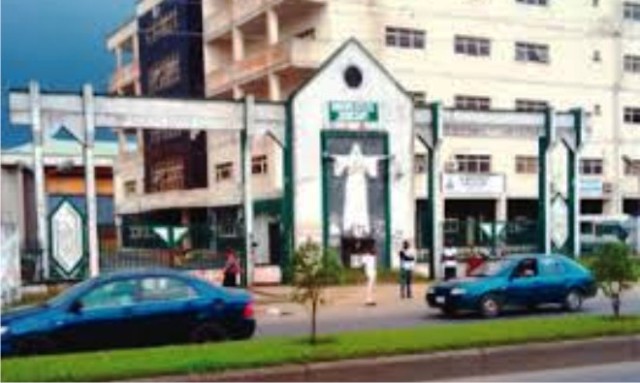
The Rivers State Judiciary has faulted the Nigerian Bar Association National over its March 26, 2026 press release condemning the jailing of a lawyer for contempt, insisting the trial judge acted lawfully to protect the court’s integrity.
In a rejoinder issued by Chief Registrar High Court,David D. Ihua-Maduenyi, Esq., the judiciary said it was necessary to “set the records straight” following reactions to the NBA’s statement on the contempt conviction of Mrs. Lovinah Ugbana Benjamin.
Titled: “JUDGES MUST NOT BULLY LAWYERS OR
ABUSE POWER TO PUNISH FOR CONTEMPT AS A TOOL
FOR INTIMIDATION OF LAWYERS”
RE: IN THE MATTER OF CONTEMPT OF COURT BY MRS.
LOVINAH UGBANA BENJAMIN
IN SUIT NO.
PHC/301/2016 CORAM C. NWOGU J., OF THE HIGH
COURT OF RIVERS STATE.
The state judiciary explained that case in question is Suit No. PHC/301/2016 before Justice Chinwendu Nwogu of the Rivers State High Court, where Mrs. Benjamin served as defence counsel.
The statement read thus
“We are compelled to make this rejoinder regarding the
incident of the conviction for contempt and subsequent
unconditional discharge of Mrs. Lovinah Ugbana Benjamin,
Learned Counsel for the Defendants in the above suit by Hon.
Justice Chinwendu Nwogu of the High Court of Rivers State in
order to set the records straight, and not allow the
misinformation, misconception and reactions arising from the
NBA National Press Release in the matter to fester as reality or
truth.”
In the suit under reference wherein the said Learned
Counsel appeared for the Defendants, the Learned Counsel
attempted to mislead the Court by her signed and filed final
written address, by knowingly and falsely presenting non-
existent facts and evidence of a witness. When confronted by the
Court, she admitted that what she stated in her final written
the address was not true and she was unapologetic.”
“The to uphold the dignity and integrity of the Court, which the
said Learned Counsel treated with clear and brazen contempt, the
Court after following due process, convicted her for contempt and
sentenced her to prison for 3 days only, instead of the 3 months
statutory term due to passionate plea from the Bar.”
“According to the statement the suggestion of the NBA National in paragraph 10 of the
Press Release under reference that “where a court considers
counsel’s conduct improper, the proper course is to invoke
recognised disciplinary mechanisms, including referring
counsel to the Legal Practitioners Disciplinary Committee
(LPDC), rather than resorting to summary punitive measures”,
is not an invariable rule because the act of the Defence Counsel
constitutes contempt in facie curiae which the Court can punish
instantly, hence the action of the Judge is not an abuse of power
or an act of intimidation.”
“Nevertheless, due to the numerous calls from respected
members of the Bar to the offices of the Chief Registrar and the
Honourable Chief Judge for the release of the said Learned
Counsel, and the intervention of the NBA Port Harcourt Branch
delegation led by its Chairman, Mrs. Cordelia U. Eke to the Judge.
in his Chambers in the morning of 26/03/2026 where the
delegation upon learning the true facts of the incident, apologised
and pleaded for the release of the said Learned Counsel.
“The Judge
having accepted the apology signed a production warrant and
upon her production in court and oral application by Mrs. Cordelia
U. Eke, discharged her unconditionally that same morning.”
The statement further stated that It is therefore shocking to read later that day the NBA
National Press Release signed by its President and Secretary, Mazi
Afam Joseph Osigwe (SAN) and Dr. Mobolaji Ojibara respectively,
fiercely threatening and hastily advocated the following ultimata and
the immediate release of the affected
Counsel.
:That the Hon. Chief Judge of Rivers State
immediately investigate the circumstances
surrounding this incident and take
appropriate administrative action.
That appropriate disciplinary steps be taken
by the National Judicial Council, where
necessary.
That the remand of Mrs. Lovinah Ugbana
Benjamin under the circumstances be
condemned and set aside”
“That all NBA branches in Port Harcourt and
its environs and all legal practitioners
boycott the proceedings before the Court of
Hon. Justice Nwogu for a period of 7 days if
Mrs. Lovinah Ugbana Benjamin is not
released within 24 hours.
“It seems to us that it is either the NBA Port Harcourt Branch
leadership did not relate the true position to the NBA National or
if they did, the NBA National decided to speak daggers, not peace
to impugn the Judge as a villain.
“We find the position of the NBA National on this subject very
offensive and embarrassingly raising a feeling of acrimony against
the Judge in particular, and the High Court bench of Rivers State
in general. We categorically state that the Hon. Justice Chinwendu
Nwogu is one of our respected and respectful Judges with
unblemished integrity.
We view this Press Release as an isolated departure from the
enterprising and amiable leadership of the NBA National,
especially its President, whom we hold in high esteem and
admiration.”
“Whilst we appreciate the concern of the NBA National in
bringing attention to the event of 25th March 2026, we assure that
the Bench and the Bar in Rivers State remain veritable partners
in the administration of justice.
“We firmly restate that the Bench in Rivers State holds the Bar
in high esteem and this event would not disrupt the cordial
relationship between the Bench and the Bar.”
-

 Maritime3 days ago
Customs Deploys Seven Patrol Vessels, Boost Waterway Anti-smuggling
-

 Sports3 days ago
Financial Issues Stall Chelle’s Eagles Contract Talks
-
Sports3 days ago
Four Private Clubs Gain Promotion To NPFL
-

 Sports3 days ago
NFF mourns ex-Eagles striker Eneramo
-

 Sports3 days ago
European Giants Circle For Osimhen
-

 Oil & Energy3 days ago
Global Energy Crisis Is Reviving Green Hydrogen
-

 Sports3 days ago
Tennis Event Boosts Grassroots Development Push
-

 Sports3 days ago
W/Cup Qualifier: Flamingos In Impressive Opener