
Politics
Of Governance And Clamour For Unicameral NASS

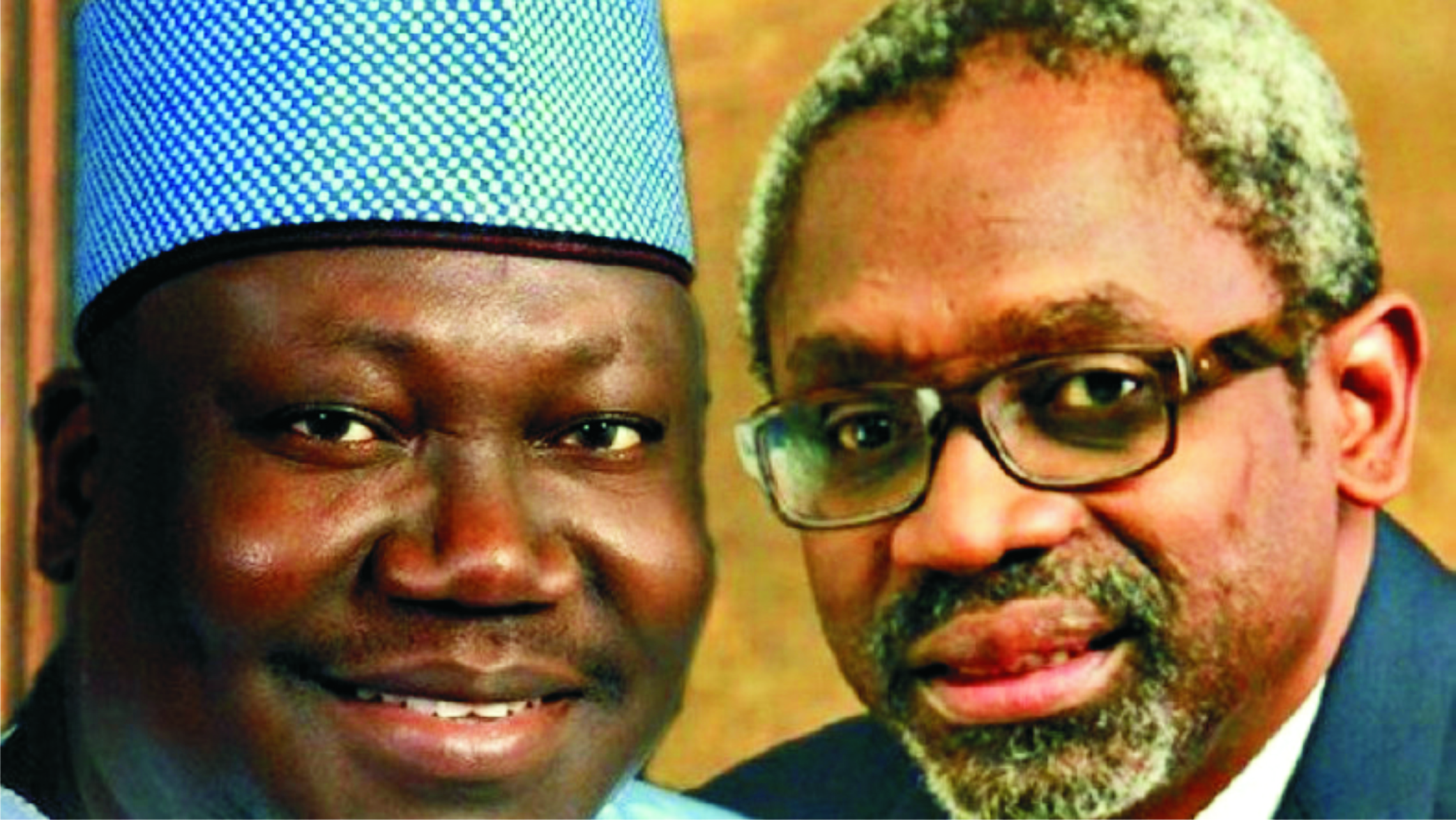
Although the heavy cost of maintaining Nigeria’s 469 federal lawmakers has always been a source of concern, “sitting politicians’’ have joined in the campaign for the reduction of the number of federal legislators.
In fact, one of the converts even suggested the scrapping of the Senate, as according to him, it is the House of Representatives that represents.
The converts: Gov. Kayode Fayemi of Ekiti; Sen. Rochas Okorocha, former governor of Imo and Chief Osita Chidoka, former Minister of Aviation, made their suggestions at different fora.
Chidoka who advocates for a unicameral legislature, made the suggestion after President Muhammadu Buhari presented the 2020 budget.
“In Nigeria, we need a unicameral legislature with six members each from the 36 states and two members from FCT.
“The legislature with 218 members will be less than 50 per cent of current members and term limit of three terms.
“The 2020 budget for the National Assembly (NASS) is N125bn, higher than the combined budget of Education N48 billion (excluding UBEC and TETFUND), Health N46 billion and Social Investment N30 billion.
“Reducing National Assembly members by half will provide over N60 billion annually for the social sector, that will be 600 billion over 10 years.”
Chidoka said the new National Assembly would be both efficient and economical.
He described the budget of N125 billion for the National Assembly as “hugely extravagant,” in an economy adjudged to have over 100 million poor people with gross infrastructure deficit.
The former Minister of Aviation said that funds saved from the contraction would be available for investment on policies and projects that would serve the common interest of the greater number of the population.
On his part, Fayemi advocated for the scrapping of the Senate in order to save cost and reduce financial burden on the government.
He also advocated for the adoption of Stephen Orosaye’s report which recommended the merging of federal government’s agencies that perform similar functions.
Fayemi said the type of legislative system that would be more productive for Nigeria in this current economic situation is a unicameral legislature.
“As it stands, the country’s legislative arm consisting of 109 Senate members and a 360-member House of Representatives, on yearly basis gulps millions of Naira.
“We do need to look at the size of government in Nigeria, and I am an advocate for a unicameral legislature.
“What we really need is the House of Representatives because that is what represents.
“You have three senators from little Ekiti and you have three senators from Lagos State, I guess the principle is not proportionality, but that if you are a state, you get it automatically.
“But I think that we can do away with that. There are several things that we can do away within the government,” he said.
Okorocha, the immediate past governor of Imo, now the Senator representing Imo West, on his part called for the reduction in the number of federal lawmakers representing a state.
He suggested that a Senator and three members of House of Representatives should represent each state.
“I want one senator and three House of Representatives members per state, which will cut expenses.
“A Senator and three House of Representatives members can do what many have been doing.’’
He said that the reduction in the number of representatives from the states would help cut cost and ensure effective representation.
While advocating for ways to cut cost and ensure effective representation, Okorocha said he would sponsor a bill that would seek for the reduction of the number of Senators and House of Representatives members for each state.
The Conference of Nigeria Political Parties (CNPP), has endorsed the suggestions for the reduction of the number of federal lawmakers.
The CNPP via a statement from its Secretary-General, Willy Ezugwu, said Okorocha spoke the truth concerning the need to reduce cost of running the National Assembly.
“The former governor simply told Nigerians the truth when he said what three Senators from a state can do; one lawmaker is capable of handling the same.
“Like Sen. Okorocha asked, what is too sacrosanct that Senators and House of Representatives members are doing that only a Senator per state can not do?’’
Also, two professors of political science at the University of Nigeria Nsukka (UNN), Jonah Onuoha and Aloysius Okolie, agreed with the advocates for unicameral legislature, which they reiterated would reduce the cost of governance.
Onuoha, who is the Head, Department of Political Science, said bicameral legislative system is not cost effective, especially in a country like Nigeria, where federal lawmakers receive bogus salaries and allowances.
“It takes huge amount of money to maintain bicameral legislative system, especially in a country like Nigeria where federal lawmakers receive bogus salaries and allowances monthly.
“Bicameral legislative system is not only costly but delays legislative processes of passing bill into law, since the bill will pass through the two chambers.’’
Onuoha, who is also the Director of American Studies in UNN, urged the country to adopt unicameral legislative system as it is cost effective.
“If the country settles for unicameral, the extra money it could have spent in paying salaries, allowances and maintaining the two chambers which runs into billions can be used to carry out capital projects,” he said.
He said if the country insisted on running bicameral legislative system, the number of lawmakers should be reduced.
Okolie in his contribution said that it was as result of bicameral legislative system that every year the budgetary allocation to the National Assembly had remained the highest.
“I subscribe to opinions in some quarters that the country should adopt unicameral legislative system as it will reduce the cost of running government as well as quicken legislative processes.
“The country is spending much to pay salaries, allowances and maintaining the two chambers — 109 Senators and 360-members of House of Representatives,’’ he said.
Okolie, former Chairman, Academic Staff Union of Universities, UNN branch, also said that as part of measures to reduce cost of running the government, the country should return to the regional structure.
“If we have one federal parliament and one regional parliament in each of the six geo-political zones, it will go a long way in cutting down cost of running the government,” Okolie said.
However, a legal practitioner, Mr Dele Igbinedion, said that people should not clamour for unicameral legislature just for cutting cost, adding that the issue is not whether or not a bicameral legislature is good or bad.
“I believe the bicameral system should remain because it has been proven to be sustainable and necessary. The process of law making is a very serious business which cannot start and end within a short time.
“The problem with the unicameral system which we have at the state level is that a bill can be introduced and passed the same day and sent to the governor for assent.
“This is not the case in the National Assembly; the two chambers must meet and possibly form a joint committee to look at the bill before sending it for presidential assent.
“The rigorous process a piece of legislation has to pass through forms part of the beauty of democracy.
“I think Nigerians should stop looking at the legislature each time there is a slight challenge and asking if we really need that arm of government.
“The judiciary often doesn’t respond to executive excesses, except there is a case it initiates, but in the legislature, a member can raise it as a matter of urgent public importance, national importance or ethics and privileges, and the attention of the parliament can be brought to it.’’
Apparently, Igbinedion was surmising that many state assemblies have become rubber stamps because the governors could easily “conquer’’ them, because it is only a single chamber.
Stakeholders say that unicameral and bicameral legislature have their advantages, but the country should settle for an option that cuts costs and wastages.
Ukoh writes for News Agency of Nigeria(NAN).
Obike Ukoh



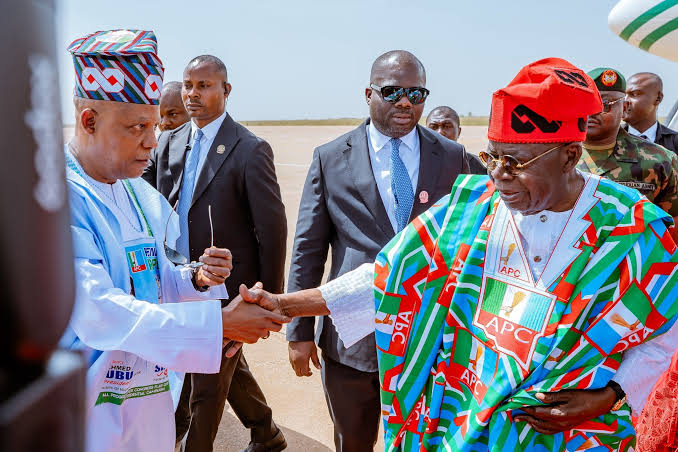
The campaign rally, held at the Kaduna Township Stadium, attracted Vice-President Kashim Shettima, APC governors, party leaders, federal and state lawmakers, political stakeholders and supporters from across the country.
The flag-off marks the beginning of the APC’s drive to secure a second presidential term for President Tinubu, with the party expected to promote its achievements, defend its economic reforms and outline its policy priorities under the proposed Renewed Hope 2.0 agenda.
Kaduna’s selection for the campaign launch underscores the strategic importance of the North-West, a region with a substantial voting population and considerable influence on presidential election outcomes.
The APC faces a significant challenge in Kaduna, where the Peoples Democratic Party’s presidential candidate, Alhaji Atiku Abubakar, defeated President Tinubu in the 2023 election. The rally therefore provides the ruling party an opportunity to strengthen its grassroots structures and regain electoral support in the state.
Addressing supporters, Vice-President Shettima appealed to Northern voters, highlighting President Tinubu’s political relationships with prominent Northern leaders, including Alhaji Abubakar, Mallam Nuhu Ribadu and the late President Muhammadu Buhari.
The Vice-President’s appeal reflects the APC’s determination to consolidate its support in the North as the party intensifies preparations for the presidential contest.
The Renewed Hope 2.0 agenda is expected to feature prominently in the campaign, providing a platform for President Tinubu to explain his administration’s economic policies and outline plans for another term.
However, the President’s record on economic reforms, rising living costs, petrol prices, employment, infrastructure and insecurity is expected to attract considerable scrutiny during the electioneering period.
-

 Education2 days ago
FCE Yola Graduates 3,555 Teachers , Seeks Upgrade to University
-

 Sports2 days ago
Nigerian Trio Target Titles At PFL Africa Finals
-

 Niger Delta2 days ago
Diri Restates Stance On Lagos-Calabar Coastal Highway
-

 Niger Delta2 days ago
C’River, NUJ Pay Tribute To Late Guardian Editor
-

 News2 days ago
NDLEA Recovers Tons Of Illicit Drug Consignments In Nine States
-

 Opinion2 days ago
Checking Voter Apathy In Nigeria’s Electoral Process
-

 Politics2 days ago
2027: DICKSON’S EX-ALLY VOWS TO WORK AGAINST NDC INTEREST IN BAYELSA
-

 Politics2 days ago
2027: GROUP PLEDGES 40,000 SUPPORTERS FOR COALITION CANDIDATES IN RIVERS