
News
15 Shiites Killed During Ashura Procession In 19 States, IMN Claims

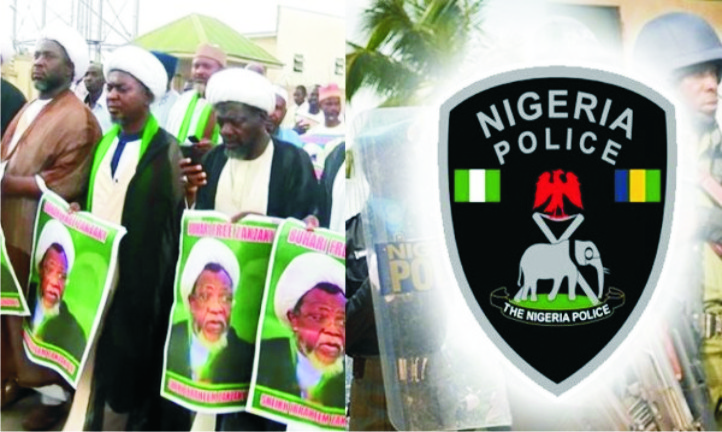
Islamic Movement in Nigeria has confirmed the killing of 15 Shi’a Muslims during yesterday’s Ashura processions by the sect across the 19 Northern states and the Federal Capital Territory (FCT).
A statement by IMN’s spokesman, Ibrahim Musa, said three persons died in Kaduna, six in Bauchi, another three in Gombe, two in Sokoto, and one in Katsina during the processions.
According to Musa, the 15 Shi’ites were killed by armed policemen who allegedly attacked the worshippers in a bid to disperse them during the sect’s street demonstrations.
He said, “These casualty figures may, however, rise due to the fatal gunshot wounds sustained by some of the peaceful mourners.
“Today’s (Tuesday) show of shame and rage by the police across the states was sequel to the tragic orders given to it by the Inspector General of Police, Mohammed Adamu to brutally attack the peaceful Ashura mourners.”
It was gathered, however, that the Ashura processions ended peacefully in the cities of Abuja, Jos, Kebbi, Minna, Lafia, Yola, Gusau, Zaria, Kano, Jalingo, Damaturu, Hadejia and Potiskum.
Speaking further, the IMN Spokesman said: “That the Ashura mourning procession ended peacefully in places not attacked by the police is sufficient evidence as to who the instigators of violence are whenever we are carrying out our legitimate religious duties.
“We are grateful to Allah the Almighty that has granted us the courage to come out in several cities and villages across the country to commemorate the brutal killing of Imam Hussein (AS), the Grandson of Prophet Muhammad (S) as it is done in several cities across the globe, despite intimidation and threats by the Federal Government and its agents, acting on behalf of the Saudis by proxy.”
Three members of the Islamic Movement in Nigeria (IMN) were killed in the early hours of yesterday as police dispersed a procession of members of the group to commemorate Ashura day.
The Shiites are demanding the release of their leader, Sheik Ibraheem El-Zakzaky, who has been in detention for alleged murder since December, 2015.
It was gathered that about one hundred members of the group had gathered at Hayin Danmani Junction along Nnamdi Azikiwe Bypass in Kaduna where they were to proceed on the procession.
Members of the IMN came out at about 6 am, ostensibly to beat the police who had earlier vowed to enforce the ban on public procession in Kaduna State.
Halfway into the procession, it was gathered that a detachment of policemen tried to disperse the gathering, leading to a clash between them and members of the group.
It was gathered that at the end of the encounter, three members of the group were killed while about ten others sustained various degrees of injuries.
However, the spokesman of the Kaduna State Police Command, Yakubu Sabo, said no casualty was recorded as the police “dispersed the protesters professionally”.
He claimed that it has become the standard practice by members of the IMN to claim that police killed their members even when such incidence did not take place.
The IMN popularly known as Shiites, have defied the directive of the Inspector General of Police, Mr Mohammed Adamu, not to hold further protest in the country.
Adamu had in a statement cautioned the group to withdraw it planned protest, noting that the activities of IMN remained proscribed in line with the Terrorism (Prevention) Proscription Order Notice of July 26.
He said that the procession is targeted at disrupting public peace, order and security in the country.
Adamu directed the commissioners of police in all the states of the federation and the Federal Capital Territory (FCT) to avert any planned procession and/or disruption of public peace by IMN members.
He equally directed all supervisory assistant inspectors general of police to put in place concrete measures to prevent the procession.
But the group, yesterday, defied his order and stormed the streets of Wuse, in Abuja, to carry out its Ashura mourning procession.
The Ashura procession is an annual religious ritual carried out by the Shia Islamic sect all over the world on September 10.
Recall that the group had on Monday said that noting would prevent it from holding its peaceful protest, yesterday.
In Bauchi State, there was tension as many scampered to safety when the Nigeria Police Force in the state clashed with members of the Islamic Movement of Nigeria.
The incident was said to have occurred about 10am, yesterday at the Central Market Roundabout and Tashan Babiye area of Bauchi, the state capital.
The police reportedly fired teargas and gunshots to disperse the protesters causing people to scamper to safety.
Most shops in the popular Central Market were shut as traders immediately closed their shops and ran for their lives.
Although there has not been any detail of deaths from the incident, eyewitnesses say that several people were injured.
An eyewitness, who refused to be mentioned, said that many of the Shiites were arrested and by the police.
He said: “Early in the morning, the Shiites gathered to embark on their usual procession, but the Police blocked the road and fired teargas to disperse them.
“They (police) also fired gunshots and many were injured. Several others were arrested and taken away in police vehicles to the hospital. I heard that the Shiites also threw stones at the police, although I didn’t witness that part, I was only told.
Another eyewitness, the Chairman of the Nigeria Union of Journalists in Bauchi State, Alhaji Ibrahim Mallam-Goje, was also caught in the incident.
He told newsmen that he also suffered from the teargas that was fired by the police around Tashan Babiye around Bakin Kura area.
“Actually, I came out of my house and was on my way to the office this morning when I ran into the members of the Islamic Movement of Nigeria who were carrying out their procession.
“You know they were protesting today being the 10th day of Muharam, the new month of the Islamic Calendar. Without my knowledge that the Police were there and as I arrived there, the Police teargassed the entire area and all the people there were affected, including myself, we were affected by the teargas,” he said.
Also in Potiskum, Yobe State, members of the IMN, yesterday, observed their annual Ashura procession.
Potiskum is one of the strongholds of the Shiites in the north apart from Kaduna, which is the headquarters of the movement.
Our correspondent, who monitored the situation, observed that the procession, which was led by the leader of the group in Potiskum, Malam Ibrahim Lawan, started at Misau road at Yaro Damboa junction through other streets in Potiskum and terminated at Ari-Kime junction where the Shiites dispersed to their homes.
A huge crowd of followers, including women and children, were sighted during the procession which was carried out without any breach of law and order.
No incident of violence was recorded during the procession as the security came after the procession was already winded up.
The spokesman of the group in Potiskum, Ibraheem El–Tafseer in told newsmen that the procession in the state was successful.



The Rivers State chapter of the All Progressives Congress Christian Leaders Forum has expressed strong confidence in the capacity of All Progressives Congress (All Progressives Congress) candidates in the state to deliver effective governance if elected into office in the coming elections.
The State Coordinator of the forum, Archbishop Lucky Aroh, made this known during a breakfast and thanksgiving meeting held in Port Harcourt, where leaders gathered to pray for the stability of the party and the safety of its candidates ahead of the 2027 general elections.According to him, the meeting was convened to seek divine intervention for peace, unity, and security among APC candidates across Rivers State.
“Today we are praying for APC stability in Rivers State and the security of our candidates that have been elected to contest the 2027 elections. It is a breakfast meeting,” Aroh said.
He further expressed optimism that the party’s candidates would not disappoint the people if entrusted with leadership responsibilities.
“They will not fail when elected into office. We are here as fathers of the land to let them know, and I must tell you the truth that these are the authentic people that will do well in Rivers State,” he added.
Speaking earlier, the National Chairman of the forum, Professor Olanrewaju Abraham, commended the Rivers State chapter for organizing the programme, noting that the national body of the forum believes strongly in the power of prayer.
He stated that political leadership provides an opportunity to influence society positively, including advancing moral and spiritual values, while expressing confidence that APC candidates at all levels would emerge victorious in the upcoming elections.
Also speaking, the Rivers State Women Leader of the APC, Hon. Darling Amadi, praised the forum for its commitment to prayers for peace, stability, and the protection of party candidates.
Represented by the Deputy Women Leader of the party in the state, she described the initiative as commendable and urged other political and support groups within the party to emulate the gesture in promoting unity and stability.
By: John Bibor, Menebe Emmanuel & Fortune Paibi
Prominent businessman and philanthropist, Elder Anthony Osagwe-Ogo, was celebrated in grand style as he marked his 70th birthday anniversary, with distinguished Nigerians, business leaders, and golf enthusiasts gathering to honour his remarkable contributions to society.
The colourful celebration took place at the Port Harcourt Golf Club, where friends, associates, and well-wishers converged to pay tribute to the revered elder statesman.
Chairman of the occasion, High Chief (Dr.) Ikenna Okafor, described the celebrant as a detribalised Nigerian whose generosity, humility, and commitment to humanity have earned him admiration across different communities and backgrounds.
According to Dr. Okafor, Pa Osagwe-Ogo’s impact on society and the development of his community remains unparalleled. He noted that members of the golfing community are proud to be associated with a father figure who consistently promotes the welfare and well-being of those around him.
He further stated that the history and growth of the Port Harcourt Golf Club cannot be told without acknowledging the significant role played by the celebrant, whose wisdom, encouragement, and leadership have helped sustain the club over the years.
“We are here to celebrate a man who has impacted humanity positively, a peace-loving individual and an epitome of hope for the younger generation. We pray to emulate his virtues. Today, we celebrate a bridge-builder, a trailblazer, and an iconic leader whose life continues to inspire many,” Dr. Okafor said.
He expressed delight at the large turnout of guests from various walks of life, describing it as a testament to the respect and affection Pa Osagwe-Ogo commands within and beyond Rivers State.
In his response, the celebrant, Pa Anthony Osagwe-Ogo, expressed profound gratitude to God for preserving his life and granting him the privilege of attaining the milestone age of 70.
He also thanked members of the Port Harcourt Golf Club, family members, friends, and associates for identifying with him during the celebration and for their unwavering support over the years.
The event featured the cutting of the birthday cake, presentation of awards to deserving members of the club, goodwill messages, and moments of celebration among guests.
The ceremony was attended by notable personalities from the business community, the golfing fraternity, and other sectors, all of whom joined in celebrating the life and legacy of the respected elder statesman.
Rivers State Governor, Sir Siminalayi Fubara, and the Permanent Secretary of the Rivers State Ministry of Information and Communications, Dr. Honour Kuru Sirawoo, have been honoured with awards of recognition in connection with the 2026 Democracy Day celebrations held in Port Harcourt.
The awards, which formed part of activities marking Nigeria’s Democracy Day on June 12, were formally presented on Tuesday at the Ministry of Information and Communications in Port Harcourt.
Presenting the awards was Hon. Abdul Hameed Oladipupo Alli, popularly known as “Mr. Nigeria,” Publisher of Asiwaju Trumpet Magazine and Achievers World International Magazine.
Governor Fubara was recognised for his efforts in sustaining peace, stability, and a conducive political atmospherJohn Bibor / Menebe Emmanuel / Fortune Paibie in Rivers State. The organisers noted that his administration has fostered harmony and strengthened civic participation across the state.
Dr. Sirawoo, on the other hand, was honoured for his exemplary administrative leadership and significant contributions to effective information management within the Ministry of Information and Communications.
Representing Dr. Sirawoo at the presentation ceremony, Dr. Christian Davies received the award on his behalf and expressed gratitude for the recognition. He described the honour as a reflection of Dr. Sirawoo’s unwavering commitment to professionalism, excellence, and dedicated public service.
Dr. Davies assured the organisers that the award would be formally conveyed to the Permanent Secretary.
The event also featured the presentation of commemorative publications highlighting major governance and civic milestones in Rivers State, including Easter celebrations, Workers’ Day activities, the Governor’s third anniversary in office, and Democracy Day programmes.
Organisers of the awards commended the Rivers State administration for what they described as sustained peace, political stability, and improved civic engagement, noting that these achievements have contributed significantly to the state’s continued development.
By: Jessica Sambol