Connect with us

Niger Delta

Groups Call For More Commitment From HYPREP On Ogoni Clean-Up

Published

on

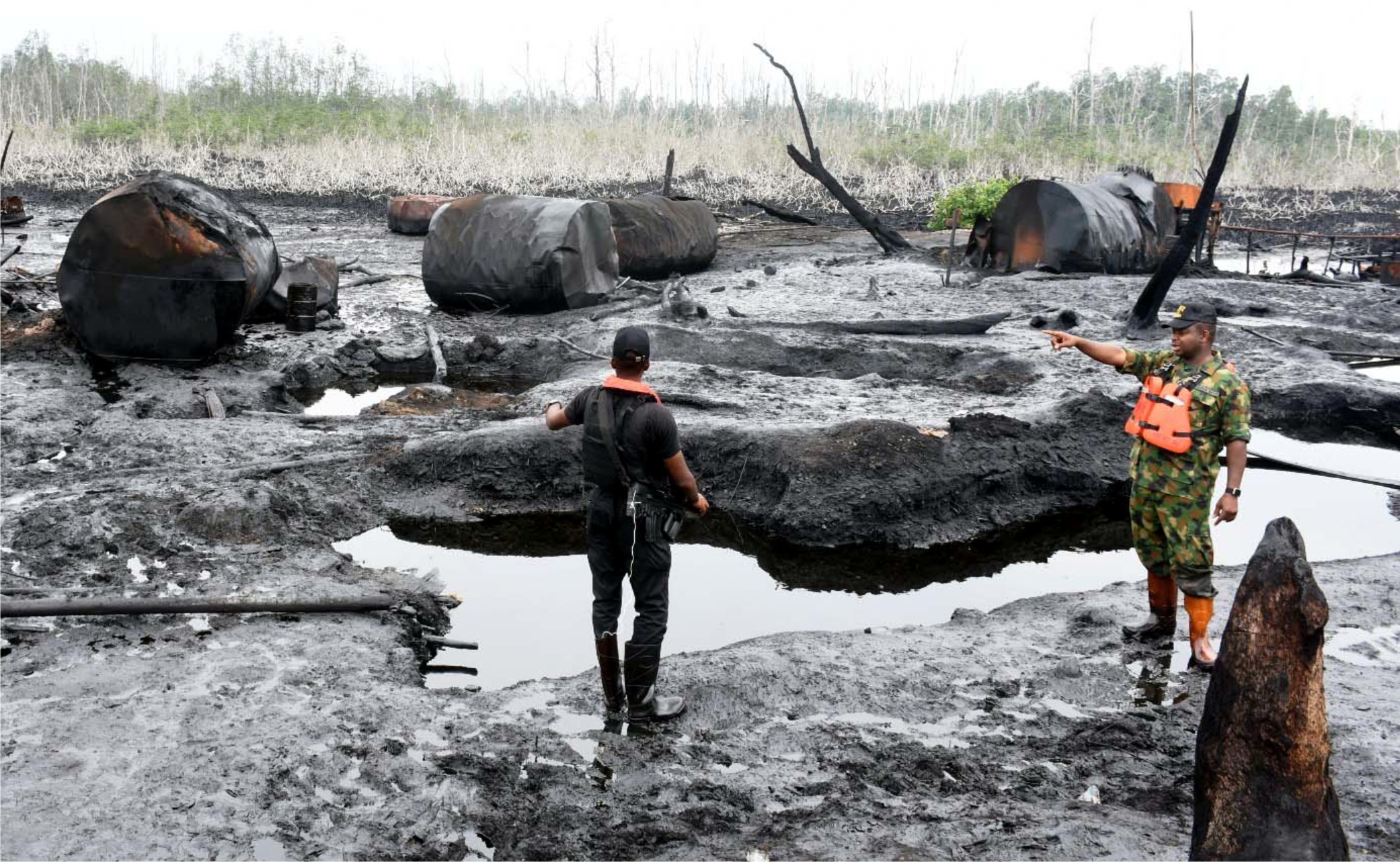
Some civil society organisations (CSOs) and other strategic stakeholders have called on the Hydrocarbon Pollution Remediation Project (HYPREP) to demonstrate more commitment and openness in the implementation of the United Nations Environment Programme (UNEP) recommendations on Ogoni clean-up.
Speaking at a stakeholders’ strategic meeting organised by Fostering Advancement of Community Empowerment (FACE) Initiative last Monday in Port Harcourt, the Executive Director of the initiative, Mr Inatimi Odio said that the people’s expectations were very high, affirming that the slow pace of the clean-up was eroding the people’s confidence in the clean-up process.
Odio further called for more commitment in community engagement on the part of HYPREP in order to break the vacuum created as a result of poor communication.
He charged HYPREP management to do more inclusive engagement with community members, so as not to be perceived as being partial.
The executive director noted that the FACE Initiative would collaborate with other CSOs and community groups to contribute to expanding community interactions and engagements through sustained consultations and sensitisation on the importance of the Ogoni clean-up exercise as well as strengthening the on-going advocacy for timely implementation of the UNEP report, particularly the emergency measures.
Speaking also, the Executive Director, African Citizens Initiative Rights and Development (ACIRD), Mr Young Kigbara stressed the need for the independence of HYPREP so as to reduce the bureaucracy that currently exists, noting that this has contributed to the pace of the clean-up exercise.
Kigbara attributed the slow pace in HYPREP activities to overbearing and cumbersome bureaucratic process in the system of getting funds approved by the Federal Executive Council.
He also blamed HYPREP for not thinking through most of its activities, claiming that HYPREP does not have a work plan, adding that his claim was based on the fact that if HYPREP had one, it would have made same available for the public to easily access.
On her part, the Founder and Chief Executive Officer, Ketbekache Women Development Resource Centre, Madam Emem Okon said that the centre’s concern was on how the women in the impacted communities were coping with the non-implementation of the emergency measures as stipulated by the UNEP report since it was released in 2011.
should be included in the process of discussion, dialogue, and sensitisation, so that they can take ownership of the project and the process of the clean-up in Ogoniland”, Okon added.
Similarly, the Executive Director, Community Conciliation and Development Initiative (CCADI), Mr Kelechi Amaechi said that the programme was aimed at gathering CSOs on how to support the clean-up process in Ogoni in a way that meets best international practices and the aspirations of community people.
Amaechi further explained that it was an opportunity for the evaluation of what HYPREP has done or failed to do as well as what key actors were doing while looking at gaps and innovations they could bring to the table so as to ensure more transparent and accountable delivery in the Ogoni clean-up exercise.


Susan Serekara-Nwikhana

Continue Reading

Niger Delta

Stakeholders In Delta Seek Stronger GBV Action, Women’s Leadership

Published

on

Stakeholders in Delta State convened in Asaba for a leadership workshop organised by Otdel Health Heritage and Environmental Initiative (OHHEI), focusing on Gender-Based Violence (GBV) and women’s participation in decision-making processes.
OHHEI Project Director, Mr. Peter Olayinka, represented by a consultant, Juliet Obiajulu, urged participants to contribute meaningfully toward advancing women’s leadership and combating GBV across communities in the state.
He said the workshop aimed to strengthen participants’ capacity to influence policies, challenge harmful cultural norms, and reinforce initiatives designed to prevent and respond to GBV.
Olayinka said women often faced bias even when they occupied leadership positions, and stressed that gender diversity improved the quality of decision-making and promoted innovation and accountability in governance structures.
Speaking, the Chairperson of the Association Against Child Sexual and Gender-Based Violence, Mr Eris Jewo-Ibi,  identified cultural norms, domestic responsibilities, political resistance, and grassroots barriers as constraints to women’s participation.
Delta State GBV Desk Officer, Mrs. Rosemary Okpuno, emphasised that effective decision-making required women’s perspectives, adding that inclusion remained critical to addressing persistent gender-based challenges.
Voke Angbagh of the Delta State Ministry of Justice outlined penalties for rape and called for the establishment of special courts to handle sexual offences cases.
Angbagh said frequent adjournments delayed justice for survivors, stressing that dedicated sexual offences courts would ensure timely trials and stronger protection for victims in Delta State.
The Tide’s source reports that facilitators identified cultural acceptance of violence, unequal power relations, discrimination, poverty, limited education, and low self-esteem as major drivers of GBV.
They emphasised that violence and exclusion resulted in social, physical and emotional harm, imposed economic costs, reinforced harmful stereotypes, and widened existing gender inequalities.
The source also reports that OHHEI, a local non-profit organisation, focuses on education, health, environment, and social justice, promoting sustainable development initiatives with gender equality at the centre of its interventions.
Continue Reading

Niger Delta

C’River Suspends Taskforce Activities Over Drivers’ Protest

Published

on

The Cross River State Government has suspended all taskforce activities connected to commercial transportation and ticketing across the state.
The State Governor, Bassey Otu, announced the suspension at an emergency stakeholders meeting on Friday in Calabar.
It would be recalled that commercial drivers in Calabar metropolis took to streets on Thursday to protest alleged multiple taxation and extortion by government agencies.
During the protest, the drivers alleged that taskforce groups claiming to represent the state government openly harassed and extorted them.
Represented at the meeting by Ekpenyong Akiba, his Special Adviser on General Duties, Otu said the suspension would subsist pending further review of the situation.
The Governor stated that the state government did not commission anyone to extort drivers in the name of task force.
He urged commercial drivers and other road users to remain law-abiding while government worked out a lasting solution.
On his part, the Chairman, Road Transport Employers Association of Nigeria, Calabar Metropolis, Mr. Sunday Dennis, expressed optimism that the dialogue would yield positive results.
He said the meeting had provided an opportunity for the aggrieved commercial drivers to present their concerns directly to the state government.
Also speaking, the Chairman, Unified Drivers Association, Mr. Nta Henshaw, described the harassment on drivers as worrisome, and urged the state government to be decisive in resolving the matter.
Continue Reading

Niger Delta

A’Ibom Assembly Urges More Private Investments In Agriculture

Published

on

The Akwa Ibom State House of Assembly Committee on Nutrition and Food Security has called for more private sector investments in agriculture.
The Chairman of the Committee, Mr. Moses Essien, made the call when the committee visited Aviclaire Farms, a private establishment in Usung Idem, Uruk Usoh in Abak Local Government Area.
Essien, who represents Ibiono Ibom in the Assembly, commended the Management of the farm for partnering an NGO, ECEWS, to promote private investment in agriculture.
He commended the partners for adopting climate-smart agriculture initiatives in their operations, adding that such move would promote food security.
“Your interest in using transformative intervention to promote food security is a veritable way of complementing the efforts of the state government,” he said.
The lawmaker continued that adopting practical climate-smart agriculture model would help to generate employment, improve nutrition outcomes, and strengthen food sufficiency.
He further said he was impressed with the strides recorded by the partners, saying, “your investment has created jobs for no fewer than 2,000 youths.
”You are an example of an environment-friendly investor. I urge Akwa Ibom residents to embrace environment-friendly and technology-driven agriculture models,” he said.
Earlier, the Chief Executive Officer, ECEWS, Dr. Andy Eyo, who conducted the committee round the farm, said the collaboration was conceived to demonstrate the viability of climate-smart farming in ensuring food sufficiency.
Eyo said the farm, which commenced operations with four greenhouses, had expanded to 14 within two years, and currently supplying high-quality produce to major markets in Uyo and neighbouring communities.
He said ECEWS was exploring cooperative frameworks to enable rural farmers and women’s groups to adopt greenhouse technology for sustainable livelihoods.
In her remarks, the Chief Executive Officer of Aviclaire Farms, Mrs. Victoria Eyo, said the controlled-environment ensured precision cultivation and consistent yields.
She further said the farm served as a capacity-building centre for students, interns, and agri-business trainees.
Continue Reading

Trending