
News
Edo APC Crisis: Oyegun Slams Oshiomhole …National Chair Must Respect Party Decision -Obaseki …Edo Govt Must Obey Constitution -Oshiomhole

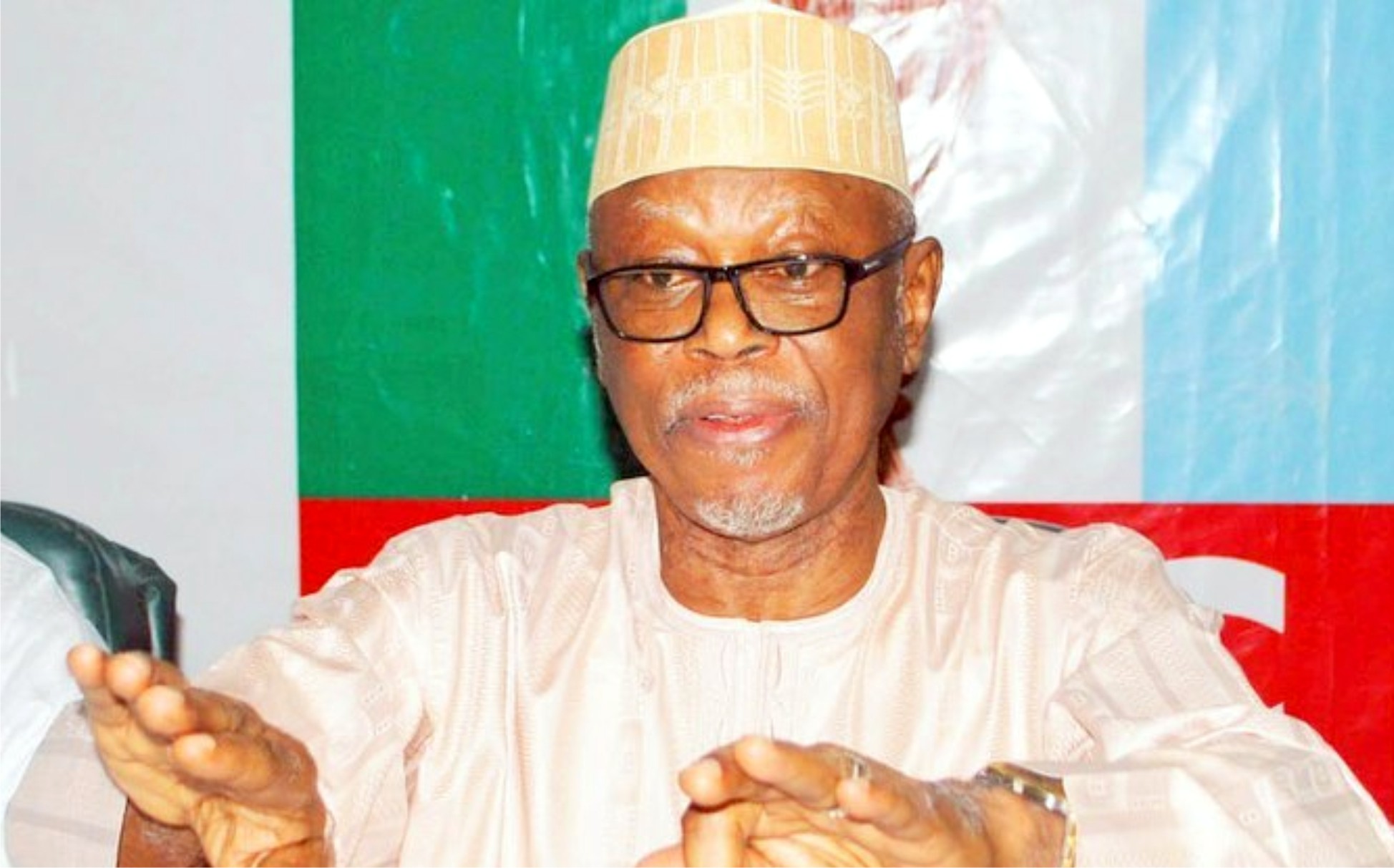
The immediate past National Chairman of the All Progressives Congress, John Odigie-Oyegun, has accused his successor, Adams Oshiomhole, of working to undermine Governor Godwin Obaseki of Edo State.
Odigie-Oyegun and Oshiomhole are both former governors of the state.
He said the national chairman was guilty of anti-party activities by working against the interest of the governor ahead of the governorship election holding next year.
Odigie-Oyegun spoke while reacting to the decision of the APC National Working Committee on the crisis rocking Edo State House of Assembly.
Nine out of the 24 lawmakers were inaugurated on Wednesday after the election of Principal Officers.
The APC had in a statement by its National Publicity Secretary, LanreIssa-Onilu, condemned the action.
“As a party that has made a commitment to change, we strongly reject any attempt to recourse to brigandage of the past, when democratic practices were defined by the inordinate whims of people in power.
“It is an unfortunate reminder of Peoples Democratic Party’s queer brand of democracy. Practices like this are unacceptable under APC-led administration.”
The APC vowed that it would use all democratic means necessary to ensure the right thing was done.
Meanwhile, Odigie-Oyegun, who spoke through his Special Assistant on Political Affairs, Chief Ray Murphy, lamented that Obaseki was receiving the highest distractions from his own political party and not from the opposition Peoples Democratic Party.
He said, “Today, there is rancour in Edo State. They all boil down to godfatherism that is heating up the polity in the state.
“Obaseki is the executive governor of Edo state and he should be allowed to exercise the powers vested in him by the law. To what purpose is the APC chairman putting the state under tension?
“As a governor under APC platform, he should be allowed to run out his tenure before they decide whether to bring him back or not. There are so many antics going on and you don’t need to be a prophet or Babalawo to trace where they are coming from. They are coming from the APC.”
Odigie-Oyegun stressed the need for APC to remain united, adding that the power game was all because of the 2020 governorship election.
“I want to think that they are all targeted at weakening the governor of Edo state. Ordinarily, the man in Edo should be given every support so that he can succeed to fend off the opposition PDP already around the corner.
“I have not heard that PDP or Edo leaders want to remove Obaseki. What has been trending is how his predecessor who happens to be the party chairman does not want him back in the office.”
He added, “This party must be stronger because we cannot go into the 2023 general elections with this discordant tunes especially as President Buhari will not be contesting.
“We need to get our acts together. Oyegun has no personal grievances with Oshiomhole but Nigerians must know that he cannot go to equity with unclean hands.”
Calls placed to the Chief Press Secretary to Oshiomhole, Simon Ebegbulem, indicated it was not available.
He had also yet to respond to a text message sent to him by our correspondent.
In his reaction, the Edo State Governor, Godwin Obaseki, has charged Adams Oshiomhole, National Chairman of the All Progressives Congress, APC, to respect the decision of the party in the state concerning the inauguration of the State House of Assembly.
He said this while berating Oshiomhole over his remarks concerning the inauguration of the State House of Assembly.
Obaseki’s charge was contained in a statement issued by his Special Adviser on Media and Communication Strategy, Crusoe Osagie.
The statement reads: “We read with utter astonishment, a statement credited to the national chairman of the All Progressives Congress (APC), Comrade Adams Oshiomhole, with respect to Governor Godwin Obaseki’s alleged role in the inauguration of the Edo State House of Assembly.
“Apart from the fact that he based his conclusion on a totally false and baseless premise, we believe that he could have shown that he does not have a vested interest by simply inquiring from his friend, the governor or any official of the State Working Committee of our party as to what actually transpired.
“His failure to satisfy the basic tenets of natural justice, which makes fair hearing from all sides of a matter mandatory, has clearly exposed his bias on this issue. For the avoidance of doubt, all the decisions relating to the leadership of the Edo State House of Assembly recently elected by the House were taken by the State Working Committee and leaders of the party from across the state.
“In reference to the rule of party supremacy, which our national chairman so eloquently professes, the governor and all party members are obliged to respect the party’s decision, as we expect the national chairman to also do.”
Meanwhile, the National Chairman of the All Progressive Congress, APC, Comrade Adams Oshiomhole, weekend, said that he would not need short-cut to sustain his position in the system.
Oshiomhole stated this while reacting to the allegation that he was behind the crisis in the Edo State House of Assembly because he has allegedly constituted himself as a godfather and wanted to dictate what happens in the state.
The APC national Chairman who was reminded that he fought godfatherism in the state but was now being accused of playing the same role he once fought to a standstill, told State House correspondents that sought his opinion on the brouhaha arising from the inauguration of the Edo State Assembly that the issue of him playing the role of a godfather was all accusation.
He rhetorically asked, “What is the evidence? It’s all about accusation. The media has a duty. They have to give you the particulars of that godfatherism. What’s the evidence? I am a democrat.
“That I accept the credit, not only that I fought godfatherism, I launched the one man one vote campaign to fight against election rigging anywhere in Nigeria and by the special grace of God under PDP (Peoples Democratic Party) with (Chief Tony) Anenih alive, and at his best, I won all the 18 local government areas and I won 95 percent of the total votes cast in my second term election.
“So, Edo people know me and I know them. I don’t need short-cut to sustain my position in the system. But you know that there is nobody in Nigeria who is not open to accusations. The important thing is that he who accuses should give you proof.”
Asked on his position over the ongoing argument and brewing crisis over the inauguration of the Edo state House of Assembly, he said,” It’s about rule of law. As journalists there are questions you don’t need to ask me because you know the answer. You know the law provides for how the House should be proclaimed transparently.
“The day it’s announced, members-elect are informed of date and time for inauguration. These are clearly spelt out in the Nigerian constitution. And just last week (about two weeks ago), you were all witnesses to how President Muhammadu Buhari issued proclamation letter to the Clerk many days before, stating date and time of the inauguration of the two chambers of the National Assembly.
“Even while we are still negotiating to ensure that our party was not divided on the floor of the House, without prejudice to the outcome of those negotiations, the President issued proclamation because he is obliged by the constitution to do so whether he likes it or not and he did.
“He did it transparently. He has led us by example. For me, it’s very embarrassing if any state governor, particularly of APC extraction, will do anything that is less than what the constitution says and the example that our President has set.”
He said that in the case of the Edo State House of Assembly inauguration, the proclamation was not publicised and that the members were not informed, adding that the inauguration took place at 9:30 pm. He said the time was what a Supreme Court judgement described as “nocturnal hours.”
He further added, “Business of parliament are done transparently; they are not secret cult. Now you have 24 member House, 19 members protested. You have six and you carry people in their short knickers (sic). Even in the House they have rules, the dress code. So, it happened in Edo, it has happened in Bauchi.
“Like Edo, Bauchi used the minority of 10 to go and proclaim the House and lock out 20 APC members and got those 10 people to elect, exactly the way Edo did with six and then co-opted other three people to become nine and even at that it is nonsense.
“For us, these are completely illegal. And that is why we said so. If it is wrong, it is wrong whether it is done by APC or by PDP; whether is the Chairman’s state or not. The law is blind to those sentiments. I believe by the end of the day, the solution is return to the rule of law.
“Let’s properly follow the law; let the parliament do what they have to do but people have the right to lobby for people they want and whom they prefer. This is also legitimate. Like you saw in the National Assembly, after all the lobbies people have the right to vote and you saw them in the National Assembly conducting secret ballot.
“We have an APC Senator, who in spite of all the efforts invested by all our leaders including Mr President, insisted that he will contest. The law allowed him so, we couldn’t stop him. The President could have said SSS (State Security Services) please find excuse to invite him for questioning the day before; put him away until the elections are over.
“But we won’t do that. That is not the change we promised. The change we promised is to try to improve in the ways public institutions are managed and how rules are implemented. I believe that it will be resolved.”



The Chief of Army Staff (COAS), Lt.-Gen. Waidi Shaibu, has tasked troops of Operation SAVANNAH SHIELD to dominate the battlespace and intensify offensive operations against kidnappers, bandits and other criminal elements in the North Central region.
Shaibu gave the directive yesterday during his maiden operational visit to the Headquarters, Joint Task Force North Central (JTF-NC), at Sobi Barracks, Ilorin.
This is contained in a statement by the Acting Director, Army Public Relations, Col. Appolonia Anele, in Abuja, yesterday.
Shaibu said the Nigerian Army would remain resolute in its constitutional responsibility of safeguarding lives and property, stressing that troops must sustain pressure to decisively deny criminal elements freedom of action.
He assured personnel of continued deployment of combat enablers and operational resources to enhance clearance operations and dismantle criminal hideouts across Kwara and Niger states.
The COAS reaffirmed his commitment to troop welfare, noting that improved welfare remained critical to sustaining morale, operational effectiveness and combat readiness.
He urged the troops to remain disciplined, professional and loyal to the Constitution and the democratically elected government.
Earlier, the Theatre Commander, JTF-NC Operation SAVANNAH SHIELD, Maj.-Gen. Yakubu Yahaya, commended the COAS for his strategic leadership and support.
Yahaya assured that troops would remain committed and steadfast in restoring peace and stability in the region.

The Nigerian Navy says it is expanding training and infrastructure to address emerging security threats and strengthen operational efficiency across formations and units nationwide.
The Chief of Naval Staff, Vice Adm. Idi Abbas, spoke during the inauguration of projects at the Nigerian Navy Basic Training School (NNBTS) in Onne, Rivers as part of activities marking the Nigerian Navy’s 70th anniversary.
Abbas, represented by the Flag Officer Commanding, Naval Training Command (NAVTRAC), Rear Adm. Ebiobowei Zipele, said the projects reflected significant progress made by the navy since its establishment in 1956 from the British Royal Navy.
“Training and infrastructure have improved significantly to meet contemporary security challenges and fulfil the navy’s constitutional responsibilities.”
According to him, the anniversary provides the navy an opportunity to reflect on its achievements and contributions over the past seven decades.
Projects inaugurated included a remodelled female trainees’ hostel accommodating more than 500 occupants and an expanded golf course upgraded from one to nine holes.
Others were the NNBTS fuel dump, Chief Boatswain’s Mate House, renovated pharmacy department and a new theatre block at the Naval Medical Centre, Onne.
Abbas described the new theatre as a major milestone for the navy’s medical services.
“Previously, injured personnel requiring surgeries were referred outside the facility.
“With this theatre, surgeries can now be conducted within the base.’’
He added that a 30KVA inverter had also been installed to guarantee uninterrupted electricity supply at the training school.
The naval chief assured officers, ratings and trainees that the navy leadership remained committed to their welfare and wellbeing.
“These infrastructure upgrades show the commitment of the Chief of Naval Staff to addressing operational and welfare challenges promptly,” he said.
In addition, NAVTRAC distributed educational materials to pupils of Community Primary Schools One and Two, Ogale, in Ebubu-Eleme area of Rivers.
Items distributed included exercise books, school bags and other writing materials as part of the navy’s civil-military engagement initiative.
Zipele said the outreach was designed to strengthen relations between the navy and host communities while supporting children’s education.
“Education remains critical to national growth and youth empowerment. Some of these pupils may eventually serve in the Nigerian Navy,” he said.
He noted that the initiative demonstrated the navy’s commitment to educational development, peace, security and sustainable community relations.
Zipele urged the pupils to remain disciplined, focused and committed to their studies while embracing patriotism, integrity and hard work.
He thanked the Ebubu community for its continued support for the naval training command headquarters and the navy.
-
News1 day ago
Obuah’s Victory Excites Former Lawmaker as APC Primaries Conclude in Rivers West
-

 Politics3 days ago
APC PRIMARIES: FUBARA’S WITHDRAWAL, HISTORIC SACRIFICE FOR NATIONAL STABILITY ……. GROUP
-

 News3 days ago
Court Sentences Seven To Death Over Murder Of Cleric In Rivers
-
News1 day ago
105 Nigerians Killed In S/Africa In Seven Years
-

 Sports3 days ago
PH Arsenal Community Set For Streets Procession, Saturday
-

 Politics3 days ago
IPAC Flays INEC Over Election Guidelines Judgement
-

 Politics3 days ago
NDC To Adopt Electronic Voting For Future Primaries
-

 Niger Delta1 day ago
Royal Father Endorses PH Arsenal Community, Pledges To Support