
Politics
‘Strong Parliament, Vibrant Opposition, Panacea For Nigeria’s Democracy’

A progressive society is said to be one which consistently seeks the means of its conservation through the protection of democratic liberties.
Nations are therefore expected to be guided by this philosophy in their chequered political history against anti-democratic forces and the trappings of institutional abasement.
However, pundits and critical stakeholders are of the view that democratic transition in Nigeria in recent times fall short of the tenets of an egalitarian society.
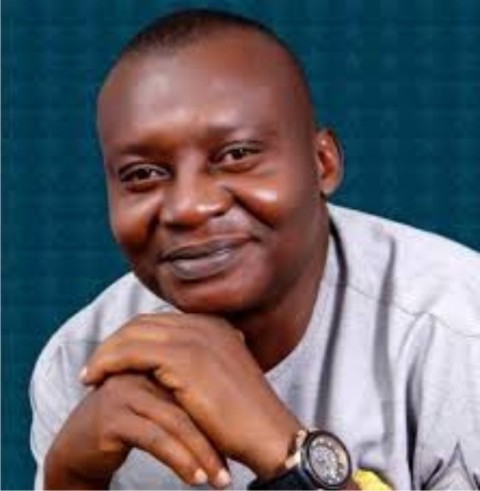
Rt. Hon Dumnamene Dekor, member-elect, Khana/Gokana Federal Constituency is one of the adherents of reforms in the Nigeria’s electoral process to evince the conviction of the citizenry in the democratic process.
Rt Hon Dekor who spoke with The Tide in an interview ahead of the inauguration of the 9th National Assembly, picked holes in the conduct of the last general elections in the country, stating that the right of the citizenry to exercise their franchise was grossly threatened by anti-democratic forces.
Dekor said the reluctance of the All Progressive Congress (APC)led Federal Government to effect practical reforms in the electoral process was an indication of a deliberate plot to subjugate the rights of Nigerians and breed political system where the whims and caprices of some emerging political tyrants would hold sway.
According to the Ogoni born politician, such insensitivity and remote sense of power portends grave consequences for the country; “Representative democracy is under severe threat in Nigeria, a system were citizens are obstructed from participating in the election of their political leaders will create room for the emergence of leaders who are completely alienated from the people, when leaders emerge through popular mandate they are conscious of the fact that they owe the electorates a sense of responsibility.”
Dekor who observed a lull in national planning and development under the APC led federal government, said the years of late U at Umaru Yaradua and Goodluck Jonathan as presidents were characterised by equity and fairness in federal appointments and citing of projects across the country: “The APC government has failed to respond to the imperatives of justice in the running of the country’s affairs, Nigeria is a federal structure and operate on the principles of Federal Character, unfortunately the federal character principle seem to have been suspended. The country is presently drifting towards tribalism and nepotism as almost all federal appointments are lopsided, Nigerians are now vulnerable to unabated repressions and anarchy.”
Commenting on the conduct of the last general elections in Rivers state, the grassroots politician decried what he described as “brazen impunity “against the right of Rivers people to elect their leaders: “The experience in Rivers state during the last general elections was quite disheartening, the exercise was reduced to a full military operation, there was a gross circumvention of civil authorities by military forces, I commend Rivers people for remaining poised and resilient in the face of intimidation and conspiracies, I think the greatest lesson from the last election in Rivers is that there is a limit to tyranny as the will of the people must always prevail, politicians should learn to play the game by the rules and not by tyranny of mere will.”
Rt. Hon Dekor is obviously not a greenhorn in legislative business. He ascended the ladder of legislative duties, when he rose from the position of Deputy Speaker of Rivers State House of Assembly to become a member of the Federal House of Representatives under the platform of the People Democratic Party (PDP).
However his first sojourn in the National Assembly was truncated few months after, a situation he described as a theft of his and insult on the sensibilities of the people of Khana/Gokana Federal Constituency.
Dekor vowed to reclaim his “stolen” mandate and was vindicated when recontested for the same seat, still under the platform of the PDP and in a landslide victory.
According to him, his second sojourn in the Nation Assembly is to consolidate on the gains of Representative Democracy by giving effective representation to the people of Khana/Gokana,and contribute in meaningful debates for the enactment of laws that will promote democracy in Nigeria.
Listing the panacea for sustainable democracy in Nigeria, the Federal Lawmaker elect said: “Only a strong parliament and a strong opposition can salvage Nigeria’s democracy.”
He recalled that the foundation of Nigeria’s democracy was strong at its incubational stage because there were committed leaders, patriots and parliamentarians who gave service and defended the tenets of democracy.
He however noted that the system nosedived because of the instructions of the country’s legislative processes, as the legislature was always the first to be suspended during military incursions in politics: “Nigeria’s democracy is evolving, a country’s journey to nationhood is always tedious but it takes a high level of commitment on the leaders and citizens to achieve success.”
Dekor also barred his mind on Governor Nyesom Wike’s post victory declarations, particularly the olive branch offered to members of the opposition join perforce with his administration for the development Of Rivers State.
He said: “Governor Wike is a man of great leadership skills and capabilities, I applaud him for his magnanimity and politics of accommodation, he is a man of his words and he has already demonstrated sincerityof purpose by accommodating people of various divides in his transition program.”
The seasoned Law Maker called on all politicians in Rivers State to embrace the offer by the RiversState Governor and abhor politics of bitterness to movethe State forward.
He regretted the fact that the enemies of Rivers State takes advantage of the political squabbles in the stateto paint the State in bad light: “Rivers State is a costly political bride and the centre of unfettered attraction in the country, most people envy Rivers State because of its strategic economic advantage, we must stop the politics of lies and calumny which has robbed the state of federal projects.”
Dekor was also saddened by the cult relate war and bloodletting that have engulfed Ogoni in recent times, resulting in the colossal wastages of human lives and properties.
He said the virtues of hard work and discipline for which Ogoni was renowned was fast eroding as a result of the invasion of the area by unbridled cultism: “Ogoni is drifting into anarchy and this is inimical to the overall development of the area. Something must be done to curb this menace. Let me use this opportunity to call on all Ogoni sons and daughters to embrace peace and shun cultism”
He attributed the crisis in Ogoni and other parts of society to neglect of the traditional values and norms of the people in preference of a strange culture that glorifies mediocrity: “It’s regrettable that most youths today do not want to work hard and apply skills to earn a living, but they want to live exorbitant and flamboyant lifestyles, there is also the issueof bad role modeling, as most young people today have admiration for those who use arm illegally to acquire wealth.
Speaking on the implementation of the UNEP report recommendation on the clean-up of Ogoni environment, Dekor described the exercise as “a piece of fraud.”
He berated the federal government for playing politics with Ogoni clean up exercise.
He said, “There is no clean up going on in Ogoni, rather the federal government is concerned about the resumption of oil exploration in ogoni the area. It’s quite disturbing that the federal government is playing politics with the destiny of a people that have paid a great price for the development of the country, some of the clandestine activities of federal government are responsible for the insecurity in Ogoni Land.”



Justice Peter Lifu of the Federal High Court in Abuja on Monday brushed aside the order of the Court of Appeal in Abuja which ordered him to stay proceedings in a suit that sought deregistration of the African Democratic Party (ADC), Accord Party and three others.
The Court of Appeal in a unanimous decision of a panel of three Justices had on May 22, 2026 directed the Federal High Court Judge not to proceed with the suit until an appeal pending before them and filed by Accord Party is resolved.
In a Certified True Copy Enrol Order of the Superior Court, Justices Mohammed Danjuma, Adebukola Banjoko and Oyejoju Oyewumi asked the lower Court Judge to stay proceedings until all issues on the appeal filed by the Accord Party were resolved
Governor Ademola Adeleke of Osun State had, through the Accord Party, applied to justice Lifu to join him as a defendant in the deregistration legal battle instituted by a group of former legislators.
The contention of the Osun State governor was that he had a stake in the Accord Party, being the platform he was seeking re-election in the August 15 gubernatorial poll in the state.
In his ruling, Justice Lifu on April 27 ruled against the Osun State governor, rejecting his request to be joined in the suit to defend his own position and interest.
Not satisfied with the Federal High Court decision, the Osun State governor, through his lawyer, Musibau Adetunbi (SAN), moved to the Court of Appeal in Abuja where he challenged the Justice Lifu decision to refuse to allow him join the suit.
After listening to the argument canvassed, especially that he has interest to protect as Accord Party gubernatorial candidate for Osun State governorship election, the three Justices of the Court of Appeal, unanimously directed Justice Lifu to allow them look into the grievances of the governor.
In specific terms, the Court of Appeal Justices directed Justice Lifu not to proceed further with the matter and fixed October 27 to determine the interlocutory appeal of the appellant.
However, when the certified enroll order and notice of appeal were served on Justice Peter Lifu by Mr Adetunbi (SAN), the judge rejected it on the ground that it was a ploy to arrest his judgment in the matter.
Although the judge had adjourned his judgment delivery in the matter indefinitely, he finally made a dramatic turn around on Monday and proceeded to deliver the judgment that has now proscribed the five political parties.

Actor turned politician, Mr Kenneth Okonkwo, has rejected the choice of former Rivers State Governor, Mr Rotimi Amaechi, as the running mate to Alhaji Atiku Abubakar in the 2027 presidential election on the platform of the African Democratic Congress (ADC).
In a statement on Monday, Mallam Bolaji Abdulllahi, the National Publicity Secretary of the ADC, announced the party’s choice of Mr Amaechi.
However in a statement, Mr Okonkwo said that the choice of Mr Amaechi from the South South strengthens the continued marginalization of people from the South East.
According to the former spokesperson of the Labour Party, any arrangement that would not factor a person from the South East either as president or vice president in the party is anti-Igbo.
He contended that Chief Raph Nwosu, who founded the ADC in 2005 and willingly surrendered it’s leadership to Senator David Mark did not do so to entrench Igbo marginalization in the party.
The former actor said: “I heard from the social media that ADC has picked its vice presidential candidate from the South-South. If this is true, it is unfortunate, as this will continue the crude marginalisation of the South-East.
“This geo-political zone has neither produced a president or vice president since 1999. To deny the South-East the opportunity to produce the president or vice president in the ADC in 2027, will amount to perpetuating the marginalisation.
“The ADC was founded by Ralphs Nwosu from the South-East in 2005. He made the sacrifice to give up the party in 2025 for the coalition to usher in a better Nigeria. He couldn’t have made that sacrifice to marginalise his own people.
“I did not join the coalition to assist in marginalisation of my own people further. I am of the opinion that if we made a sacrifice to give up the national chairman and the president, it will amount to unpardonable injustice to deny us the vice president in 2027.
“I joined politics to fight for a better Nigeria where no region, geo-political zone, or person will be marginalised.
“The only favour I asked Atiku Abubakar, who openly declared that he is the pathway to the presidency of the South-East, is to show it by choosing someone from the South-East to be his vice.
“If it is confirmed that he has chosen a candidate from the South-South, I wish him well. I am not favourably disposed to campaigning for any presidential ticket that does not have a person of South-East origin as president or vice in 2027”

The National Chairman of the All Progressives Congress (APC), Professor Nentawe Yilwatda, on Monday said that the numerous projects being executed by President Bola Tinubu across the states in the southeast will give him upper hand over other presidential candidates during next year’s general elections.
Prof. Yilwatda stated this at the Abakaliki Township Stadium during a mega rally organized by the Ebonyi State government and Minister of Works, Senator David Umahi, during which President Tinubu and other APC candidates for the 2027 general elections were adopted.
According to the APC National Chairman, no President had done for the southeast region what President Tinubu has done for them and expressed the confidence that the president would not only win in Ebonyi State but in the entire South East.
Prof. Yilwatda also used the occasion to address growing insinuations in some quarters that Ebonyi State had been conceded to the Peoples Democratic Party (PDP) ahead of the 2027 general elections.
Dismissing the claim, Prof. Yilwatda said the state would not allow the PDP to win any position in the forthcoming general election.
“We will return President Bola Ahmed Tinubu and Francis Nwifuru as Governor of Ebonyi State in 2027.
“We want to return all APC senators, members of the House of Representatives and House of Assembly candidates in 2027.
“Nobody has conceded Ebonyi to the PDP. Therefore, there is no vacancy in Ebonyi State. Ebonyi PDP has no place, and there is no vacancy at all in the Government House come 2027,” the APC National Chairman declared.
He commended the people of the state for their support for President Tinubu and urged them to re-elect him in the next presidential election in appreciation of what he has done for the state and the entire South-East through infrastructural transformation and human capital development.
Governor Francis Nwifuru, who also spoke at the event, said the state had no other presidential candidate for the 2027 general elections apart from President Tinubu.
He declared that Ebonyi remained a stronghold of the APC and vowed that the party would deliver the President in the state.
Gov. Nwifuru said President Tinubu had shown exceptional commitment to the state and deserved total support for appointing Senator Umahi as Minister of Works, a role he said Senator Umahi had performed creditably.
“Ebonyi has no other presidential candidate apart from President Bola Ahmed Tinubu, and we will return him in the presidential election.
“We are standing here today to tell the whole world, especially those using the President’s name to orchestrate division and confusion in this great state, that we have only one party, and that is the APC.
“This statement became necessary because some people are going around claiming they have discussed with Mr President and that he has handed Ebonyi over to the PDP. They are also saying that Chief Nyesom Wike is their leader and that Wike said the President has given Ebonyi to him.
“Ebonyi is not for sale. We are restraining ourselves because the people are with us. Nobody should push us because we have what it takes to confront anyone trying to destabilise us.
“We want to tell Mr President that he has earned our votes. He gave us what we had never had in Eastern Nigeria — the office of the Minister of Works. And this Minister of Works is not sitting idle; he is working,” he stated.
Senator Umahi, in his remarks, said President Tinubu had done what no other President had done for Ebonyi State and the entire South-East by executing numerous projects across the state and the region.
“Ebonyi State is a one-party state under Governor Francis Ogbonna Nwifuru. We are not going to repeat the mistakes of the past.
“President Bola Ahmed Tinubu has done a lot, not just for Ebonyi State but for the entire South-East and other geopolitical zones,” he said.
-

 Niger Delta2 days ago
Warri Airport Manager Disputes Air Peace Bird Strike Claim
-

 News2 days ago
Nigeria Won’t Surrender Any Territory To Criminals -Tinubu
-

 News2 days ago
FG Begins Trial Of Over 600 Terrorism Suspects
-

 Rivers2 days ago
79th IAUE Inaugural Lecture: Prof Anero Advoctes Tuition-Free Education For Children
-
 Politics2 days ago
Parties’ Deregistration: How Justice Lifu Overruled Appeal Court Justices
-
 Politics2 days ago
ADC: Okonkwo Rejects Amaechi As Presidential Running Mate, Withdraws Support
-

 News2 days ago
Rivers Judges Commence Annual Vacation, July 20
-
 Politics2 days ago
2027: Tinubu’s Projects Give APC Edge In South East – Yilwatda