
Featured
RSG, RSUST’s Synergy’ll Boost Agric – Don

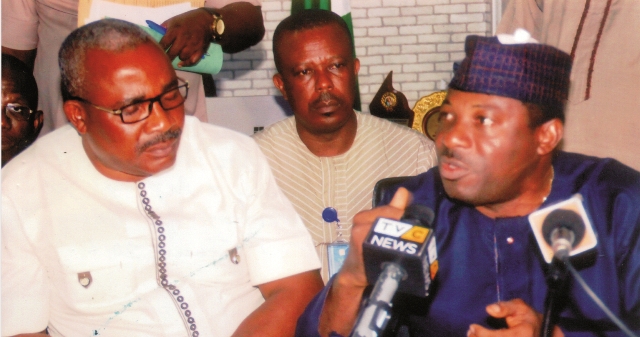
A Professor of Plant Pathology and Protection, Rivers State University of Science and Technology (RSUST), Edith Chisa Chuku, has said that a strategic synergy between the Rivers State Government and the institution will boost agricultural research, development and production in the state.
She said that this would be accelerated if the government intervenes, and re-acquires the Rivers Institute of Agricultural Research and Training (RIART) for the purpose of conducting agricultural research, crop development and production to enhance food sufficiency and security for the citizenry.
The professor, who is also director, Students Industrial Works Experience Scheme (SIWES), disclosed this in her office at the university main campus in Port Harcourt, the Rivers State capital, during an exclusive interview with The Tide, recently.
Chuku said that government action in that regard has become imperative in view of the urgent necessity to diversify the state’s economy and increase employment opportunities for the youth, especially through agriculture.
She emphasised that the school has all it takes in terms of crop and animal scientists, whose technical knowledge will help the state fast-track the momentum in achieving aggressive agriculture, noting that agriculture should not be left in the hands of individuals alone as mechanized farming was required now more ever before to revive the economy.
The professor lamented that since RIART was taken over by the previous administration and handed over to Rivers State Sustainable Development (RSSDA), the vast land for agricultural research, development and production, has been lying fallow, thereby undermining the state’s quest to grow its economy.
Chuku stated that as a university, it was ready and prepared to go into aggressive agricultural production on the vast RIART land, if government returns the institute to the university, promising that RIART would be transformed to a centre of excellence for local food production as well as for export.
She recalled that the original plan of the Rivers State Government on the RIART, was to utilize the vast land for agricultural training, demonstration and farming, appealing that RIART should be given back to the Faculty of Pathology for practical agricultural research, production and demonstration.
Chuku said: “We have relied so much on oil. If we utilize that place, we can boast of export; and crops would be processed and sold outside the state. This will create youth employment, increase food production and help the state government increase its revenue base for investment into other sectors.
“Agriculture has suffered so much over the years in this state due to lack of support, and now that the state is facing a lull in the economy, I think there is no harm in venturing into agriculture as a priority in the soonest possible time.”
“Before now, funding was a major problem of the university but before the last accreditation, the Governor Nyesom Wike-led administration did a lot support research, training and funding to encourage education and agriculture.
“Our laboratories are equipped and most of the departments that were denied accreditation before now have been accredited. Also, in the area of partnerships that would move the state forward, Chief Nyesom Wike is doing very well,” Chuku noted.
She hinted that the university’s collaboration with International Institute for Tropical Agriculture (IITA) formerly at Onne, but now relocated to Ibadan, would help push forward new ways of increasing food production in the state.
She appealed to the Rivers State Governor, Chief Nyesom Wike, to ensure that RIART is returned to RSUST to enable professionals in the university maximize the institute to boost agricultural productivity.
Susan Serekara-Nwikhana



Governor of Rivers State, Sir Siminalayi Fubara, has reaffirmed the unwavering commitment of his administration to peace, unity, security, and inclusive development as Rivers State marked its 59th anniversary, last Wednesday.
In a goodwill message issued on Wednesday to commemorate the anniversary, Governor Fubara stated that despite the challenges faced over the years, the people of Rivers State have continued to demonstrate resilience, strength, and an enduring spirit of unity that has sustained the state since its creation.
The Governor noted that the strong bond of brotherhood among the various ethnic nationalities of the state, including the Ijaw, Ikwerre, Ogoni, Etche, Ekpeye, Andoni, Kalabari, and others, remains one of Rivers State’s greatest strengths and a critical foundation for peace, stability, and progress.
He further observed that Rivers State has remained a major driver of Nigeria’s economy for decades, not only because of its abundant oil and gas resources, but also because of the exceptional contributions of its people across diverse sectors including academia, jurisprudence, business, entertainment, public service, and sports.
Governor Fubara assured the people that his administration will continue to prioritize policies and programmes that promote peace, protect lives and property, and expand development across all parts of the state. He emphasized that governance must be people centered and impactful, with equal attention given to every Local Government Area of the state.
The Governor also paid tribute to the elders and founding leaders of the state for preserving the spirit of unity and coexistence over the years, while urging the youths to remain hopeful, responsible, and actively committed to building a greater Rivers State through innovation, hard work, and patriotism.
He equally acknowledged the invaluable role of women in strengthening families, communities, and society, describing them as indispensable partners in the continued growth and stability of the state.
Governor Fubara called on all Rivers people to use the occasion of the anniversary as a moment of reflection and renewed commitment to peaceful coexistence, mutual respect, dialogue, and collective progress, stressing that the unity and future of Rivers State must always rise above personal interests and political differences.
Rivers State was created on May 27, 1967, by General Yakubu Gowon.


The Rivers State Government has distributed science equipment and materials to all senior secondary schools across the state to support students during the ongoing West African Examinations Council exams and to strengthen practical learning.
Flagging off the distribution at the Rivers State Senior Secondary Schools Board premises in Port Harcourt, on Monday, the State Commissioner for Education, Dr. Peters Nwagor, said the move demonstrates Governor Siminalayi Fubara’s commitment to improving education standards in the State.
Nwagor said the materials were approved and provided by the state government specifically to boost the teaching and learning of science subjects, describing science education as the foundation for technological advancement, innovation, and national development.
“No society can compete globally without deliberate investment in science and technology,” the Commissioner stated.
He commended the governor for consistently prioritising the education sector by providing tools needed for effective teaching and hands-on learning.
The Commissioner directed principals to ensure that the equipment are used strictly for practical lessons in their schools, warning that any principal or administrator found diverting, hoarding, or selling the materials wil face disciplinary action under public service regulations.
Nwagor also warned against examination malpractice, saying any principal found aiding or encouraging malpractices will be decisively sanctioned.
“We must collectively restore the dignity and credibility of our educational system,” he said.
Also speaking, Chairman, Rivers State Senior Secondary Schools Board, Tony Egwurugwu, urged school heads to make judicious use of the materials for students’ benefit.
He thanked the State Government for providing the resources, and assured that monitoring mechanisms would be put in place to ensure the materials serve their intended purpose.
In his own remarks, a Board Member for Technical Education, Nwisabari Bani Samuel, expressed appreciation to the governor for prioritising education and acknowledged the Commissioner’s role in advancing education development in the State.
He said the distribution covers all senior secondary schools in the State and is intended to improve students’ performance in both internal and external science examinations.
Akujobi Amadi
-

 Politics3 days ago
APC PRIMARIES: FUBARA’S WITHDRAWAL, HISTORIC SACRIFICE FOR NATIONAL STABILITY ……. GROUP
-

 News3 days ago
Court Sentences Seven To Death Over Murder Of Cleric In Rivers
-
News13 hours ago
Obuah’s Victory Excites Former Lawmaker as APC Primaries Conclude in Rivers West
-
News14 hours ago
105 Nigerians Killed In S/Africa In Seven Years
-

 Sports3 days ago
PH Arsenal Community Set For Streets Procession, Saturday
-

 Politics3 days ago
IPAC Flays INEC Over Election Guidelines Judgement
-

 Politics3 days ago
NDC To Adopt Electronic Voting For Future Primaries
-

 Politics3 days ago
Otu Vows To Recall Indolent, Arrogant Cross River Legislators