
Politics
2015: Jonathan Versus Who (APC)?

President Goodluck
Jonathan, on Tuesday, November 12, 2014, stood to be counted by the ruling Peoples Democratic Party (PDP) for the 2015 presidential election when he formally declared his intention to re-contest the election to the admiration of jubilant party faithful at the Eagle Square, Abuja.
“After seeking the face of God, in quiet reflection with my family and having listened to the call of our people nationwide to run, 1, Goodluck Ebele Azikiwe Jonathan, have accepted to re-present myself on the platform of Peoples Democratic Party for the re-election as the President of the Federal Republic of Nigeria in the 2015 general elections,” the man of the moment, with these words, offered himself to the party for the second time after his party have zeroed on him as a presidential candidate.
The declaration of Jonathan provided an opportunity for him to showcase his strengths (achievements) against his weaknesses. Jonathan’s admission that corruption remained a stain on his administration may not border the people so much, but what he is doing to stem the tide. He reflected on the past and looked into the future. “I am convinced that I have served my past with Nigerians and it’s now time to look into the future. With your tremendous support, we have collectively done so much in the last three and a half years. But to take our country to the next level, there is still more work to be done,” Jonathan said: a statement that boosted his conscience and his preparation to launch Nigeria to greater development despite threats to national growth.
All Progressives Congress (APC), for sure may be disappointed when Jonathan reminded critics of his administration that “History has shown that the path of honours of a true leader is not to walk away from his people in the face of challenges.” But with a strong character, he said “we must stand together in adversary and overcome the threat to our development. We must defend our future,” apparently referring to insurgency that has taken a toll on the nation’s peace and pride.
Jonathan’s score card in education, power, aviation, water, agriculture, transport, port reforms, health, housing as well as oil and gas sectors, and his promise to do more if given another chance at the Presidency, kept the crowd that defied the scorching sun at the occasion, yelling for a man (Jonathan) whom Vice President Namadi Sambo is convinced is a “blessing to Nigeria.”
The Chairman of the PDP Governors’ Forum and governor of Akwa Ibom State, Godswill Akpabio, though acknowledged that the road to 2015 will be rough, is optimistic that “at the end of the tunnel, victory will be yours and the PDP,” adding that “those who are behind you are more than those that are against you” and in 2015, Nigerians will speak for him (Jonathan).
PDP leaders in some geo-political zones expressed confidence and capacity of Jonathan to deliver more on his transformation agenda to the delight of the citizenry. Erstwhile governor of Rivers State, Dr Peter Odili said, the South-South had absolute trust and confidence in the capacity and capability of Jonathan to make Nigeria a better country. Prof. Jerry Gana, who spoke on behalf of the people of the North Central, described Jonathan as a catalyst for development.
Former Senate President, Ken Nnamani, on behalf of PDP supporters in the South East, said the success recorded so far by Jonathan’s administration demanded continuity. Alhaji Hassan Adamu (North-East Zone) scored Jonathan high especially in boosting education in the region with the approval of universities in Potiskum and Wukari, building of almajiri schools as well as connecting the region with rail trucks from Bauchi. Chief Bode George of the South West, however, reflected on the prophecy of their late leader, Pa Obafemi Awolowo, who had predicted that one day, an ijaw man would be the president of the country.
Though security challenge is the pain in the neck of Jonathan’s administration, Akpabio said “we will never be intimidated,” and likened Jonathan to David in the bible who is “fighting all the wars today so that future presidents in Nigeria will have peace.” Senate President, David Mark, who spoke on behalf of PDP lawmakers, however, urged the president to bring the issue of terrorism to an end.
True, there are misgivings about Jonathan and his party, but according to Niyi Akinnaso, “no matter how much we may hate the PDP and abhor Joanthan’s records, neither the party nor Jonathan could be written off completely.”
Writing on The Punch of Tuesday, October 14, 2014 under the title “Why Jonathan May Win Re-election,” Akinnaso said “since electoral politics is about the strategies and manoeuvres employed to win votes, there are three things Jonathan and the PDP have done that could be considered electorally smart. We may not like them at all, but they could eventually translate into victory.”
One of the things, according to Akinnaso, is that the perceived opponents of the party leadership were pushed out and those who would toe the President’s line were wooed into the party, even after they had left it.
The edging out of erstwhile controversial chairman of the PDP, Bamanga Tukur, also went along way to douse the tension in the party and reshaped it for electoral exploits. The fallout of that move was the unanimous endorsement of Jonathan’s candidacy, Akinnaso says.
The third issue, is a well-choreographed series of political adverts, including TV commercials, billboards and other promotional activities which portray Jonathan’s achievements and to which the public has been inundated with. Then, of course, the stomach infrastructure widely adopted by the PDP to catch millions of electorate who are willing to respond to the power of stomach politics; that is, if they are willing to toe the PDP line or respond to primordial tribal or religious politics or better still, the candidates likeability.
Jonathan’s approach to leadership may be misconstrued to mean weakness, yet APC’s inability to provide alternative to the president’s perceived weak policy has made the people to hold on to what they believe that “the devil you know is better than the angel you don’t know,” apparently because they do not believe that there is merit in the planned change of APC.
While Sabella Abidde (The Punch, September 24, 2014) queries what is the problem with the APC, Akinnaso, in the aforementioned write-up believes “For now, the APC’s failures are Jonathan’s gains,” adding that “the gains will multiply, if the APC come out bruised from its presidential primary.”
Already, there are ominous signs that the new APC is likely to run into troubled waters in its presidential primary as the camp of APC national leader, Asiwaju Bola Tinubu has been reportedly pressured by powerful leaders and some Northern clerics to dump its support for Muhammadu Buhari for the party’s presidential candidate and switch same to the presidential aspiration of Speaker Aminu Tambuwal who, with his entry, immediately turned into a major contender for the ticket in which former Vice Presidnt, Atiku Abubakar; Governor Rabiu Kwankwanso of Kano State; Governor Rochas Okorocha of Imo State and newspaper publisher, Sam Nda-Isaiah are also contending.
Concerns are high that the religious extremism which PDP tagged Buhari may be injurious to the political outing of the APC in the South if the former head of State emerges as APC candidate. Even more disturbing is the fact that “The APC cannot present itself as a party with an ideology of change and still field a 72-year-old man who probably will want to run two terms that will expire when he is 81,” writes Abimbola Adelakun (The Punch, Thursday October 23, 2014).
In his write-up titled: “Why Buhari May Not Defeat Jonathan,” Adelakun said there is doubt in the mind of Nigerians that “Buhari will have a better run this time around and probably defeat Jonathan.” According to him, Buhari’s candidature may end up producing a boomerang effect that will favour Jonathan.
Those who oppose Buhari do so not necessarily because age is not on his side for lofty visions of nation building or economic ideas and ideals, but essentially and most importantly out of the fact that Buhari is no religious nut, but he is religion himself with large number of devotees.” No wonder, Adelakun concludes that “anybody with such authority over people’s minds should not be tried with the absolutism of power the Nigerian brand of democracy endows on a political leader.”
The entry of Tambuwal into the presidential race of APC may be seen as robust and a welcome development, but his chances to pick the ticket can be anybody’s guess. Unlike Buhari and Atiku that had contested nationwide election, Tambuwal only contested a federal constituency and won with stealing leadership of the House of Representatives.
Even as current permutations may favour Tambuwal to clinch the APC ticket, Osita Okechukwu, a strong loyalist of Buhari, notes that Tambuwal’s entry into APC presidential race “will neither diminish nor cut-off the celestial bond between Buhari and the masses and the middle class of our dear country.”
True, the heat is on in the camp of APC and the house divided against itself cannot stand in the face of undaunting challenge of who, among the contenders, gets the nod at the end of the day without the APC being battered in the process.
Now that the PDP smarted itself out of trouble by endorsing Jonathan for the presidential race, who is APC’s battle axe in the race? Time will tell and the earlier the better because Jonathan who is already at the track has taken off for the race.
Samuel Eleonu
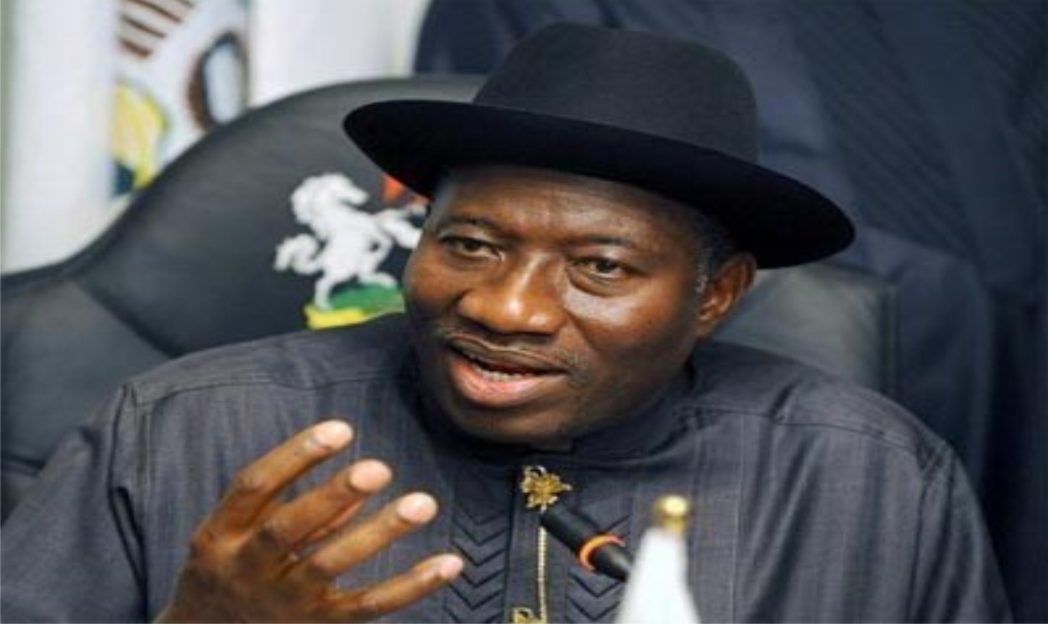
President Goodluck Jonathan




Justice Peter Lifu of the Federal High Court in Abuja on Monday brushed aside the order of the Court of Appeal in Abuja which ordered him to stay proceedings in a suit that sought deregistration of the African Democratic Party (ADC), Accord Party and three others.
The Court of Appeal in a unanimous decision of a panel of three Justices had on May 22, 2026 directed the Federal High Court Judge not to proceed with the suit until an appeal pending before them and filed by Accord Party is resolved.
In a Certified True Copy Enrol Order of the Superior Court, Justices Mohammed Danjuma, Adebukola Banjoko and Oyejoju Oyewumi asked the lower Court Judge to stay proceedings until all issues on the appeal filed by the Accord Party were resolved
Governor Ademola Adeleke of Osun State had, through the Accord Party, applied to justice Lifu to join him as a defendant in the deregistration legal battle instituted by a group of former legislators.
The contention of the Osun State governor was that he had a stake in the Accord Party, being the platform he was seeking re-election in the August 15 gubernatorial poll in the state.
In his ruling, Justice Lifu on April 27 ruled against the Osun State governor, rejecting his request to be joined in the suit to defend his own position and interest.
Not satisfied with the Federal High Court decision, the Osun State governor, through his lawyer, Musibau Adetunbi (SAN), moved to the Court of Appeal in Abuja where he challenged the Justice Lifu decision to refuse to allow him join the suit.
After listening to the argument canvassed, especially that he has interest to protect as Accord Party gubernatorial candidate for Osun State governorship election, the three Justices of the Court of Appeal, unanimously directed Justice Lifu to allow them look into the grievances of the governor.
In specific terms, the Court of Appeal Justices directed Justice Lifu not to proceed further with the matter and fixed October 27 to determine the interlocutory appeal of the appellant.
However, when the certified enroll order and notice of appeal were served on Justice Peter Lifu by Mr Adetunbi (SAN), the judge rejected it on the ground that it was a ploy to arrest his judgment in the matter.
Although the judge had adjourned his judgment delivery in the matter indefinitely, he finally made a dramatic turn around on Monday and proceeded to deliver the judgment that has now proscribed the five political parties.

Actor turned politician, Mr Kenneth Okonkwo, has rejected the choice of former Rivers State Governor, Mr Rotimi Amaechi, as the running mate to Alhaji Atiku Abubakar in the 2027 presidential election on the platform of the African Democratic Congress (ADC).
In a statement on Monday, Mallam Bolaji Abdulllahi, the National Publicity Secretary of the ADC, announced the party’s choice of Mr Amaechi.
However in a statement, Mr Okonkwo said that the choice of Mr Amaechi from the South South strengthens the continued marginalization of people from the South East.
According to the former spokesperson of the Labour Party, any arrangement that would not factor a person from the South East either as president or vice president in the party is anti-Igbo.
He contended that Chief Raph Nwosu, who founded the ADC in 2005 and willingly surrendered it’s leadership to Senator David Mark did not do so to entrench Igbo marginalization in the party.
The former actor said: “I heard from the social media that ADC has picked its vice presidential candidate from the South-South. If this is true, it is unfortunate, as this will continue the crude marginalisation of the South-East.
“This geo-political zone has neither produced a president or vice president since 1999. To deny the South-East the opportunity to produce the president or vice president in the ADC in 2027, will amount to perpetuating the marginalisation.
“The ADC was founded by Ralphs Nwosu from the South-East in 2005. He made the sacrifice to give up the party in 2025 for the coalition to usher in a better Nigeria. He couldn’t have made that sacrifice to marginalise his own people.
“I did not join the coalition to assist in marginalisation of my own people further. I am of the opinion that if we made a sacrifice to give up the national chairman and the president, it will amount to unpardonable injustice to deny us the vice president in 2027.
“I joined politics to fight for a better Nigeria where no region, geo-political zone, or person will be marginalised.
“The only favour I asked Atiku Abubakar, who openly declared that he is the pathway to the presidency of the South-East, is to show it by choosing someone from the South-East to be his vice.
“If it is confirmed that he has chosen a candidate from the South-South, I wish him well. I am not favourably disposed to campaigning for any presidential ticket that does not have a person of South-East origin as president or vice in 2027”

The National Chairman of the All Progressives Congress (APC), Professor Nentawe Yilwatda, on Monday said that the numerous projects being executed by President Bola Tinubu across the states in the southeast will give him upper hand over other presidential candidates during next year’s general elections.
Prof. Yilwatda stated this at the Abakaliki Township Stadium during a mega rally organized by the Ebonyi State government and Minister of Works, Senator David Umahi, during which President Tinubu and other APC candidates for the 2027 general elections were adopted.
According to the APC National Chairman, no President had done for the southeast region what President Tinubu has done for them and expressed the confidence that the president would not only win in Ebonyi State but in the entire South East.
Prof. Yilwatda also used the occasion to address growing insinuations in some quarters that Ebonyi State had been conceded to the Peoples Democratic Party (PDP) ahead of the 2027 general elections.
Dismissing the claim, Prof. Yilwatda said the state would not allow the PDP to win any position in the forthcoming general election.
“We will return President Bola Ahmed Tinubu and Francis Nwifuru as Governor of Ebonyi State in 2027.
“We want to return all APC senators, members of the House of Representatives and House of Assembly candidates in 2027.
“Nobody has conceded Ebonyi to the PDP. Therefore, there is no vacancy in Ebonyi State. Ebonyi PDP has no place, and there is no vacancy at all in the Government House come 2027,” the APC National Chairman declared.
He commended the people of the state for their support for President Tinubu and urged them to re-elect him in the next presidential election in appreciation of what he has done for the state and the entire South-East through infrastructural transformation and human capital development.
Governor Francis Nwifuru, who also spoke at the event, said the state had no other presidential candidate for the 2027 general elections apart from President Tinubu.
He declared that Ebonyi remained a stronghold of the APC and vowed that the party would deliver the President in the state.
Gov. Nwifuru said President Tinubu had shown exceptional commitment to the state and deserved total support for appointing Senator Umahi as Minister of Works, a role he said Senator Umahi had performed creditably.
“Ebonyi has no other presidential candidate apart from President Bola Ahmed Tinubu, and we will return him in the presidential election.
“We are standing here today to tell the whole world, especially those using the President’s name to orchestrate division and confusion in this great state, that we have only one party, and that is the APC.
“This statement became necessary because some people are going around claiming they have discussed with Mr President and that he has handed Ebonyi over to the PDP. They are also saying that Chief Nyesom Wike is their leader and that Wike said the President has given Ebonyi to him.
“Ebonyi is not for sale. We are restraining ourselves because the people are with us. Nobody should push us because we have what it takes to confront anyone trying to destabilise us.
“We want to tell Mr President that he has earned our votes. He gave us what we had never had in Eastern Nigeria — the office of the Minister of Works. And this Minister of Works is not sitting idle; he is working,” he stated.
Senator Umahi, in his remarks, said President Tinubu had done what no other President had done for Ebonyi State and the entire South-East by executing numerous projects across the state and the region.
“Ebonyi State is a one-party state under Governor Francis Ogbonna Nwifuru. We are not going to repeat the mistakes of the past.
“President Bola Ahmed Tinubu has done a lot, not just for Ebonyi State but for the entire South-East and other geopolitical zones,” he said.