
Nation
THE STATES

Adamawa
Former President Olusegun Obasanjo on Tuesday in Yola condemned the recent mayhem in Adamawa where 26 persons were killed by gunmen.
Obasanjo made the condemnation when he visited the Christ Apostolic Church where 12 worshippers were killed.
The former President, who described the incident as “callous and shocking’’ said the perpetrators of the crime were possessed by Satan.
Obasanjo, who was in Yola for the grand finale of Governor Murtala Nyako’s campaign, said: “If the intention of the perpetrators is to cause ethnic and religious crisis, the people of Adamawa have disappointed them by their resolved to continue to live in peace.’’
Bauchi
The Bauchi State Police Commissioner, Mr Ikechukwu Aduba, on Monday commended the state chapter of the Nigeria Labour Congress (NLC) for conducting itself peacefully during the ongoing strike over the fuel subsidy removal.
He made the commendation in an interview with newsmen in Bauchi.
Aduba said that the labour leaders kept to their promise of ensuring a peaceful atmosphere during the strike.
He, however, regretted that some hoodlums attacked the Police during the protest.
Aduba also commended his men for displaying professionalism by not being provoked but kept the hoodlums at bay to avoid clash with the protesters.
‘’As a matter of fact, I give kudos to the leadership in charge of the affair, but that notwithstanding, there was some levels of infiltration. The hoodlums tried to hijack it at the Government House.
Borno
Borno government has presented a N100 million cheque to the family of Malam Baba Fugu, the slain in-law of late Boko Haram leader Malam Mohammed Yusuf.
Fugu was allegedly shot while in police custody in Maiduguri during the 2009 Boko Haram crisis.
The Fugu’s family sued the state government to court, and a Maiduguri High Court last year ordered the state to pay N100 million compensation to the family.
Not satisfied with the judgment, the state government took its case to the Appeal Court, Jos.
Presenting a cheque for the amount at a ceremony in Government House, Maiduguri, Gov. Kashim Shettima explained that the action was aimed at terminating the ongoing legal tussle between the two parties.
“No amount of money can adequately compensate for the loss of Fugu.
FCT
The Managing Director of Urban Development Bank of Nigeria (UDBN) PLC, Mr Adekunle Oyinloye, said in Abuja on Tuesday that about N50 billion capital injection would be needed to meet the “built-up’’ demands of the nation’s mass transit revolving loan scheme.
Oyinloye said that to cushion the effect of the fuel subsidy withdrawal, the Federal Government had entrusted UDBN with additional N15 billion for the mass transit revolving loan scheme under its Subsidy Reinvestment and Empowerment Programme (SURE).
He said that the N15 billion would create a much larger pool of funds to enhance improved access to affordable public mass transportation across the country.
Gombe
Peoples Democratic Party (PDP) member representing Billiri East Constituency, Gombe State House of Assembly, Mr. Sunday Mela says he has trained 20 youths and some women in various skills since he was sworn in, six months ago.
Mela, disclosed this in an interview with newsmen in Billiri on Monday.
He said the beneficiaries were trained in various skills including hair dressing and computer and internet operations.
Mela said that kits would also be provided to the trainees in batches, to enable them to establish their own businesses and become self-reliant.
“I know it is a different thing for you to train someone and allow him to keep roving the streets.
“I don’t have the capacity to take the whole 20 at a time, but I am working out a formula, whereby I would be settling one or three at a time,” he said.
Jigawa
An Islamic cleric, Sheikh Isa Kachako, has advised the Nigeria Labour Congress and the Trade Union Congress, to employ dialogue and consultation in pursuing the issue of fuel subsidy removal.
Kachako told newsmen in Dutse on Monday that anarchy and confrontation by the unions would not solve the current situation, adding that people must seek dialogue as a means of resolving crisis.
The cleric explained that the government alone should not be blamed for the removal of fuel subsidy, saying that some persons in the society should also share from the blame for exploiting the fuel situation.
Kachako urged parents to ensure that their children and wards stayed away from any act that could create problem in the society.
Kano
The Police in Kano State arrested 24 persons allegedly involved in an attempt to take over Government House, Kano, during protests against the removal of fuel subsidy on Monday.
The Commissioner of Police in the state, Alhaji Ibrahim Idris, told newsmen that the suspects pulled down part of the fence of the Government House and burnt 20 vehicles at the cabinet office.
Kebbi
The Kebbi government has released 200 vehicles on loan to the state branch of the National Union of Road Transport Workers (NURTW), to cushion the impact of fuel subsidy removal.
The union on its part, immediately announced a reduction in transport fares by 15 per cent.
Gov. Saidu Dakingari, said in Birnin Kebbi while addressing a procession of protesters, that the vehicles were “highly subsidised”.
The governor, added that the government would also provide ferries to ease problem of movement in Dole Kaina, Lolo, Kwanji and Laffagu fishing communities of Dandi and Shanga local government areas of the state.
Lagos
A twenty-three-year old, Suleiman Ajanaku, has been arraigned before a Surulere Magistrates’ Court, Lagos, for allegedly stealing a Blackberry mobile phone valued at N120,000, property of one Miss Clara Nwafor.
The prosecutor, Inspector James Olumide, told the court that the accused had on December 31, at Akerele Street, in Surulere, Lagos, confronted Nwafor and demanded for her phone.
He said Nwafor had refused to surrender her phone to the accused, who forcefully snatched the phone from her, and pushed her to the ground in the process.
Plateau
The Jos Zone of the National Association of Nigerian Students (NANS), has kicked against the removal of fuel subsidy by the Federal Government.
The students’ body has therefore asked the President to reverse the decision while dissociating itself from any decision taken by a faction of NANS’ national body in support of the removal.
In a statement in Jos on Monday, Mr Dazi Mangse, the Public Relations Officer Zone C of NANS, accused the government of carrying out the removal “undemocratically.”
According to him, the president should respect the constitutional rights of Nigerians who voted him by reversing the decision of removing fuel subsidy.
Sokoto
Governor Aliyu Wamakko of Sokoto State on Tuesday in Sokoto assured residents of their safety.
Wamakko gave the assurance when he met with a delegation of the Association of Resident Communities led by its President, Mr Patrick Atusu .
“I want to reassure you that as a responsible government, we take responsibility for each one of you just like any other indigene of the state.
“You should feel free to do your businesses in Sokoto State. You should shun rumour mongering and all forms of sentimental comments of some leaders elsewhere in Nigeria.
“The country belongs to all of us and everyone should be free to do business anywhere he or she wants”, he said.
Zamfara
Following the violence, which trailed Monday’s protest against the removal of fuel subsidy in Gusau, the Zamfara Government has accused politicians of instigating the destruction of public property.
A statement by the Special Adviser to the Governor on Media and Communication, Alhaji Sani Tsafe said “some politicians hide under the cover of the ongoing strike to cause havoc in the state.“
The statement said politicians instead of allowing the protest to go on peacefully instigated the youth to engage in the destruction of government and public property.
“If it is right for anybody to embark on strike to make his grievances public, it is equally the right of the public not to be victims of his action“ it said.
The government warned that it would not fold its arms and allow miscreants to plunge the state into crisis and strip it of its credible status as one of the most peaceful states.
Meanwhile, the police in Bauchi State on Monday announced that it would intensify a joint patrol with soldiers in Bauchi metropolis.



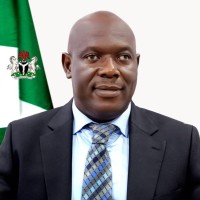
The Hydrocarbon Pollution Remediation Project (HYPREP) has commemorated the 15th anniversary of the release of the United Nations Environment Programme (UNEP) Environmental Assessment Report on Ogoniland, reaffirming its commitment to restoring the environment and improving the livelihoods of affected communities.
In a statement signed by the Project Coordinator, Prof Nenibarini Zabbey, to commemorate the anniversary, HYPREP described the anniversary as a significant milestone in Nigeria’s environmental restoration efforts, noting that the project has made remarkable progress in implementing the recommendations of the landmark UNEP report released on August 4, 2011.
The UNEP report had revealed extensive oil pollution across Ogoniland, severe environmental degradation, and serious public health risks resulting from decades of petroleum operations. It also recommended an initial $1 billion fund to commence the cleanup of the affected communities.
According to HYPREP, the Federal Government formally launched the Ogoni clean-up in 2016, while the Project Coordination Office was established in 2017 to drive the implementation of UNEP’s recommendations.
Zabbey said the current administration has continued to prioritise the project under the Renewed Hope Agenda.
Providing an update on the cleanup, the Project Coordinator disclosed that 30 of the 65 contaminated sites identified by UNEP have been fully remediated, while work is ongoing at several medium- and high-risk locations. It also stated that more than 1.5 million mangrove seedlings have been planted as part of what it described as the world’s largest restoration of oil-degraded mangroves, with over 1,000 hectares of shoreline already rehabilitated.
Zabbey further revealed that 49 Ogoni communities have been connected to potable water schemes through multiple water projects and booster stations aimed at providing safe drinking water across the region.
In the health sector, he said the 100-bed Ogoni Specialist Hospital in Kpite and the 43-bed Cottage Hospital in Buan are nearing completion, adding that several existing health facilities have been upgraded with modern medical equipment, while five ambulances have been donated to improve emergency healthcare services. The Project Coordinator also disclosed that a three-year human health biomonitoring study is being conducted in collaboration with the World Health Organization’s International Agency for Research on Cancer (IARC).
On economic empowerment, Zabbey stated that the Project has created more than 8,000 direct jobs and trained thousands of Ogoni youths and women in various vocational and technical skills, including software development, cybersecurity, aviation, commercial diving, seafaring, mechatronics, and creative arts. The project also reported awarding scholarships to more than 1,000 students, providing grants to small businesses, and supporting persons living with special needs through skills acquisition programmes.
The statement further highlighted ongoing legacy projects, including the Ogoni Power Project and the Centre of Excellence for Environmental Restoration, which it said is about 96 per cent complete. HYPREP also welcomed the recent designation of the Ogoni Wetland as a Ramsar Site of International Importance and pledged to continue promoting biodiversity conservation and sustainable management of the ecosystem.
Marking the anniversary, Zabbey said the progress achieved over the past 15 years demonstrates the collective commitment of government, development partners, stakeholders, and local communities to restoring Ogoniland. He called for renewed collaboration to sustain the cleanup effort, promote environmental sustainability, and support the long-term development of the region. 3
-

 News2 days ago
RSG Targets Nine Million Residents in Mosquito Net Distribution Campaign
-

 Oil & Energy2 days ago
Aiyedatiwa Signs New Electricity Bill
-

 Oil & Energy2 days ago
NLNG Commissions Research And Innovation Centre In RSU
-

 Maritime2 days ago
Marine Minister Commends President Tinubu On NPERA Bill Assent
-

 News2 days ago
KenPoly Holds Eight Convocations, August 29
-

 News2 days ago
RSG Begins Another Phase of Projects Commissioning Today
-

 News2 days ago
RMAFC Completes Revenue Sharing Review, Proposes New Pay
-

 Maritime2 days ago
NAGAFF Petitions IGP Over Alleged Maritime Police Harassment