
Nation
THE STATES

Adamawa
The Adamawa Universal Basic Education Board (ADSUBEB) has decried the increasing rate of consumption of alcohol by some primary school teachers during working hours.
The board’s Director of School Servives, Hajiya Fuloh Maikano, made the observation on Tuesday in Yola at a “train the trainer” workshop on abuse of alcohol for primary school headmasters.
The workshop was organised by the National Drug Law Enforcement Agency (NDLEA) in collaboration with ADSUBEB.
Maikano said such teachers, who were mostly in the rural areas, engaged in the consumption of local gin, popularly known as “Ogogoro” which had adverse effect on their health.
Borno
Another bomb exploded on Monday in Maiduguri near the customs round about, killing two children.
Maj.-Gen. Jack Nwaogbo, the Commander of the Military Task Force code named “Operation Restore Order’’, made this known in an interview with newsmen in Maiduguri.
Nwaogbo said that three customs officers were also injured in the explosion, suspected to be a car bomb.
“Two people died in the blast; they are children believed to have accompanied their mothers hawking in the area.
“Three custom officers were also injured although the injuries were not life threatening,” he said.
Ekiti
The Ekiti Government has said that its decision to raise bonds from the capital market was because of the need to fast-track development in the state.
Mr Oladapo Kolawole, the state’s Commissioner for Finance, gave the explanation in Ado-Ekiti on Monday while addressing stakeholders at a public hearing on a bill to raise the bonds.
The bill is titled, “Ekiti State Bonds, Notes and Other Securities Issues Bill 2011”.
In the bill, the state’s governor is seeking the state legislators’ approval to enable the state government to raise bonds from the capital market for the execution of pressing capital projects at minimal and affordable interest rates.
While debating the bill during its first and second readings, most of the lawmakers expressed support for the executive bill.
FCT
The Cameroonian Ambassador to Nigeria, Mr Salahudeen Abbas, has commended the remarkable progress recorded so far by the American University of Nigeria (AUN), Yola.
A statement by Mr Abbas Tahir, AUN’s Vice-President, Public Relations and Communications, on Tuesday said.
Abbas made the commendation when he visited the university while leading a 10-member Cameroonian officials to Yola for a diplomatic meeting on interconnection of power between the two countries.
The meeting also facilitated the inauguration of a bilateral technical committee of 23 members with respect to electricity sharing between the two countries.
Jigawa
The Commander of National Drug Law Enforcement Agency (NDLEA), in Jigawa, Alhaji Ibrahim Abdul, has decried the high rate of drug trafficking and drug abuse in the state.
Abdul bared his mind at a seminar to mark the International Day Against Drug Abuse, last Tuesday in Dutse, saying that the development had led to an upsurge in other crimes in the state.
He said that the high intake of hard drugs in the state had also caused a wave in the rate of armed rubbery, prostitution, pastoral and farmers’ conflicts as well as kidnapping.
The commander said that within five months, his command alone had arrested 156 suspects with 46 kilograms of various drugs of abuse in the state.
Kaduna
Bee-keeping Extension Society, a Kaduna-based NGO, has appealed to the Federal Government to engage youths in bee-keeping business to curb restiveness.
The president of the society, Mr Idris Mohammed, made the appeal in an interview with newsmen in Zaria, Kaduna State.
Mohammed stressed the need for the government to provide the enabling environment to enable bee-keepers compete favourably with their international counterparts, as Nigerian honey had been adjudged the best worldwide.
Lagos
The Chairman of Conoil Plc, Dr Mike Adenuga, says exposure of shareholders to the provisions of International Finance Reports Standard (IFRS) will aid corporate governance.
Adenuga, who made the observation at a workshop in Lagos said that there was the need to educate shareholders on the new accounting method.
He promised that his company would train members of its audit committee on the new method.
Our correspondent reports that Adenuga, who was represented by a director in the company, Dr Moses Omatsola, charged shareholders to organise “exploratory workshop” on IFRS.
Oyo
The Catfish Farmers Association of Nigeria (CAFAN) has suggested channelling flood waters to dams as an effective flood control strategy.
Mr Rotimi Oloye, the national Secretary-General of the association, made the suggestion while speaking with the News Agency of Nigeria (NAN) in Ibadan on Tuesday.
Oloye said that the strategy could also pave the way for more fish ponds in the country, adding that the numerous inland waterways in the country could be made viable for fish production.
Ogun
Governor Ibikunle Amosun of Ogun last Tuesday said that given the poor financial situation of the state, his administration might not be able to pay the N18,000 minimum wage.
The News Agency of Nigeria (NAN) reports that the minimum wage issue has pitched most of the state governors against labour, for claiming that they had no adequate resources to pay.
Some of the governors had recently hinged the payment of the new wage on the upward review of the revenue allocation, which they said was grossly in favour of the Federal Government.
Osun
Chief Adelowo Adebiyi, the Chairman Osun Action Congress of Nigeria
(ACN) has called on the people of the state to support the state government’s environmental sanitation programme.
Adebiyi, who made the call in a statement made available to newsmen in Osogbo, noted that the programme was one of Aregbesola’s promises to give the state a face lift.
He said that the cause of restoring healthy living in the state, which is one of the items on the administration’s six-point agenda might fail if nothing was done.
“The battle to rid the state of filth is a major task without which the health of our people might be in danger.
Sokoto
Hajiya Luba Hassan, a PDP Ward Secretary in Sokoto South Local Government Area has appealed to the state government to provide some infrastructure in Gagi, to prevent floods in the area.
Hassan told newsmen in Sokoto that the infrastructure, including drainage, if provided, would prevent houses from collapsing.
“We lost two girls and several houses as a result of heavy rain fall about a week ago.
“Our Governor is a listening one and I am very optimistic that he will urgently do something about it because he is concerned about the yearning and aspiration of the governed.’’
Zamfara
The Zamfara Government says it will partner with France to develop irrigation agriculture to facilitate economic growth and place agriculture as a major revenue earner.
The Acting Governor of the state, Malam Ibrahim Muhammad, said this in Gusau when he received the French Ambassador to Nigeria, Mr Jean Michel Dumont, who paid him a courtesy visit.
Muhammad noted that Zamfara is an agrarian state which requires modern agricultural systems to boost its production capacity for enhanced revenue generation and the development of its economy.
According to him, the state looks forward to a partnership that will be mutually beneficial .
He commended the French Government for its foreign policy of non-interference in the internal politics of other countries.
Earlier, Dumont said he was in Zamfara to seek collaboration with the state in area of agricultural development.



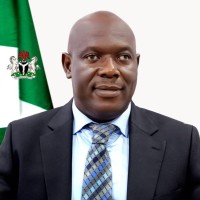
The Hydrocarbon Pollution Remediation Project (HYPREP) has commemorated the 15th anniversary of the release of the United Nations Environment Programme (UNEP) Environmental Assessment Report on Ogoniland, reaffirming its commitment to restoring the environment and improving the livelihoods of affected communities.
In a statement signed by the Project Coordinator, Prof Nenibarini Zabbey, to commemorate the anniversary, HYPREP described the anniversary as a significant milestone in Nigeria’s environmental restoration efforts, noting that the project has made remarkable progress in implementing the recommendations of the landmark UNEP report released on August 4, 2011.
The UNEP report had revealed extensive oil pollution across Ogoniland, severe environmental degradation, and serious public health risks resulting from decades of petroleum operations. It also recommended an initial $1 billion fund to commence the cleanup of the affected communities.
According to HYPREP, the Federal Government formally launched the Ogoni clean-up in 2016, while the Project Coordination Office was established in 2017 to drive the implementation of UNEP’s recommendations.
Zabbey said the current administration has continued to prioritise the project under the Renewed Hope Agenda.
Providing an update on the cleanup, the Project Coordinator disclosed that 30 of the 65 contaminated sites identified by UNEP have been fully remediated, while work is ongoing at several medium- and high-risk locations. It also stated that more than 1.5 million mangrove seedlings have been planted as part of what it described as the world’s largest restoration of oil-degraded mangroves, with over 1,000 hectares of shoreline already rehabilitated.
Zabbey further revealed that 49 Ogoni communities have been connected to potable water schemes through multiple water projects and booster stations aimed at providing safe drinking water across the region.
In the health sector, he said the 100-bed Ogoni Specialist Hospital in Kpite and the 43-bed Cottage Hospital in Buan are nearing completion, adding that several existing health facilities have been upgraded with modern medical equipment, while five ambulances have been donated to improve emergency healthcare services. The Project Coordinator also disclosed that a three-year human health biomonitoring study is being conducted in collaboration with the World Health Organization’s International Agency for Research on Cancer (IARC).
On economic empowerment, Zabbey stated that the Project has created more than 8,000 direct jobs and trained thousands of Ogoni youths and women in various vocational and technical skills, including software development, cybersecurity, aviation, commercial diving, seafaring, mechatronics, and creative arts. The project also reported awarding scholarships to more than 1,000 students, providing grants to small businesses, and supporting persons living with special needs through skills acquisition programmes.
The statement further highlighted ongoing legacy projects, including the Ogoni Power Project and the Centre of Excellence for Environmental Restoration, which it said is about 96 per cent complete. HYPREP also welcomed the recent designation of the Ogoni Wetland as a Ramsar Site of International Importance and pledged to continue promoting biodiversity conservation and sustainable management of the ecosystem.
Marking the anniversary, Zabbey said the progress achieved over the past 15 years demonstrates the collective commitment of government, development partners, stakeholders, and local communities to restoring Ogoniland. He called for renewed collaboration to sustain the cleanup effort, promote environmental sustainability, and support the long-term development of the region. 3
-

 News2 days ago
RSG Targets Nine Million Residents in Mosquito Net Distribution Campaign
-

 Oil & Energy1 day ago
Aiyedatiwa Signs New Electricity Bill
-

 Maritime1 day ago
Marine Minister Commends President Tinubu On NPERA Bill Assent
-

 Oil & Energy1 day ago
NLNG Commissions Research And Innovation Centre In RSU
-

 News2 days ago
KenPoly Holds Eight Convocations, August 29
-

 News2 days ago
RSG Begins Another Phase of Projects Commissioning Today
-

 News2 days ago
RMAFC Completes Revenue Sharing Review, Proposes New Pay
-

 Maritime1 day ago
NAGAFF Petitions IGP Over Alleged Maritime Police Harassment