Connect with us

Oil & Energy

Bill Prohibiting Gas Flaring Passes 2nd Reading

Published

on

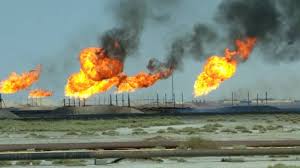
The Bill for an act to prohibit gas flaring, encourage commodity utilisation, and provide for penalties and remedies for gas flaring violations has passed its second reading in the House of Representatives.
Sponsored by the Member representing Ikorodu Federal Constituency (APC, Lagos), Babajimi Adegoke Benson, the bill seeks to prohibit the flaring and venting of natural gas, except in strictly regulated circumstances, while encouraging the utilisation of gas resources to foster economic growth and energy generation.
The proposed legislation aims to mitigate the environmental, health, and economic impacts of gas flaring, aligning Nigeria’s oil and gas operations with international climate change commitments.
Offenders, who violate the provisions of the proposed law, would face stringent penalties, including fines of $5 per 1,000 standard cubic feet of gas flared and potential suspension of operations for repeat violations.
Leading debate on the general principles of the bill, Benson said gas flaring has plagued Nigeria for decades, resulting to severe environmental degradation, public health crises, and economic losses while it environmentally, contributes to greenhouse gas emissions, global warming, and acid rain, exacerbating climate challenges.
The lawmaker said public health impacts of the practice are equally dire, as pollutants from gas flaring cause respiratory and cardiovascular diseases, particularly among residents of communities close to flaring sites.
According to him, economically, flaring results in the waste of a valuable resource that could otherwise be harnessed for energy generation or exported to generate revenue.
Benson insisted that the bill was designed to address those issues while bringing Nigeria in line with global standards such as the Paris Agreement on climate change.
“The bill provides for a comprehensive prohibition of gas flaring except in emergencies or when explicitly authorised by the Nigerian Upstream Petroleum Regulatory Commission (NUPRC).
“Operators are required to submit and implement Gas Utilisation Plans, detailing how gas that would otherwise be flared will be captured, processed, or commercialised.
“Offenders, who violate these provisions, face stringent penalties, including fines of $5 per 1,000 standard cubic feet of gas flared and potential suspension of operations for repeat violations. Furthermore, the Bill ensures that communities affected by gas flaring are entitled to compensation and environmental restoration, creating a mechanism for redress.
“Transparency and accountability are integral to the enforcement framework of this Bill. Operators must submit regular reports on gas flaring incidents, which will be audited and made publicly available by the NUPRC. This approach ensures public oversight and stakeholder engagement, fostering trust and compliance.
“Nigeria’s adoption of this Bill positions the country to emulate such success, ensuring a balance between environmental stewardship and economic development.
“The implementation of this Bill will be overseen by the Nigerian Upstream Petroleum Regulatory Commission, which will monitor compliance through regular audits, enforce penalties, and facilitate gas utilisation projects in collaboration with operators and development partners.
“The Anti-Gas Flaring (Prohibition and Enforcement) Bill, 2024, is a timely and necessary response to one of Nigeria’s most pressing environmental challenges. Its provisions are both practical and forward-looking, addressing immediate concerns while laying the groundwork for a sustainable future.
“I urge all Honourable Members to support the Second Reading of this Bill as a demonstration of our collective commitment to environmental protection, public health and economic progress”, he added.
###

Continue Reading

Oil & Energy

REA, Mente Energy Sign MoU On Renewable Energy Localisation

Published

on

The Rural Electrification Agency (REA) and Mente Energy Limited have signed a Memorandum of Understanding (MoU), formally launching the Renewable Energy Localisation and Industrialisation Programme (RELIP).
The programme is designed to structure renewable energy market to catalyse investment, generate skilled industrial employment and build a domestic clean-energy manufacturing base in partnership with global capital.
Speaking during the signing ceremony at the agency’s headquarters in Abuja, the Managing Director/Chief Executive Officer, REA, Abba Aliyu, said Nigeria built significant momentum in decentralised renewable energy but until now, the economic value of that deployment has largely flowed offshore.
“By organising our national demand and building the institutional architecture to support domestic manufacturing, we are creating the conditions for investment, jobs and industrial growth to take root on Nigerian soil.
“The REA is proud to lead this programme and we welcome partners – Nigerian and international – who share our commitment to building a clean-energy industrial base that serves Nigeria first,” he said.
The founder and managing partner of Mente Energy, Tolu Osekita, said Nigeria’s renewable-energy market is one of the most significant industrial opportunities of this decade.
Osekita said “What RELIP does is to put structure around that opportunity so that capital of every origin can invest here with greater confidence and at greater scale.
“Grounded in Nigeria-first principles, this is about catalysing the maximum economic opportunity for our country – factories, jobs, investment and industrial growth built on Nigerian soil, in partnership with the world.
We are proud to stand alongside the REA in leading this work”.
The MoU establishes a five-year framework for strategic collaboration – with RELIP identified as the first priority workstream am phase 1 will be delivered over approximately six months, establishing the commercial, analytical and institutional foundations required for NREIF launch and subsequent capital mobilisation.
The programme is designed to structure renewable energy market to catalyse investment, generate skilled industrial employment and build a domestic clean-energy manufacturing base in partnership with global capital.
It would be noted that Nigeria is one of Africa’s most dynamic renewable-energy markets as both the public and private sectors adoption is accelerating with millions of solar home systems, hundreds of mini-grids and growing commercial and industrial uptake.
Continue Reading

Oil & Energy

Stakeholders Seek Unified Action To Accelerate Methane Abatement In Oil, Gas Sector

Published

on

Stakeholders across the government, civil society and industries have called for stronger regulatory coordination and accelerated action on methane abatement in the nation’s oil and gas sector.
They made the call at the Methane Emission Abatement in the Oil and Gas Industry Regulatory Dialogue organised by the Stakeholder Democracy Network (SDN) alongside other partners, in Abuja, at the weekend
The Country Director, SDN, Mrs Florence Ibok-Abasi, insisted that fragmented regulatory approaches have slowed progress in the past, noting that the current engagement aimed to align priorities, strengthen enforcement, and build lasting institutional coordination.
“We are here to align priorities, learn from our challenges, break down silos, and build genuine coordination among all stakeholders.
“Each of you brings critical knowledge; upstream expertise, midstream insights, climate policy perspective, civil society accountability, and legislative oversight. Our strength lies in bringing these together.
“Improved inter-agency cooperation is not optional; it is the foundation for better data, stronger enforcement, and credible progress toward Nigeria’s global methane pledge. We have the talent to make this work”, she said.
Ibok-Abasi said the gathering marked a turning point in efforts to harmonise regulatory approaches, describing collaboration as critical to achieving meaningful climate outcomes.
While noting that the dialogue was the first of two, the SDN boss stated that a second dialogue would be reconvene to advance initiatives and collaboration that would ensure improvement of methane abatement in the oil and gas sector.
Also speaking, the Head, Environment and Climate Change, SDN, Dr Jude Samuelson, highlighted methane reduction as one of the fastest and most effective strategies for tackling climate change globally.
Samuelson noted that the initiative was, therefore, designed to ensure regulators and operators work hand in hand to deliver measurable results.
He, however, identified the high cost of methane abatement technologies as a major constraint, calling for stronger government-industry partnerships to make such solutions more accessible and scalable in Nigeria.
“One of the recommendations that SDN has is to see how the government can work with the operators to ensure that the operators afford these technologies.
“We are also interested in bringing some of the new technologies from methane emission abatement down to the country to see how the technologies could be deployed in the oil and gas sector to ensure that emissions reduce drastically”, he said.
Speaking from the climate policy perspective, the representative of the National Council on climate Change (NCCC), Chukwuemeka Okebugwu, said methane remained a significant contributor to global warming, particularly in oil-producing countries like Nigeria.
“The oil and gas sector is a major source of methane emissions.
“So regular dialogue helps us develop practical solutions and also identify opportunities, including converting methane into useful energy instead of wasting it,” he said.
On his part, the Chief Executive Officer of the Nigerian Midstream and Downstream Petroleum Regulatory Authority (NMDPRA), Saudi Mohammed, highlighted the need for methane abatement.
Represented by the Technical Adviser on  Health, Safety Environment and Community, Odafe Atebe, Mohammed,
described methane abatement as a cost-effective pathway for Nigeria to achieve climate goals without compromising energy security.
In his words, “Fragmented approaches will not deliver the scale of impact required. We must move beyond discussions to coordinated action across the entire oil and gas value chain”.
On his part, Senior Manager, Nigerian Upstream Petroleum Regulatory Commission (NUPRC), Ibrahim Jilo, noted that while progress has been made, challenges remain in ensuring compliance across a diverse and evolving industry landscapNRGIe.
Jilo emphasised the importance of tailored approaches, capacity building, and sustained engagement with operators.
Representative of the Civil Society Group, Natural Resource Governance Institute, Tengi George- Kalu, who spoke from the civil society standpoint, urged stakeholders to ensure that methane reduction efforts translate into tangible benefits for communities affected by oil and gas operations.
“Collaboration is key to moving from policy ambition to real implementation and enforcement,” she stated.
Continue Reading

Oil & Energy

NITDA, NNPC Partner To Drive Digital Transformation In Energy Sector

Published

on

The National Information Technology Development Agency (NITDA) and the Nigerian National Petroleum Corporation (NNPC) are deepening collaboration to accelerate digital transformation in Nigeria’s energy sector.
The collaboration is being championed through the Research, Technology and Innovation (RTI) Unit of the NNPC.
In a courtesy visit by the Director, RTI Unit of the NNPC, Olatomiwa Olaniyi, to the Director-General, NITDA, Malam Kashifu Inuwa, the duo explored strategies to leverage emerging technologies to reposition the nation’s energy industry.
Speaking, NITDA boss, Inuwa, stressed the need for the NNPC to shift from traditional dependence on the exploitation of oil and gas resources to a more innovative model.
According to him, the innovative model would be anchored on the exploration of technologies such as Artificial Intelligence (AI), Internet of Things (IoT) and robotics, among other emerging technologies.
Inuwa said information technology had become a critical enabler across sectors, adding that innovation would play a key role in shaping the future of energy production, efficiency and sustainability in Nigeria.
He outlined NITDA’s strategic priorities to include promoting digital literacy, nurturing local talent, strengthening research ecosystems and advancing indigenous technology solutions.
According to him, reducing reliance on foreign technologies while encouraging home grown innovation is vital to achieving digital sovereignty and sustainable economic growth.
The NITDA boss also said the agency would support NNPC in developing a robust innovation pipeline to connect the company with Nigeria’s growing startup ecosystem.
He said startups would be engaged through incubation programmes and innovation challenges to develop practical solutions tailored to the oil and gas industry.
Inuwa further scored that NITDA’s initiatives aimed at fostering innovation among young Nigerians, including members of the National Youth Service Corps.
“Many of our corps members are already creating solutions to real-world challenges through the agency’s programmes,” he said.
Inuwa also said that effective implementation of the Nigerian Startup Act would be crucial in supporting emerging technology ventures and scaling ideas into commercially viable solutions.
Earlier, Olaniyi said the engagement was aimed at co-creating solutions and building a strong partnership framework to accelerate innovation across the energy value chain.
He emphasised that collaboration among government agencies, industry players and the technology ecosystem remained critical to achieving sustainable innovation.
Presenting the mandate of the RTI Unit, he said its focus was on driving excellence through innovation.
According to him, this would lead to improved operational efficiency, enhanced revenue generation and support sustainable growth across NNPC’s businesses, including upstream, gas, power and new energy.
Continue Reading

Trending