
Business
FG, SNEPCo Partner On Health Opportunities

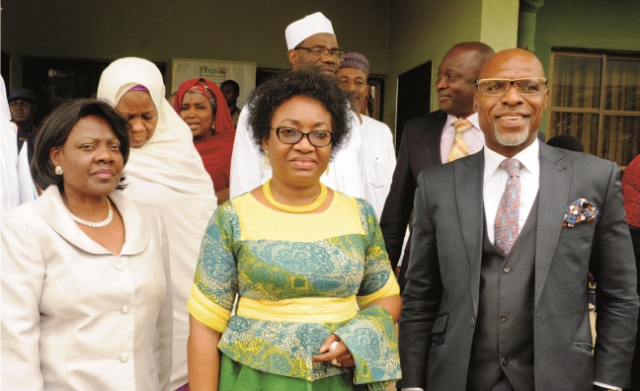
The Federal Ministry of Health and Shell Nigeria Exploration and Production Company (SNEPCo) have agreed to explore partnership opportunities in healthcare delivery to boost the health of citizens of the country.
At a just-concluded Health Concepts Validation Exercise organised by SNEPCo in Lagos, the Minister of Health, Prof. Isaac Adewole, identified potential areas of collaboration in the delivery of primary and secondary healthcare.
Unfolding the Federal Government’s vision for the health sector, Adewole said the support of the private sector was key towards ensuring the delivery of affordable healthcare to the people.
The minister commended the Shell deep-water subsidiary for the first-of-its-kind concepts validation exercise.
“The exercise has a good fit with public and private sector collaboration in the delivery of available and affordable healthcare,” the minister said.
In his remarks, General Manager, External Relations of Shell in Nigeria, Mr. Igo Weli, said the company was committed to effective healthcare and had continued to invest in the sector.
“SNEPCo has already implemented health projects and programmes in some states, and we hope that this exercise will help highlight more areas of partnership,” Weli, who represented SNEPCo Managing Director, Mr. Bayo Ojulari, added.
Also speaking at the session, Public Affairs Manager, National Petroleum Investments Management Services, Mr. Ahmed Laminu, who represented the Group General Manager of NAPIMS, Mr. Dafe Sejebor, described the initiative as timely and purposeful.
“This gathering is coming at a most auspicious time when government is calling on well-meaning organisations to assist in the attainment of the Sustainable Development Goal-3 which is good health and wellbeing,” he said.
The Regional Community Health Manager of Shell, Dr Akin Fajola, cited SNEPCo’s achievements in health in parts of Nigeria, and pointed out that the envisaged areas of partnership would be in line with national goals and policies with sustainability in mind.
Health Specialist of the International Finance Corporation of the World Bank, Dr Olumide Okunola, said that new ideas and concepts should be looked at for an economic investment purpose, saying government needs to “look at resources, processes and policies.”
The session brought together a variety of international development agencies, academia and medical professionals who brainstormed along with officials of the Federal Ministry of Health and SNEPCo on the possible areas of support and collaboration.
The 32 participants then went into syndicate sessions on possible intervention options.
The concept validation session is the latest in the effort of SNEPCo to bring effective healthcare to different parts of Nigeria.
In co-operation with NNPC and its co-venturers, SNEPCo strengthened emergency care, set up five Hemo-Dialysis machines and breast cancer mammography screening services at the Iyi-Enu Mission Hospital in Anambra State, developed the capacity of health workers in seven states in the South West and South South regions, and supported the HEWS Foundation for the repair of congenital cleft lip and palate.
It also supported the Extended Hands Foundation for the repair of about 50 Vesico-Vaginal fistulas across the country.
It has equipped the health centre at the SOS Village, Isolo, Lagos and supported a neonatal hearing screening programme at the University of Ilorin Teaching Hospital.


Nkpemenyie Mcdominic
Reports say that the training is designed to equip youths with practical technical skills for employment in the oil and gas and construction sectors, with emphasis on employability, safety, competence and self reliance.
In attendance at the flag-off ceremony this week, at the Petroleum Training Institute (PTI) Conference Hall, Effurun, were stakeholders, dignitaries, and political representatives, among others.
Dafinone, represented by his Chief of Staff, Adelabu Bodjor, said the initiative reflects a deliberate political investment in human capital development across Delta Central.
He explained that the training focuses on rigging and scaffolding, noting that “both are essential technical competencies required in industrial operations, construction projects, and oil and gas installations”.
Bodjor added, “The programme is intended to reduce dependency among youths by providing job-ready skills capable of supporting long-term economic opportunities and self-sufficiency. The initiative aligns with Senator Dafinone’s broader development agenda, which prioritises practical skill acquisition as a pathway to sustainable empowerment.”
Also addressing the participants, the NCDMB, Felix Omatsola Ogbe, represented by Mr. Teddy Bai, commended Dafinone for sponsoring the programme, describing it as “a timely response to critical manpower gaps in the industry”.
Bai explained that rigging and scaffolding remain safety-sensitive skills required across fabrication yards, offshore platforms, and construction sites, stressing that the programme bridges the gap between certification and practical competence.
He also charged the training consultant, OROH Contractors Limited, to maintain strict standards of professionalism, safety, and discipline, while urging participants to remain committed, focused, and disciplined throughout the exercise.
The Senate Liaison Officer for Sapele Local Government Area, Chief Patrick Akamuvba, , described the programme as a major step in strengthening human capital development in Delta Central.
Akamuvba said scaffolding and rigging skills are in high demand across residential, commercial, and industrial construction projects, noting that the training offers real employment opportunities for beneficiaries
He urged participants to prioritise knowledge and certification over short-term material expectations, stressing that discipline and seriousness would determine their long-term success.
He also cautioned youths against social vices and distractions, advising them to remain focused to maximise the opportunities provided by the programme.
-
News1 day ago
Obuah’s Victory Excites Former Lawmaker as APC Primaries Conclude in Rivers West
-

 Politics3 days ago
APC PRIMARIES: FUBARA’S WITHDRAWAL, HISTORIC SACRIFICE FOR NATIONAL STABILITY ……. GROUP
-

 News3 days ago
Court Sentences Seven To Death Over Murder Of Cleric In Rivers
-
News1 day ago
105 Nigerians Killed In S/Africa In Seven Years
-

 Sports3 days ago
PH Arsenal Community Set For Streets Procession, Saturday
-

 Politics3 days ago
IPAC Flays INEC Over Election Guidelines Judgement
-

 Politics3 days ago
NDC To Adopt Electronic Voting For Future Primaries
-

 Politics3 days ago
Ex-IGP Defects To SDP After APC Primary Fiasco