
Nation
THE STATES

Abuja
There are allegation of fraudulent practices in the salary department of the National Assembly.
Quite a number of complaints have been made by many against the staff on the department which is situated at the Annex of the National is supposed to have been done by the Auditors, who would have collected 10 percent of the amount in question.
Benue
Councillors in Ogbadibo local council of Benue State are presently at dagger drawn with the council chairman for allegedly mismanaging the recently released excess crude funds.
This was coming after repeated warnings from the Benue State government to invoke necessary sanctions against local government council leadership in the state that pilfer the excess crude funds released to the councils for development purposes.
The councilors who have commenced impeachment proceeding against the council chairman, Mr. Clement Agada, are also venting their anger on the chairman for his alleged total disregard for the principles for accountability and transparency in the handling of the council’s funds.
The aggrieved councilors reached the decision after a committee set up to investigate the management of the last allocation of excess crude totaling N78 million released to the council in December discovered that the council chairman allegedly misapplied the funds.
Aside the impeachment proceedings, the local government legislative council under the leadership of Mr. Julius Ali had directed the immediate freezing of the council’s account in three commercial banks to forestall further illegal withdrawals from the affected accounts.
For now the only authorised withdrawal is for the payment of workers’ salaries to save the council workers the agony as a result of the crisis.
Ondo
The commissioner representing Ondo State in the Niger Delta Development Commission, NNDC, Mr. Benson Enikuomehin assured the people of the communities of adequate and unprecedented development and fairness to all the communities in the region.
Enikuomehin gave the assurance in Akure during a reception organised for him by leaders from Ilaje council area of the state.
According to him, the areas have suffered in the past and within the next four years some developmental projects would be inaugurated.
He said plans are on to reclaim an expanse of land in the oil rich community of Ilaje while some road projects would be awarded to link it with other towns in he hinterland.
Communities which would benefit from road projects according to him include Ugbo, Ugbonla and Mahin township roads.
Enikuomehin said the contract had been included in this years’ budget.
He lauded the governor for nominating him for the board appointment and promised to justify the confidence reposed in him.
The commissioner pointed out that the “door of NDDC is opened for anybody irrespective of political affiliations because as a Peoples Democratic Party member I was nominated by Labour Party administration in the state.”
Enikuomehin said he would not work against the interest of the governor but work with him for the Development of the Niger Delta region areas of the state.
Plateau
Teacher in Plateau State have threatened to resume their suspended strike, accusing the government on reneging on the agreement reached with them.
Chairman of the Nigeria Union of Teachers, NUT, in the state Comrade Gunshin Yarling alleged that the state government had failed to abide by the agreement reached on the 27.5 percent Teachers salary structure, TSS, and outstanding three years leave transport allowance.
He said the teachers were dissatisfied with the implementation of the agreement reached to end the over four-month strike and would not return to classes until their demands were fully met.
However, the state government in a swift reaction denied the allegation saying it had infact, started a gradual implementation of the agreement.
Commissioner for Education, Prof. Angela Miri told journalists that the NUT had been trying to resist the verification exercise which would see unqualified teachers being eased out of the system.
“Our children are suffering from the strike. The implementation of the agreement has started. I have been asking the chairman of State Universal Basic Education Board, SUBEB, about the progress being made and she said NUT was trying to resist the verification exercise that we are going to do which is part of the agreement,” she said.
She appealed to the teachers to consider the negative effect of another strike on school children who were get to regain lost ground fro last year’s four month strike, adding that those of them with requisite qualification or evidence of having started NCE programme had nothing to fear.
The Gbony Gwon Jos, Da Gyang Buba had in October last year brokered an agreement between the state and the teachers to end the protracted crisis.
Lagos
Federal Bureau of Investigations, FBI, agents have carried their investigation of Umar Farouk Abdulmutallab into Ghana, trying to piece together his time in the West African nation before he embarked on a journey that ended with his Christmas Day attempt to blow up a U.S. plane.
Abdulmutallab arrived in Lagos, Nigeria December 24 from a flight originating in Ghana. He then flew to Amsterdam where he boarded a plane bound for Detroit on Christmas.
Details are scarce because “this is a security issue,” James Agyenim-Boateng, the country’s Deputy Information Minister, told our source. He said the FBI had been in the country since last Saturday and that no arrests have been made as of yet.
Agyenim-Boateng said Abdulmutallab, upon arriving in Ghana Dec. 9 from Ethiopia, had listed one hotel where he was staying on his immigration form, but actually stayed in a different hotel.
Investigators, he said “have put that part of the puzzle together.”
Ghana, the official said, was unhappy about not having information on Abdulmutallab after his father reported the young man’s radical views on the United States and other foreign security agencies.
“Fighting terrorism is a collective responsibility of every country and it is therefore important that we share security information of this nature if we are to fight terrorism,” Agyenim-Boateng told our correspondent earlier this week.
“If we have heard this information (given to the US embassy in Nigeria) from our Nigerian counterparts, the suspect would have been subjected to a more thorough screening,” he said.
In Detroit, Abdulmutallab is due in federal court Friday for his arraignment on charges that he failed to detonate a chemical-laden explosive on the Detroit-bound Northwest Airlines flight. But with so much evidence stacked against him, experts say his defense team is left with few options as the case moves forward.
Attorneys outside the case say the 23-year-old’ s lawyers can challenge incriminating statements to the FBI, seek a mental-health exam for Abdulmutallab – and seriously consider a plea deal.
“This is not a case of mistaken identity or a whodunit. For the defense, it’s damage control,” said Joseph Niskar, a defense lawyer who was involved in a 2001 terrorism case in Detroit that fell apart for the government.
Former U.S. Attorney David Griem, who gave CBS News the government’s perspective, agrees.
“This a no-lose trial for the prosecution. .. You have a combination of two factors; One, that the crime was so horrific and, two, overwhelming evidence,” Griem told our source.



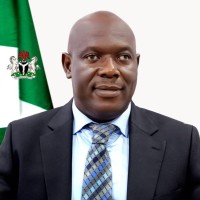
The Hydrocarbon Pollution Remediation Project (HYPREP) has commemorated the 15th anniversary of the release of the United Nations Environment Programme (UNEP) Environmental Assessment Report on Ogoniland, reaffirming its commitment to restoring the environment and improving the livelihoods of affected communities.
In a statement signed by the Project Coordinator, Prof Nenibarini Zabbey, to commemorate the anniversary, HYPREP described the anniversary as a significant milestone in Nigeria’s environmental restoration efforts, noting that the project has made remarkable progress in implementing the recommendations of the landmark UNEP report released on August 4, 2011.
The UNEP report had revealed extensive oil pollution across Ogoniland, severe environmental degradation, and serious public health risks resulting from decades of petroleum operations. It also recommended an initial $1 billion fund to commence the cleanup of the affected communities.
According to HYPREP, the Federal Government formally launched the Ogoni clean-up in 2016, while the Project Coordination Office was established in 2017 to drive the implementation of UNEP’s recommendations.
Zabbey said the current administration has continued to prioritise the project under the Renewed Hope Agenda.
Providing an update on the cleanup, the Project Coordinator disclosed that 30 of the 65 contaminated sites identified by UNEP have been fully remediated, while work is ongoing at several medium- and high-risk locations. It also stated that more than 1.5 million mangrove seedlings have been planted as part of what it described as the world’s largest restoration of oil-degraded mangroves, with over 1,000 hectares of shoreline already rehabilitated.
Zabbey further revealed that 49 Ogoni communities have been connected to potable water schemes through multiple water projects and booster stations aimed at providing safe drinking water across the region.
In the health sector, he said the 100-bed Ogoni Specialist Hospital in Kpite and the 43-bed Cottage Hospital in Buan are nearing completion, adding that several existing health facilities have been upgraded with modern medical equipment, while five ambulances have been donated to improve emergency healthcare services. The Project Coordinator also disclosed that a three-year human health biomonitoring study is being conducted in collaboration with the World Health Organization’s International Agency for Research on Cancer (IARC).
On economic empowerment, Zabbey stated that the Project has created more than 8,000 direct jobs and trained thousands of Ogoni youths and women in various vocational and technical skills, including software development, cybersecurity, aviation, commercial diving, seafaring, mechatronics, and creative arts. The project also reported awarding scholarships to more than 1,000 students, providing grants to small businesses, and supporting persons living with special needs through skills acquisition programmes.
The statement further highlighted ongoing legacy projects, including the Ogoni Power Project and the Centre of Excellence for Environmental Restoration, which it said is about 96 per cent complete. HYPREP also welcomed the recent designation of the Ogoni Wetland as a Ramsar Site of International Importance and pledged to continue promoting biodiversity conservation and sustainable management of the ecosystem.
Marking the anniversary, Zabbey said the progress achieved over the past 15 years demonstrates the collective commitment of government, development partners, stakeholders, and local communities to restoring Ogoniland. He called for renewed collaboration to sustain the cleanup effort, promote environmental sustainability, and support the long-term development of the region. 3
-

 News2 days ago
RSG Targets Nine Million Residents in Mosquito Net Distribution Campaign
-

 Oil & Energy2 days ago
Aiyedatiwa Signs New Electricity Bill
-

 Maritime2 days ago
Marine Minister Commends President Tinubu On NPERA Bill Assent
-

 Oil & Energy2 days ago
NLNG Commissions Research And Innovation Centre In RSU
-

 News2 days ago
KenPoly Holds Eight Convocations, August 29
-

 News2 days ago
RSG Begins Another Phase of Projects Commissioning Today
-

 News2 days ago
RMAFC Completes Revenue Sharing Review, Proposes New Pay
-

 Maritime2 days ago
NAGAFF Petitions IGP Over Alleged Maritime Police Harassment