
Sports
After Villas-Boas’ Fall At The Bridge, Who’s Next?

Andre Villas-Boas now knows the answer to a question that was thrown into the air at Stamford Bridge as the first cracks appeared in the reputation he built so rapidly at FC Porto.
It was late November and Chelsea had lost at home to Liverpool in the Premier League.
Villas-Boas had awoken to headlines suggesting owner Roman Abramovich was having his first doubts about the young manager he appointed at great expense to replace Carlo Ancelotti.
Villas-Boas, under heavy interrogation, responded: “The owner didn’t pay 15 million Euros to get me out of Porto to pay another fortune to get me out of Chelsea.”
It turns out he did, or at least that he was prepared to do so once he was convinced that what was meant to be a new era of modernisation under Europe’s brightest emerging coach had turned out to be a mirage.
In that November moment, Villas-Boas certainly showed a flimsy grasp of Chelsea and Abramovich’s history, as well as some of the naivety that characterised his tenure.
All he needed to recall was that Ancelotti was sacked at the foot of the stairs at Goodison Park only 12 months after winning the Premier League and FA Cup double.
As recent figures revealed, it cost Abramovich the not inconsiderable sum of £28 million to dispense with Ancelotti and his staff while bringing in Villas-Boas and his.
In other words, never believe Abramovich will feel it is too expensive t o rid himself of a manager in whom he has lost his faith.
Villas-Boas breezed into Stamford Bridge backed up by a glowing Chelsea reference claiming he “was the outstanding candidate for the job, one of the most talented managers in football today”.
The man christened “AVB” may fulfil those credentials in time but it soon became clear that the task of challenging for the Premier League title while wrestling with the beast that is cryptically known as “the Chelsea dressing room” was too much for a manager whose career was still in its infancy.
So with Chelsea’s Champions League campaign on the edge after a 3-1 defeat in the last 16 first leg in Napoli, the title a distant dream and a place in the top four no longer a certaintly after another defeat at West Bromwich Albion, Abramovich decided to call time on Villas-Boas on Sunday afternoon.
Villas-Boas’s recent words, coupled with his resigned body language, suggests the call will have come as no surprise.
He bristled with defiance in the early days of his time at Chelsea but recently looked burdened, the natural confidence replaced by a careworn expression.
And Chelsea’s fans, who sympathised with Ancelotti when he was dismissed and greeted Villas-Boas optimistically, delivered their own verdict when the manager was vociferously criticised by the travelling support during the defeat at Everton last month.
The Villas-Boas who arrived at Chelsea was summed up by a feisty December exchange with the media when he claimed the Champions League win against Valencia was “a slap in the face” to his critics.
The one who leaves is a young man chastened by a brief, fruitless experience that leaves a blemish on his previously spotless CV.
One of Villas-Boas’s main tasks on taking over from Ancelotti, and one that will face his eventual successor, was to move an ageing team populated by influential and powerful personalities on to the next stage of its development.
He could hardly have been expected to accomplish this overnight, but Villas-Boas was in the building long enough to discover it was a task easier said than done.
He had to deal with the fall-out from Chelsea captain John Terry being charged with racially abusing OPR’s Anton Ferdinand, a claim Terry denies, in the league game at Loftus Road in October.
Villas-Boas was publicly supportive of Terry but his relationship with another of Chelsea’s old guard was fragile and provided a backdrop to the closing days of his reign.
Frank Lampard, a pivotal figure in Chelsea’s successes, became a symbol of the perceived unrest at Chelsea as he was left out of key games, with many suggesting he was being used as a tool for the new manager to demonstrate his authority.
Ultimately, as ever, it is results on which Villas-Boas has been judged, even though the clock ticks more quickly for managers at Stamford Bridge than at most places in football.
Chelsea were starting to lose some of the old air of invincibility under Ancelotti and it was hardly likely to improve under Villas-Boas without a major rebuild and the removal of some of the elder statesmen.
Terry and Lampard, while still serviceable Premier League players, are closer to the end of their careers than the beginning. The same applies to Petr Cech, Didier Drogba and Ashley Cole.
And for all his coaxing and cajoling, Villas-Boas has had no success in restoring Fernando Torres, regarded in most quarters as Abramovich’s prime vanity project, to anything like the form that made him one of the greatest strikers in world football during his time at Liverpool.
The next man ushered in by Abramovich will find the same work in his in-tray.
Even the Russian, not noted for patience, may have expected some period of transition but results have been so poor, and the prospect of not qualifying for next season’s Champions League so real, that another manager has bitten the dust.
The appointment of Roberto di Matteo smacks of a holding operation and no more. Is this an attempt to preserve some semblance of continuity, even from a failed regime, or an admission of defeat for this season?
Phil McNulty



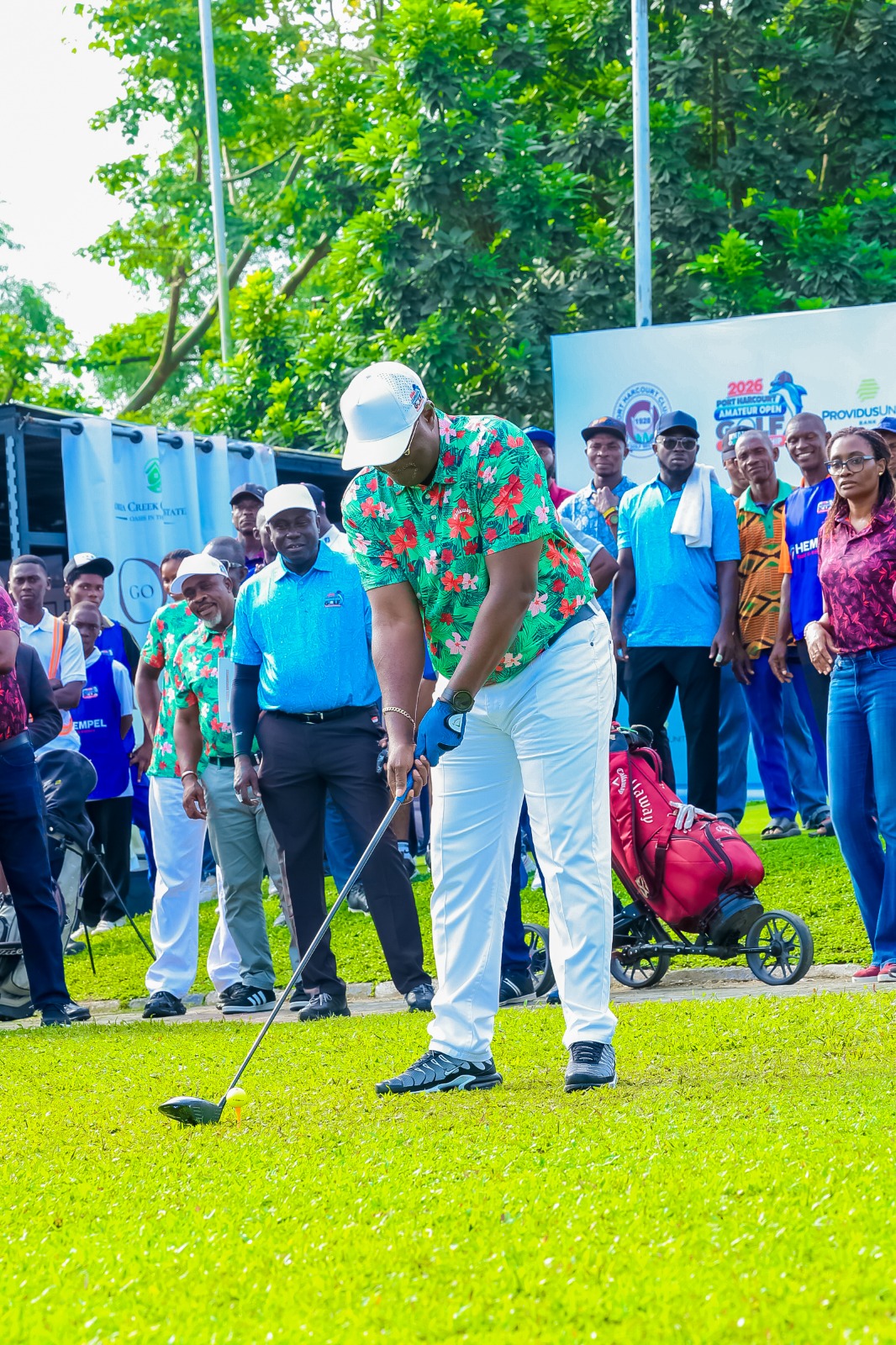
Governor of Rivers State, Sir Siminalayi Fubara, on Saturday declared open the 2026 Port Harcourt Amateur Open Golf Championship during which he renewed his administration’s commitment to supporting initiatives that promote youth development and the wellbeing of Rivers people.
Governor Fubara, who was represented by his Chief of Staff, Barr. Sunny Ewule, at the ceremonial Tee -off to kickstart the tournament, said the event holding in Port Harcourt, is a clear indication that Rivers State is safe, peaceful and open for sports, tourism and business.
“This championship bringing over two hundred and fifty golfers from across Nigeria to Port Harcourt is a testament to the fact that Rivers State is safe, peaceful and open for sports, tourism and business. You have demonstrated that sports is a powerful tool for social cohesion and for projecting the positive nature of our State,” he said.
The Rivers State Government, the Governor stated, identifies with the championship and will continue to support initiatives that promote youth development and the wellbeing of the people.
Governor Fubara described golf as more than a sport, emphasising that it teaches patience, discipline, focus and integrity. According to him, these values were in line with his administration’s commitment to peace, unity and healthy living for all the people of Rivers State.
He commended the Local Organizing Committee for their hard work in putting the event together. He also commended the Port Harcourt Club Golf Section for sustaining the historic Club since 1928, while wishing all golfers participating in the championship an injury-free and worthy tournament.
The President of the Port Harcourt Club, Barr. Victor Omubo Frank-Briggs, expressed appreciation to the Governor honouring their invitation, noting that with the government’s presence the golfers have been energised and inspired to do their best in the championship
MFM, First Bank eye AWBL finals in Liberia (5)
Nigerian clubs MFM Basketball Club and First Bank Basketball Club will battle for places in the African Women’s Basketball League finals when they compete in the FIBA Africa Zone 3 qualifiers in Monrovia, Liberia, from November 2 to 9.
The six-team competition will take place at the Samuel Kanyon Doe Indoor Gymnasium in Paynesville, with the top two teams earning qualification for the continental finals in Cairo, Egypt, scheduled for December 11 to 19.
MFM and First Bank will be seeking to carry their domestic form into the qualifiers after meeting in the final of the Zenith Bank Women’s Basketball League, where MFM claimed a narrow 66-64 victory.
The result underlined the close rivalry between the Nigerian sides, who will now look to establish themselves against opponents from across the region and secure their places in Cairo.
Defending FIBA Africa Zone 3 champions Friends of Basketball Association of Côte d’Ivoire will also compete, alongside Benin Republic’s Energie Basketball Club of Cotonou.
Hosts Liberia will be represented by Flames Basketball Club, the domestic league runners-up, and reigning national champions D’Rockers Basketball Club.
The Nigerian clubs secured their places in the qualifiers after FIBA Africa and the Liberia Basketball Association extended the registration deadline and adjusted the competition schedule following the late conclusion of their domestic league campaign. The intervention was facilitated by FIBA Africa Zone 3 President, Colonel Sam Ahmedu (retd.).
Preparations for the tournament are also gathering momentum, with Flames president and Liberia Basketball Association Secretary-General Calvin Diggs saying the organisers are working to deliver a successful competition.
FIBA Africa Zone 3 Secretary Joe Apu also expressed confidence in Liberia’s readiness, citing the experience of the country’s basketball community in hosting international events.
With six teams competing for just two qualification places, MFM and First Bank will face a demanding test as they seek to progress to the continental finals in Egypt.
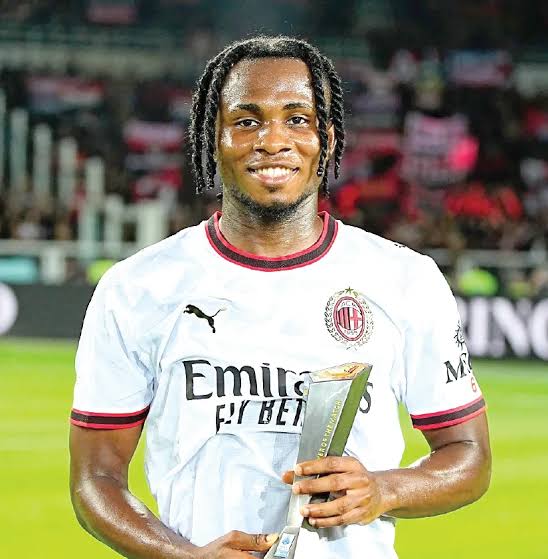
Super Eagles winger Samuel Chukwueze is expected to spend at least two months on the sidelines with a hip injury, ruling him out of AC Milan’s upcoming fixtures, including the derby against Inter Milan.
According to Italian sources, the 27-year-old has consulted a specialist over a problem with his left hip and commenced treatment with injections.
Chukwueze will undergo another assessment in 10 to 15 days, but he is not expected to return before the end of the year, dealing a blow to Nigeria and Milan’s options on the right flank.
The Nigerian reportedly experienced discomfort in his hip after Milan’s Serie A fixture against Atalanta and missed training ahead of last Thursday’s UEFA Europa League clash with Bournemouth, which the Italian side lost 3-0.
Chukwueze has made eight appearances across all competitions this season, providing two assists since returning to Milan following a loan spell at Premier League club Fulham.
His absence adds to Milan’s injury concerns, with defender Matteo Gabbia and winger Alexis Saelemaekers also sidelined by long-term injuries.
The Rossoneri are reportedly considering recalling Zachary Athekame from his loan spell at Lyon to provide additional cover during Chukwueze’s recovery.
Milan, who remain unbeaten in Serie A this season, face Udinese on Sunday before taking on Inter in the derby on October 31.
There is better news for the Italian side regarding striker Gonçalo Ramos, who has returned to full training after missing the Bournemouth defeat with fatigue in his left calf.
A scan revealed no muscle damage, making the Portuguese forward available for Sunday’s trip to Udinese.
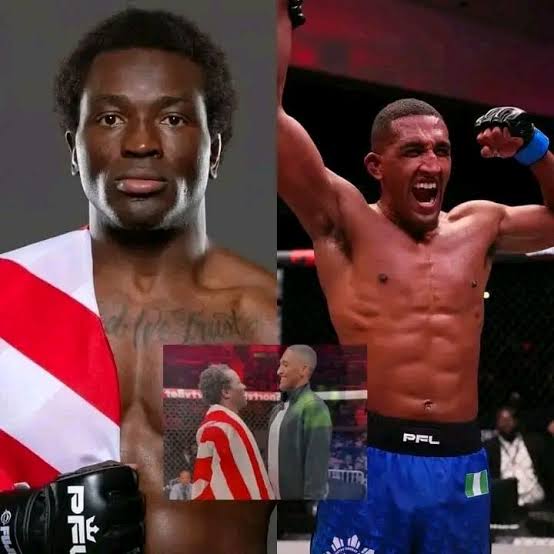
Three Nigerians, David Samuel, Patrick Ocheme and Raphael Uchegbu, will fight for titles at the PFL Africa finals after the Professional Fighters League confirmed PFL Rwanda for December 12 at the BK Arena in Kigali.
The promotion announced on October 23 that the event will crown three African champions in the welterweight (170 lbs), lightweight (155 lbs) and bantamweight (135 lbs) divisions.
In the main event, the undefeated Samuel, who has a record of 7-0, will meet Angola’s Shido “Machine” Boris Esperança, who is 13-2, in the welterweight final.
Esperança reached the final with a first-round finish in his semi-final, while Samuel went the distance to keep his perfect record.
“My Nigerian roots opened the door for me to compete in PFL Africa, and reaching the final is a special source of pride for me,” Samuel said. “On December 12, I will step into the cage not just as a finalist, but as a man determined to finish what he started and become a champion.”
Esperança said, “I believe that I can be that champion that the promotion deserves because I have been crafting myself for that.”
Ocheme, whose record stands at 10-1, headlines the co-main event against Senegal’s Demba “Black Tiger” Seck, who is 11-3, in the lightweight final. Ocheme booked his place with a devastating first-round body kick in his semi-final.
“This means a lot to me because finishing fights is what I do best; I am a knockout artist by nature,” Ocheme said. “I trust my preparation, my fight IQ and my ability to get the job done, God willing, in the first or second round.”
Seck responded, “Patrick is a tough opponent, and I always knew our paths could cross in the final. I respect his skills, but I truly believe I am the most complete, technical, strongest, and the most experienced fighter in this division.”
In the bantamweight final, Uchegbu, a former FCC champion with a record of 11-2, faces Liberia’s Dwight Joseph, who is 17-3 and won his semi-final by split decision.
“Winning in the final will change my life, and I look forward to bringing the belt back to the motherland and showing the next generation of African fighters what is possible,” Uchegbu said.
Joseph said, “Coming up short last year motivated me to push even harder this time around. I am getting my hand raised, leaving with that belt, and taking it back to Liberia.”
PFL Rwanda will be shown across Africa on SuperSport for English-speaking viewers and Canal+ for French-speaking audiences. It will also be available on free-to-air television via SportyTV.
PFL Africa General Manager, Elias Schulze, said, “Kigali will take centre stage as we crown Africa’s next champions in front of a global audience. Together with our Rwandan partners, we are giving African talent a world stage, and the next generation something to fight for.”
-

 Education1 day ago
FCE Yola Graduates 3,555 Teachers , Seeks Upgrade to University
-

 Sports1 day ago
Nigerian Trio Target Titles At PFL Africa Finals
-

 Niger Delta1 day ago
Diri Restates Stance On Lagos-Calabar Coastal Highway
-

 Niger Delta1 day ago
C’River, NUJ Pay Tribute To Late Guardian Editor
-

 News1 day ago
NDLEA Recovers Tons Of Illicit Drug Consignments In Nine States
-

 Opinion1 day ago
Checking Voter Apathy In Nigeria’s Electoral Process
-

 Politics1 day ago
2027: DICKSON’S EX-ALLY VOWS TO WORK AGAINST NDC INTEREST IN BAYELSA
-

 Politics1 day ago
2027: GROUP PLEDGES 40,000 SUPPORTERS FOR COALITION CANDIDATES IN RIVERS