Environment
Environment ministry validates plan to tackle climate-related challenges
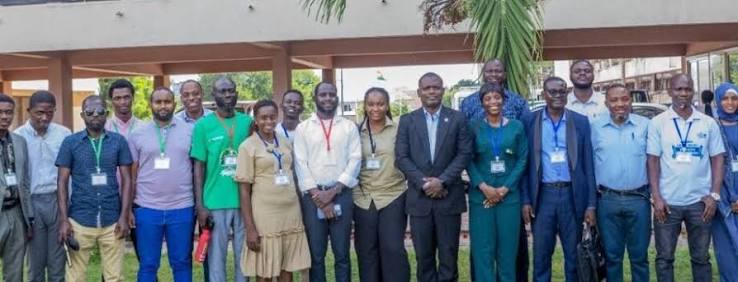
The Ministry of Environment on Thursday in Abuja, advanced its National Adaptation Plan (NAP) process, validating a comprehensive plan aimed at tackling climate-related challenges in the country.
The Permanent Secretary in the Ministry, Alhaji Mahmud Kambari, said this at the Stakeholders Consultative Workshop on the Development of the concept notes to the Green Climate Fund (GCF) for NAP in Nigeria.
Kambari, who was represented by Mrs Victoria Pwol, the Deputy Director in the Department of Climate Change (DCC) in the ministry, said that the workshop is a collective resolve to confront the realities of climate change with purpose, strategy, and coordinated action.
“Over the past years, the Federal Government of Nigeria, with crucial support from the Green Climate Fund (GCF) and the United Nations Environment Programme (UNEP), has made significant progress in advancing the NAP process.
“As a nation, we stand at a critical juncture where climate risks ranging from extreme weather events to environmental degradation continues to threaten our socio-economic stability, food systems, public health, infrastructure, and national development aspirations.
“Through extensive technical work, we have completed a Climate Risk Assessment across all geopolitical and agro-ecological zones, developed an Economic Appraisal, an Adaptation Finance Strategy, and a robust Monitoring and Evaluation Framework.”
Kambari said that these foundational elements now guide Nigeria to identify priority adaptation needs and investment opportunities.
“Let me mention that we are at the tail end of this NAP Formulation Process and looking forward to the implementation phase.
“This workshop therefore serves as a strategic purpose to harmonise perspectives across key MDAs; refine project ideas into strong, evidence-based concept notes.
“It will ensure that proposed interventions align with national priorities and the investment criteria of the GCF and position Nigeria to competitively access the resources required to strengthen resilience across vulnerable sectors,” he said.
Dr Iniobong Abiola-Awe, the Director DCC in the Ministry said that the engagement would enhance achievements by collaboratively developing bankable, climate-resilient concept notes that align with national priorities and meet the GCF’s investment requirements.
Abiola-Awe who was represented by Dr Jonah Barde in the Ministry said that the workshop represented an important step in Nigeria’s ongoing efforts to strengthen climate resilience.
She added that the workshop would advance sustainable development, and mobilise the climate finance needed to safeguard Nigeria’s communities, ecosystems, and economy from the growing impacts of climate change.

Environment
Stakeholders Unite To Build Greener, More Resilient In Kaduna
Environment
Disaster: Society Urges FG To Prioritise Ecological Challenges Across 36 States
Environment
FG Urges Citizens To Prepare That Flood Will Affect 266 LGIn 33 States
This was disclosed in a keynote address by the Minister of Water Resources and Sanitation, Engr Joseph Utsev, at the AFO public presentation at the Presidential Banquet Hall, Abuja, organised by the Nigeria Hydrological Services Agency, NiHSA, with the theme ‘Smart Water Resources Management: Moving from Oil to Water-Based Economy’.
Utsev acknowledged that early information saves lives, livelihoods, protects infrastructure, and reduces economic losses, saying that, as part of the Federal Government’s commitment to improving flood forecasts and preparedness, is the modernisation of the national hydrological monitoring networks.
The minister also said his ministry is strengthening collaboration with the Nigerian Meteorological Agency, NiMet, to ensure better integration of weather and water information, as it is critical for delivering reliable forecasts that support farmers, disaster managers, urban planners, and other key sectors of the economy.
He said AFO is therefore not just a scientific report, it is a call to action by all in terms of preparation ahead of the flood season, as early information saves lives, livelihoods, protects infrastructure, and reduces economic losses.
However, the minister acknowledged that forecasts alone are not sufficient if the information does not translate into action at the community level, which he said his Ministry is working with other relevant government agencies to mitigate the impacts of flooding.
Meanwhile, the 2026 AFO presentation had in attendance President Bola Tinubu, represented by the Minister of Environment, Balarabe Lawal.
Others present were the federal ministries: Water Resources and Sanitation; Livestock Development, Environment and Women Affairs.
Others include the Speaker of the House of Representatives, State Governments, Service Chiefs, development partners and the media.
He said: “The 2026 flood forecast presented today provides us with the following general highlights: High Flood Risk: 14,118 communities in 266 Local Government Areas (LGAs) in 33 States and FCT fall within the high flood risk areas. The States are: Abia, Adamawa, Anambra, Bauchi, Bayelsa, Benue, Borno, Cross River, Delta, Ebonyi, Edo, Enugu, Gombe, Imo, Jigawa, Kaduna, Kano, Kebbi, Kogi, Kwara, Lagos, Nasarawa, Niger, Ogun, Ondo, Osun, Oyo, Plateau, Rivers, Sokoto, Taraba, Yobe, Zamfara and the FCT.
“Moderate Flood Risk: 15,597 Communities in 405 LGAs, 35 states except Ekiti State, will experience moderate flood risk.
“Low Flood Risk: Incidences of minimal flood is expected in 923 communities in 77 LGAs in 24 States. The States are Adamawa, Anambra, Bauchi, Bayelsa, Benue, Borno, Cross River, Delta, Ebonyi, Edo, Jigawa, Kaduna, Kano, Kebbi, Kogi, Nasarawa, Niger, Ogun, Ondo, Osun, Oyo, Sokoto, Taraba and Zamfara.
“Flash and Urban Flooding: Flash and urban flooding are projected in major cities in the country due to high rainfall intensities, low attention to management of water facilities including drainage systems, waterways and lack of flood resilience structures. Cities such as Abakaliki, Abeokuta, Abuja, Asaba, Benin City, Birnin–Kebbi, Calabar, Ibadan, Kaduna, Kano, Lagos, Makurdi, Nguru, Onitsha, Oshogbo, Port Harcourt, Sokoto, Warri and Yola, among others are to experience these categories of flood incidence.
“Coastal and Riverine Flooding: Bayelsa, Cross River, Delta, Lagos, Ogun, Rivers and Ondo are to experience coastal flooding due to rise in sea level and tidal surge and this would impact on fishing, wildlife habitation and river navigation.”
He also emphasised that, “As we transition toward a water-based economy, we must recognize that water security is national security. Effective water governance will play a critical role in ensuring food security, supporting economic diversification, and improving the overall well-being of our citizens.”
However, the Minister called on State andand Local Governments including communities to start preparation to mitigate the impacts of the predicted flood.
“I therefore call on state governments, local authorities, disaster management agencies, farmers, and community leaders to carefully study the findings and advisories contained in this document and take the necessary steps to prepare for the coming flood season.
“Furthermore, we are encouraging state governments to integrate flood risk considerations into land-use planning, urban development, and infrastructure design.
“Floodplains must be properly managed, drainage systems must be improved, and communities must be empowered to adapt to changing climate conditions.
“Preparedness remains the most effective strategy for reducing flood risks. When we plan ahead, we protect lives, safeguard infrastructure, and preserve economic gains. Let us commit to building a safer, more resilient and more water-secure nation.”
Earlier, the Director General/Chief Executive Officer, Nigeria Hydrological Services Agency, Umar Ibrahim Mohammed, NiHSA, said the 2026 AFO aligns with the Renewed Hope Agenda in terms of economic diversification, infrastructure development, climate resilience, food security and sustainable water management.
Mohammed also explained that, “The AFO has evolved into an important national planning instrument that provides early scientific prediction of flood risks in the country, evidence-based guide for decision-makers and platform for emergency coordination among stakeholders.
“In producing this year’s forecast, the Agency undertook a comprehensive and data-driven process to provide tailored information for high-risk flood zones and flash floods in urban cities and towns.
“Building on the success achieved through AFO publications, we have upgraded from reporting flood forecast to Flood Risk Intelligence Architecture and from the traditional modelling to Hybrid AI-Integrated Modelling system to improve forecast reliability, reduce false alarms and improve the lead time accuracy.
“Not these alone, the modelling for the 2026 forecast have been conducted in-house. This marks a strategic shift toward enhancing capacity building, manpower development and institutional resilience.”
-
Maritime4 days agoCustoms Deploys Seven Patrol Vessels, Boost Waterway Anti-smuggling
-
Sports3 days agoFinancial Issues Stall Chelle’s Eagles Contract Talks
-
Sports3 days agoNFF mourns ex-Eagles striker Eneramo
-
Sports3 days ago
Four Private Clubs Gain Promotion To NPFL
-
Sports3 days agoEuropean Giants Circle For Osimhen
-
Sports3 days agoW/Cup Qualifier: Flamingos In Impressive Opener
-
Sports3 days agoChelle Confirms Financial Issues in Eagles Contract Discussion
-
Sports3 days agoTennis Event Boosts Grassroots Development Push