Opinion
A Renewing Optimism For Naira
Quote:”……in 2024 alone, Nigeria imported N14.14 trillion worth of goods from China, compared to China’s N3 trillion imports from Nigeria.”
Nigeria’s national currency, the Naira, is creating a new buzz as it sets on rising trends following years of astronomical slides in the recent past. Just within a few months ago, naira’s trajectory charted almost a straight course, strengthening from N1,636.71/$ on April 10, 2025, to N1,465.68/$ on October 2, 2025. But financial analysts appear divided over the future fate of the local legal tender.While analysts like the Forbes and Renaissance Capital Africa (RENCAP) deride naira’s current trends as being unsustainable, Bloomberg sees a sunnier side. However, evolving economic landscapes strongly suggest that the naira might be charting a sustainable path of resilience. For more than four decades, the naira had never experienced favourable Foreign Exchange (FX) tussles.
Suffering under skewed supply and demand tensions against foreign currencies, the value of the naira had procedurally depreciated. It got worse when, at the height of subsidized petroleum products import-dependence, subsidies got suddenly withdrawn in May 2023 as the present government took over office. Barring local production of the products, coupled with poor export earnings, demands for scarce foreign currencies surged at all FX windows as product importers competed to make overseas payments. The result was cataclysmic. The naira depreciated rapidly against the dollar, falling from N460.7/$ in May 2023 to N1,706/$ in 2024. Hardships propagated across the entire Nigerian economy in ripples of hyper-inflation as is still being felt. The initial response from the Central Bank of Nigeria (CBN) was knee-jerk and unsustainable, as the regulator kept throwing its store of foreign reserve into FX markets to quench the ensuing inferno.
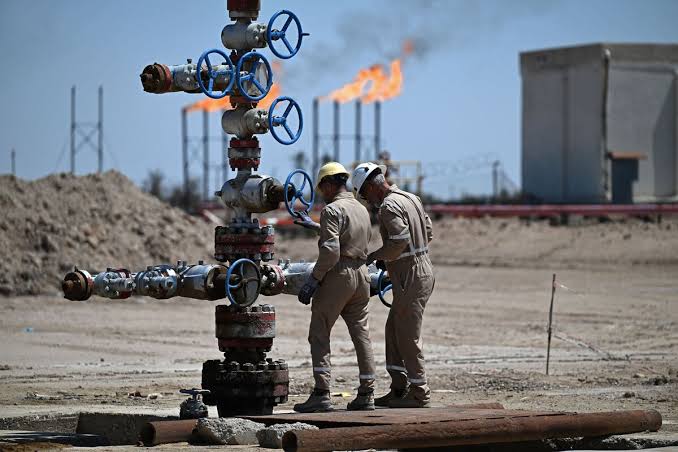
Though the naira showed buoyancy at the expense of depleting reserves, the CBN was criticized against the hopelessness and unsustainability of such artificial floats. Thankfully for the local currency, after months of fire-fighting, the CBN, aided by other lucky developments, may have stumbled unto some formulae to weather the storms. Emerging econometrics now suggest that the economy may be in recovery, and the naira appears to be charting a more optimistic course, even as the apex bank still prods it. The lower oil production data of around one million barrels per day as at May 2023, has improved to around 1.51 million barrels per day at the moment. Surely, the fight against oil thefts is rewarding the economy with surpluses unencumbered by Nigeria’s debt-mortgaged oil futures.bSecondly, a changed petroleum products sourcing landscape, berthed by new-found local refining capacity at Dangote Refinery, if not strengthening the naira, must be tipping the balance of FX pressures in its favour.
While asserting its ability to fully satisfy local demands, the Dangote Refinery also hit a remarkable milestone when it shipped its first cargo of gasoline to the United States of America last month, drawing-in huge FX. Earlier, the refiners had shipped to Asia and West Africa, in a significant shift that has transited Nigeria from being a net-importer of petroleum product, to a net-exporter. Also, improvements in the non-oil exports are increasing the inflow of foreign currencies to Nigeria. Nigerian cocoa and other agro-products especially, got higher demands as crop diseases resulted in poor crop yields in neighboring West African countries. It should be noteworthy that CBN’s experiments with Naira-Yuan trade swaps with China may not have been of much favour. Though on-going trade swap arrangements between Nigerian and China which enable some settlement in naira and yuan, may ease dollar pressures, the huge trade imbalance between Nigeria and China may replace any gains with new yuan pressures.
According to the National Bureau of Statistics, in 2024 alone, Nigeria imported N14.14 trillion worth of goods from China, compared to China’s N3 trillion imports from Nigeria.
However, the CBN could be given credits for its bold reforms at the Foreign Exchange market that created a single Nigerian Foreign Exchange Market (NFEM) in October 2023, which replaced the former Investors’ and Exporters’ window, and later adopting the Electronic Foreign Exchange Matching System (EFEMS) in December 2024. These steps successfully narrowed the gap between official FX rates and the black market. Even as the measures may not directly detect the balance of currency demands and supplies, improved transparency and liquidity raised confidence that is boosting foreign remittances via official channels. Added to improved exports, it is evident that the extra liquidity gives spontaneous buoyancy to the naira, in ways CBN’s panicked throwing-in of dollar into FX markets could not have.
This is why, when the CBN Governor, Olayemi Cardoso, announced during the 302nd monetary policy committee meeting that, “The second quarter 2025 current account balance recorded a significant surplus of $5.28 billion compared with $2.85 billion in first quarter of 2025,” there is need for him to identify significant drivers. The CBN deserves commendation also, for incrementally growing Nigeria’s Foreign Reserve savings from $34.39 billion as at May, 2023 to $42.40 as at October 2, 2025. The strength of a nation’s reserves reflects its ability to meet international payment obligations without straining the stability of its legal tender, and also serves as part of risk assessment criteria that determines its borrowing costs. Increasing reserves is projecting greater external resilience for Nigeria, which reflects in Moody’s upgrading, this year, of Nigeria’s rating from ‘Caa1’ to ‘B3.’
With renewed investor confidence, foreign investments may be heading towards Nigeria as ripples from the Nigerian Stock Exchange (NGX) suggest. Following recent interest rate cuts in the US, foreign investors appear to be shifting appetites towards Nigerian portfolios. Improved reserve is also helping Nigeria at the Eurobond market, where the yield rates Nigeria pays on its loans, have fallen from above 8 percent in early 2024 to just over 5 percent by mid-2025. However, even as the N1,706/$ exchange rate of last year, compared to the current N1,465.68/$, may seem cheery, it is still a far cry from the N460.7/$ of May 2023, when this administration took over. Government and the CBN need to push further to shore-up greater reserves, and to build local and international assurances that attract job-creating investments for local production. Comparatively among its pairs, South Africa’s reserve is $70.42 billion, Algeria’s, $64.574 billion and Egypt’s, $49.04 billion.
Nigeria, which is being projected for a $1 trillion economy by 2050, should be focusing on $100 billion external reserves. Apart from reserves, Dangote local refining shows that local production is pivotal to the value of local currencies. Nigeria needs to improve security and infrastructure to reassure subsisting industries, and improve ease of doing business, in order to attract industries. Though Naira’s path of recovery this time is sustainable, the factors that aid it need to be sustained.
By: Joseph Nwankwor

Continue Reading
Opinion
Policy Intervention: More Than Administrative Reform
Quote:”This policy intervention proves that education reform is not just about administration, but about restoring dignity, equity, and integrity to the learning process.”
On September 24, 2025, the article” A Growing Emergency: How Marked-Up Textbooks Are Sabotaging Nigeria’s School Children”, written by King Onunwo, was published in The Tide Newspaper. In the said article, the writer expressed pains in what he viewed as ‘a silent but damaging practice’ taking root in homes across Nigeria, one that threatens the academic future of millions of children in primary and secondary schools. From the paintings of the writer, this seemingly minor convenience where older siblings complete their homeworks directly inside their school textbooks, may seem harmless on the surface. On the contrary, it is creating a dangerous ripple effect. What used to be a normal practice—siblings reusing textbooks year after year to ease the financial burden on families—has now turned into a nightmare. The writer could best describe its impact in our educational system as a stumbling block for students, and a ticking time bomb for the education system and to say the least, a source of distress for countless parents.
The core message of the article is that writing homework and classwork inside textbooks has evolved from a harmless household habit into a national educational crisis that is quietly undermining learning outcomes in Nigeria. Specifically, the article argues that: marked-up textbooks sabotage learning by denying younger students the opportunity to think independently, practice problem-solving, and engage meaningfully with lessons. Economic hardship has normalized textbook reuse, but misuse has turned a cost-saving strategy into an educational disadvantage. The problem is systemic, not merely individual, reflecting failures in policy enforcement, public awareness, and educational support structures. Hence, government’s intervention is urgently required, including regulations, awareness campaigns, textbook audits, penalties, and subsidized writing materials.
Violation of education equity was also fingered as children are academically punished due to circumstances beyond their control—birth order and family income. King Onunwo opined that small oversights can cause large-scale damage, and ignoring such “minor” issues threatens Nigeria’s broader educational goals. Ultimately, he called for a national textbook integrity policy to protect learning materials and ensure fairness in education. Deductively, the writer ‘s feelings and emotional tone conveyed a deep concern and alarm, repeatedly framing the issue as a “growing emergency,” “ticking time bomb,” and “quiet academic crisis.” which signals a genuine fear that the problem if unchecked, may have irreversible consequences.
The writer ‘s tone is outrightly that of an advocate, not a neutral observer, speaking with a strong sense of justice, emphasizing on education as a right, meaning that children should not be academically disadvantaged by family circumstances, hence, the need for society to protect educational tools.The repeated calls for “immediate,” “urgent,” and “no time to waste” action showed impatience with delays and excuses. The writer believes every academic term lost worsens the damage. It is not just about textbooks—it is about educational dignity, equality, and systemic responsibility. The closing metaphor (“the handwriting is on the wall”) reinforces the writer’s belief that the consequences are already visible and that failure to act would be inexcusable. By responding decisively to growing concerns around the misuse and rising cost of learning materials, the Federal Government has demonstrated that thoughtful advocacy still matters—and that public interest writing can indeed influence policy in meaningful ways.
The recently unveiled education policy banning disposable workbooks and mandating the use of durable, reusable textbooks is a commendable step in the right direction. It directly addresses the very issues raised by King Onunwo and other concerned writers and parents who have long warned about the silent damage being done to Nigeria’s school children through poorly designed textbook practices and unchecked misuse of learning materials. For years, families—especially those with multiple children—have struggled under the weight of repeated textbook purchases. Worse still, the culture of writing directly into textbooks turned what should have been reusable learning tools into single-use items, sabotaging younger siblings who inherited books already filled with answers, errors, and confusion. The new policy does not merely reduce costs; it restores the integrity of textbooks as reference materials meant to guide thinking, not replace it.
By insisting on standardized, high-quality textbooks designed to last four to six years, the government has effectively validated the core argument of education advocates: that sustainability, affordability, and quality learning are deeply interconnected. The decision to prohibit the bundling of disposable workbooks—often used as a commercial tactic to force annual purchases—is particularly laudable. It signals a shift away from profit-driven educational practices toward child-centered learning. Equally important is the policy’s emphasis on strengthening assessment and quality assurance for instructional materials. This tackles another long-standing problem: superficial textbook revisions that compel parents to buy “new editions” without meaningful improvements in content. Such practices have eroded trust in the system and placed unnecessary financial strain on households already stretched thin.
Beyond textbooks, the introduction of a uniform academic calendar and the rationalization of graduation ceremonies show a broader sensitivity to the hidden costs of schooling. These reforms recognize that education expenses are not limited to fees alone but are compounded by traditions and inconsistencies that quietly drain family resources. This policy intervention is more than administrative reform; it is proof that government can listen, reflect, and act when issues are clearly articulated and grounded in lived realities. It affirms the value of public-interest writing as a bridge between citizens’ experiences and policy action.While implementation and enforcement will be the true test, the direction is encouraging. Parents, teachers, and school administrators must now play their part to ensure that these reforms translate into real change in classrooms across the country.
In acknowledging and addressing the concerns raised by writers, educators, and families, the government has taken a vital step toward protecting the learning future of Nigerian children. It is a reminder that when the handwriting on the wall is read early enough, it is still possible to rewrite the story—for the better.However, kudos to Federal Government for the intervention, but it should not end on the table rather should be given accelerated attention in order to ensure full implementation.
By: Sylvia ThankGod-Amadi
Opinion
Redefining New Year Resolutions
Quote: “Transformation begins the moment intention meets action.”
At the dawn of a new year and throughout its early days, millions of people across the globe make promises to themselves—to improve, to grow, and to transform. The New Year carries a unique sense of renewal, hope, and possibility. It offers a clean slate on which aspirations are rewritten and goals are redefined. But beyond the excitement and optimism lies an important question: what truly gives power to these resolutions, and how can they be sustained to positively impact individuals, families, and teams?
New Year resolutions emerge from different platforms, perspectives, and points of need. For many, the focus is personal growth—acquiring new skills, practicing mindfulness, improving physical health, or cultivating emotional resilience. Others prioritize relationships, seeking to strengthen bonds with family and friends, heal broken connections, or build new ones. Career development also ranks high, with goals such as professional advancement, job transitions, skill enhancement, or entrepreneurship. Financial stability—saving money, paying off debt, investing wisely—remains a major concern, while some individuals turn to creativity, exploring new hobbies, talents, or artistic pursuits.
Regardless of the resolution, a clear roadmap is essential. Transformation begins with reflection—understanding personal values, clarifying what truly matters, and identifying the change one desires to see. This process often involves shedding unproductive habits and mindsets to create room for growth. Setting specific and achievable goals, then breaking them into manageable tasks, increases the likelihood of success. Equally important is establishing an accountability system—whether through self-monitoring, trusted partners, or structured reviews—to sustain commitment over time.
New Year resolutions embody the power of intentional living. They allow individuals and groups to pause, evaluate past actions, and consciously chart a new course. When intentions are clearly defined, it becomes easier to identify growth areas, develop a realistic plan, maintain motivation, cultivate healthy habits, and strengthen relationships. Setting SMART goals—Specific, Measurable, Achievable, Relevant, and Time-bound—ensures that resolutions are practical and purposeful rather than vague aspirations. In addition, prioritizing self-care enables the mind, body, and soul to function optimally, providing the stamina needed for long-term success.
Many resolutions require learning something new—whether acquiring professional skills, developing hobbies, or broadening intellectual capacity. For personal growth, this may include learning a new language, reading more books, or gaining knowledge that enhances competence and confidence. Involving family members in shared goals strengthens bonds and encourages collective responsibility. Regular family activities, open communication, shared meals, and intentional time together help instill values such as kindness, empathy, discipline, and accountability.
Career-focused resolutions may involve enrolling in online courses or certification programs, improving digital literacy, or networking with professionals in the same field. Financial growth requires discipline—creating and adhering to a budget, building a savings plan, investing wisely, and paying off debt systematically. When creativity or leisure is the focus, starting a journal or blog, learning an instrument, engaging in arts and crafts, or pursuing writing can be both fulfilling and therapeutic.
For families and teams, resolutions foster unity and shared purpose. When goals are collectively set and pursued, they promote collaboration, trust, and mutual support. Teams that align their resolutions with shared values experience improved productivity, morale, and accountability. Clear communication, regular progress reviews, and celebrating small wins reinforce commitment and sustain momentum throughout the year.
However, common pitfalls must be avoided. Unrealistic expectations often lead to discouragement and failure; goals should be challenging yet attainable. A lack of planning or strategy undermines even the best intentions, while poor accountability increases the risk of giving up prematurely. To make resolutions stick, it is important to track progress using journals, planners, or digital tools; celebrate milestones; remain patient with setbacks; and review goals periodically to adjust when necessary.
As the year unfolds, may our goals, hopes, and resolutions inspire meaningful change. Resolutions are not merely seasonal rituals—they are journeys of growth and discipline. With intentional planning, focused action, and collective effort, individuals, families, and teams can thrive, transform, and make lasting strides toward a better future.
By: Nneka Amaechi-Nnadi
Opinion
Trans-Kalabari Road: Work In Progress
Quote:”This Dream project is one of the best things that have happened to the people and residents of Degema, Asari Toru and Akuku Toru Local Government Areas in recent times.”
This is the concluding part of this story featured in our last edition.
Good road network helps farmers to convey their agro-allied products to commercial hubs where buyers and sellers meet periodically to transact business. Road network engineers and motivates people resident in unfriendly geographical terrains, like riverine areas, to own property and shuttle home with ease. Some people will prefer living in their own houses in a more serene and nature-blessed communities to living in the city that is fraught with pollution, and other environmental, social and economic hazards. Prior to the cult epidemic that ravaged parts of Rivers State, the Emohuas, Elemes, Ogonis, and Etches were known for rural dwelling. Most public servants from these areas do their official and private transactions from their villages. For them it was comparatively easier to live in the village and engage in a diversified economic endeavours through farming, fishing or other lucrative business without outrageous charges and embarrassment associated with doing business in Port Harcourt, where land is as scarce as the traditional needle.
That is why the decision to construct the Trans-Kalabari Road by the administration of Dr. Peter Odili was one of the best decisions that administration took. When Dr. Odili vacated office as the Rivers State Governor, Rt. Hon. Chibuike Rotimi Amaechi took over and awarded contracts for continuation of the road project which in my considered view is the felt need of the people of Degema, Asari Toru and Akuku Toru Local Government Areas. Unfortunately, Rt. Hon. Amaechi’s efforts to drive the project was sabotaged by some contractors some of whom are Kalabari people. The main Trans-Kalabari Road is one project that is dear to the people and residents of Degema, Asari Toru and Akuku Toru Local Government Areas of Rivers State. This is because through the road commuters can easily access several communities in the three local government areas. For instance, the road when completed will enable access to eight of the ten communities in Degema Local Government Area, namely: Bukuma, Tombia, Bakana, Oguruama, Obuama, Usokun, Degema town and the Degema Consulate. It will also link 15 of the 16 communities in Asari Toru Local Government Area. The communities are: Buguma, the local government headquarters, Ido, Abalama, Tema, Sama, Okpo, Ilelema, Ifoko, Tema, Sangama, Krakrama, Omekwe-Ama, Angulama. The road will also connect 14 of 17 wards in Akuku Toru Local Government Area, and other settlements. It is interesting to note that It is faster, and far more convenient and economical for the catchment Communities on the Trans-Kalabari Road network to go to the State Capital than the East West Road. The people of the three local government areas will prefer to work or do their transactions in Port Harcourt from their respective communities to staying in Port Harcourt where the house rent and the general cost of living is astronomically high.
Consequently, development will seamlessly spread to the 28 out of 34 communities of Degema, Asari Toru and Akuku Toru Local Government Areas. The only Communities that are not linked by the road project are Oporoama in Asari Toru, the Ke and Bille Communities in Degema Local Government Area and the “Oceania” communities of Abissa, Kula, Soku, Idama, Elem Sangama of Akuku Toru Local Government Area. But because of the economic value of the unlinked Communities to Nigeria, (they produce substantial oil and gas in the area), the Federal, State Governments and the Niger Delta Development Commission (NDDC), can extend the road network to those areas just as Bonny is linked to Port Harcourt and the Lagos Mainland Bridge is connecting several towns in Lagos and neighbouring States.Kudos to previous administrations who had constructed the Central Group axis.
However, what is said to be the First Phase of the Trans-Kalabari Road project is actually a linkage of the “Central Group” Communities which consists of Krakrama, Angulama, Omekwe. Ama, Omekwe Tari Ama, Ifoko, Tema, Sangama. It is the peripheral of the Trans-Kalabari Road. The completion of the Main Trans Kalabari project will free Port Harcourt and Obio/Akpor areas from congestion. It will motivate residents and people of the three local areas to contribute to the development of their Communities. If the Ogonis, Etches, Emohuas, Oyigbos, Okrikas, Elemes can feel comfortable doing business in Port Harcourt from home, residents and people whose communities are linked to Port Harcourt through the Trans-Kalabari Road will no doubt, do likewise. The vast arable virgin land of the Bukuma people can be open for development and sustainable agricultural ventures by Local, State and Federal Government.
It is necessary to recall that the Bukuma community was host to the Federal Government’s Graduate Farmers’ Scheme and the Rivers State Government moribund School-to-Land Scheme under Governor Fidelis Oyakhilome. Bukuma was the only community in Degema, Asari Toru and Akuku Toru Local Government Areas that has the capacity to carry those agricultural programmes. However the lack of road to transport farm produce to Port Harcourt and facilitate the movement of the beneficiaries of the scheme who lived in the community which is several miles away from the farms, hampered the sustainability of the programme. The main Trans-Kalabari Road remains the best gift to the people of Degema, Asari Toru, and Akuku-Toru Local Government Areas. Kudos to Sir Siminilayi Fubara.
By: Igbiki Benibo
-
News8 hours agoAkande Proffers solution to insecurity in Nigeria
-
News8 hours agoSERAP Sues Govs, FCT Minister Over Security Vote Spending
-
News8 hours agoNDLEA Nabs Wanted Drug Kingpin 12 Years After Killing Three Officers
-
Editorial5 hours agoBeyond Accessing Bonny By Road
-
Sports5 hours agoTinubu Lauds Super Eagles’ after AFCON bronze triumph
-
Sports4 hours agoAFCON: Lookman gives Nigeria third place
-
News8 hours agoRSG Sets Up Panel To Investigate Alleged Extortions At College Of Nursing Sciences
-
Niger Delta7 hours agoINC Polls: Ogoriba Pledges To Continuously Stand For N’Delta Rights … Picks Presidential Form