Connect with us

Maritime

FG Launches National Single Window Steering Committee

Published

on

President Bola Ahmed Tinubu has said the decision of his administration to embark on a National Single Window (NSW) platform is to boost the country’s Ease of Doing Business Index as rated by the World Bank.
The NSW is an electronic portal that links all agencies and operators within the country’s supply chain to an integrated platform, which is to be domiciled at the Federal Inland Revenue Service (FIRS).
Membership of the steering committee is drawn from the Nigerian Ports Authority (NPA), Nigeria Customs Service (NCS), Federal Airports Authority of Nigeria, (FAAN), Federal Inland Revenue Service, (FIRS), National Agency for Food and Drug Administration and Control, (NAFDAC), Nigerian Maritime Administration and Safety Agency, (NIMASA), Central Bank of Nigeria (CBN), Standards Organisation of Nigeria (SON), and some key private sector operators, which include importers, exporters, shipping lines, freight agents and banks.
Speaking while inaugurating the steering committee for the project at the Presidential Villa, Abuja, the President also said the platform is aimed at eliminating all forms of encumbrances to trade and commerce with a view to optimising revenue generation and ultimately boost the inflow of both local and foreign direct investment into the country.
The President, who decried the bottlenecks that characterise the country’s import, export and other supply chain activities, noted that the project is another milestone by his administration, saying the project would boost investment inflow by removing all forms of trade barriers in the import and export value chain.
“Nigeria’s import and export processes are bureaucratic, which lead to delays at the seaports. Such inefficiencies have adverse impacts on local businesses in the country and serve as potential impediment for foreign direct investments.
“To eliminate these challenges, today, we are launching the National Single Window project.
“The National Single Window Project is intended to enhance revenue generation through imports and exports and accelerate economic activities in the country.
“This project is a bold initiative to simplify and streamline our import and export clearance processes by eliminating bottlenecks, and harnessing best-in-class technology. This will result in reduced costs of doing business and position us to attract more foreign investment.
“The National Single Window Project will consist of four key pillars, namely: Single Window for Imports, Single Window for Exports, Port Community System and Scanning Services across our sea, air and land borders.
“The Project is not merely a technological advancement, but a strategic initiative to increase revenue generation by consolidating import and export related procedures into a unified electronic platform.
“The platform will serve as a single portal for the submission and approval of all import and export related documents, as well as a centralised payment system. It will be integrated with the various systems in the Ministries, Departments and Agencies (MDAs) involved in the import and export processes.
“The National Single Window project is a top priority for this Administration. As a result, I am directing all relevant Ministries, Departments and Agencies working on similar systems or information technology implementation projects to stop doing so in silos but align and consolidate such projects under the National Single Window Project’s scope.
“Today, I am also inaugurating the National Single Window project steering committee. The primary objectives of the Steering Committee are to provide support, oversight, strategic direction, and guidance to ensure the effective implementation of the project.
“You are entrusted with the responsibility of aligning this project with this government’s revenue enhancement objectives, setting the stage for a more efficient and responsive economy.
“I expect nothing short of excellence from this committee. You are the driving force behind the success of this crucial project, and your commitment and dedication will determine its outcome.
“Our collective effort will shape this project and play a key role in shaping the future of trade and commerce in Nigeria. I urge you to approach this task with a sense of purpose, unity, and a shared commitment for the betterment of our nation”, the President said.
Meanwhile, Chairman of FIRS, Zacch Adedeji, who also spoke at the event, thanked President Tinubu for the project and approving FIRS and the Nigeria Sovereign Investment Authority (NSIA) as the project’s implementing agencies and financial managers.
Adedeji said the project aligns with the President’s commitment to stimulating Nigeria’s economy through enhanced trade facilitation and a bold step towards realising the country’s immense economic potential.
“As we strive towards achieving sustainable economic growth, we must embrace high-impact projects such as the National Single Window. By simplifying the government trade compliance process through a cutting-edge digital platform, we will unlock a myriad of economic benefits.
“This initiative will serve as a catalyst for achieving an average Gross Domestic Project (GDP) growth rate of seven per cent annually, propelling Nigeria to new heights of prosperity. The National Single Window is not just a technological advancement; it is the gateway to a more connected, efficient, and transparent system.
“By integrating our seaports, government agencies, and key stakeholders, we will create a seamless ecosystem that facilitates trade, saves time for businesses, and opens up a world of opportunities.
“From providing access to education and healthcare to enabling small businesses to reach global markets, digital connectivity is the key to unlocking Nigeria’s true potential.
“The heavy costs, delays, and inefficiencies at our ports has been a constant burden. It is estimated that a staggering $4 billion annually is lost due to these inefficiencies.
“By addressing revenue leakage prevention and facilitating effective trade, we will reclaim these lost resources and channel them towards the betterment of our society.
“Steering Committee, National Single Window 2 Paperless trade alone is projected to bring an annual economic benefit of around $2.7 billion; a testament to the transformative power of this initiative.
“The success stories of countries that have embraced Single Window systems are evident. Singapore, Korea, Kenya and Saudi Arabia have all witnessed significant improvements in trade efficiency after implementing similar initiatives. It is now Nigeria’s turn to join the ranks of these progressive nations and reap the rewards of a streamlined, digitised trade environment.
“The National Single Window is not just about facilitating trade, it is also a powerful tool for expanding our tax base and capturing the informal e-Commerce sector. By providing a unified, modern digital platform for expeditious paperless cargo clearance and logistics, we will bring more businesses into the formal economy, ensuring that everyone contributes their fair share to our nation’s development.
“Moreover, by linking the Nigerian National Single Window with other African nations, we will expedite cargo movement and optimise intra-Africa trade.
“This will position Nigeria as a leader in regional trade facilitation, fostering stronger economic ties with our neighbors and creating new opportunities for growth and collaboration.
“The current international trade environment is complex, involving disparate systems and requiring an average of 40 documents per transaction. Nigeria’s lack of a comprehensive trade facilitation system has led to bottlenecks, corruption, port delays, decreased revenue, and a negative business environment. The National Single Window is a decisive response to these challenges.

“By improving trade facilitation, revenue generation, economic growth, transparency, security, and streamlined processes, we will transform Nigeria into a global trade powerhouse”, the FIRS boss explained.


Continue Reading

Maritime

NIMASA GETS NEW MARITIME GUARD COMMANDER,ADOKI

Published

on

The Chief of the Naval Staff, Vice Admiral Idi Abbas has approved the appointment of Commodore Reginald Odeodi Adoki as the Commander of the Maritime Guard Command at the Nigerian Maritime Administration and Safety Agency (NIMASA).
 Commodore Adoki takes over from Commodore H.C Oriekeze who has been redeployed.
Commodore Adoki, a principal Warfare Officer specializing in communication and intelligence brings onboard 25 years experience in the Nigerian Navy covering training, staff and operations. As a seaman, he has commanded NNS Andoni, NNS Kyanwa and NNS Kada. It was under his command that NNS Kada under took her maiden voyage, sailing from the country of build (the United Arab Emirates) into Nigeria.
He was commissioned into the Nigerian Navy in 2000 with a BSc in Mathematics.
He has since earned a Masters in International Law and Diplomacy from the University of Lagos and an M.Sc in Terrorism, Security and Policing at University of Leicester, England.
 He is currently pursuing a Ph.D in Defence and Security Studies at the National Defence Academy (NDA).
 He is a highly decorated officer with several medals for distinguished service.
 Welcoming the new MGC Commander to the Agency, the Director General, Dr Dayo Mobereola expressed confidence in Adoki’s addition to the team emphasising that it will further strengthen the nation’s maritime security architecture given his vast experience in the industry.
The Maritime Guard Command domiciled in NIMASA was established as part of the resolutions of the Memorandum of Understanding (MoU) with the Nigerian Navy to assist NIMASA strengthen operational efficiency in Nigeria’s territorial waters especially through enforcement of security, safety and other maritime regulations.
Ghana Custom Impounds 12 Trucks At Tema Port, Prevents GHS85MILLIIN Loss In Revenue
By: Nkpemenyie mcdominic, Lagos
The Ghana Revenue Authority’s (GRA) Customs Division said it conducted an overnight operation from 10:00 p.m. Wednesday to 5:00 a.m. Thursday along the Dawhenya-Tema Road, seizing 12 of 18 articulated trucks declared as transit goods from Akanu to Niger via Kulungugu.
The trucks carried 44,055 packages of edible cooking oil, tomato paste, and spaghetti but violated procedures by lacking mandatory human escorts.
 All 18 had been electronically gated out of the port system, raising suspicions of a breach.
The operation Led by the Deputy Commissioner for Operations with support from Tema Collection officers, National Security’s Revenue Mobilisation Taskforce, and GRA Headquarters, said the effort secured 11 trucks at the GPHA Transit Terminal; one faulty truck had its cargo transferred.
Investigations continue for the six missing trucks and potential collusion.
Tax risk was valued at over GHS85 million, with an initial assessment of GHS2.6 million.
Deputy Finance Minister, Thomas Nyarko Ampem praised the GRA for protecting revenue and curbing leakages.
By: Nkpemenyie mcdominic, Lagos
Continue Reading

Maritime

NIWA Collaborates ICPC TO Strengthen Integrity, Revenue

Published

on

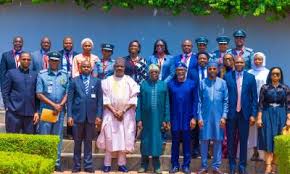
The National Inland Waterways Authority (NIWA) has formed a strategic partnership with the Independent Corrupt Practices and Other Related Offences Commission (ICPC) to overhaul it’s operational transparency and maximize revenue collection.
 The Acting Managing Director, Umar Yusuf Girei, who announced this at a post event press conference at NIWA Headquarters Lokoja, said the organization recently convened a two day Executive and Anti-Corruption training themed “Strengthening Integrity and Revenue System in Inland Waterways Management”
He said discussions with the Commission aims to explore measures for strengthening integrity and curbing corruption within its operations.
 The training brought together Board members, Management and Area Managers alongside the 2026 NIWA Management Retreat in Abuja.
 Girei said the initiative forms part of new strategies aimed at improving its operational system and enhancing collaboration with key stakeholders as part of efforts to boost efficiency and accountability.
 He noted as part of the Renewed Hope Agenda of President Bola Ahmed Tinubu, with the support of the Minister of Marine and Blue Economy, Dr. Adegboyega Oyetola, the Authority is focused on aligning institutional goals in ensuring better service delivery to Nigerians.
Girei therefore, assured staff that the ongoing reforms under his watch would translate into improved service and better working conditions.
 “NIWA remains committed to continuous improvement and stakeholder engagement and the reforms are expected to enhance both internal performance and public confidence”, he stated.
By: Nkpemenyie mcdominic, Lagos
Continue Reading

Maritime

Nigeria To Pilot Regional Fishing Vessels Register In Gulf Of Guinea —Oyetola

Published

on

Nigeria has agreed to serve as the pilot country for the formal implementation of the Regional Record of Authorised Fishing Vessels in West Africa, a move the government says reflects its belief that credible leadership must be matched by practical action to combat illegal fishing and strengthen marine governance across the Gulf of Guinea.
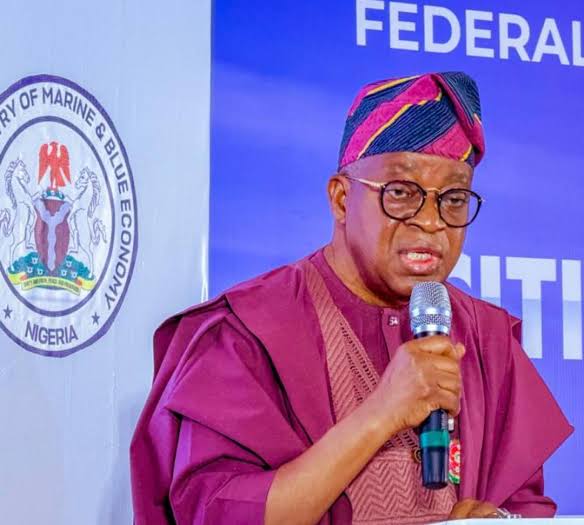
 The commitment was announced by the Minister of Marine and Blue Economy and Chairman of the Conference of Ministers of the Fisheries Committee for the West Central Gulf of Guinea (FCWC), Dr. Adegboyega Oyetola, during a high-level meeting with the organisation’s Secretary-General and secretariat staff in Abuja.
He said Nigeria’s decision to host the pilot phase of the Regional Record of Authorised Fishing Vessels demonstrates its resolve to translate regional leadership into measurable outcomes for sustainable fisheries management.
The proposed Regional Record of Authorised Fishing Vessels will create a verified database of industrial fishing vessels authorised to operate within the maritime zones of FCWC member states, covering both foreign and national fleets.
The system is designed to improve transparency, accountability and cross-border cooperation in a region heavily affected by illegal, unreported and unregulated fishing.
 The initiative builds on a roadmap endorsed by member states and reaffirmed in the Monrovia Declaration, which set out steps for establishing the register as a shared governance tool across West Central Africa.
 Oyetola said Nigeria expected the pilot phase to test feasibility, identify operational gaps and generate practical lessons for broader regional rollout.
 He pledged that Nigeria would use its experience to guide and support other member states once implementation expands, stressing that collective action was essential to protect fisheries resources and livelihoods in the Gulf of Guinea.
 “The project is envisaged as a formalised and validated regional database containing comprehensive and reliable information on fishing vessels authorised to operate within the maritime jurisdictions of FCWC Member States.
 This initiative represents a major step forward in strengthening transparency, accountability and cooperation in fisheries governance across our shared waters,” he said.
The minister also highlighted complementary regional efforts, including joint patrols and enforcement initiatives under the West Africa Sustainable Ocean Programme, implemented by the FCWC in partnership with the European Fisheries Control Agency, to deter illegal fishing. Dr. Oyetola also disclosed that Nigeria’s draft National Plan of Action on illegal fishing was being reviewed and updated following the transfer of fisheries oversight to the Federal Ministry of Marine and Blue Economy, underscoring the country’s determination to address illicit fishing activities.
 He proposed deeper institutional engagement with the FCWC, including a high-level Nigerian mission to the organisation’s secretariat and regional monitoring centre, as well as collaboration on harmonising food safety and fisheries regulatory standards across member states to boost trade and consumer protection.
 Reaffirming Nigeria’s commitment to regional cooperation, Dr. Oyetola said his tenure as Chairman of the FCWC Conference of Ministers would focus on practical outcomes, stronger institutions and sustainable use of ocean resources.
 He thanked the FCWC member states for their continued partnership, describing the pilot vessel register as a defining step towards transparent and accountable fisheries governance in West Africa.
 Speaking earlier, the FCWC Secretary-General, Antoine Gaston Djihinto, commended the Minister for his commitment to addressing illegal, unreported, and unregulated fishing, and also for boosting fish production in the country. He also thanked the Ministry for hosting an “outstanding and highly commendable”
 FCWC Conference in Lagos in November 2025. The Fisheries Committee for the West Central Gulf of Guinea (FCWC) is an intergovernmental organisation established in 2007 to facilitate regional cooperation in fisheries management among its six member states: Benin, Côte d’Ivoire, Ghana, Liberia, Nigeria, and Togo.
 Headquartered in Tema, Ghana, the FCWC works to ensure the sustainable development and optimal use of shared marine resources while aggressively combating illegal, unreported, and unregulated (IUU) fishing in the sub-region. Its core activities include harmonising fisheries legislation, enhancing monitoring and surveillance, and promoting the growth of a sustainable blue economy to support the livelihoods of small-scale fishers in the sub-region.
By: Nkpemenyie mcdominic, Lagos
Continue Reading

Trending