
Opinion
Failed Corruption Fight

The fight against corruption has been a major policy thrust of the present administration at the Federal level headed by President Muhammadu Buhari. In fact the perceived stinking corruption in the country was a campaign mantra of the Buhari Campaign Group. In view of the doggedness and ferocity with which the campaign was carried out I had thought that corruption and related activities will no longer be fashionable about eight years into the administration of the corruption fight.
No sooner the Buhari-led Federal Government was sworn into office did they intensify the fight against the corruption. The anti-graft agencies, the Independent Corrupt Practices Commission (ICPC), the Code of Conduct Bureau (CCB), the Economic and Financial Crimes Commission (EFCC) and other relevant agencies were restructured. The war against corruption was decentralised. Anti-corruption units were established in virtually all public and corporate organisations including schools. Tribunals for anti-corruption cases were set up to give teeth to the fight. The electronic, print and the social media were inundated with advertorials designed to denigrate and discourage corrupt practices in Nigeria. But I discovered much to my chagrin that some of those who were at the forefront of the titanic struggle against the corruption scourge are the masterminds, perpetrators and protagonists. No wonder, about eight years the Buhari-led Federal Government purportedly scaled up the corruption fight, it has not yielded dividends. In fact, to say the least, the fight and all the resources injected to prosecute it are counter productive.
The arrow-heads of the corruption fight were caught in the thicket and web of corruption. Who is Maina? What is the fate of thousands of Nigerian retirees who were conscripted and hoodwinked into the Pension Fund contribution? Some of the contributors are dead without accessing their benefits. Where are the billions of naira of pension fund contributors that are either outrightly misappropriated with impunity or feared embezzled by some pension fund administrators?
The present administration lacked the will to fight corruption, it only used it as a hype and a smokescreen to rig out the Dr. Goodluck Jonathan’s administration.
How could a person explain the situation where a nation that is blessed with human and material resources, is at the same time, one of the single digit poorest countries in the world, whose citizens live below the United Nations economic benchmark of one dollar per day. This is an inexplicable irony. How on earth should Nigeria’s Foreign and Domestic debts keep rising like a phoenix in a country God has so blessed? Why should China whose economy is technology-driven be a perpetual loan benefactor to Nigeria with China being a potential controller of Nigeria’s economy. Very soon, China will be a major player in the politics of Nigeria, making the nation a hub for Chinese products. He who pays the piper will inevitably dictate the tune.
Because of the abysmal level of corruption, most Government establishments are either moribund or in comatose. This has worsened the rate of unemployment in the country, even though developed economies are private sector driven.
The sing-song “Government is not a good manager of business” is a truism because of the high profile corrupt practices in the public institutions. This is based on the misconception that “Government money belongs to no one”. Since Government money is a common wealth that belongs to everyone, it should not be misappropriated or embezzled by an insignificant few to the detriment of the majority. Some serving public officers are landlords of empires and are living in affluence, acquired with public money
The Transparency International corruption index on Nigeria lends credibility to that Nigeria thrives on corrupt practices. In fact, corruption is systemic and the second nature of Nigeria
Nigeria ranked 150 out of 180 countries on the 2022 Corruption Perception Index released by the Transparency International, penultimate Tuesday. This demeaning ranking which actually reflects the country’s true corruption status, should pose great concern to all meaning Nigerians.
The Corruption Perception Index, I gather is the Transparency International’s tool for measuring the level of corruption in the system of the 180 countries across the world based on prevalent indices.
While I congratulate Nigeria for obtaining 150 in 2022 against the 154th position of 2021, I am sad that the fight against corruption is not yielding positive results. Though President Buhari was vehement in the fight against corruption, with a heightened effort to indict Dr. Goodluck Ebele Jonathan’s administration of corruption. Nigeria and her citizens fared better under the, Dr. Goodluck Ebele Jonathan’s “corrupt” administration than the present saintly Government of Muhammadu Buhari.
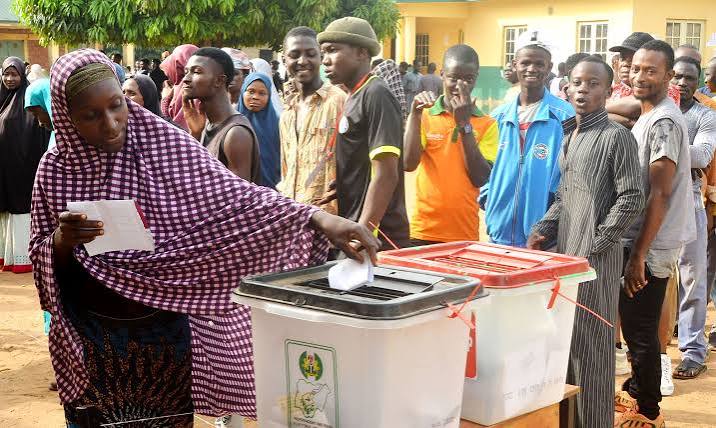
When Dr. Jonathan was in the saddle rice and other food items and beverages were within the rich of the common man. A litre of petrol was N86, today it is N500 per litre in the parallel market, transportation fare has quadrupled, virtually every thing is in a downturn. To access an NNPC petrol station to buy fuel, a person has to pay between N500 and N1000 as gate pass. Nothing goes for nothing under the present administration. Corruption is today systemic. It has eaten deep into our fabric. See the mess associated with the currency swap where the Redesigned currency is not in banks, not in Automated Teller Machines facility. Transaction cannot be made over the counter because the money that is not available in banks are in the hands of private people. How did the private people get the money? Either they bought it from bank staff or they are conduits through which the bank echelon sell the money to unsuspecting public. To get your money in bank through an outlet like a Point of Sale (PoS) you must part with a minimum of N1,000 for N10,000. People now buy their own money or barter old currency for Redesigned currency at an exorbitant rate. What can be corruption than these? Right and exemplary leadership will right the wrongs. Let us enthrone meritocracy through the conscientious use of the Permanent Voter’s Card.
By; Igbiki Benibo



Quote: “No oil vessel, commercial contract or operational deadline is worth the loss of innocent lives; where environmental grievances are ignored and dialogue gives way to confrontation, the entire society pays a price that no compensation can adequately erase.”

Quote:”The value of wealth is
Will and gifts are subjects
A Will is an important legal
Where documentation is
This does not mean every
Properly completed lifetime
Property owners must also
My appeal is simple: let us
-

 Education2 days ago
FCE Yola Graduates 3,555 Teachers , Seeks Upgrade to University
-

 Sports2 days ago
Nigerian Trio Target Titles At PFL Africa Finals
-

 Niger Delta2 days ago
Diri Restates Stance On Lagos-Calabar Coastal Highway
-

 Niger Delta2 days ago
C’River, NUJ Pay Tribute To Late Guardian Editor
-

 News2 days ago
NDLEA Recovers Tons Of Illicit Drug Consignments In Nine States
-

 Opinion2 days ago
Checking Voter Apathy In Nigeria’s Electoral Process
-

 Politics2 days ago
2027: DICKSON’S EX-ALLY VOWS TO WORK AGAINST NDC INTEREST IN BAYELSA
-

 Politics2 days ago
2027: GROUP PLEDGES 40,000 SUPPORTERS FOR COALITION CANDIDATES IN RIVERS