
Politics
Buhari Urges Action Against Modern Day Slavery

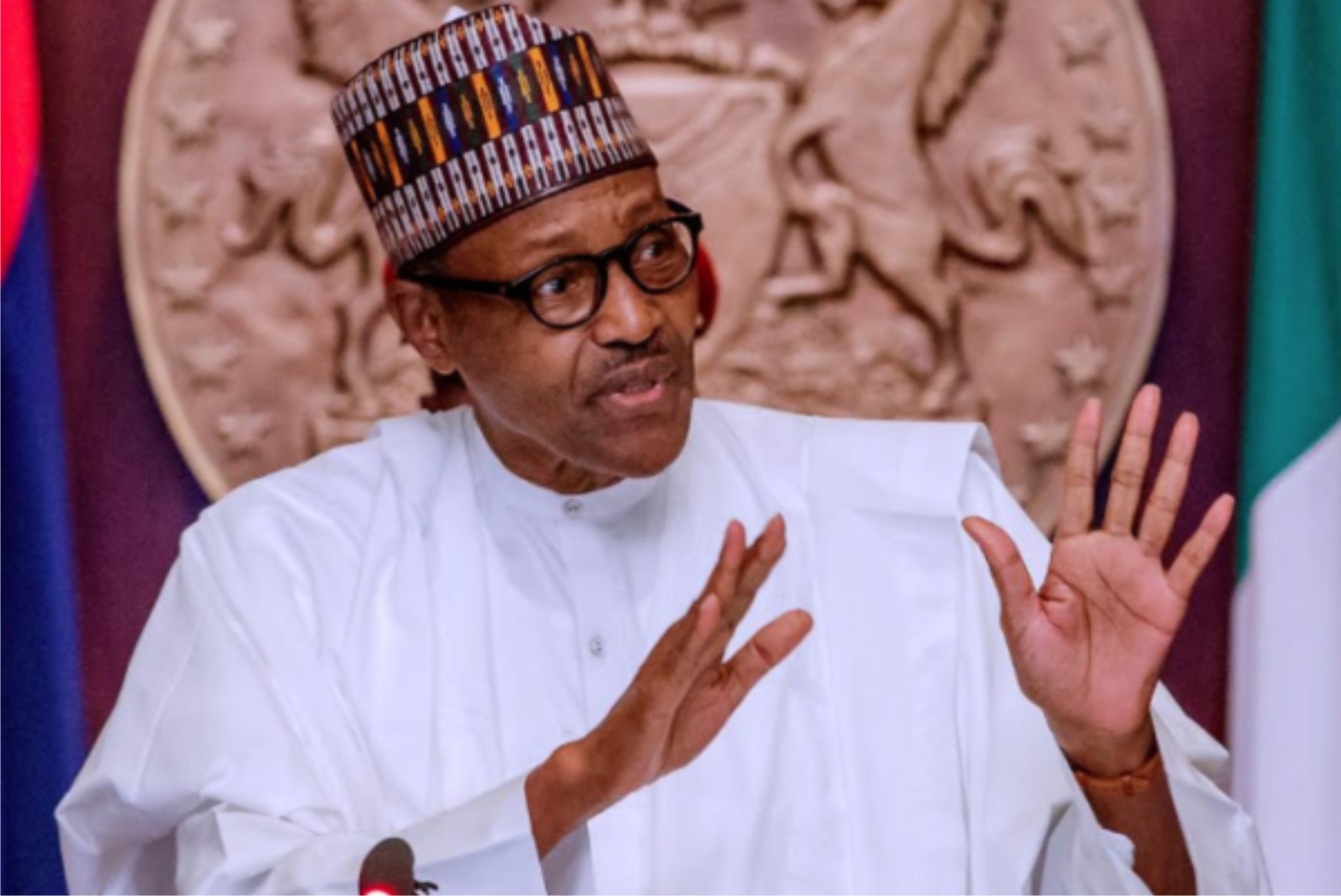
President Muhammadu Buhari at the weekend said four centuries after the first 20 documented African slaves arrived on the shores of Virginia, the slave trade still exists.
The president said this via a statement released on Saturday to mark the International Day for the Remembrance of the Slave Trade and Its Abolition.
Buhari said in the years that followed, millions more were shipped in dehumanising conditions across the ocean and enslaved.
“Slavery had, of course, existed before. But this indicated the beginning of a mechanised trade that saw human beings reduced to property on an unprecedented scale,” he added.
The president explained that despite the fact that descendants of African slaves have made valuable contributions across society, they are still dealing with the effects of this poisonous legacy. They still have to navigate its everyday manifestations, such as discrimination, racism or lack of access to resources and opportunities. This must not be overlooked or forgotten.
Yet, as we reflect on this day, International Day for the Remembrance of the Slave Trade and Its Abolition, it is clear slavery did not only thrive then. It still thrives today. Across the world it is estimated there are as many as 40 million men, women and children living in forced servitude. They are the industrial victims of a business many believe was abolished hundreds of years ago. They are the modern enslaved.
Their exploitation appears in many guises, though usually unrecognized as slavery. Many victims are unseen, hidden beneath opaque supply chains. Others are hidden in plain sight, entrapped by circumstances that rob them of autonomy. In any case, their labour, often dangerous, is no product of choice and its conditions are self-perpetuating.”
He said in Africa, its modern forms include debt bondage, the enslavement of war captives, commercial sexual exploitation and forced domestic servitude. Holding people held against their will, controlling their movements and forcing them to work for the sole profit of others – wherever they are – is slavery today and always.
The abolitionists of the 19th century succeeded more than any before: By working to extinguish the transatlantic slave trade that had claimed 15 million victims, they laid the groundwork to ensure it did not manufacture millions more. But their work is not done. We must take up their examples as we forge a path forward to eliminate modern-day slavery in all its forms.
Slavery, once again, has become entwined in the global economy – and it is largely unseen. For instance, most of us might know in principle that the mining of cobalt crucial to our smartphones might have used forced labour.



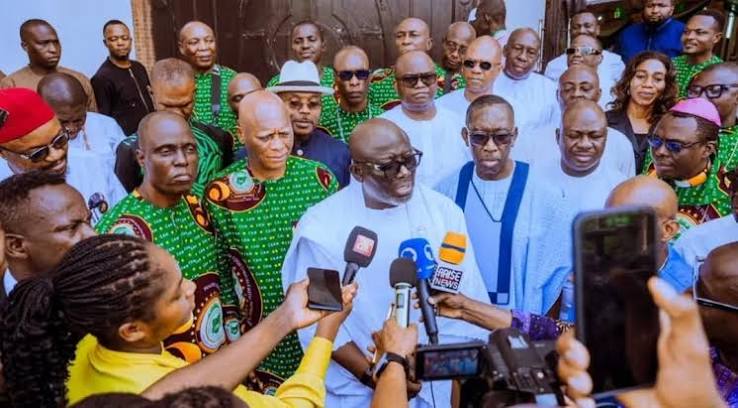
Delta State Governor, Rt. Hon. Sheriff Oborevwori, has urged public office holders to maintain a clear distinction between political responsibilities and service to God, saying the pursuit of political interests should never weaken their commitment to faith and humanity.
Gov. Oborevwori made the call in Abuja, at the weekend, after receiving the Christian Icon Award from the Christian Association of Nigeria (CAN) during the association’s 50th anniversary celebration at the National Christian Centre.
The award was presented by CAN President, Dr Daniel Okoh, in recognition of the governor’s public service, ethical leadership and commitment to Christian values.
Speaking after the presentation, Gov. Oborevwori expressed gratitude to God for the honour, describing it as a reminder of the responsibility to serve humanity with greater dedication.
“We may be involved in politics, but we must be able to distinguish between serving God and playing politics. These are two different responsibilities, and we must never allow politics to undermine our commitment to God,” he said.
The governor explained that his commitment to serving in the church predated his emergence as Speaker of the Delta State House of Assembly. He said he had continued with his ushering duties despite advice at the time that his political position might make the practice inappropriate.
According to him, his conviction that service to God and humanity should remain a sustained responsibility has continued to guide his public life.
Gov. Oborevwori described the recognition by CAN as particularly meaningful because, in his view, the association’s awards reflect not only public service but also character, integrity and the impact of a recipient’s contributions to society.
“When an organisation such as CAN gives you an award, it means a lot because the recognition is based not merely on public service but also on integrity, character and the impact you have made,” he said.
The governor also commended efforts to bring the five blocs within the Christian community together, expressing the belief that greater unity among them would strengthen their contribution to national development.
He said a united Christian community, speaking with one voice on issues of common concern, could contribute to a more cohesive Nigeria.
Gov. Oborevwori added that service to God should be undertaken with sincerity, dedication and a sense of responsibility, rather than for personal gratification or public recognition.
CAN’s 50th anniversary celebration brought together religious leaders, political office holders and other prominent Nigerians to mark the association’s five decades of service.
Those who accompanied the governor included immediate past Delta State Governor, Senator Ifeanyi Okowa; Speaker of the Delta State House of Assembly, Rt. Hon. Emomotimi Guwor; and members of the National Assembly, Hon. Victor Nwokolo, Hon. Nicholas Mutu and Hon. Jonathan Ukodhiko.
Others were the Chief of Staff, Government House, Hon. Johnson Erijo, and the Senior Political Adviser to the Governor, Senator Emmanuel Aguariavwodo, alongside other government functionaries and political leaders.
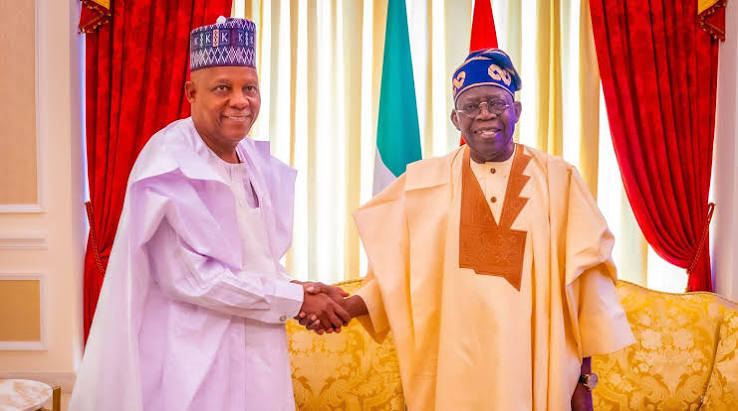
Vice President Kashim Shettima has expressed concern over internal divisions within the ruling All Progressives Congress (APC), warning that disagreements among party members pose a greater threat to its electoral success in 2027 than opposition leaders Atiku Abubakar and Peter Obi.
Vice President Shettima stated this at the weekend, in Abuja, during the unveiling of the campaign headquarters of Arewa for Asiwaju (A4A), a northern political coalition supporting the re-election of President Bola Tinubu.
The Vice President stressed that unity within the APC would be crucial to securing victory in the forthcoming general elections.
Vice President Shettima cautioned party stakeholders against concentrating solely on the presidential election while neglecting governorship and National Assembly contests.
According to him, undermining APC governors or other candidates could weaken the party’s chances of achieving a comprehensive victory.
“There is no point in championing the cause of the presidential election and then undermining the governor in the gubernatorial election. Honestly, it will not go down well with the system,” he warned.
He urged party leaders and supporters to rally behind President Tinubu, APC governors and National Assembly members to strengthen the party ahead of the elections.
Speaking on the political situation in the North, Vice President Shettima declared that the region had already demonstrated its support for President Tinubu’s second-term ambition.
“By now, I believe the North has spoken. We have spoken with a resounding voice and unmistakable conviction. From Adamawa to Zamfara, from Borno to Niger, we have spoken,” he stated.
The Vice President also challenged APC members to confront former Vice President Atiku Abubakar politically but respectfully.
“Go and perform. Go and defeat Baba Atiku. Defeat him respectfully,” he said.
Vice President Shettima maintained that the APC possessed the political structure and grassroots strength required to compete effectively across Nigeria’s polling units.
He disclosed that the party had 361,045 officials across ward and local government structures, compared with the country’s 176,845 polling units.
According to him, the figures demonstrate the party’s organisational capacity to mobilise voters nationwide.
The Vice President further charged political appointees to demonstrate their electoral relevance in their respective wards and local government areas, stressing that political success begins at the grassroots.
“Politics is still local,” he declared.
On the APC’s strength in northern Nigeria, Vice President Shettima claimed that 18 of the region’s 19 states were under the party’s political influence.
He also highlighted defections from the New Nigeria Peoples Party (NNPP) in Kano State as evidence of the APC’s growing political strength.
Addressing Nigeria’s economic challenges, Vice President Shettima acknowledged the hardship facing many households but defended the economic reforms introduced by the Tinubu administration.
According to him, the administration’s reforms have helped stabilise the economy and improve the country’s financial position.
He claimed that Nigeria’s foreign reserves had risen to approximately $58.9 billion, describing the development as evidence of economic recovery.
Vice President Shettima assured northern Nigerians that the region would benefit from President Tinubu’s second term, insisting that the President remained committed to its development.
“For the North, we have absolutely nothing to fear in a Tinubu second term. He has the North at heart,” he said.
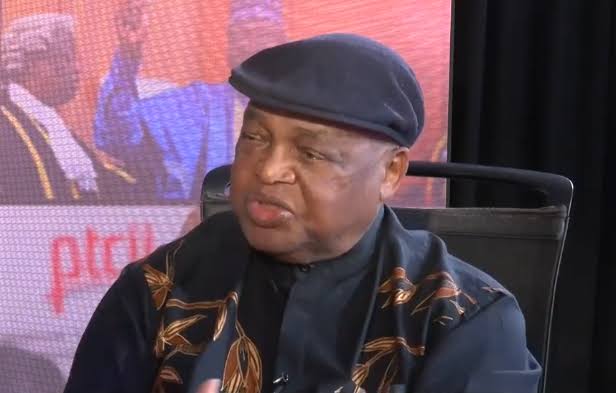
A family source confirmed his death to The Tide source on Saturday, October 17, 2026, disclosing that the former Nigerian ambassador died earlier in the morning following a prolonged period of deteriorating health.
According to the source, Dr Cole had recently been discharged from the intensive care unit (ICU), but his condition continued to worsen.
“He left ICU a few days ago. He had been doing poorly in recent weeks leading to this end,” the source reportedly said.
Born on August 4, 1940, Dr Cole celebrated his 86th birthday in August, barely two months before his death.
He was a prominent figure in Nigeria’s public life, with a distinguished career spanning journalism, diplomacy, public administration and historical scholarship.
Before joining the diplomatic service, Dr Cole established himself in the Nigerian media industry, serving on the editorial board of The Guardian newspaper before becoming Managing Director of Daily Times, one of Nigeria’s most influential media organisations.
His leadership role at Daily Times placed him among the notable figures who shaped the country’s media landscape during a significant period in its development.
Dr Cole subsequently served Nigeria as ambassador to Argentina and Brazil, representing the country in international diplomatic engagements and further broadening his public service experience.
Beyond journalism and diplomacy, he was known for his contributions to discussions on governance, politics and Nigeria’s historical development. His professional engagements reflected a longstanding interest in the country’s political and institutional evolution.
His death marks the end of a career that traversed several important areas of national life, leaving a record of service in journalism, international relations and public affairs.
As of the time of filing this report, the family had yet to announce details of his funeral arrangements.