
Business
‘Sugar Industry Key To Nigeria’s $1trn Economy Goal’

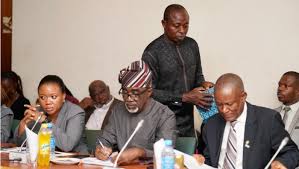
Towards advancing President Bola Tinubu’s vision of achieving a $1trillion economy, the Minister of State for Industry, John Owan, has emphasised the strategic importance of Nigeria’s sugar sector.
A statement obtained by The Tide’s source said Enoh stated this during a public hearing organised by the House of Representatives Committee on Industry, held as part of efforts to amend the Establishment Act of the National Sugar Development Council.
The Minister, while addressing stakeholders, shared insights from a recent Federal Executive Council (FEC) meeting, which disclosed President Tinubu’s recognition of the potential in the sugar sector.
He said, “about two weeks ago, the President spoke about sugar at the FEC meeting.
“That in itself reflects the importance of sugar as a strategic industrial and domestic product that no country should take lightly, and Nigeria should be no exception.
“The sugar sector has a significant role to play in the President’s commitment to a $1 trillion economy.
“Our approach must ensure it contributes effectively to job creation and rural economic development.”
Commenting on it, the Executive Secretary of the NSDC, Mr. Kamar Bakrin, said full implementation of the Nigeria Sugar Master Plan could save the nation over $1 billion in foreign exchange annually.
The NSDC scribe noted the plan’s potential to drive employment, attract large-scale investment, and stimulate rural development.
Bakrin explained that the proposed legislative amendments aim to redefine the council’s powers and align its financial structure with the 1999 Constitution.
Stressing the necessity of robust investor confidence to realise the NSMP’s vision, Bakrin said “We require about $4.5 billion in investments to fully achieve the NSMP’s objectives.
“Investor confidence is therefore crucial, and this can only be attained through transparent and rule-based policies.”
He, however, expressed concern over a recent government directive mandating that 50 per cent of the sugar levy be paid into the Consolidated Revenue Fund, warning that such a move could undermine sectoral progress.
“The sugar levy was not intended as a general revenue-generating mechanism but as a dedicated fund to support the sector’s growth.
“Redirecting it threatens to defeat its original purpose”, Bakrin stated.
The National Agency for Food and Drug Administration and Control, represented by Iba Edward, acknowledged the bill’s intent but cautioned against regulatory overlaps.
She said, “Some proposed provisions encroach on NAFDAC’s core responsibilities under Section 5 of our Act. We urge lawmakers to clearly define roles to avoid duplication”.
A former Minister, Aliyu Idi Hong, who represented BUA Group, highlighted the company’s commitment to sugar development, citing a 50,000-hectare plantation, with 20,000 hectares currently under cultivation.
He stressed the importance of policy stability to sustain investor interest.
Speaking, the Head of Government and Community Relations at Flour Mills of Nigeria, owners of the Golden Sugar Company in Sunti, Niger State, Mr. Onome Okurah, shared ongoing efforts to boost local production.
He noted that GSC cultivates over 6,000 hectares and currently sustains sugar production for four months each year.
“With stronger partnerships, we expect tangible results in the coming years”, he stated.
On his part, Chairman of the House Committee, Enitan Dolapo Badru, assured all stakeholders that the amendment process would be inclusive and aimed at empowering the NSDC to fulfil its mandate effectively.


Nkpemenyie Mcdominic
Reports say that the training is designed to equip youths with practical technical skills for employment in the oil and gas and construction sectors, with emphasis on employability, safety, competence and self reliance.
In attendance at the flag-off ceremony this week, at the Petroleum Training Institute (PTI) Conference Hall, Effurun, were stakeholders, dignitaries, and political representatives, among others.
Dafinone, represented by his Chief of Staff, Adelabu Bodjor, said the initiative reflects a deliberate political investment in human capital development across Delta Central.
He explained that the training focuses on rigging and scaffolding, noting that “both are essential technical competencies required in industrial operations, construction projects, and oil and gas installations”.
Bodjor added, “The programme is intended to reduce dependency among youths by providing job-ready skills capable of supporting long-term economic opportunities and self-sufficiency. The initiative aligns with Senator Dafinone’s broader development agenda, which prioritises practical skill acquisition as a pathway to sustainable empowerment.”
Also addressing the participants, the NCDMB, Felix Omatsola Ogbe, represented by Mr. Teddy Bai, commended Dafinone for sponsoring the programme, describing it as “a timely response to critical manpower gaps in the industry”.
Bai explained that rigging and scaffolding remain safety-sensitive skills required across fabrication yards, offshore platforms, and construction sites, stressing that the programme bridges the gap between certification and practical competence.
He also charged the training consultant, OROH Contractors Limited, to maintain strict standards of professionalism, safety, and discipline, while urging participants to remain committed, focused, and disciplined throughout the exercise.
The Senate Liaison Officer for Sapele Local Government Area, Chief Patrick Akamuvba, , described the programme as a major step in strengthening human capital development in Delta Central.
Akamuvba said scaffolding and rigging skills are in high demand across residential, commercial, and industrial construction projects, noting that the training offers real employment opportunities for beneficiaries
He urged participants to prioritise knowledge and certification over short-term material expectations, stressing that discipline and seriousness would determine their long-term success.
He also cautioned youths against social vices and distractions, advising them to remain focused to maximise the opportunities provided by the programme.
-
News2 days ago
Obuah’s Victory Excites Former Lawmaker as APC Primaries Conclude in Rivers West
-

 Politics4 days ago
APC PRIMARIES: FUBARA’S WITHDRAWAL, HISTORIC SACRIFICE FOR NATIONAL STABILITY ……. GROUP
-

 News5 days ago
Court Sentences Seven To Death Over Murder Of Cleric In Rivers
-
News3 days ago
105 Nigerians Killed In S/Africa In Seven Years
-

 Sports4 days ago
PH Arsenal Community Set For Streets Procession, Saturday
-

 Niger Delta2 days ago
Royal Father Endorses PH Arsenal Community, Pledges To Support
-

 Politics4 days ago
IPAC Flays INEC Over Election Guidelines Judgement
-

 Politics4 days ago
NDC To Adopt Electronic Voting For Future Primaries