Connect with us

Oil & Energy

Drought Dims Hydropower’s Promise

Published

on

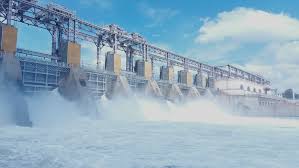
Hydropower is the world’s single largest source of green energy. On a global scale, hydropower plants produce more energy than all other renewable power sources combined.
However, the growth rate of new hydropower capacity has tapered off in recent years, and the sector is plagued by serious current and future problems, from increased incidents and intensity of droughts in a changing climate, and major negative environmental externalities associated with mega-dams.
Hydropower offers a critical benefit that other renewable energies don’t. It creates energy around the clock unlike solar and wind energy, which are dependent on weather patterns and therefore highly variable.
For this reason, hydropower is an extremely attractive option for river-endowed nations that want to boost their clean energy production levels without compromising grid stability or energy security. But in recent years, investment in expanded hydro has dropped off.
“In the last five years the average growth rate was less than one-third of what is required, signaling a need for significantly stronger efforts, especially to streamline permitting and ensure project sustainability”, the International Energy Agency (IEA) reported last year.
It continued that “Hydropower plants should be recognised as a reliable backbone of the clean power systems of the future and supported accordingly”.
But in recent years hydropower has not proved to be as reliant as its investors had hoped. Widespread droughts associated with climate change have caused rivers to run lower or even dry up entirely, causing seriously negative (literal) downstream effects for hydropower production plants.
In 2022, intense droughts in China’s Yangtze River basin slashed developed hydropower potential (DHP) by 26%, causing critical shortages and spurring an uptick in coal-fired power production.
In the last few years similar problems have cropped up in Brazil, Ecuador, the United States, and the Mediterranean region, too.
Critically, these are not isolated or one-off incidents; the risk of similar extreme droughts in the future rises by nearly 90% in a number of climate change scenarios, notably SSP585.
“Since September, daily energy cuts have lasted as long as 14 hours”, the New York Times recently reported from Quito, Ecuador.
“Highways have turned an inky black; entire neighborhoods have lost running water, even internet and cell service”, it added.
Not only does this have enormous implications for day-to-day life, these blackouts reverberate through the national economy. It is estimated that for every hour of blackout, Ecuador loses $12 million in productivity and sales.
Climate scenarios are just one of the factors deterring investors away from new hydropower mega-projects.
In the United States, investments in large hydropower plants all but drief up due to the simple fact that “there are no suitable river locations in the US for new ones”, according to recent reporting from CleanTechnica.
And the ones that do exist are associated with major ecological disruptions, changing flood patterns and blocking salmon runs for tens of millions of fish, among other environmental issues.
“There are certainly rivers in other countries which could be tapped using conventional hydropower technology, but not in the US”, Frederick Hasler wrote for CleanTechnica.
“Going forward, current US hydro needs to be maintained, but cannot be significantly increased”, he said.
And there are indeed major projects being planned in the rivers of other countries, but these are not without their own problems.
In the Congo, plans for the world’s largest hydropower project have been stalled for years after much enthusiasm at the outset. Some blame the Democratic Republic of the Congo’s poor governance for the Grand Inga dam’s failure to launch, while others point to a revolving door of international partners, a blisteringly high up-front cost of around $80 billion in one of the world’s poorest nations, and “deep concerns about the project’s environmental and social impact” according to reporting from the BBC.
But the need for the Grand Inga is enormous and impossible to ignore. Around 600 million people in Sub-Saharan Africa lack access to power completely, making electrification a critical step for economic and social development in the region.
But Africa does not have the luxury of emitting greenhouse gases indiscriminately as the developed world has done over the past 150 years.
Instead, the continent is under enormous international pressure to “leapfrog” over fossil fuels and straight to the development of clean energy systems.
It’s hard to imagine how this will be possible without large-scale hydropower.

By: Haley Zaremba

Continue Reading

Oil & Energy

REA, Mente Energy Sign MoU On Renewable Energy Localisation

Published

on

The Rural Electrification Agency (REA) and Mente Energy Limited have signed a Memorandum of Understanding (MoU), formally launching the Renewable Energy Localisation and Industrialisation Programme (RELIP).
The programme is designed to structure renewable energy market to catalyse investment, generate skilled industrial employment and build a domestic clean-energy manufacturing base in partnership with global capital.
Speaking during the signing ceremony at the agency’s headquarters in Abuja, the Managing Director/Chief Executive Officer, REA, Abba Aliyu, said Nigeria built significant momentum in decentralised renewable energy but until now, the economic value of that deployment has largely flowed offshore.
“By organising our national demand and building the institutional architecture to support domestic manufacturing, we are creating the conditions for investment, jobs and industrial growth to take root on Nigerian soil.
“The REA is proud to lead this programme and we welcome partners – Nigerian and international – who share our commitment to building a clean-energy industrial base that serves Nigeria first,” he said.
The founder and managing partner of Mente Energy, Tolu Osekita, said Nigeria’s renewable-energy market is one of the most significant industrial opportunities of this decade.
Osekita said “What RELIP does is to put structure around that opportunity so that capital of every origin can invest here with greater confidence and at greater scale.
“Grounded in Nigeria-first principles, this is about catalysing the maximum economic opportunity for our country – factories, jobs, investment and industrial growth built on Nigerian soil, in partnership with the world.
We are proud to stand alongside the REA in leading this work”.
The MoU establishes a five-year framework for strategic collaboration – with RELIP identified as the first priority workstream am phase 1 will be delivered over approximately six months, establishing the commercial, analytical and institutional foundations required for NREIF launch and subsequent capital mobilisation.
The programme is designed to structure renewable energy market to catalyse investment, generate skilled industrial employment and build a domestic clean-energy manufacturing base in partnership with global capital.
It would be noted that Nigeria is one of Africa’s most dynamic renewable-energy markets as both the public and private sectors adoption is accelerating with millions of solar home systems, hundreds of mini-grids and growing commercial and industrial uptake.
Continue Reading

Oil & Energy

Stakeholders Seek Unified Action To Accelerate Methane Abatement In Oil, Gas Sector

Published

on

Stakeholders across the government, civil society and industries have called for stronger regulatory coordination and accelerated action on methane abatement in the nation’s oil and gas sector.
They made the call at the Methane Emission Abatement in the Oil and Gas Industry Regulatory Dialogue organised by the Stakeholder Democracy Network (SDN) alongside other partners, in Abuja, at the weekend
The Country Director, SDN, Mrs Florence Ibok-Abasi, insisted that fragmented regulatory approaches have slowed progress in the past, noting that the current engagement aimed to align priorities, strengthen enforcement, and build lasting institutional coordination.
“We are here to align priorities, learn from our challenges, break down silos, and build genuine coordination among all stakeholders.
“Each of you brings critical knowledge; upstream expertise, midstream insights, climate policy perspective, civil society accountability, and legislative oversight. Our strength lies in bringing these together.
“Improved inter-agency cooperation is not optional; it is the foundation for better data, stronger enforcement, and credible progress toward Nigeria’s global methane pledge. We have the talent to make this work”, she said.
Ibok-Abasi said the gathering marked a turning point in efforts to harmonise regulatory approaches, describing collaboration as critical to achieving meaningful climate outcomes.
While noting that the dialogue was the first of two, the SDN boss stated that a second dialogue would be reconvene to advance initiatives and collaboration that would ensure improvement of methane abatement in the oil and gas sector.
Also speaking, the Head, Environment and Climate Change, SDN, Dr Jude Samuelson, highlighted methane reduction as one of the fastest and most effective strategies for tackling climate change globally.
Samuelson noted that the initiative was, therefore, designed to ensure regulators and operators work hand in hand to deliver measurable results.
He, however, identified the high cost of methane abatement technologies as a major constraint, calling for stronger government-industry partnerships to make such solutions more accessible and scalable in Nigeria.
“One of the recommendations that SDN has is to see how the government can work with the operators to ensure that the operators afford these technologies.
“We are also interested in bringing some of the new technologies from methane emission abatement down to the country to see how the technologies could be deployed in the oil and gas sector to ensure that emissions reduce drastically”, he said.
Speaking from the climate policy perspective, the representative of the National Council on climate Change (NCCC), Chukwuemeka Okebugwu, said methane remained a significant contributor to global warming, particularly in oil-producing countries like Nigeria.
“The oil and gas sector is a major source of methane emissions.
“So regular dialogue helps us develop practical solutions and also identify opportunities, including converting methane into useful energy instead of wasting it,” he said.
On his part, the Chief Executive Officer of the Nigerian Midstream and Downstream Petroleum Regulatory Authority (NMDPRA), Saudi Mohammed, highlighted the need for methane abatement.
Represented by the Technical Adviser on  Health, Safety Environment and Community, Odafe Atebe, Mohammed,
described methane abatement as a cost-effective pathway for Nigeria to achieve climate goals without compromising energy security.
In his words, “Fragmented approaches will not deliver the scale of impact required. We must move beyond discussions to coordinated action across the entire oil and gas value chain”.
On his part, Senior Manager, Nigerian Upstream Petroleum Regulatory Commission (NUPRC), Ibrahim Jilo, noted that while progress has been made, challenges remain in ensuring compliance across a diverse and evolving industry landscapNRGIe.
Jilo emphasised the importance of tailored approaches, capacity building, and sustained engagement with operators.
Representative of the Civil Society Group, Natural Resource Governance Institute, Tengi George- Kalu, who spoke from the civil society standpoint, urged stakeholders to ensure that methane reduction efforts translate into tangible benefits for communities affected by oil and gas operations.
“Collaboration is key to moving from policy ambition to real implementation and enforcement,” she stated.
Continue Reading

Oil & Energy

NITDA, NNPC Partner To Drive Digital Transformation In Energy Sector

Published

on

The National Information Technology Development Agency (NITDA) and the Nigerian National Petroleum Corporation (NNPC) are deepening collaboration to accelerate digital transformation in Nigeria’s energy sector.
The collaboration is being championed through the Research, Technology and Innovation (RTI) Unit of the NNPC.
In a courtesy visit by the Director, RTI Unit of the NNPC, Olatomiwa Olaniyi, to the Director-General, NITDA, Malam Kashifu Inuwa, the duo explored strategies to leverage emerging technologies to reposition the nation’s energy industry.
Speaking, NITDA boss, Inuwa, stressed the need for the NNPC to shift from traditional dependence on the exploitation of oil and gas resources to a more innovative model.
According to him, the innovative model would be anchored on the exploration of technologies such as Artificial Intelligence (AI), Internet of Things (IoT) and robotics, among other emerging technologies.
Inuwa said information technology had become a critical enabler across sectors, adding that innovation would play a key role in shaping the future of energy production, efficiency and sustainability in Nigeria.
He outlined NITDA’s strategic priorities to include promoting digital literacy, nurturing local talent, strengthening research ecosystems and advancing indigenous technology solutions.
According to him, reducing reliance on foreign technologies while encouraging home grown innovation is vital to achieving digital sovereignty and sustainable economic growth.
The NITDA boss also said the agency would support NNPC in developing a robust innovation pipeline to connect the company with Nigeria’s growing startup ecosystem.
He said startups would be engaged through incubation programmes and innovation challenges to develop practical solutions tailored to the oil and gas industry.
Inuwa further scored that NITDA’s initiatives aimed at fostering innovation among young Nigerians, including members of the National Youth Service Corps.
“Many of our corps members are already creating solutions to real-world challenges through the agency’s programmes,” he said.
Inuwa also said that effective implementation of the Nigerian Startup Act would be crucial in supporting emerging technology ventures and scaling ideas into commercially viable solutions.
Earlier, Olaniyi said the engagement was aimed at co-creating solutions and building a strong partnership framework to accelerate innovation across the energy value chain.
He emphasised that collaboration among government agencies, industry players and the technology ecosystem remained critical to achieving sustainable innovation.
Presenting the mandate of the RTI Unit, he said its focus was on driving excellence through innovation.
According to him, this would lead to improved operational efficiency, enhanced revenue generation and support sustainable growth across NNPC’s businesses, including upstream, gas, power and new energy.
Continue Reading

Trending