
News
2025 Budgets: I Hope Snake, Monkey Won’t Swallow This One-Atiku

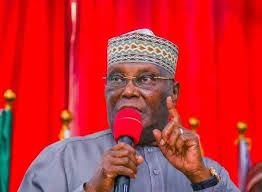
Former Vice President of Nigeria, Atiku Abubakar, has cautioned against the misappropriation of funds allocated to the health sector in the 2025 budget, referencing past bizarre claims of animals—such as snakes, termites, gorillas, and monkeys—being blamed for missing public funds. He stressed that such absurd incidents must not be allowed to happen with resources meant for healthcare.
Amid dwindling resources and reduced external support for healthcare services, Abubakar emphasised the need for transparency and accountability in the government’s $1.07 billion budgetary appropriation for the health sector. He called for mechanisms to ensure public audits and proper utilization of every kobo earmarked for healthcare.
The former vice president specifically questioned the government’s failure to provide a detailed breakdown of how it intends to spend over a billion dollars in the primary health sector. He noted that while investment in primary healthcare is crucial for providing Nigerians with accessible and affordable medical services, it would be unethical for the government to allocate such a significant sum without disclosing its intended use.
“The Federal Government has announced plans to spend a whopping $1.07 billion in the primary health sector, in addition to the N2.48 trillion initially proposed for healthcare in the budget,” Abubakar noted.
“What is even more concerning is that this additional funding is largely sourced from foreign loans, with a small portion coming from an international donor agency. Since these loans must be repaid, Nigerians have the right to know the full details and ensure that the expenditure is transparent and well-justified,” he added.
Abubakar further criticized the government for failing to commit to any physical infrastructure projects within the health sector, suggesting that this raises red flags about potential mismanagement or fraud.
According to the government, the funds will be used to improve governance in healthcare and strengthen primary health services nationwide, including recruitment, training, and retention of healthcare workers and teachers. However, Abubakar argued that the government has a poor track record in managing public funds, particularly in humanitarian services, and that Nigerians should not accept vague explanations without clear accountability mechanisms.
“It is difficult to trust this administration’s claims, especially given its history of misleading Nigerians about investments in social infrastructure,” he said.
He pointed out the government’s misleading statements about improvements in tertiary hospitals, despite the reality that many of these institutions lack basic amenities, such as stable electricity supply.
“The Tinubu administration has failed in the health sector due to poor funding. Major diseases in primary healthcare, including malaria, tuberculosis, and HIV/AIDS, remain critical challenges. If this government is truly committed to healthcare, it must clarify how it plans to use this intervention fund to tackle these diseases,” Abubakar stated.
He also criticized the government’s response to the recent withdrawal of American aid for HIV/AIDS treatment, noting that its proposed intervention of N5 billion is grossly inadequate.
“If the Tinubu administration does not present a clear framework for managing this significant health sector investment or subject it to proper legislative scrutiny, then it may be safe to conclude that this is yet another case of public funds being mismanaged under the guise of serving Nigerians,” Abubakar concluded.



The Force Criminal Investigation Department, FCID, Alagbon, Lagos, has restated that disputes over land ownership are civil matters that fall under the jurisdiction of the courts and should not be handled by the police.
Speaking with newsmen on Sunday, the FCID spokesperson, Assistant Superintendent of Police, Aminat Mayegun, said the role of the police in land-related cases is limited to addressing criminal infractions that may arise from such disputes.
Her clarification follows growing complaints from property owners and residents in Lagos who have raised concerns about alleged police interference in land disputes, despite long-standing directives that ownership disagreements are civil in nature.
Some residents have accused law enforcement operatives of actions that allegedly worsened tensions, encouraged intimidation and complicated the resolution of land ownership matters, which they insist should be determined strictly through legal proceedings.
Others claim such involvement sometimes tilts in favour of powerful interests, further eroding public confidence.
Mayegun explained that issues relating to land boundaries or ownership are governed by civil law and must be settled in court, stressing that the police lack the authority to determine who owns any parcel of land.
She noted, however, that police intervention becomes necessary when criminal acts are committed in the course of a land dispute.
“The police are duty-bound to intervene and investigate only when land-related disputes give rise to criminal offences, as they have no mandate to determine ownership of land,” she said.
According to her, offences such as obtaining money by false pretence, malicious damage to property, arson, assault or any other act recognised under the Criminal Code Act fall squarely within the responsibility of the police.
She warned that individuals who resort to fraud, violence or destruction of property under the pretext of asserting land rights would be thoroughly investigated and prosecuted.
The FCID spokesperson also cautioned members of the public against taking laws into their hands, urging aggrieved parties to seek redress through established legal channels.
She assured that the Nigeria Police Force would continue to carry out its duties strictly in line with the law and called on citizens to report cases of improper land-related interference through the Police Complaints Response Unit.

The Nigeria Governors’ Forum has unveiled plans to prioritise sugar as a key driver of industrial development across the country.
The initiative, in partnership with the National Sugar Development Council, aims to boost local production, create jobs, and reduce Nigeria’s reliance on imported sugar.
Disclosing this yesterday in a statement, the NGF said it has agreed to include sugar projects as priority beneficiaries in engagements with both local and international development partners.
The decision follows requests by the NSDC to accelerate the development of the sugar sector, with the dual goals of achieving self-sufficiency in sugar production and creating employment opportunities for Nigerians.
Speaking at a meeting with NGF officials, NSDC Executive Secretary/CEO, Kamar Bakrin, highlighted the vast investment potential in the sugar sector and encouraged governors of states with suitable lands to embrace sugar project development.
He identified 11 states with prime sugarcane cultivation potential: Oyo, Kwara, Niger, Nasarawa, Kaduna, Kano, Bauchi, Gombe, Jigawa, Adamawa, and Taraba.
“Recent macroeconomic shifts have made domestic sugar production more commercially viable.
“While global sugar prices remain relatively stable in dollar terms, exchange rate fluctuations have made imports significantly more expensive. With locally sourced inputs, Nigeria’s sugar industry now offers robust returns,” Bakrin explained.
He added that Nigeria has approximately 1.2 million hectares of land suitable for large-scale sugarcane cultivation, far exceeding the 200,000 hectares needed to achieve national self-sufficiency.
“Sugarcane projects will empower host communities, promote inclusive development, and support environmental sustainability,” he noted.
Bakrin also cited a model sugar project producing 100,000 metric tons annually, requiring an estimated $250 million investment, with an internal rate of return of 24 per cent. Beyond sugar, the projects generate valuable by-products such as ethanol and bio-electricity, further enhancing profitability and sustainability.
The Director-General of NGF, Abdulateef Shittu, welcomed the initiative, noting that several state governments are already exploring sugar-related investments spanning land development, agricultural schemes, and agro-industrial projects.
He emphasized that effective coordination, credible investment frameworks, and alignment with federal policy objectives are critical for scaling such opportunities.
“The NGF secretariat is committed to supporting state-level development priorities that leverage sugar projects for rural development and job creation,” Shittu stated.

Urban residents in Nigeria enjoy faster internet than rural users, a new report by the Nigerian Communications Commission, NCC, has revealed, even as nationwide connectivity shows modest improvements.
The report, which analysed 377,135 network tests using geospatial mapping, found that urban download speeds average 20.5 megabits per second, Mbps, compared to 11 Mbps in rural areas, a gap of about 40 percent. Upload speeds were also uneven, with urban users recording 10.5 Mbps against 6.1 Mbps in rural locations.
Although rural speeds have improved from 8.5 Mbps earlier this year, the NCC said higher latency in rural areas continues to affect real-time services such as voice and video calls.
NCC said: “Urban areas account for just 5.2 percent of Nigeria’s landmass but 96.7 percent of total network activity.
“Rural communities, which cover over 93 percent of the country, experience much sparser usage and slower speeds.”
The report also highlighted that the choice of network operator can sometimes matter more than location.
It stated: “MTN’s average rural download speed of 15.8 Mbps was found to outperform Glo’s average urban speed of 9.5 Mbps, showing uneven performance across operators.
“Major highways, especially the Lagos–Abuja corridor, were identified as ‘digital corridors’ where network coverage is stronger.
“Rural towns along these routes often enjoy better connectivity than remote interior villages, reflecting how road and network infrastructure grow together.”
On technology trends, the report noted that “4G LTE remains Nigeria’s broadband backbone, delivering speeds of 10–20 Mbps in rural areas, while 5G networks, where available, offer speeds of up to 220 Mbps but are still largely confined to dense urban centres.
“Among operators, MTN delivered the most consistent nationwide performance, followed by Airtel. T2 recorded the highest median rural speed at 24.9 Mbps in select regions, while Glo maintained baseline connectivity of 9.5 Mbps across both urban and rural areas.”
The NCC said closing the persistent urban-rural gap will require targeted rural infrastructure upgrades, improved upload capacity, and stronger quality-of-service standards to support digital education, e-government and remote work.
“Improving network quality outside cities is akey to ensuring all Nigerians benefit from digital services,” the regulator added.
-

 Business4 hours ago
NCDMB, Jake Riley Empower 250 Youths On Vocational Skills
-

 Oil & Energy5 hours ago
NNPCL Unveils Gas Master Plan 2026 …….Targets 10bcf/day production
-
 News6 hours ago
Govs Move To Prioritise Sugar For Industrial Growth
-

 Politics3 hours ago
PFN Rejects Call For INEC Chairman’s Removal Over Genocide Comments
-

 Sports5 hours ago
Ekitike Stars As Liverpool Upstage Newcastle
-
 News6 hours ago
Land ownership disputes are civil matters, not police cases – FCID
-

 Niger Delta3 hours ago
PDP Declares Edo Airline’s Plan As Misplaced Priority
-

 Environment4 hours ago
Nigeria, UAE to waive tariffs on some products