
Nation
‘Yahaya Bello Not Behind Kogi Peace’

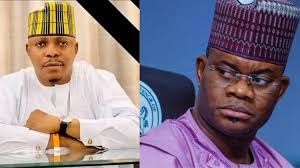
The 2023 Peoples Democratic Party, (PDP) candidate for the House of Representatives election for Dekina/Bassa in Kogi State, Usman Okai Austin, has dismissed claims that former Governor Yahaya Bello is the reason youths shunned the #EndBadGovernance protest in the State.
Okai said contrary to claims, Bello is not maintaining peace in Kogi State, stressing that his actions and policies were detrimental to the state.
The socio-political commentator was reacting to an article by one Sulaimon Adejoh, that the former governor was the reason the state has been peaceful amid the ongoing nationwide protest.
Adejoh said Bello saw the protest as an agenda that must not fly in Kogi State due to his support for President Bola Tinubu’s presidency.
He had written: “Someone indeed pulled some strings, same way he has been pulling it since 2016. That someone is Alhaji Yahaya Adoza Bello, the one who as governor, restored security in Kogi State.
“Despite his ordeals in the hands of the Economic and Financial Crimes Commission (EFCC), since he left office as governor of Kogi State, he has remained firm in his conviction that President Bola Tinubu’s Presidency must be supported by all well-meaning Nigerians and nothing must be done to derail the President.
“Yahaya Bello therefore saw the call for protest by some groups as an agenda that must not be allowed to fly in Kogi State. He gave his full support to the State Governor, Alhaji Usman Ododo and rallied all the necessary stakeholders, especially the youths behind him to ensure that not a single soul joined the protest in the State.”
However, Okai faulted Adejoh’s claim, noting that Bello’s past administration brought about severe hunger in the state.
Posting on his Facebook wall, Okai wrote: “Muri Ajaka, who was cheated and defrauded in the last election, could have been the catalyst for unrest in Kogi State during the #EndBadGovernance In Nigeria protests. However, he wisely appealed to his supporters to remain calm.
“Similarly, Senator Echocho and Karimi issued strong statements urging peace in their various Senatorial districts in Kogi state.
“Ironically, Yahaya Bello, who is metaphorically imprisoned in the Government House in Lokoja, claims to be the one maintaining peace in Kogi State.
This is far from the truth, as Bello’s actions and policies have been detrimental to the state.
“He secretly hopes for a serious protest in Kogi, believing it would distract us from his own troubles with the EFCC, a federal agency investigating him.
“Bello should respect himself and remain quiet, acknowledging his own failures. Kogi people are already accustomed to hunger, which Bello’s leadership has exacerbated, making Kogi one of Nigeria’s hungriest states. The people feel unlucky under the APC-led federal government.”


An Information and Communication Technology (ICT) Centre is set to be established in Omoku, ogba/egbema /ndoni local government area of Rivers state .
The initiative is being championed by the Omoku People’s Forum, a global association of Omoku elites, under the leadership of its President-General, Dr. George Ada Ubah.
As part of efforts to ensure the successful execution of the project, a prominent son of Omoku, Chief (Barr.) Dennis Masi, has been appointed by the Forum as the Chairman of the ICT Centre Project Committee, entrusted with the responsibility of coordinating and driving the initiative to fruition. Upon completion, the ICT Centre is expected to serve as a major hub for the training and empowerment of youths in digital and technological skills, equipping them to actively participate in the increasingly technology-driven global environment.
The project is also widely regarded as a significant step towards positioning Omoku as an emerging ICT hub within Rivers State, fostering innovation, digital literacy, and economic development in the region.
Concerned Rivers Chiefs For Peace And Development has said it formation was not politically motivated or has any links to political parties or candidates.
The group which said this at a media briefing at Abuloma in Port Harcourt City Local Government Area said it’s formation has nothing to do with politics.
According to the text for the briefing jointly signed by Chief Boma Kele Oyika it’s chairman and Chief Inemo T Ikama Deputy Secretary General said the organization is expected to focus on conflict Resolution, community engagement, collaboration with government and private sector actors
‘it mandate also includes promoting peace building initiative, supporting local economic empowerment programms and strengthening traditional institutions in our state and beyond as partners in governance ”
It said the body is led by a team of respected traditional leaders serving as trustees
“Their collective leadership reflects a blend of experience cultural authority and grassroots connection
“Key elements considered vital for addressing long standing,socio economic and security challenges in the region”
The release further says ” the formation of this organization comes at a time when communities in Rivers state continue to navigate between issues ranging from youth unemployment, environmental concerns and intermittent conflicts amongst the traditional rulers and beyond
“By bringing together influential traditional figures under a unified platform, the group aims at serving as stabilizing force while advocating for inclusive development policies ” it said
It also described its emergence as a new chapter in grass roots leadership and regional development
Earlier, chairman of the body, Chief Boma Kele Oyika said the organization will work with relevant authorities to promote peaceful coexistence in the state, reduce crime and promote economic development.
He said it is open to all Chiefs from the 23 local government areas.
The Chairman of The Nigeria Delta Chamber of Commerce, Trade, Mines and Agriculture NDCCTMA,Ambassador Idaere Gogo Ogan and the Managing Director of the Niger Delta Development Commission ( NDDC ) Dr Samuel Ogbuku have challenged Niger Delta entrepreneurs to close the gap in Gross Demostic Products (GDP) differences between the region and that of the South Western part of the country by coming home to invest.
The two leaders spoke at a business round table organized by NDDCTMA in Port Harcourt
Chairman of NDDCTMA Ambassador Idaere Gogo Ogan, said to close the gap between the south west region which he said has a GDP seize of about #59 trillion and that of the Niger Delta which is about #34 trillion was to massively invest in the region.
He said no other persons can do this except sons and daughters from the region.
“For me I believe in statistics,I believe in data and everyday I looked at the data concerning development in Nigeria and from the GDP point of view, the South West has #59 trillion, that is the seize of the south west region economy, the second region following them is the Niger Delta region with GDP seize of #34 trillion,so there is a yearning gap of #25 trillion that separates the south west and the Niger Delta region, that is why we are here”
Ogan said the region has the capacity to close the gap and even surpassed it but regretted that indigenes of the region have chosen to ignore it in terms of investment.
“We need to close that gap .If we close that gap and even surpassed it,all the negative problems of militancy and unemployment will automatically erase “he said
Ogan said the event was organized to remind the people that past efforts of militancy and agitations have not led the region to any where
“That is why we are gathered here in this room “he said.
Also speaking Managing Director/Chief Executive officer of the Niger Delta Development Commission( NDDC) Dr Samuel Ogbuku urged indigenes of the region not to use the problem of insecurity as an excuse to continue to deny the region of investment as every part of the country have in one time or the other experienced crisis.
Ogbuku said most indigenes have displayed high level of unpatriotism towards the region by taking investments that would have benefited the people to either Lagos or Abuja.
“With little threat we have left the city,we have gone to Lagos,we have moved our families to Abuja and Lagos
“If you go round GRA all the property, you will see,”to let to let”most of them are now empty “he said.
The NDDC MD said despite the fact that people from the region are doing well in the oil and gas, banking and other sectors, its impact are not being felt at home because they are stationed outside the region.
He said time has come for potential investors from the region to have a change of heart by coming home to invest.
John Bibor
-
News4 days ago
Decentralizing Pipeline Surveillance Poses Greater Dangers To Niger Delta …. Group Warns
-

 Politics4 days ago
APC Resumes Electronic Membership Registration Nationwide
-

 Rivers4 days ago
Court Rules Out Interim Administration In Jumbo House, Bonny
-
 Business4 days ago
33 Banks Raise N4.65tn As Recapitalisation Ends
-
 Politics4 days ago
Alleged Coup: Protests Rock N’Assembly As Detained Officers’ Children, Wives Demand Justice
-

 Nation4 days ago
Nile University Hosts ICA Nigeria First National Confab On Global Communication
-
Sports4 days ago
Lewandowski Leads Top Stars Missing From W/Cup Roll Call
-

 Sports4 days ago
Para Games: Team Rivers Wins 53 Medals On Day 5 … Director Praise Athletes