
Nation
Osun PDP, APC Trade Words Over Alleged Arson Plot


The Osun State chapter of the Peoples Democratic Party (PDP) has said it has uncovered a plot to attack its Secretariat and campaign offices in the state.
The Osun PDP alleges that this plot aims to sabotage the existing peace in the state by the All Progressives Congress (APC) and has alerted local security agencies to the development.
In a statement from the Osun PDP chairman, Sunday Bisi, it was disclosed that the plot was uncovered on Thursday night. The statement indicated that security agencies promptly deployed personnel to prevent the arson.
“To this end, we urge the Police and the Secret Service to summon the State APC leaders for interrogation to prevent any disruption of peace in Osun State,” Bisi said.
“Unless the opposition leaders are promptly interrogated, the state may be exposed to danger from an opposition group that is so violent-minded it would plan to set ablaze its own structures for political gain.
“At this point, the State APC leaders should be aware that security reports on this nefarious plot have reached Abuja, and they will be held responsible for any breakdown of law and order in Osun State.
“We believe the opposition is concerned that Governor Ademola Adeleke has successfully managed the national protest in Osun State without any incidents. We warn against the dark elements within the APC who are seeking bloodshed and destruction to blackmail the state government.
“We particularly condemn the State APC Chairman for his cyberstalking and personal attacks on Governor Adeleke, actions that are immoral and constitute unacceptable infractions.
“We call on the security agencies to address the constant cyberstalking and total disrespect for the office of the State governor by the APC state chairman, and we declare our readiness to pursue appropriate legal action if these infractions and libelous activities continue.”
While assuring the people of Osun State of peace and stability despite the APC’s antics, Bisi affirmed that the state government is monitoring the protest situation and is determined to maintain Osun’s status as a peaceful state despite the ongoing national protests.
Earlier, the Osun APC alleged that hoodlums working for the state governor, Ademola Adeleke, planned to set fire to its state Secretariat in Osogbo.
Reacting to the allegation, the Osun APC, in a statement by its chairman, Tajudeen Lawal, advised security agencies in the state to be cautious of plots by hoodlums allegedly loyal to Adeleke.
Lawal claimed that these hoodlums were disguising as protesters in the ongoing national protest to burn down the party’s secretariat and the Ileri Oluwa House, which served as the Tinubu/Shettima Presidential Campaign Secretariat.
Lawal suggested that the APC has reason to believe that Adeleke masterminded the protest against President Bola Tinubu’s administration.
“We have reliable intelligence that Governor Adeleke has been arming his supporters during the protest under the guise of embarrassing President Tinubu,” Lawal said.
“There is credible intelligence linking the governor to the sponsorship of the rampage in Osun State, with some of his appointees and PDP chieftains playing leading roles in the protest in Osogbo on Thursday and Friday.”
“APC has alerted the state Police Command and other security services in the state to be wary of a sinister plan by hoodlums loyal to the state chapter of the PDP, who are masquerading as protesters in the ongoing national protest to burn down the APC state secretariat and the Tinubu/Shettima Presidential Campaign Secretariat, all in Osogbo, the state capital.”



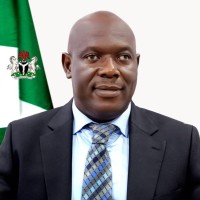
The Hydrocarbon Pollution Remediation Project (HYPREP) has commemorated the 15th anniversary of the release of the United Nations Environment Programme (UNEP) Environmental Assessment Report on Ogoniland, reaffirming its commitment to restoring the environment and improving the livelihoods of affected communities.
In a statement signed by the Project Coordinator, Prof Nenibarini Zabbey, to commemorate the anniversary, HYPREP described the anniversary as a significant milestone in Nigeria’s environmental restoration efforts, noting that the project has made remarkable progress in implementing the recommendations of the landmark UNEP report released on August 4, 2011.
The UNEP report had revealed extensive oil pollution across Ogoniland, severe environmental degradation, and serious public health risks resulting from decades of petroleum operations. It also recommended an initial $1 billion fund to commence the cleanup of the affected communities.
According to HYPREP, the Federal Government formally launched the Ogoni clean-up in 2016, while the Project Coordination Office was established in 2017 to drive the implementation of UNEP’s recommendations.
Zabbey said the current administration has continued to prioritise the project under the Renewed Hope Agenda.
Providing an update on the cleanup, the Project Coordinator disclosed that 30 of the 65 contaminated sites identified by UNEP have been fully remediated, while work is ongoing at several medium- and high-risk locations. It also stated that more than 1.5 million mangrove seedlings have been planted as part of what it described as the world’s largest restoration of oil-degraded mangroves, with over 1,000 hectares of shoreline already rehabilitated.
Zabbey further revealed that 49 Ogoni communities have been connected to potable water schemes through multiple water projects and booster stations aimed at providing safe drinking water across the region.
In the health sector, he said the 100-bed Ogoni Specialist Hospital in Kpite and the 43-bed Cottage Hospital in Buan are nearing completion, adding that several existing health facilities have been upgraded with modern medical equipment, while five ambulances have been donated to improve emergency healthcare services. The Project Coordinator also disclosed that a three-year human health biomonitoring study is being conducted in collaboration with the World Health Organization’s International Agency for Research on Cancer (IARC).
On economic empowerment, Zabbey stated that the Project has created more than 8,000 direct jobs and trained thousands of Ogoni youths and women in various vocational and technical skills, including software development, cybersecurity, aviation, commercial diving, seafaring, mechatronics, and creative arts. The project also reported awarding scholarships to more than 1,000 students, providing grants to small businesses, and supporting persons living with special needs through skills acquisition programmes.
The statement further highlighted ongoing legacy projects, including the Ogoni Power Project and the Centre of Excellence for Environmental Restoration, which it said is about 96 per cent complete. HYPREP also welcomed the recent designation of the Ogoni Wetland as a Ramsar Site of International Importance and pledged to continue promoting biodiversity conservation and sustainable management of the ecosystem.
Marking the anniversary, Zabbey said the progress achieved over the past 15 years demonstrates the collective commitment of government, development partners, stakeholders, and local communities to restoring Ogoniland. He called for renewed collaboration to sustain the cleanup effort, promote environmental sustainability, and support the long-term development of the region. 3
-

 News2 days ago
RSG Targets Nine Million Residents in Mosquito Net Distribution Campaign
-

 Oil & Energy2 days ago
Aiyedatiwa Signs New Electricity Bill
-

 Oil & Energy2 days ago
NLNG Commissions Research And Innovation Centre In RSU
-

 Maritime2 days ago
Marine Minister Commends President Tinubu On NPERA Bill Assent
-

 News2 days ago
KenPoly Holds Eight Convocations, August 29
-

 News2 days ago
RSG Begins Another Phase of Projects Commissioning Today
-

 News2 days ago
RMAFC Completes Revenue Sharing Review, Proposes New Pay
-

 Maritime2 days ago
NAGAFF Petitions IGP Over Alleged Maritime Police Harassment