
Business
PH Refinery Under-goes Licensing, Minister Defends Rehabilitation Exercise

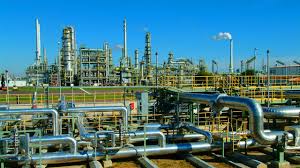
The Port Harcourt Refining Company is currently undergoing various licensing processes following the supply of crude to the plant after it was mechanically completed in December 2023.
Senior officials at the Federal Ministry of Petroleum Resources and the Nigerian National Petroleum Company Limited disclosed this last Saturday. Similarly, the Minister of State for Petroleum Resources (Oil), Heineken Lokpobiri, earlier insisted that the plant was at its final rehabilitation stage.
“The mechanical work at the Port Harcourt refinery has been completed. Also, crude oil has been sent to the plant. What is being awaited now has to do with licensing and the like. Now, these licenses are given based on some set of time-frames.
“Some officials involved in issuing these licenses are still observing the plant. Some of them came in last month and they are still there checking everything. They will also have to test-run the plant and all this will be at their pace. Most of them are foreigners and you can’t rush them.
“They have their integrity to protect, for if anything contrary happens at the refinery, the officials might be held accountable and their insurance firms would have to pay for any damage. So it is not entirely on our part when it comes to the takeoff of the refinery,” a petroleum ministry official, who spoke in confidence due to lack of authorisation to talk about the matter, stated.
In March this year, the Group Chief Executive Officer of NNPC, Mele Kyari, said the Port Harcourt refinery had received 450,000 barrels of crude oil and would begin operations in April. This, however, did not happen.
Kyari had disclosed this at a press briefing after he appeared before the Senate Ad-hoc Committee investigating the various Turn Around Maintenance projects of the country’s refineries.
“We did a mechanical completion of the refinery, which was what we said in December. We now have crude oil already stocked in the refinery. We are doing the regulatory compliance tests that must happen in every refinery before you start it, and I assure you that this Port Harcourt refinery will start in the next two weeks.
“Completing the mechanical work means that you are done with the rehabilitation work, now you have to test to see how it works. Of course, we have also completed the mechanical work on the Warri refinery. It is also undergoing regulatory compliance; processes that we are doing with our regulator, and this will soon be completed and it will be ready.
“Kaduna refinery will be ready by December. We have not reached that stage in Kaduna, but we promise Kaduna will be delivered by December,” the NNPC helmsman had stated.
On the volume of crude pumped to the plant at the time, Kyari had said, “All crude lines are active and have delivered over 450,000 barrels into the Port Harcourt refinery.”
Earlier at a press briefing on developments in the oil sector on Friday, the petroleum minister defended the ongoing work at the Port Harcourt refinery, as he told journalists that it often takes time before refineries start pumping out refined products after their mechanical completion.
Lokpobiri cited the Dangote Petroleum Refinery as an example, stating that the plant did not start releasing refined products immediately after its inauguration by former President Muhammadu Buhari in May 2023.
Dangote refinery first released diesel into the Nigerian market in March 2024, followed by aviation fuel, but has yet to release petrol, which is largely consumed nationwide.
“Port Harcourt refinery is still in the final stage of rehabilitation. After the flares at the refinery in December (2023), a lot of work has to be done. Recall that Dangote refinery was commissioned by (former) President Buhari before he left. But when did they start producing products? It took a long while.
“So it’s not just as easy as Nigerians may think. The best example is that between when Buhari commissioned the Dangote refinery and when it started bringing the products it took a long time. So I believe that within a short time we will get clarity on it (Port Harcourt refinery),” Lokpobiri stated.
The minister, however, stated that though he normally received briefings from NNPC on the status of the plant, he had always asked the company about when the refinery would eventually be completed.
“I would like you to also go to NNPC. They awarded the contract. They report to me. But they awarded the contract. They are the people who are paying for the contract. And it’s always good to get the information right from the source. I get briefed from time to time.
“The same question people are asking me is what I’m also asking them (NNPC). When are we going to actually get this thing done? But they always said, look, Dangote refinery took some time. So it’s not just as easy as we think.
“And I think all of you here are witnesses to the Dangote refinery. When it was inaugurated by Buhari and when they started bringing our products. Even up till now, they haven’t started bringing out PMS. It takes time. But our own as a government is to ensure that we support them in any way we can,” Lokpobiri stated.
He, however, assured Nigerians that the government was working hard to ensure that the refinery commences the release of refined petroleum products in earnest, as this would impact positively on the country’s economy.


Nkpemenyie Mcdominic
Reports say that the training is designed to equip youths with practical technical skills for employment in the oil and gas and construction sectors, with emphasis on employability, safety, competence and self reliance.
In attendance at the flag-off ceremony this week, at the Petroleum Training Institute (PTI) Conference Hall, Effurun, were stakeholders, dignitaries, and political representatives, among others.
Dafinone, represented by his Chief of Staff, Adelabu Bodjor, said the initiative reflects a deliberate political investment in human capital development across Delta Central.
He explained that the training focuses on rigging and scaffolding, noting that “both are essential technical competencies required in industrial operations, construction projects, and oil and gas installations”.
Bodjor added, “The programme is intended to reduce dependency among youths by providing job-ready skills capable of supporting long-term economic opportunities and self-sufficiency. The initiative aligns with Senator Dafinone’s broader development agenda, which prioritises practical skill acquisition as a pathway to sustainable empowerment.”
Also addressing the participants, the NCDMB, Felix Omatsola Ogbe, represented by Mr. Teddy Bai, commended Dafinone for sponsoring the programme, describing it as “a timely response to critical manpower gaps in the industry”.
Bai explained that rigging and scaffolding remain safety-sensitive skills required across fabrication yards, offshore platforms, and construction sites, stressing that the programme bridges the gap between certification and practical competence.
He also charged the training consultant, OROH Contractors Limited, to maintain strict standards of professionalism, safety, and discipline, while urging participants to remain committed, focused, and disciplined throughout the exercise.
The Senate Liaison Officer for Sapele Local Government Area, Chief Patrick Akamuvba, , described the programme as a major step in strengthening human capital development in Delta Central.
Akamuvba said scaffolding and rigging skills are in high demand across residential, commercial, and industrial construction projects, noting that the training offers real employment opportunities for beneficiaries
He urged participants to prioritise knowledge and certification over short-term material expectations, stressing that discipline and seriousness would determine their long-term success.
He also cautioned youths against social vices and distractions, advising them to remain focused to maximise the opportunities provided by the programme.
-
News1 day ago
Obuah’s Victory Excites Former Lawmaker as APC Primaries Conclude in Rivers West
-

 Politics3 days ago
APC PRIMARIES: FUBARA’S WITHDRAWAL, HISTORIC SACRIFICE FOR NATIONAL STABILITY ……. GROUP
-

 News4 days ago
Court Sentences Seven To Death Over Murder Of Cleric In Rivers
-
News1 day ago
105 Nigerians Killed In S/Africa In Seven Years
-

 Sports3 days ago
PH Arsenal Community Set For Streets Procession, Saturday
-

 Politics3 days ago
IPAC Flays INEC Over Election Guidelines Judgement
-

 Politics3 days ago
NDC To Adopt Electronic Voting For Future Primaries
-

 Niger Delta1 day ago
Royal Father Endorses PH Arsenal Community, Pledges To Support