Opinion
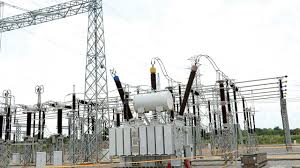
Electricity Tariff Increase: Problem Or Solution?
In some Nigerians’ typical way of making joke with the policy summersault that has characterised the current federal government and that has plunged the nation into the current unprecedented economic woes, a caller on a radio phone-in programme on the recent electricity tariff increase said, “shebi dem dey complain of meter by-passing, now dem go see fly-passing.”
Of course the act of energy theft through illegal connections, meter by pass, illicit meters and other means is condemnable. The Criminal Code, Penal Code, the Electric Power Sector Reform Act (EPSRA) and other federal and state laws criminalise the act. For instance, Section 1 (1) of the 2013 Nigerian Electricity Regulatory Commission (NERC) Electricity theft and other related offences regulations provides as follows:
“Any person who willfully and unlawfully taps, makes or causes to be made any connection with overhead, underground or under water lines or cables, or service wires, or service facilities of a licensee; or tampers with a meter, installs or uses a tampered meter, current reversing transformer, shorting or shunting wire, loop connection, receives electricity supply by by-passing a meter, or uses any other device or method which interferes with accurate or proper registration, calibration or metering of electric current or otherwise results in diversion in a manner whereby electricity is stolen or wasted; or damages or destroys an electric meter, apparatus, equipment, wire or conduit or causes or allows any of them to be so damaged or destroyed as to interfere with the proper or accurate metering of electricity, so as to abstract or consume electricity or knowingly use or receive the direct benefit of electric service through any of the acts mentioned in paragraphs (a), (b) and (c) or uses electricity for the purpose other than for which the usage of electricity was authorised, so as to abstract or consume or use electricity shall be guilty of an offence under Sections 383 and 400 of the Criminal Code, Sections 286 (2) of the Penal Code and Section 1 of this Regulation, and shall be punishable with terms of imprisonment as applicable, provided under Sections 390 of the Criminal Code, Section 287 of the Penal Code or Section 94 of the EPSR Act.”
But while the government focuses on dealing with anyone who commits the crime, a pertinent question that must be asked is, what are the factors that contribute to the prevalence of energy theft in the country? Is the hike in electricity tariff a problem or a solution?
The latest tariff hike according to the authorities affects consumers categorised under Band A. These consumers NERC disclosed, enjoy up to 20 hours of power supply will henceforth pay a tariff of N225 per kilowatt-hour, up from the previous rate of N68/kWh. Reason being that the government can no longer continue to subsidise electricity for this category of customers and decided to take them off subsidy so that the government can still manage to cope giving subsidies to those enjoying less hours of electricity.
According to NERC only 15 percent of the 12 million electricity consumers are affected. Those in the rural areas are not affected while those in the urban areas will be significantly affected. Incidentally, many places in the urban areas seem to now belong to Band A or have been on Band A without knowing it yet they do not enjoy the services that those in that category should enjoy.
I live in a neighbourhood that can hardly boast of 12 hours of power supply daily. After the tariff increase announcement, some of my neighbours bought electricity tokens and were shocked to discover that the Estate is on Band A. “I got 20.7 units for N5,000 which is approximately my household average daily consumption. Which means we will be spending about N150, 000: 00 every month on electricity minus the cost of fuel for the generator. This is unrealistic”, exclaimed one resident. Of course the Estate has approached NERC to seek for an appropriate categorisation.
We all know that the reason for the constant electricity tariff increase is to enable the investors to recoup their investment and make profit. The spokesman of the power distributors under the Association of Nigerian Electricity Distributors (ANED), Sunday Oduntan, stated during a recent television appearance that, “In every business, there’s the need for the businessman to be able to put money into business and recover the costs. Even when there is no profit, you need to recover your cost.”
But it is also a known business strategy to sell products with a low profit margin and make more sales than to insist on high profit margin and sell less. So, would it not make better sense for electricity to be sold at a more affordable rate which will guarantee more legal consumption than sky rocketing the price and have more people turn to illegal connections as a way to reduce their electricity costs?
In a couple of weeks, May 29 precisely, it will be one year since the controversial removal of fuel subsidy which has caused untold hardship to Nigerians and their businesses. Experts had warned that tampering with energy security would have a serious negative impact on the nation’s economy and the living standard of the people. However, the voices of those who claimed that fuel subsidy was bad and that it is corruption ridden and strikes down growth and profit were louder. See where the country is today.
And to think that Nigeria is again toiling with electricity subsidy? That may send the economy of the nation into a coma. The World Bank report released on April 9, 2024, ranked Nigeria (alongside Congo Democratic Republic) as the headquarters of extreme poverty in Africa. The National Bureau of Statistics (NBS) recently placed the inflation in the country at 31.7 per cent. The nation’s currency has collapsed.
The irony is that the federal government keeps assuring that efforts are being made to tackle the inflation and make life better for the citizens. Yet the same government keeps coming up with policies that will make no meaning of whatever that is being made. Did the government consider the number of businesses that will fold as a result of the electricity hike, the jobs that will be lost and the other consequences on the masses and the economy?
One therefore suggests that rather than hiking the electricity tariff and worsening the problem of energy and economic crisis in the country, the government should deal with the corruption within the energy sector. The issue of allowing individuals or businesses to operate illegally without facing consequences, officials taking bribes to overlook illegal connections or to avoid prosecution must be adequately tackled.
It is not enough to have the barrage of laws aimed at tackling energy theft and vandalism, Law enforcement agencies must wake up to their responsibility of enforcing these laws and ensuring that no defaulter goes unpunished no matter how highly placed. These agencies must be provided with the necessary resources and be motivated to address the issue effectively.
By: Calista Ezeaku

Opinion
Betrayal: Vice Of Indelible Scar
The line that separates betrayal and corruption is very thin. Betrayal and corruption are two sides of the same coin. Like the snail and its shell they are almost inseparable. They go hand-in-globe. Betrayal and corruption are instinctive in humans and they are birthed by people with inordinate ambition – people without principles, without regard for ethical standards and values. Looking back to the days of Jesus Christ, one of his high profile disciples-the treasurer, was a betrayer. Judas Iscariot betrayed Jesus Christ for just 30 pieces of silver. One of the characteristics of betrayers is greed.
So, when on resumption from his imposed suspension, the Rivers State Governor, Sir Siminilayi Fubara threatened to bring permanent secretaries who were found complicit in “defrauding” the State during the days of Locust and Caterpillar regime, he did not only decry a loot of the Treasury but the emotional trauma of betrayal perpetrated by those who swore to uphold the ethics of the civil service. Governor Siminilayi Fubara had least expected that those who feigned loyalty to his administration would soon become co-travellers with an alien administration whose activities were repugnant to the “Rivers First” mantra of his administration. The saying that if you want to prove the genuineness of a person’s love and loyalty feign death, finds consummate expression in the Governor Fubara and some of the key members of the State engine room
Some of those who professed love for Governor Siminilayi Fubara and Rivers State could not resist the lure and enticement of office in the dark days of Rivers State, like Judas Iscariot. Rather, they chose to identify with the locusts and the caterpillars for their selfish interest. Julius Caesar did not die from the stab of Brutus but by his emotional attachment to him, hence he exclaimed in utter disappointment, “Even you Brutus”. The wound of betrayal never heals and the scar is indelible. Unfortunately, today, because of gross moral turpitude and declension in ethical standards and values, betrayal and corruption are celebrated and rewarded. Corruption, a bane of civil/public service is sublime in betrayal. The quest to get more at the expense of the people is the root of betrayal and sabotage.
This explains why Nigeria at 65 is the World’s capital of poverty.
Nigeria is not a poor country, yet, millions are living in hunger, abject poverty and avoidable misery. What an irony. Nigeria, one of Africa’s largest economies and most populous nation is naturally endowed with 44 mineral resources, found in 500 geographical locations in commercial quantity across the country. According to Nigeria’s former Minister for Mines and Steel Development, Olamiekan Adegbite, the mineral resources include: baryte, kaolin, gymsium, feldspar, limestone, coal, bitumen, lignite, uranium, gold, cassiterite, columbite, iron ore, lead, zinc, copper, granite, laterite, sapphire, tourmaline, emerald, topaz, amethyst, gamer, etc. Nigeria has a vast uncultivated arable land even as its geographical area is approximately 923, 769 sq km (356,669 sq ml).
“This clearly demonstrates the wide mineral spectrum we are endowed with, which offers limitless opportunities along the value-chain, for job creation, revenue growth. Nigeria provides one of the highest rates of return because its minerals are closer to the suffer”, Adegbite said. Therefore, poverty in Nigeria is not the consequences of lack of resources and manpower but inequality, misappropriation, outright embezzlement, barefaced corruption that is systemic and normative in leaders and public institutions. According to the World Poverty Clock 2023, Nigeria has the awful distinction of being the world capital of poverty with about 84 million people living in extreme poverty today.
The National Bureau of Statistics (NBS) data also revealed that a total of 133 million people in Nigeria are classed as multi-dimensionally poor. Unemployment is a major challenge in the country. About 33 percent of the labour force are unable to find a job at the prevailing wage rate. About 63 percent of the population are poor because of lack of access to health, education, employment, and security. Nigeria Economic Summit Group (NESG) speculated that unemployment rate will increase to 37 percent in 2023. The implications, therefore, is increase in unemployment will translate to increase in the poverty rate. The World Bank, a Washington-based and a multi-lateral development institution, in its macro-poverty outlook for Nigeria for April 2023 projected that 13 million Nigerians will fall below the National Poverty line by 2025.
It further stated that the removal of subsidy on petroleum products without palliatives will result to 101 million people being poor in Nigeria. Statistics also show that “in 2023 nearly 12 percent of the world population of extreme poverty lived in Nigeria, considering poverty threshold at 1.90 US dollars a day”.Taking a cursory look at the Nigerian Development Update (NDU), the World Bank said “four million Nigerians were pushed into poverty between January and June 2023 and 7.1 million more will join if the removal of subsidy is not adequately managed.” These startling revelations paint a grim and bleak future for the social-economic life of the people.The alarming poverty in the country is a conspiracy of several factors, including corruption. In January, 2023 the global anti-corruption watchdog, Transparency International, in its annual corruption prospect index which ranks the perceived level of public sector corruption across 180 countries in the world says Nigeria ranked 150 among 180 in the index. Conversely, Nigeria is the 30th most corrupt nation in the ranking. It is also the capital of unemployment in the world.
Truth be told: a Government that is corruption-ridden lacks the capacity to build a vibrant economy that will provide employment for the teeming unemployed population. So crime and criminality become inevitable. No wonder, the incessant cases of violent crimes and delinquency among young people. Corruption seems to be the second nature of Nigeria as a nation . At the root of Nigerians’ poverty is the corruption cankerworm.How the nation got to this sordid economic and social precipice is the accumulation of years of corrupt practices with impunity by successive administrations. But the hardship Nigerians are experiencing gathered momentum between 2015 and 2023 and reached the climax few days after President Bola Ahmed Tinubu, who assumed power as president of Nigeria, removed the controversial petroleum subsidy. Since then, there is astronomical increase in transport fares, and prices of commodities. Living standard of most Nigerians is abysmally low, essential commodities are out of reach of the poor masses who barely eat once a day.
The Dollar to Naira exchange rate ratio at one dollar to N1,000, is the most economy-unfriendly in the annals of the history of Nigeria. The prohibitive prices of petroleum products with the attendant multi-dimensional challenges following the removal of the subsidy, has posed a nightmare better to be imagined than experienced. Inflation, has been on the increase, negatively affecting the purchasing power of low income Nigerians. Contributing to the poverty scourge is the low private investment due to.unfriendly business environment and lack of power supply, as well as low social development outcomes resulting in low productivity. The developed economies of the world are private sector-driven. So the inadequate involvement of the private sector in Nigeria’s economy, is a leading cause of unemployment which inevitably translates to poverty.
Igbiki Benibo
Opinion
Dangers Of Unchecked Growth, Ambition
In today’s fast-paced, hyper-competitive world, the pursuit of success and growth has become an all-consuming force. Individuals, organisations, and nations alike, are locked in a perpetual struggle to achieve more, earn more, and surpass their rivals. Yet, beneath this relentless drive for progress lies a silent danger—the risk of self-destruction. This perilous pattern, which I call the self-destruct trajectory, describes the path taken when ambition and growth are pursued without restraint, awareness, or moral balance. The self-destruct trajectory is fueled by an insatiable hunger for more—a mindset that glorifies endless expansion while disregarding the boundaries of ethics, sustainability, and human well-being. At first glance, it may appear to promise prosperity and achievement. After all, ambition has long been celebrated as a virtue. But when growth becomes the only goal, it mutates into obsession.
Individuals burn out, organisations lose their soul, and societies begin to fracture under the weight of their own excesses. The consequences are everywhere. People pushed beyond their limits face anxiety, exhaustion, and disconnection. Companies sacrifice employee welfare and social responsibility on the altar of profit. The entire ecosystems suffer as forests are cleared, oceans polluted, and air poisoned in the name of economic progress. The collapse of financial systems, widening income inequality, and global environmental crises are all symptoms of this same relentless, self-consuming pursuit. To understand this dynamic, one can turn to literature—and to Charles Dickens’ Oliver Twist. In one of the novel’s most haunting scenes, young Oliver, starving in the workhouse, dares to utter the words: “Please, sir, I want some more.” This simple plea encapsulates the essence of human desire—the urge for more. But it also mirrors the perilous craving that drives the self-destruct trajectory. Like Oliver, society keeps asking for “more”—more wealth, more power, more success—without considering the consequences of endless wanting.
The workhouse itself symbolises the system of constraints and boundaries that ambition often seeks to defy. Oliver’s courage to ask for more represents the daring spirit of human aspiration—but it also exposes the risk of defying limits without reflection. Mr. Bumble, the cruel overseer, obsessed with authority and control, embodies the darker forces that sustain this destructive cycle: greed, pride, and the illusion of dominance. Through this lens, Dickens’ tale becomes a timeless metaphor for the modern condition—a warning about what happens when ambition blinds compassion and growth eclipses humanity. Avoiding the self-destruct trajectory requires a radical rethinking about success. True progress should not be measured solely by accumulation, but by balance—by how growth serves people, planet, and purpose.
This calls for a more holistic approach to achievement, one that values sustainability, empathy, and integrity alongside innovation and expansion
Individuals must learn to pace their pursuit of goals, embracing rest, reflection, and meaningful relationships as part of a full life. The discipline of “enough”—knowing when to stop striving and start appreciating—can restore both mental well-being and moral clarity. Organisations, on their part, must reimagine what it means to succeed: prioritising employee welfare, practising environmental stewardship, and embedding social responsibility in the core of their mission. Governments and policymakers also play a vital role. They can champion sustainable development through laws and incentives that reward ethical practices and environmental responsibility. By investing in education, renewable energy, and equitable economic systems, they help ensure that ambition is channeled toward collective benefit rather than collective ruin.
Corporate Social Responsibility (CSR) provides a tangible pathway for this transformation. When businesses take ownership of their social and environmental impact—reducing carbon footprints, supporting local communities, and promoting fair labour—they not only strengthen society but also secure their own long-term stability. Sustainable profit is, after all, the only kind that endures. Ultimately, avoiding the self-destruct trajectory is not about rejecting ambition—it is about redefining it. Ambition must evolve from a self-centred hunger for more into a shared pursuit of the better. We must shift from growth at all costs to growth with conscience. The future will belong not to those who expand endlessly, but to those who expand wisely. By embracing restraint, compassion, and sustainability, we can break free from the cycle of self-destruction and create a new narrative—one where success uplifts rather than consumes, and where progress builds rather than burns.
In the end, the question is not whether we can grow, but whether we can grow without losing ourselves. The choice is ours: to continue along the self-destruct trajectory, or to chart a more balanced, humane, and enduring path toward greatness.
Sylvia ThankGod-Amadi
Opinion
Gridlock at the Gates