Connect with us

Editorial

Towards Clean Energy Dev In Nigeria 

Published

on

In the global bid to combat the adverse effects of climate change, sustainability has come to the forefront of world
wide conversations. As the world battles to reduce harmful greenhouse gas emissions, greater emphasis has been placed on the search for clean energy sources. On 26th January, the entire world collectively turned its attention to this green pursuit by observing the International Day of Clean Energy.
This commemorative day serves as a grim reminder of our collective responsibility to navigate towards a future, powered by clean, sustainable energy. Embracing the use of clean energy is crucial in the battle against climate change. A substantial portion of the greenhouse gases that envelop our planet and retain the sun’s warmth are produced as a result of energy generation, achieved by the combustion of fossil fuels such as oil, coal, and gas, to generate power and heat.
To mitigate climate change, the global community must cease dependency on fossil fuels and allocate resources towards clean, readily accessible, cost-effective, sustainable, and dependable alternative energy sources. Renewable energy sources, such as solar, wind, hydro, bioenergy, and geothermal, hold great potential, being abundantly available and replenished by natural processes, while emitting minimal greenhouse gases and pollutants into the atmosphere.
Energy presents a dual challenge of inclusivity and environmental preservation. The solution to this challenge heavily relies on the adoption of clean energy sources. Amidst the global struggle against climate change, clean energy assumes a vital role in curbing emissions while simultaneously addressing the needs of communities deprived of reliable access to power. Regrettably, a staggering number of over 675 million people continue to endure a lack of electricity, with the majority residing in Sub-Saharan Africa.
For populations without access to clean energy, the absence of dependable power poses obstacles to education, healthcare, and economic prospects. Furthermore, many of these developing regions continue to heavily rely on polluting fossil fuels in their daily lives, thus perpetuating poverty. If present patterns persist, it is projected that by 2030, one out of every four individuals will still resort to hazardous, unhealthy, and inefficient cooking methods, such as burning wood or dung.
The current state of affairs indicates that despite some progress, the global community is not making sufficient headway towards the attainment of Sustainable Development Goal 7 (SDG7). This goal aims to provide universal access to affordable, reliable, sustainable, and modern energy by the year 2030. Thankfully, to evaluate the advancements made and propose viable remedies, the General Assembly has scheduled a Global Stocktaking on SDG7 to take place in April 2024.
Considering the abysmal energy poverty prevalent in the nation, individuals and organisations involved in the energy sector have emphasised the necessity of implementing inventive tactics to achieve a comprehensive electrification of Nigeria. Current data reveals that Nigeria possesses the largest disparity in energy access globally, with more than 90 million individuals lacking electricity.
Known for having one of the least efficient national grids in Africa, Nigeria is the leading purchaser of petrol and diesel generators in Sub-Saharan Africa. It is responsible for acquiring three million out of the total 6.5 million generators utilised in the region. Consequently, both individuals and businesses expend a substantial amount of $22billion per year on fuelling these generators. Additionally, the country heavily depends on fossil fuels for its vehicle energy needs.
The necessity for transitioning towards clean energy in Nigeria cannot be overstated. Reliance on fossil fuels not only contributes to detrimental environmental consequences like air pollution and climate change, but also presents substantial economic and security risks. The nation’s economy is at high risk of instability because of its heavy dependence on oil exports, which makes it vulnerable to global oil price changes, as evidenced in the past.
Moreover, the use of fossil fuels not only has adverse effects on the environment, such as air pollution and deforestation, but also poses risks to the health and well-being of the population. In contrast, opting for clean energy sources presents a more sustainable and environmentally-friendly approach to address the increasing energy requirements of the country. Incorporating renewable sources like solar, wind, and hydroelectric power into Nigeria’s energy portfolio can lead to a reduction in carbon emissions, enhance energy security, and foster the creation of employment opportunities in the renewable energy industry.
Nigeria, being the largest economy in Sub-Saharan Africa, is currently facing challenges in its energy sector as it strives to cater to the demands of its steadily increasing population. The nation’s reliance on fossil fuels is essential, with oil and gas accounting for about 90 per cent of its overall energy consumption as cited by the World Bank in 2021. This heavy dependence is attributable to several factors, including the abundant reserves of oil and gas, and the relatively affordable nature of fossil fuels in the country.
Our country faces a multitude of challenges following its heavy dependence on fossil fuels. These challenges include restricted access to electricity, an unstable power supply, and exorbitant energy costs. Reports indicate that only about 45 per cent of Nigerians have access to electricity, and even those who are connected to the grid frequently endure fluctuating power supply. The expense of energy in Nigeria is notably high because of various factors, such as the nation’s dependence on imported oil and gas, the substantial cost of generating electricity, and the inefficiencies and financial troubles afflicting the power sector.
Nigeria possesses a wealth of diverse energy resources that offer tremendous potential for clean and renewable energy production. These resources include abundant sunlight for solar power, vast expanses of windy coastal and mountainous regions for wind power, substantial biomass resources and significant reserves of natural gas. Harnessing these resources could herald a new era of green energy production for the country and the region.
The road to cleaner energy in our country may be fraught with various challenges, yet the possibilities are endless, and the benefits far-reaching. Putting Nigeria on the path to clean energy development will not only ensure the nation’s energy security but also contribute to global efforts to combat climate change. The concerted effort of all stakeholders is critical in this journey, with a guiding beacon of sustainable development illuminating the path ahead. Nigeria’s journey towards clean energy, though challenging, represents a promising leap forward for the nation, the region, and indeed, the world.

Continue Reading

Editorial

Task Before New Defence Minister 

Published

on

The appointment of General Christopher Musa as Nigeria’s Defence Minister has been met with widespread approval across the nation, and rightly so. After his commendable tenure as Chief of Defence Staff, where he demonstrated exceptional leadership and strategic acumen, Nigerians are justified in their optimism that he possesses the requisite credentials to tackle the country’s mounting security challenges. This is not merely another political appointment; it represents a deliberate and overdue shift towards placing experienced military personnel at the helm of our defence apparatus. The stakes could not be higher, and the nation’s expectations are correspondingly elevated.
For once, the Senate demonstrated the thoroughness that Nigerians have long demanded from their legislators. During approximately five hours of screening, General Musa faced rigorous questioning rather than the perfunctory “take a bow and go” treatment that has become the hallmark of senatorial confirmations. This meticulous approach signals a refreshing departure from the rubber-stamp mentality that has characterised many previous appointments. The lawmakers deserve commendation for recognising the gravity of the defence portfolio and subjecting the nominee to proper scrutiny. We can only hope this sets a precedent for future ministerial screenings.
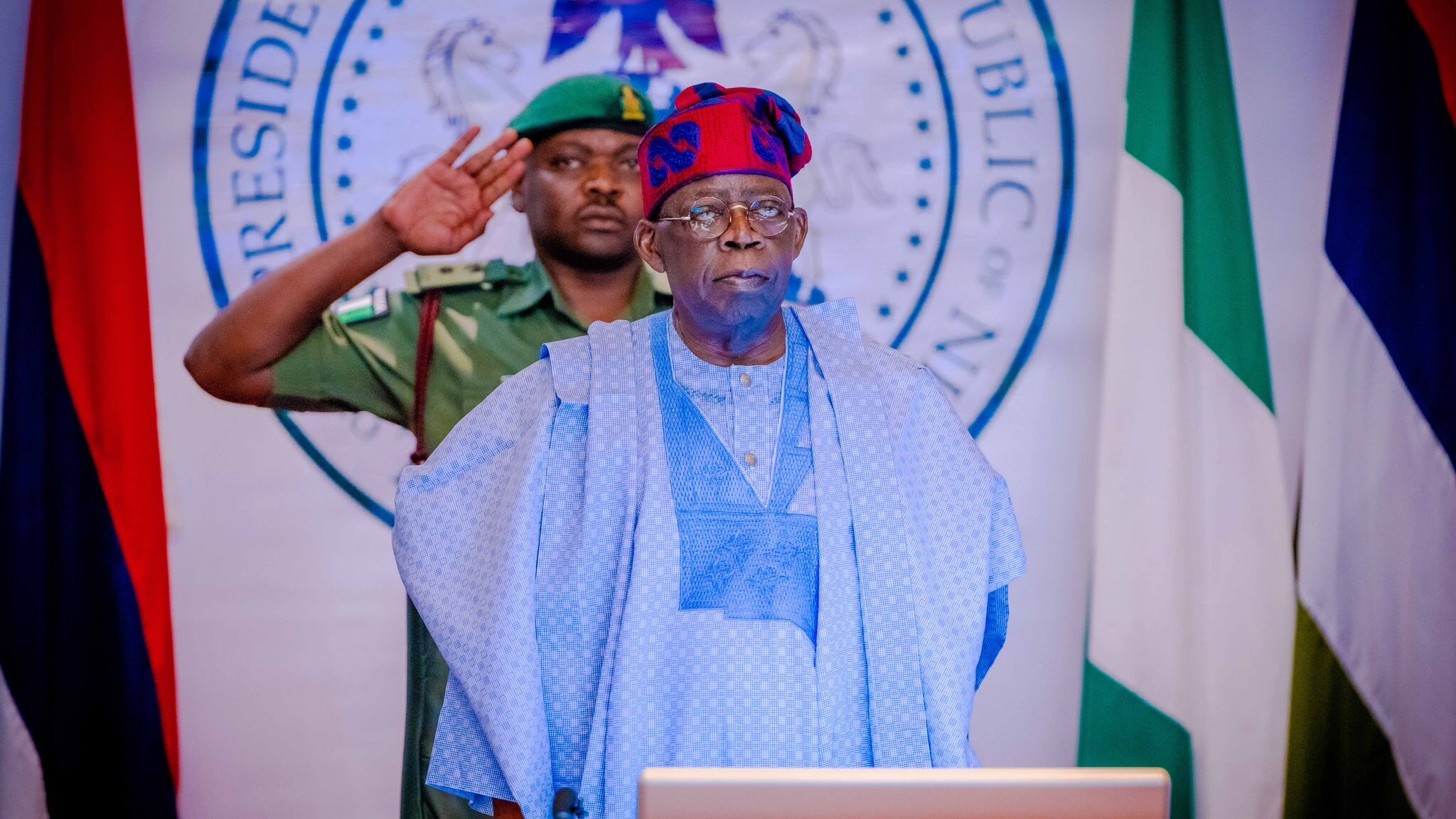
President Bola Tinubu deserves credit for making what appears to be a pragmatic and judicious decision. By appointing someone with robust military credentials and intelligence expertise, the President has demonstrated an understanding that Nigeria’s security crisis demands specialised knowledge and battlefield experience. This appointment suggests a willingness to prioritise competence over political patronage, a quality that has been sorely lacking in previous administrations. The President must be encouraged to maintain this standard across other critical appointments.
The departure of Mohammed Badaru Abubakar from the Defence Ministry should serve as a lesson in the importance of matching expertise to responsibility. Whilst Mr Abubakar may possess political acumen, his lack of military background rendered him ill-equipped for the complexities of national defence. He was, in every sense, a square peg in a round hole. The previous arrangement, which saw two politicians manning the Defence Ministry, was nothing short of a misnomer. One cannot credibly oversee military operations without understanding military strategy, tactics, and the psychology of warfare. The mistake should not be repeated.
Whilst we applaud both the President for this appointment and the Senate for their diligent screening, the real test lies ahead. General Musa must now prove his mettle in the theatre of action. Words and credentials, however impressive, mean little without tangible results. Nigeria has suffered too long under the scourge of insecurity, with bandits, terrorists, and kidnappers operating with impunity across vast swathes of the country. The new minister must act decisively to save the nation from the embarrassment of continued security failures. The time for excuses has passed; Nigerians demand results.
During his screening, General Musa made a particularly important pledge: to end the patronage of bandits and terrorists by state governors. This commitment strikes at the heart of one of Nigeria’s most troubling security contradictions. The practice of negotiating with criminals, often facilitated or endorsed by state governments, has emboldened these miscreants and transformed banditry into a profitable enterprise. Such negotiations amount to nothing less than aiding and abetting criminality. General Musa’s promise to treat these elements as the criminals they are, rather than as legitimate negotiating partners, is commendable and must be pursued with unwavering resolve. There can be no compromise on this principle.
The new minister must undertake a comprehensive overhaul of Nigeria’s security architecture to enhance military effectiveness. This requires close collaboration with the service chiefs to establish clear objectives and ensure coordinated execution. Beyond structural reforms, General Musa must address the discipline deficit within the military ranks. Reports of corruption, negligence, and complicity in security breaches have eroded public confidence in the armed forces. Restoring discipline is not merely an administrative matter; it is fundamental to rebuilding the military’s credibility and operational effectiveness. Without discipline, no amount of equipment or funding will suffice.
General Musa’s promise to investigate the mysterious withdrawal of soldiers from the school in Kebbi State, which preceded the kidnapping of students, demonstrates a welcome commitment to accountability. This incident exemplifies the inexplicable lapses that have characterised Nigeria’s security response. Someone ordered or permitted that withdrawal, and the timing suggests either catastrophic incompetence or deliberate sabotage. The minister must get to the root of this matter and ensure that culprits face appropriate sanctions. Only through such decisive action can he send a clear message that negligence and complicity will no longer be tolerated.
However, Musa cannot succeed without adequate resources. The Federal Government must provide sufficient funding to enable the Defence Ministry to perform optimally. Next year’s budgetary allocation must reflect the enormous task at hand. It is counterproductive to demand results whilst starving the military of the resources necessary for modern warfare. This includes investment in intelligence gathering, modern weaponry, surveillance technology, and troop welfare. A poorly equipped and demoralised military cannot be expected to defeat well-armed insurgents and bandits who increasingly possess sophisticated weaponry.
The political class must resist the temptation to interfere with the General’s work. Whilst many politicians publicly profess support for the fight against insecurity, evidence suggests that some work surreptitiously to undermine these efforts for personal or political gain. Whether through the aforementioned negotiations with bandits, the protection of criminal elements, or the diversion of security funds, political interference has consistently sabotaged military operations. General Musa must be given the autonomy to perform his duties professionally. Only then can he be fairly held accountable for outcomes. The President must shield him from political machinations and vested interests.
The military must abandon its reactive, fire brigade approach to security operations. Waiting to respond only after attacks have occurred is a strategy of perpetual failure. The armed forces must take the fight to the criminals’ hideouts, conducting sustained offensive operations that dismantle their infrastructure and eliminate their capacity to strike. This requires robust intelligence, rapid deployment capabilities, and the political will to sustain operations until objectives are achieved. Proactive military engagement, not defensive positioning, is what the situation demands.
Nigeria’s porous borders represent a critical vulnerability that demands immediate attention. Countries around the world have recognised that border security is fundamental to national security. India has erected comprehensive fencing along its border with Pakistan specifically to prevent terrorist infiltration. Israel has constructed sophisticated barrier systems along multiple borders. Hungary built fences along its borders with Serbia and Croatia. Even the United States has invested billions in border security infrastructure. These nations understand what Nigeria seems reluctant to acknowledge: that uncontrolled borders invite national disaster.
Our borders remain scandalously porous, serving as entry points for the foreign fighters who constitute a proportion of those conducting attacks on Nigerian soil. The Lake Chad Basin, where Nigeria shares borders with Cameroon, Niger, and Chad, has become a particularly problematic corridor through which terrorists move freely. Without proper border infrastructure, surveillance systems, and adequate personnel deployment, Nigeria will continue to face an endless influx of armed criminals. The Defence Minister must prioritise border security as part of a comprehensive strategy to protect Nigerian lives and territory. The appointment of a competent Defence Minister means little if our borders remain open highways for those who wish us harm.
Continue Reading

Editorial

HYPREP And The Collapsed Water Tank

Published

on

The recent collapse of a water tank built by the Hydrocarbon Pollution Remediation Project (HYPREP) in the Gwara area of Ogoni in Rivers State is an alarming reminder of how easily public faith in government interventions can erode when development projects fail so soon after their unveiling. The incident has stirred deep concern across the state, raising doubts about whether the communities can truly rely on the structures meant to improve their lives.
Only days earlier, the Minister of Environment, Balarabe Lawal, had proudly inaugurated two water projects in Bane and Gwara communities in the Khana Local Government Area, with residents celebrating what they believed would mark a new chapter in access to clean and safe drinking water. The communities had hoped these projects would bring long-awaited relief and stand as symbols of meaningful government presence.
Yet in an unexpectedly disturbing turn of events, the Gwara water station, designed to supply potable water to about 14 communities, collapsed merely three days after the commissioning. This rapid failure has left residents not only shocked but also frustrated, as such an outcome suggests deep flaws in planning, execution, supervision, or all three combined.
Some natives allege that the debacle resulted from the use of inferior construction materials, raising a serious accusation that calls into question the level of professionalism involved. If such claims turn out to be true, then the collapse becomes more than an accident; it becomes evidence of negligence that could have endangered several lives.
Others are alleging outright sabotage, a troubling claim that suggests there may be forces actively working against the progress of development projects in the area. This possibility only widens the scope of questions that investigators must answer to restore public confidence.
Meanwhile, HYPREP insists that its water projects in other Ogoni communities are functioning efficiently and that this particular incident does not define the overall quality of its work. However, this defence, while necessary, does little to calm a community that has already seen too many failed promises over the years.
This situation raises an important question about whether the good work of HYPREP is being undermined by unscrupulous individuals whose interests may not align with the welfare of the people. If sabotage is indeed at play, then identifying those responsible becomes crucial in preventing further setbacks.
Given the gravity of the matter, the collapse requires an immediate and rigorous investigation to uncover what truly happened and why. It is reassuring that a committee has already been set up to delve into the details, but the public expects nothing short of a transparent and thorough process.
The fact remains that if the tank had collapsed on people, the community would be counting casualties and dealing with a deeply grievous tragedy. The near-miss should serve as a wake-up call about the potential dangers that poorly executed infrastructure projects pose in vulnerable areas.
It is therefore expected that the findings of the committee will expose the actual competence or otherwise of the contractors HYPREP engages. Only a reliable and professional team can successfully deliver the kind of durable infrastructure that the Ogoni people deserve.
If such a catastrophe can occur just days after commissioning, it indicates that similar incidents may happen again in the future unless deliberate and strategic efforts are made to prevent them. Preventive measures must become a standard part of project planning and monitoring.
The public cannot help but question why an organisation as financially endowed as HYPREP appears unable to deliver a credible water project for the Gwara community. With the massive resources at its disposal, the people expect excellence, not excuses.
Ogoni, being a historically volatile area whose people have endured relentless injustice and environmental degradation, cannot afford provocations of this nature. A crisis could easily have been triggered if the collapse had caused casualties or severe destruction.
More regrettably, the Ogoni clean-up has evolved into a lucrative cash cow for corrupt officials who seem more interested in contracts and kickbacks than in the wellbeing of the people. Meanwhile, residents continue to drink polluted water, suffer from inadequate healthcare, and navigate treacherous road networks.
Communities across Ogoniland must refuse to remain silent when substandard projects are imposed on them. Their voices and vigilance are vital in demanding accountability and ensuring that development interventions truly meet their needs.
HYPREP, on its part, must reaffirm an unwavering commitment to quality, transparency, and accountability in all ongoing and future water projects across Ogoni. Only through this can it rebuild trust and demonstrate that it genuinely prioritises the people.
Finally, HYPREP must enforce rigorous internal and external quality assurance mechanisms that leave no room for negligence. Restoration work should commence urgently, with all efforts dedicated to ensuring that project delivery meets global standards and restore hope to the long-suffering communities of Ogoniland.
Continue Reading

Editorial

Resurgence Of Illegal Structures In PH

Published

on

The resurgence of illegal structures in Port Harcourt has become a thing of deep concern for residents who remember what the city once looked like and what it has now become. From street corners to backyard spaces, unapproved buildings and makeshift extensions are rising once again, disturbing the orderliness that once defined the capital of Rivers State. The return of this ugly trend signals a worrying decline in urban discipline.
Illegal structures were decisively prohibited during the administration of Rt. Hon. Chibuike Rotimi Amaechi, who enforced the ban in 2008. His government recognised that Port Harcourt was slipping into chaos, and firm action was taken to restore the integrity of the city’s physical environment. What followed was a sweeping clampdown on structures that violated the city’s masterplan.
The enforcement was so severe and so uncompromising that many residents of the Garden City took it upon themselves to demolish their own illegal structures in order to avoid heavier sanctions. It was a defining moment in the city’s recent history, because it demonstrated that with political will and consistent implementation, urban order could be restored.
The demolition exercise brought back the beauty of Port Harcourt. The city began to breathe again as congested spaces opened up and previously blocked access routes became free. There was a noticeable improvement in cleanliness and spatial organisation, and the renewed aesthetic appeal was appreciated by many who had longed for a well-planned urban landscape.
Many backyards became so spacious that they were not only neat but motorable. Before the enforced clean-up, these same spaces had been used for all kinds of menial activities. Some were turned into mechanic workshops, while others were cluttered with kiosks and shanties that distorted the environment. The transformation that followed the demolition was evidence of what strong governance can achieve.
When former Governor Nyesom Wike assumed office in 2015, he sustained the ban and continued the demolition of illegal structures. This ensured that the gains of the previous administration were not eroded. Residents saw a continuation of orderliness and appreciated the consistency in urban policy.
Sadly, today, illegal structures have returned in full force, defacing the state capital and reintroducing the very problems that had earlier been tackled. These structures now appear everywhere, giving Port Harcourt the look of a city sliding back to its infamous reputation as a Garbage City. This development is unacceptable and raises questions about the laxity of enforcement agencies.
We therefore urge the Ministry of Physical Planning and Urban Development to halt this dangerous trend by rigorously enforcing the ban on illegal structures across Port Harcourt. Without immediate action, the city risks losing the gains of years of disciplined planning.
Such structures must be identified and demolished without hesitation, and their owners prosecuted in accordance with the law. This is necessary to send a clear message that Port Harcourt cannot be returned to filth, especially in an era when cities around the world strive to modernise and maintain order.
Additionally, the Urban Development Ministry should intensify the monitoring and control of physical development in the city. Before any new site is approved, the Ministry must ensure that access roads, drainage systems, markets, and other social amenities are included in the layout. Proper planning must precede construction.
The Rivers State Government must take more than a passive interest in the development of virgin areas within the metropolis. It is discouraging that illegal structures continue to spring up even in locations where earlier demolitions had taken place. This shows a lack of consistent supervision.
A responsible government sustains good policies introduced by previous administrations rather than discarding them. The fight against illegal structures should not depend on who occupies the Brick House, but on the collective desire to preserve the city’s integrity.
One of the primary features of a modern city is its aesthetic value, complemented by good roads and effective sanitation. Illegal structures distort these values. They obstruct traffic, endanger pedestrians, and increase the likelihood of accidents. When order is compromised, everyone suffers.
There must also be policies to regulate the indiscriminate sale of properties in the state. Many illegal structures exist because land transactions are poorly monitored. Enlightenment campaigns will help residents understand the dangers and legal implications of contributing to urban disorder.
Finally, the authorities must rise to their responsibilities. The Ministry of Urban Development must take immediate action to restore sanity. Port Harcourt is the only real metropolitan centre that Rivers State can boast of, which means it must be carefully maintained. Its masterplan should not be tampered with, and the city must be preserved for future generations.
Continue Reading

Trending

Decoration sticker
Decoration sticker
Decoration sticker
Decoration sticker