
Politics
Reps Pass Bill To Establish Almajiri Education Commission

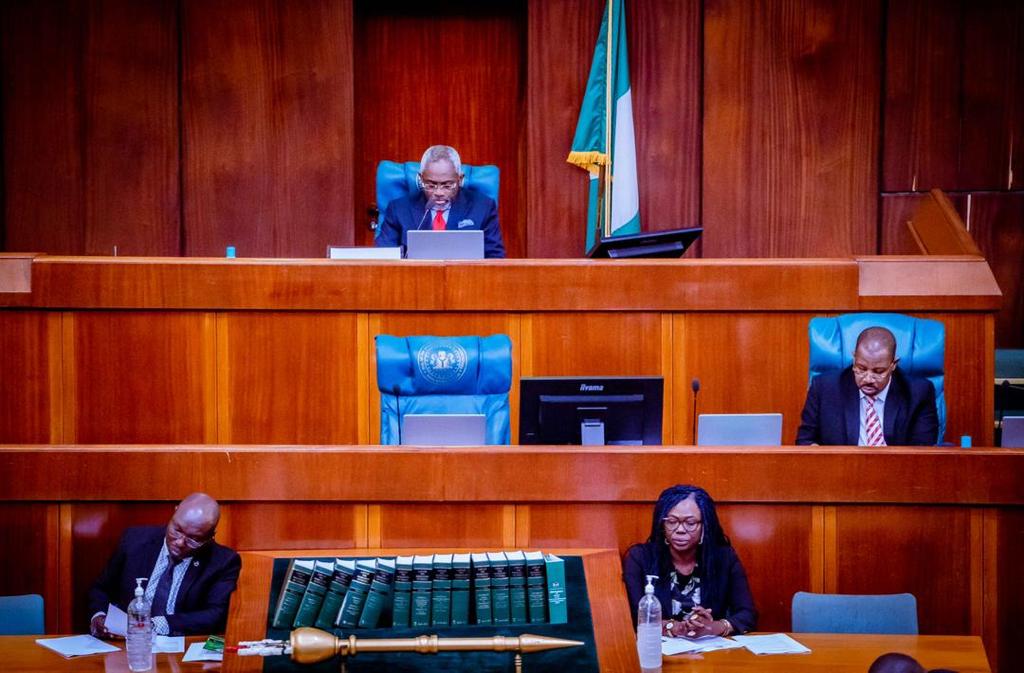
Barely 24 hours after former President Olusegun Obasanjo raised an alarm that out-of-school children posed a threat to national security, the House of Representatives had passed for second reading a bill seeking to establish National Commission for Almajiri education and out-of-school children.
It will be recalled that the government of former President Goodluck also gave the almajiri a facelift, establishing schools to educate them.
Tilted, “Bill for an Act to Establish National Commission for Almajiri Education and out of School Children to Provide for a Multimodal System of Education to tackle the Menace of Illiteracy, Develop Skill Acquisition and Entrepreneurship Programmes, Prevent Youth Poverty, Delinquency and Destitution in Nigeria; and for Related Matters (HB.2028),” the bill was sponsored by Hon. Shehu Kakale and 18 other lawmakers.
In his lead debate at Wednesday’s plenary, Kakale noted that Nigeria was among the countries with millions of children that were out of school.
He said, “Nigeria is among many other countries that are confronted with the phenomenon of out-of-school children. As you may be aware, millions of children and teenagers across the country are currently out of school, due to one reason or the other.
“Mr Speaker, as of September 2022, out-of-school children in Nigeria were estimated to be 18.5 million by the United Nations Children’s Fund (UNICEF). However, the Universal Basic Education Commission (UBEC) estimated the same to be 13.2 million.”
The lawmaker also gave staggering statistics of the figures in many states of Nigeria, recalling Jonathan’s efforts to build 157 schools for the almajiris.
“The statistics appear even grimmer, judging from the rough estimate of out-of-school children per state in the country.
“Mr. Speaker and my Honourable Colleagues, the digest of basic education statistics by the Universal Basic Education Commission (UBEC) revealed that Ten (10) out of Nigeria’s Thirty-Six (36) states were homes to more than half of Nigeria’s out-of-school children, as at 2018. The 10 states at the top of the chart had about 5.2 million of the country’s approximately 10.2 million out-of-school children at that time.
“In no particular order, Kano State had the most with 989,234, while Akwa-Ibom (581,800), Katsina (536,122) and Kaduna (524,670) followed closely. Taraba (499,923), Sokoto (436,570), Yobe (427,230), Zamfara (422,214) and Bauchi (354,373) were other states that ranked high on the list. States with the lowest numbers of out-of-school children were Cross River with 97,919, Abia with 91, 548, Kwara with 84,247, Enugu with 82,051, Bayelsa with 53,079, FCT with 52,972 and Ekiti with 50,945.
“Mr. Speaker, several challenges are associated with the high number of out-of-school children in Nigeria. All out-of-school children in Nigeria are at risk of exploitation, vulnerable to recruitment by insurgents, human traffickers, and by other criminal elements in society.
In fact, in your address to Members of the House of Representatives in this hallowed chamber on 28th January 2020, Mr. Speaker, you were very vivid on the rising number of out-of-school children and the danger it portends for the Nigerian state.
“Mr Speaker and my Honourable colleagues, as I draw this debate to a close, permit me to reiterate the fact that education is pivotal to human development and the growth of a nation. It was in recognition of this that Dr. Goodluck Ebele Jonathan had to build 157 Almajiri Model Schools to enable the education of the almajiris in Nigeria.
“There cannot be a functional society without a functional educational system. Accordingly, the establishment of the proposed Commission will ensure that the Almajiris receive sound education that will shield them from exploitation by criminal elements. It is in line with the foregoing, I hereby urge you Mr. Speaker, and my respected colleagues to support that this Bill is read the Second time,” he said.
In his contribution, the Speaker of the House, Rep. Femi Gbajabiamila said the bill was worthy of passage.
Gbajabiamila said, “The sponsor and I worked very closely last year on the issue of almajiri. I commend him for this proactiveness. For anything that has to do with education in this 9th assembly, we have been very proactive. Education has been a priority in our legislative agenda. We have just concluded a two-day summit on tertiary education. We hope that at the end of the day, we will make recommendations.”
But in his own inputs, Hon. Ossai Nicholas Ossai said that while he was not against the bill, a timeline should be provided in the bill for the termination of the programme.
“You are aware that 12 years ago, the Presidency embarked on making sure that the almajiris are integrated into the educational sector. I agree with this bill but in agreeing with it, they are making an intervention and it should have a gestation period like saying this program will last ten to 15 years or so. If the commission is established to just run like that, it will be discriminatory in nature. Every child is entitled to an education. This particular program is an interventionist to bridge the gap, so if it’s an intervention to bridge the gap, it supposed to have a timeline, the laws are made in that way”, he said.
Also contributing, Hon. Dachung Bagos called for punitive measures against failures on the part of the operators of the commission when established.
“This bill coming from a PDP man, my colleague from Sokoto. This is the heartbeat of the project the PDP administration started during the time of Goodluck Jonathan because of the importance— of seeing that Almajiri and out-of-school children— if someone had done his work all through the years, we could not have been at the point in time. It is a bill we support totally, but ours is that once this is established, the people that are supposed to do their work in the bill should be able to spell out actual punishment for those that are supposed to carry out that duty. At this point, let the penalty be spelled out,” Bagos said.
Responding to Ossai comment, the Deputy Speaker, Hon. Idris Wase who presided over the session said the bill was not discriminatory but for all out-of-school children nationwide.
“I want you (Ossai) to look at the long title of the bill. It says almajiri and out-of-school children, which we have in all parts of Nigeria. It’s not only for the almajiri, it will also take care of our brothers that are always in the street,” he said.
The bill later scaled through second reading when put to a voice vote by the presiding officer.
In a related development, the House also passed for second reading a Bill for an Act to Establish Chartered Institute of Corporate and Business Management Affairs; and for Related Matters sponsored by Hon. Julius Ihonvbere from Edo State.



The Independent National Electoral Commission (INEC) has extended the deadline for political parties to submit the list of candidates for the 2027 governorship and state Houses of Assembly elections from Saturday, August 8, to Tuesday, August 11, 2026.
The commission announced the extension in a statement issued on Saturday and signed by the National Commissioner and Chairman of its Information and Voter Education Committee, Mohammed Haruna.
According to INEC, the decision followed appeals by political parties for additional time to complete the submission process through the dedicated online portal.
“The submission window, which according to the revised Timetable and Schedule of Activities for the General Election was originally scheduled to close on Saturday, 8th August, 2026, has been extended to Tuesday, 11th August, 2026,” the commission said.
In a a related development, INEC announced the suspension of PVC collection in Osun State ahead of the August 15 governorship election.
The commission said voters who applied for replacement of lost, damaged or defaced Permanent Voter Cards would have until midnight on Sunday, August 9, to print downloadable copies of their cards.
The electoral body explained that the deadline was necessary to enable it compile data on downloaded PVCs and produce final statistics on the total number of cards collected ahead of the election.
INEC said PVC collection in Osun commenced at the Registration Area level from July 22 to 28, 2026, but was extended to July 31 following complaints about large crowds and difficulties experienced by voters at collection centres.
The exercise subsequently moved to the local government level and ran from August 1 to 7.
The commission also disclosed that replacement downloadable PVCs had been made available to voters in Odo-Otin and Ife Central Local Government Areas following the theft of cards during attacks on the two collection centres.
It stressed that the stolen cards could not be used to vote.
INEC reassured Osun residents of its preparedness for the August 15 governorship election.
“The commission reiterates that the stolen cards cannot be used to vote.
“INEC reassures the people of Osun State of its readiness to conduct a free, fair, credible and inclusive governorship election on 15th August, 2026,” the statement said.
The commission said the deadline, initially set for Saturday, 8 August, has been extended to Tuesday, 11 August 2026, following appeals from political parties for more time.
INEC also announced that the window for voters who applied to replace lost, damaged or defaced PVCs to download their replacement cards will close at midnight on Sunday, 9 August.
The move is to enable the commission compile final PVC collection figures ahead of the 15 August Osun governorship election.
INEC said replacement downloadable PVCs have also been provided to affected voters in Odo-Otin and Ife Central Local Government Areas after hoodlums carted away cards from two collection centres, stressing that the stolen cards cannot be used to vote.
The commission reaffirmed its readiness to conduct a free, fair, credible and inclusive election in Osun State.
Gov. Kefas made the remarks over the weekend at the Federal Medical Centre (FMC), Jalingo, during the flag-off of the second phase of the Renewed Hope Medical Outreach in Taraba State, organised as part of activities marking Prof. Yilwatda’s 58th birthday.
The governor commended Prof. Yilwatda for choosing to mark his birthday by providing medical care to people in need.
“What Professor Nentawe did is a powerful demonstration of what leadership should be,” Gov. Kefas said.
He assured that his administration would continue to support initiatives that complement government efforts to improve healthcare delivery and the wellbeing of residents.
Speaking at the event, Prof. Yilwatda called on Nigerian leaders to embrace the culture of giving and use their positions to touch the lives of the less privileged.
He said his decision to celebrate his 58th birthday in Taraba State was deliberate and informed by the needs of underserved communities, particularly people who face difficulties accessing healthcare because of distance and financial constraints.
According to him, the intervention followed a needs assessment and was extended across the three senatorial districts of the state.
He said the exercise commenced on August 3 at Takum General Hospital and covered the Federal University Teaching Hospital, Wukari; First Referral Hospital, Sunkani, Ardo-Kola Local Government Area; General Hospital, Bali; General Hospital, Gembu; and FMC Jalingo.
Prof. Yilwatda said the intervention provided medical services to thousands of beneficiaries, including people who required surgical procedures.
He said sustainable national development could only be achieved when strong institutions placed Nigerians at the centre of development.
“Leadership is about service,” he said, urging political and public leaders to make giving back to society an important part of their responsibilities.
He reaffirmed his commitment to serving Nigeria and its people, saying his personal vision was to make every day of his life useful to humanity.
“Every day that I live, the vision is: let it be useful to humanity,” he said.
The Taraba State Commissioner for Health, Dr. Bordiya Buma, commended the initiative, saying it was consistent with the Renewed Hope agenda and efforts to strengthen healthcare delivery in the state.
Dr Buma said the second phase followed the successful completion of the first phase, which was conducted simultaneously in six local government areas, with two LGAs selected from each of the three senatorial districts.
According to him, more than 10,000 patients were attended to during the first phase, including people with medical and surgical conditions.
He disclosed that 327 general surgeries, 71 eye surgeries and 575 dental procedures were carried out during the exercise.
The commissioner expressed appreciation to President Bola Tinubu for the Renewed Hope Medical Outreach and thanked Prof. Yilwatda for supporting the initiative and choosing Taraba State as a beneficiary.
The Minister of Health and Social Welfare, Prof. Muhammad Ali Pate, also commended Prof. Yilwatda for choosing Taraba State to mark his 58th birthday through a medical outreach.
Prof. Pate said making healthcare the centrepiece of the birthday celebration was significant because health affects everyone.
-

 News2 days ago
RSG Targets Nine Million Residents in Mosquito Net Distribution Campaign
-

 Oil & Energy2 days ago
Aiyedatiwa Signs New Electricity Bill
-

 Maritime2 days ago
Marine Minister Commends President Tinubu On NPERA Bill Assent
-

 Oil & Energy2 days ago
NLNG Commissions Research And Innovation Centre In RSU
-

 News2 days ago
KenPoly Holds Eight Convocations, August 29
-

 News2 days ago
RSG Begins Another Phase of Projects Commissioning Today
-

 News2 days ago
RMAFC Completes Revenue Sharing Review, Proposes New Pay
-

 Maritime2 days ago
NAGAFF Petitions IGP Over Alleged Maritime Police Harassment