
Opinion
A Call To Tackle Insecurity

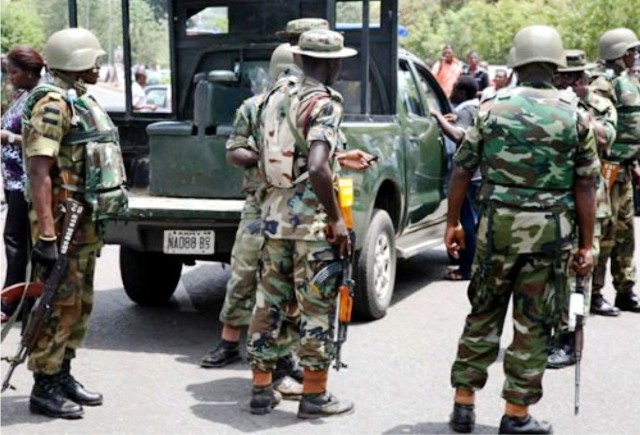
The issue of insecurity in Nigeria has become something of grave concern to all well-meaning citizens, most of whom continue to wonder how the country arrived at such a dastardly situation where no one is safe; and worse still, rather than abate, the problem is escalating and now totally out of control.
The country has always faced different difficult challenges at different times. As early as the 1960s, the country was involved in a three-year civil war that totally decimated certain parts of the country. So many innocent people lost their lives to a war they neither anticipated nor supported.
Throughout the period the war lasted, there was so much insecurity across the country leading to the loss of so many lives. Shortly after the war, another form of insecurity was unleashed on the country by armed robbers. At a time, it got so rampant and scary that the military government at the time promulgated a decree recommending firing squad for armed robbers.
Since then, the nation had witnessed different groups of armed bandits terrorising the entire landscape . In recent times, herders have become another source of insecurity in Nigeria. Many innocent farmers are being killed on the farms they have lived in their entire lives by herders, many of whom now bear sophisticated weapons. The trend has led to so much disaffection between the Fulanis and most of their host communities. It has also caused the refusal by most of the southern rural communities to accept different suggestions by the government for settling the herders.
Religious extremism is also a strong factor militating against peace in the enclave of insecurity that Nigeria has suddenly become. For more than ten years, the north eastern, north western and indeed, most parts of the north have been ravaged by religious extremists known as Boko Haram and bandits.
Several thousands of people have been killed while a large section of the people have been displaced and now live in Internally Displaced Persons’ Camps (IDPC) spread across the whole northern states. In addition, kidnapping for ransom has since entered Nigeria’s lexicon and the problem is becoming highly intractable. Innocent school children especially in the north are being kidnapped on daily basis and taken into the deep forest while their parents are thrown into great despair. From the foregoing, there is no gainsaying the fact that insecurity in Nigeria today is more pronounced than in the yesteryears, and it is suggestive of the fact that the government has a great task before it to deploy whatever is needed to restore peace and normalcy to the land. It should not be out of place for Nigeria to seek foreign assistance if need be. The duty of every government is to ensure the security of lives and property of the citizens and whatever manner is adopted to guarantee peace and tranquility is not only welcome but also desirable
Insecurity in Nigeria has disrupted the supply chain as road transport that is regularly used to move goods and services from the northern to the southern part has worsened over the fear of kidnapping and diverting goods. The Nigerian business environment has been concerned about investment safety in Nigeria as some foreign investors are migrating to other safer neighbouring countries for investment. The potential in the tourism industry has equally been affected by safety concerns for tourists. There are high incidences of rural-urban migration, which has increased congestion in urban cities, accompanied by high levels of youth unemployment, especially in urban areas. The security challenges have affected men, women and children in Nigeria. There are increasing cases of health crises, hunger, and starvation. Women and girls have been exposed to rape, forced marriages, lack of education, lack of equal economic opportunities, and other abuses even in camps for Internally Displaced Persons (IDPs) where they seek refuge. The death of able and productive men over insecurity has caused an unbalanced marriage market for women at marriageable age with fewer men at their disposal. There is an increase in budgetary allocations to defence in acquiring more military hardware, equipment, and internal security at the detriment of other vital sectors like health, education, and investment in human capital development and programmes.
There are tendencies of a crisis economy, a situation where people take undue advantage of the security situation in a place to their economic benefit and enrichment. Insecurity in Nigeria has been linked to an underlying religious undertone, raising cases of religious intolerance, extremism, and a battle for superiority. This religious onslaught has heightened fear over the safety of worshippers in practising their faith in Nigeria. The presence of many foreign humanitarian agencies and organisations in Nigeria is a pointer to the challenges currently bedevilling Africa’s most populated nation. Insecurity has spread like wildfire all over Nigeria, with the government’s efforts not enough to address the root cause of these challenges. Poverty, the number of school children unable to go back to school or continue with their education, loss of people’s source of income, health crisis, migration induced by insecurity, hunger, starvation, unemployment, and gender-based violence present a considerable challenge to this present administration.
Cybercrime is on the rise in Nigeria with both an increasing number of victims and perpetrators. facing trial for cyber fraud, hacking and scamming. You do not need to travel far across Nigeria to see a generation of young people lost in the world of cybercrime and ostensibly inspired by the likes of Hushpuppi. You will find them in many Nigerian cities like Lagos, Benin, Port Harcourt, Owerri, and even up to Accra, Johannesburg, Dubai and Kuala Lumpur.
It is from these remote locations that young opportunists try to launch phishing and ransomware attacks, including malicious spams, all over the world. Often when they try to escape criminal justice, they easily stand out with their characteristic way of dressing and brazen lifestyle. Cybercrime has become a universal spectacle, and ubiquitous internet connectivity supports cybercrime activities such as raiding bank accounts, identity theft, impersonation and stealing corporate information. Nearly two thirds of people who use online services (more than two billion individuals worldwide) have had their personal data stolen or compromised . Government efforts to fight cybercrime is useful but insufficient
By: Favour Harry
Harry writes from Port Harcourt.



-

 Featured4 days ago
Oil & Gas: Rivers Remains The Best Investment Destination – Fubara
-
Nation5 days ago
MOSIEND Calls For RSG, NDDC, Stakeholders’ Intervention In Obolo Nation
-
Nation5 days ago
Hausa Community Lauds Council Boss Over Free Medical Outreach
-

 Nation5 days ago
Ogoni Power Project: HYPREP Moves To Boost Capacity Of Personnel
-
Nation5 days ago
Association Hails Rivers LG Chairmen, Urges Expansion Of Dev Projects
-
Nation5 days ago
Film Festival: Don, Others Urge Govt To Partner RIFF
-

 News5 days ago
NDLEA Arrests Two, Intercepts Illicit Drugs Packaged As Christmas Cookies
-
 News5 days ago
Troops Rescue 12 Abducted Teenage Girls In Borno