
Business
Customs Foils Smuggling Attempt Seizes Goods Worth N1.48bn

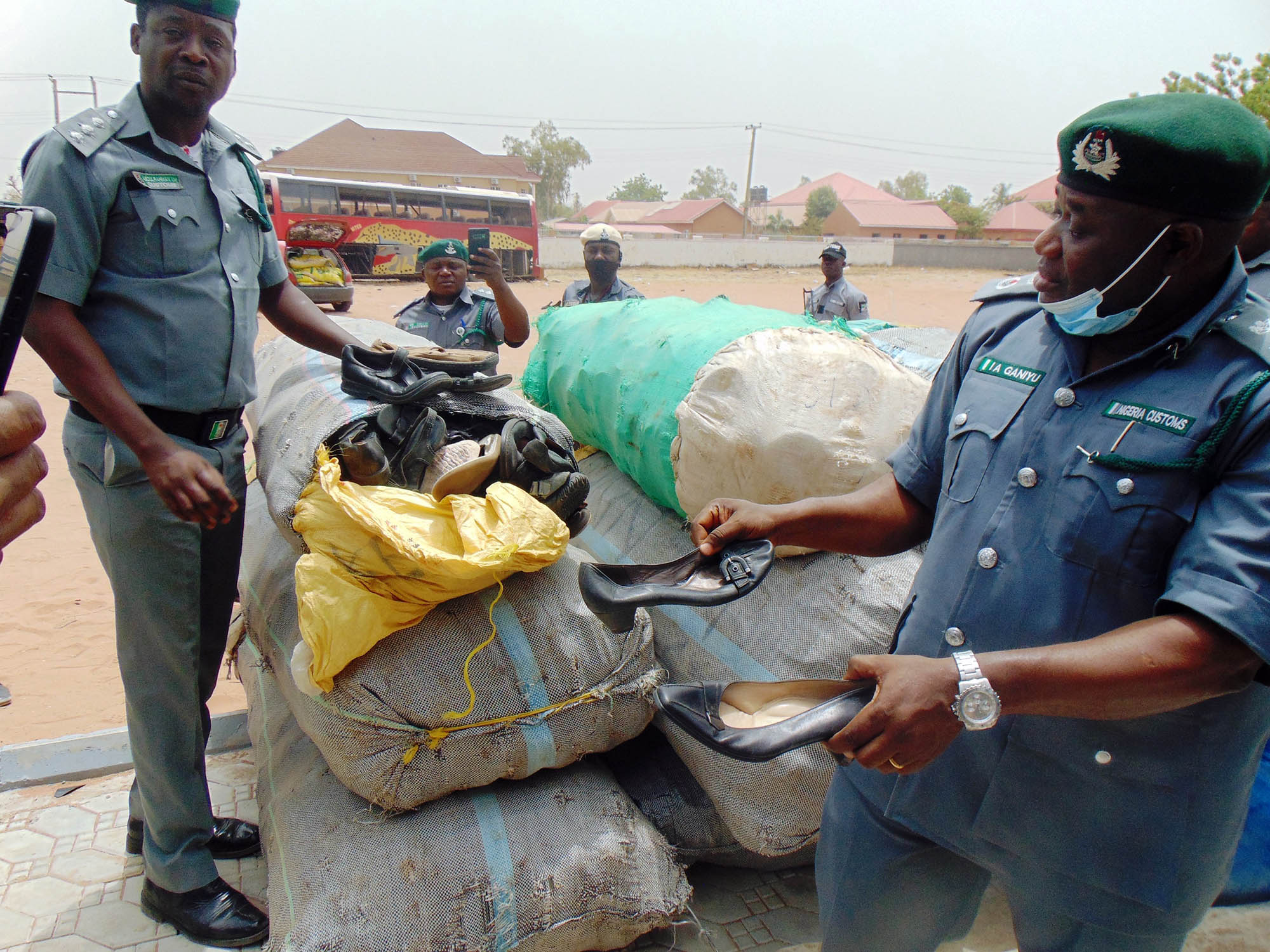
Seme Command of the Nigeria Customs Service (NCS), says it has intercepted a total of139 cartons of expired soft drinks the command also stated that it intercepted a total of 325,950 litres of Premium Motor Spirit (PMS), otherwise locally known as petrol, estimated at over 10 tankers of 33,000 litres each.
The Customs Area Controller, Compt. Mohammed Jibo, during a press conference on Friday, said aside the 139 cartons of expired soft drinks intercepted, it also impounded some consignments of illicit and restricted medicaments.
Speaking on the war against smuggling of petroleum products, with respect to a recent offensive by his officers and men, Jibo said, “The continuous surveillance of the beaches and creeks by our men has yet recorded another huge interception of 1,600 jerry cans of petroleum product of 30 litres each.
“The arrest was made at the late hours of Tuesday, 7 June, 2022, along Seme- Badagry waterways”.
He listed the illicit drugs to include 100 cartons of gabadol/tramadol, 120 milligrams, 2.8 kilograms, 306 parcels of cannabis sativa and 132 packets of tramadol capsules; with a combined Duty Paid Value (DPV) of N1, 481,107,671.00.
He explained that the seized petrol alone intercepted along the Badagry and Seme creeks has DPV of N65.6million.
The customs boss said other items seized are 86 pieces of Apetamin syrup; 302 prices of Dynewell Syrup; 50 pieces of Baba Yellow Syrup; three sachets of Rofhymol, 32 bottles of Cough Syrup; 99 cartons of fearless Energy Drinks and 139 cartons of Soft Drinks with a DPV of N1.48billion.
Jibo further disclosed that two suspects were arrested in connection with some of the seizures, adding that the seized petroleum products would be auctioned in line with Standard Operating Procedure (SOP) relating to seized perishable items.
He attributed the impressive performance of the Command, officers and men to renewed strategies and the uncommon support of the CGC’s led management.
“Professionalism, discipline, good working relationship with our stakeholders, cordial relationship with the host communities, and collaboration with other security agencies, were part of strategies responsible for this scorecard” he said.
By: Nkpemenyie Micdominic, Lagos


Nkpemenyie Mcdominic
Reports say that the training is designed to equip youths with practical technical skills for employment in the oil and gas and construction sectors, with emphasis on employability, safety, competence and self reliance.
In attendance at the flag-off ceremony this week, at the Petroleum Training Institute (PTI) Conference Hall, Effurun, were stakeholders, dignitaries, and political representatives, among others.
Dafinone, represented by his Chief of Staff, Adelabu Bodjor, said the initiative reflects a deliberate political investment in human capital development across Delta Central.
He explained that the training focuses on rigging and scaffolding, noting that “both are essential technical competencies required in industrial operations, construction projects, and oil and gas installations”.
Bodjor added, “The programme is intended to reduce dependency among youths by providing job-ready skills capable of supporting long-term economic opportunities and self-sufficiency. The initiative aligns with Senator Dafinone’s broader development agenda, which prioritises practical skill acquisition as a pathway to sustainable empowerment.”
Also addressing the participants, the NCDMB, Felix Omatsola Ogbe, represented by Mr. Teddy Bai, commended Dafinone for sponsoring the programme, describing it as “a timely response to critical manpower gaps in the industry”.
Bai explained that rigging and scaffolding remain safety-sensitive skills required across fabrication yards, offshore platforms, and construction sites, stressing that the programme bridges the gap between certification and practical competence.
He also charged the training consultant, OROH Contractors Limited, to maintain strict standards of professionalism, safety, and discipline, while urging participants to remain committed, focused, and disciplined throughout the exercise.
The Senate Liaison Officer for Sapele Local Government Area, Chief Patrick Akamuvba, , described the programme as a major step in strengthening human capital development in Delta Central.
Akamuvba said scaffolding and rigging skills are in high demand across residential, commercial, and industrial construction projects, noting that the training offers real employment opportunities for beneficiaries
He urged participants to prioritise knowledge and certification over short-term material expectations, stressing that discipline and seriousness would determine their long-term success.
He also cautioned youths against social vices and distractions, advising them to remain focused to maximise the opportunities provided by the programme.
-
News2 days ago
Obuah’s Victory Excites Former Lawmaker as APC Primaries Conclude in Rivers West
-

 Politics4 days ago
APC PRIMARIES: FUBARA’S WITHDRAWAL, HISTORIC SACRIFICE FOR NATIONAL STABILITY ……. GROUP
-

 News4 days ago
Court Sentences Seven To Death Over Murder Of Cleric In Rivers
-
News2 days ago
105 Nigerians Killed In S/Africa In Seven Years
-

 Sports4 days ago
PH Arsenal Community Set For Streets Procession, Saturday
-

 Niger Delta2 days ago
Royal Father Endorses PH Arsenal Community, Pledges To Support
-

 Politics4 days ago
IPAC Flays INEC Over Election Guidelines Judgement
-

 Politics4 days ago
NDC To Adopt Electronic Voting For Future Primaries