
Health
How To Boost Your Stamina Naturally

The post Covid period is having a toll on the people.
Many are battling depression , bad economy and other ailments this period. This follows the long’stay at home’ . The pandemic has made severe changes to our lifestyle, thereby, indirectly affecting our physical and psychological well-being. We moved from working from office to our home desks, from dining at restaurants to just eating at home, from hitting the gym daily to performing daily household chores – our lives are rewired and our movements are restricted. While there are many who found a way to exercise daily and stick to a healthy eating pattern, but for most of us it was just sitting, eating all the delicious and decadent homemade treats, which we were missing because of the rush of daily life.
However, as we are slowly getting out of our homes, starting to go to office, we find that the stamina to do so isn’t there. We get tired easily and feel the need to push ourselves mentally and physically to do what we used to do without putting extra effort. But fret not! It’s time to rewire ourselves – we just need to take small steps to reach back where we want to be and do so in a systematic manner.
Eat At Proper Times
It makes a world of difference to our system which is closely linked to the solar clock. Set your meal timings and stick to them keeping a leeway of 30 minutes up or down. Eating at regular hours means the energy levels remain steady and don’t sway from highs to lows. This will help your body rhythm settle down; it will balance out the hormones, keeping you energised.
Eat Nutrient-Rich Food
One of the best things that happened during lockdown was that we were eating fresh home-cooked food with mostly fresh ingredients. We learnt to make pizzas and burgers at home but all with fresh and healthy ingredients. Any food that is closest to its natural form, least processed and seasonal is the best for your health. Cheat meals are only 1-2 meals a week. Nutrient-rich food adds health while processed and refined foods add empty calories leaving you without energy and feeling low. Fermented foods add good bacteria that keep our gut healthy and the absorption of nutrients efficient..
Drink, Drink And Drink Lots Of Water
We are in the thick of summers and need hydration. Even a mild dehydration leaves us exhausted; therefore, one must take adequate fluids, and a plain glass of water is the best option. But if just having water is monotonous, you can have fresh lemon water, coconut water, fresh iced tea, without sugar or with the minimum amount of sugar. Bael sherbet is another amazing drink that you can try. Again while rediscovering food, I am sure you must have found a lot of traditional summer drinks that need very little work and are super hydrating. But keep the caffeine to the minimum!
Include Nuts And Seeds In Your Diet
Nuts and seeds are a Yes in summers too. You can soak them if you believe they are “garam” in summers. You can even add nuts to your summer drinks. Almond thandai is a healthy drink and you can even have it in summers. We just need one ounce of nuts and seeds per day – meaning 15-20 almonds, one walnut and a teaspoon of seeds. Nuts add healthy fats, fibre, protein and most importantly, antioxidants, which are known to clean up the free radicals from our system. They are great for boosting immunity to.
Get Back To Exercising
The ones, who have taken this time to do nothing in the exercise space, need to restart. Never mind where you were when the lockdown happened, you need to start all over again. Don’t get back to the high level of exercise immediately – get there slowly. And the ones, who have maintained a mid-level of exercise, can go on to the next level, but gradually.
These are testing times and though a lot is unlocking, minimum social contact is still to be maintained along with frequent handwashing and sanitising. We will reclaim our lives but the good habits that we were forced to relearn like having home-cooked food, rediscovering traditional foods, hand and body hygiene, spending quality time with family and sitting still for a while, shouldn’t be forgotten. There is a silver lining to every cloud and the sun shines after every dark night.
By: By Kevin Nengia
Adapted from NDTV FOOD Online.com



The Federal Government has begun a scheme to battle malnutrition in children.
Tagged, “Nutrition 774 Initiative”, the programme was unveiled by Vice President Kashim Shettima as it falls within a framework for the Federal Government’s comprehensive vision for a nationwide nutrition programme to address malnutrition and food insecurity in Nigeria.
The proposed programme, “Nutrition 774 Initiative,” aims to improve nutritional outcomes across all 774 local government areas (LGAs) in the country.
Speaking yesterday during a roundtable with development partners at the Presidential Villa, Abuja, VP Shettima said the initiative aligns with President Bola Ahmed Tinubu’s broader focus on food security and availability across Nigeria.”The priority with which His Excellency, President Bola Ahmed Tinubu, has pursued food availability has gone hand-in-hand with our commitment to eradicating malnutrition.
“Our aspiration as a nation goes beyond the mere abundance of food in our barns and warehouses. We cannot claim victory unless there is certainty that each household across Nigeria has access to the preferred and prescribed diets essential for a healthy life,” the vice president stated.
It would be recalled that the 144th meeting of the National Economic Council (NEC) had in September endorsed the Nutrition 774 programme as a primary platform for combating malnutrition within Nigerian communities.
The council encouraged development partners to provide financial and technical assistance to support this initiative.
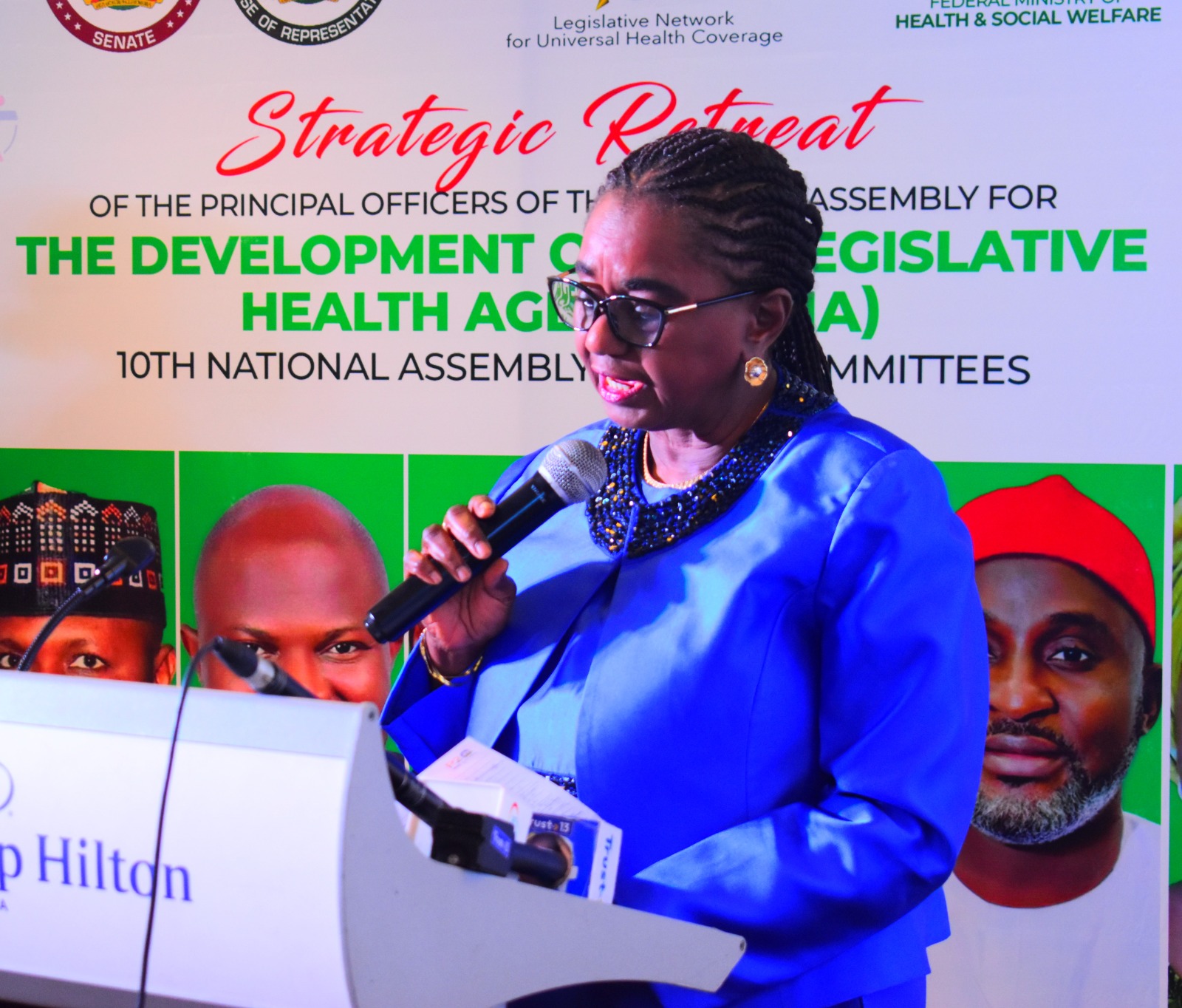
The importance of e-Health devices and digital health solutions in improving Nigeria’s healthcare system has been emphasised by Senator Ipalibo Harry Banigo, Chairman of the Senate Committee on Health, Secondary and Tertiary.
She also stressed that health is a multilayered activity and a multisectoral collaboration that requires legislators to work together to provide legislation, implement policies, and track funds effectively.
Banigo, who represents Rivers West Senatorial District in the National Assembly, made these remarks at the 5th Annual Legislative Summit on Health in Abuja, themed “Improving Legislative Stewardship and Accountability for Universal Health Coverage.”
She highlighted the potential of eHealth devices, especially given Nigeria’s large population and limited healthcare professionals.
“We can develop platforms that can be accessed through simple phones, even in remote villages, to provide health education and interventions,” she said.
“We are not talking about highfalutin things; we are talking about what will impact communities at the grassroots level, particularly pro-poor initiatives that will benefit vulnerable populations.”
Banigo also emphasized the importance of accountability and effective care, encouraging legislators to share knowledge, engage in peer reviews, and exchange information to achieve better health outcomes.
She recalled the cholera outbreak, where basic health education and interventions could have been delivered via mobile phones, preventing preventable deaths.
The 5th Annual Legislative Summit on Health brought together federal and state legislators, the Coordinating Minister of Health and Social Welfare, Prof. Muhammad Pate, the World Health Organisation’s representative in Nigeria, Dr. Walter Mulombo, and other dignitaries.
-

 News2 days ago
RSG Targets Nine Million Residents in Mosquito Net Distribution Campaign
-

 Oil & Energy2 days ago
Aiyedatiwa Signs New Electricity Bill
-

 Maritime2 days ago
Marine Minister Commends President Tinubu On NPERA Bill Assent
-

 Oil & Energy2 days ago
NLNG Commissions Research And Innovation Centre In RSU
-

 News2 days ago
KenPoly Holds Eight Convocations, August 29
-

 News2 days ago
RSG Begins Another Phase of Projects Commissioning Today
-

 News2 days ago
RMAFC Completes Revenue Sharing Review, Proposes New Pay
-

 Maritime2 days ago
NAGAFF Petitions IGP Over Alleged Maritime Police Harassment