
Business
SON Moves To Overhaul Operations

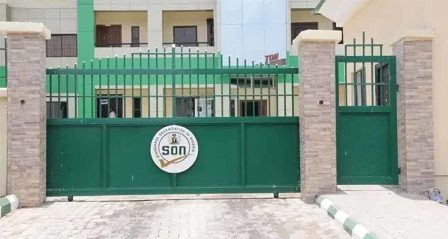
The Standards Organization of Nigeria (SON) has set up a five-member independent committee to overhaul its operations for optimum performance.
Director-General of SON, Mallam Farouk Salim, said in a statement that the committee would review its management practices to strengthen the organisation for improved service delivery.
The SON boss said that the move was aimed at building strong processes for the organisation that would outlive its various chief executives’ tenures.
He mandated the committee to help examine the Standards body structure, processes and practices with a view to providing a template to address operational, service delivery and staff welfare challenges.
Salim also charged the committee to entrench equity and fairness as well as provide greater opportunities for staff to better contribute to attainment of organisational goals.
He further enumerated the committee’s terms of reference to include control and coordination, communication and effectiveness, manpower dispositions and manning levels.
Others, the SON DG said, are recruitment, postings and transfers as well as public perception of the organisation and its services, among others.
Salim stated that the committee members were carefully selected, given their rich pedigrees and experiences in the public sector and the management’s belief in their competence and ability to contribute to the growth of SON.
He said SON would give the committee departmental presentations containing activities, achievements, challenges and suggestions obtained from interactions with directors, heads of departments and relevant portions of the handover notes by the last management.
Salim enjoined the committee to invite additional inputs, presentations, clarifications or opinions from members of the SON management and the staff unions as it might deem necessary.
“Arrangements have been made for the committee to visit the organisation’s major operational offices in Lagos, Enugu, Port Harcourt and Kano to feel the pulse of the staff and have a broader view of the organisation,” he said.
Salim stressed that the committee had four weeks from the date of inauguration to submit its interim report and was expected to submit its final report before the end of the year.
nomic development.
He said that the new appointment was a novel approach by the SON’s Director General towards realising his vision for the standards body.
“We will hit the ground running and members of this committee will devote their time and passion to the assignment with a view to delivering on the terms of reference within the time frame given,” he pledged.


Nkpemenyie Mcdominic
Reports say that the training is designed to equip youths with practical technical skills for employment in the oil and gas and construction sectors, with emphasis on employability, safety, competence and self reliance.
In attendance at the flag-off ceremony this week, at the Petroleum Training Institute (PTI) Conference Hall, Effurun, were stakeholders, dignitaries, and political representatives, among others.
Dafinone, represented by his Chief of Staff, Adelabu Bodjor, said the initiative reflects a deliberate political investment in human capital development across Delta Central.
He explained that the training focuses on rigging and scaffolding, noting that “both are essential technical competencies required in industrial operations, construction projects, and oil and gas installations”.
Bodjor added, “The programme is intended to reduce dependency among youths by providing job-ready skills capable of supporting long-term economic opportunities and self-sufficiency. The initiative aligns with Senator Dafinone’s broader development agenda, which prioritises practical skill acquisition as a pathway to sustainable empowerment.”
Also addressing the participants, the NCDMB, Felix Omatsola Ogbe, represented by Mr. Teddy Bai, commended Dafinone for sponsoring the programme, describing it as “a timely response to critical manpower gaps in the industry”.
Bai explained that rigging and scaffolding remain safety-sensitive skills required across fabrication yards, offshore platforms, and construction sites, stressing that the programme bridges the gap between certification and practical competence.
He also charged the training consultant, OROH Contractors Limited, to maintain strict standards of professionalism, safety, and discipline, while urging participants to remain committed, focused, and disciplined throughout the exercise.
The Senate Liaison Officer for Sapele Local Government Area, Chief Patrick Akamuvba, , described the programme as a major step in strengthening human capital development in Delta Central.
Akamuvba said scaffolding and rigging skills are in high demand across residential, commercial, and industrial construction projects, noting that the training offers real employment opportunities for beneficiaries
He urged participants to prioritise knowledge and certification over short-term material expectations, stressing that discipline and seriousness would determine their long-term success.
He also cautioned youths against social vices and distractions, advising them to remain focused to maximise the opportunities provided by the programme.
-
News18 hours ago
Obuah’s Victory Excites Former Lawmaker as APC Primaries Conclude in Rivers West
-

 Politics3 days ago
APC PRIMARIES: FUBARA’S WITHDRAWAL, HISTORIC SACRIFICE FOR NATIONAL STABILITY ……. GROUP
-

 News3 days ago
Court Sentences Seven To Death Over Murder Of Cleric In Rivers
-
News19 hours ago
105 Nigerians Killed In S/Africa In Seven Years
-

 Sports3 days ago
PH Arsenal Community Set For Streets Procession, Saturday
-

 Politics3 days ago
IPAC Flays INEC Over Election Guidelines Judgement
-

 Politics3 days ago
NDC To Adopt Electronic Voting For Future Primaries
-

 Politics3 days ago
Otu Vows To Recall Indolent, Arrogant Cross River Legislators