
Business
Tariff Increment: Ikeja Electric Targets N170bn Revenue In 2020

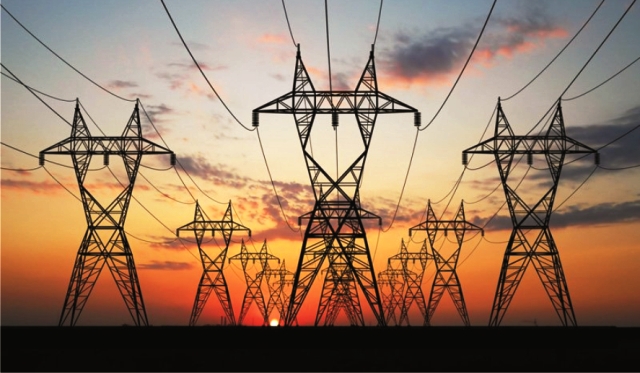
Ikeja Electric (IE) Plc says it is targeting a total revenue of N170 billion in 2020 with the implementation of the increment in various classes of electricity tariff.
The electricity Distribution Company (Disco) says it intends to create a new tariff class called Bilateral for customers it had signed Power Purchase Agreement (PPA) with under a willing-buyer-willing-seller arrangement.
The company gave the projection in its Addendum Performance Improvement Plan (PIP) and Application for Extraordinary Tariff Review of Multi Year Tariff Order- 2015 signed by its Chief Executive Officer, Mr Anthony Youdeowei.
A copy of the document, which was addressed to the Nigerian Electricity Regulatory Commission (NERC), was obtained The Tide at the weekend.
The report said the objective of the extraordinary review was to ensure that IE adjusts its tariff in line with the commission’s directive that current average allowed a Disco tariffs
shall be grossed-up by 50 per cent from April 1.
According to the report, this is in order to meet the tariff shortfall funding target for 2020 by the Federal Government.
It said: The creation of the Bilateral tariff class is aimed at providing an efficient and reliable service to customers under the tariff class because cost-reflective tariffs are required to cover the cost at service delivery.
”Our total bilateral energy procured is currently 200MW. However, bilateral sales in this application is only the portion of the bilateral energy that has been contracted with customers on a willing-buyer-willing-seller arrangement.”
The report said the collected energy sales based on the 50 per cent tariff increase in MYTO was 3,955 GWh, while that of bilateral sales was 161 GWh.
”The expected MYTO 2020 and bilateral revenue requirement are N162 billion and N8 billion respectively, to give a total revenue requirement of N170 billion.
”The 50 per cent tariff increase is expected to raise the average tariffs from the current level of N27.30 per kilowatt to N40.95 per kilowatt.
”The addition of the bilateral sales revenue requirement further increases the average tariffs to N41.31 per kilowatt in 2020 which is projected to rise to N44.24 in 2024.”





-

 Niger Delta12 hours ago
Diri Restates Stance On Lagos-Calabar Coastal Highway
-

 Niger Delta12 hours ago
C’River, NUJ Pay Tribute To Late Guardian Editor
-

 News13 hours ago
NDLEA Recovers Tons Of Illicit Drug Consignments In Nine States
-

 Opinion12 hours ago
Checking Voter Apathy In Nigeria’s Electoral Process
-

 Sports9 hours ago
Nigerian Trio Target Titles At PFL Africa Finals
-

 Education10 hours ago
FCE Yola Graduates 3,555 Teachers , Seeks Upgrade to University
-

 Politics9 hours ago
2027: DICKSON’S EX-ALLY VOWS TO WORK AGAINST NDC INTEREST IN BAYELSA
-

 Politics9 hours ago
2027: GROUP PLEDGES 40,000 SUPPORTERS FOR COALITION CANDIDATES IN RIVERS