Opinion
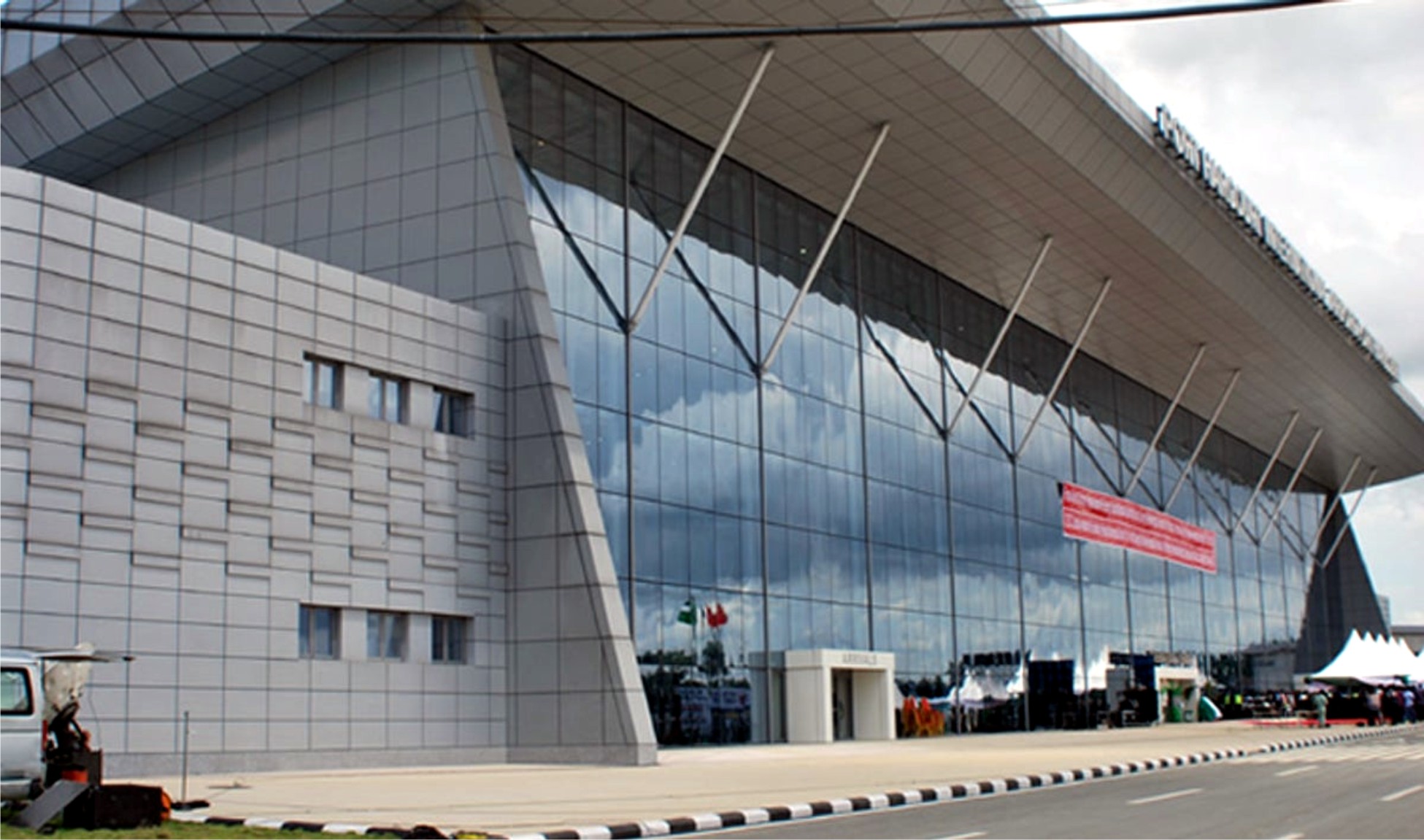
The Mad House Called PH Airport
Watching the video of the stampede at Lagos State University, Ojo last Monday where some undergraduates reportedly fainted and others injured as they scrambled to enter the venue of an examination brought back the memory of an ugly situation at Port Harcourt International Airport, Omagwa, just a day after the Lagos incident.
It was a day many passengers and, perhaps, some staff will not forget in a hurry. Moving by plane has always been considered to be cost-effective, relatively stress-free and a convenient alternative to moving by car. Some even consider it prestigious and classy.
But all that perception changed for many people on Tuesday when passengers at the famous airport were treated no better than molue passengers. The very long queue to the terminal was not unexpected being very early in the morning of a working day and many had first flights to catch. It was also not surprising to see the snake-like queue to the check-in desk although the action of some people, mainly uniformed men who intermittently jumped the queue to have their bosses or whoever they escorted to the airport expressly attended to was very disappointing.
Then at the various check-in desks were embarrassing chaotic situations. The places were crowded by all manner of people: those who feel they are too big and influential to stand in the line; some touts who collect stipends from passengers to help them with the checking-in process; the aforementioned security personnel who are supposed to be law enforcers but blatantly break them in service to their masters and the passengers who had patiently and obediently been in line and should be rightly attended to. A particular woman who apparently is not a Nigerian, bewildered at what was going on, was heard lamenting in American accent, “This ain’t how things are done at the airport. Things should be done orderly. This is insane”. But was anybody ready to listen?
If the situation at the check-in desks could be called insane, one wonders the adjective that could be used to describe the scene at the sorting station. The standard practice at airports across the globe is that after passengers are checked, they leave their baggage to be processed. Once the scanner clears the bag, it moves down the conveyor belt and into the airline’s baggage sorting station. There, it is temporarily stored before being sorted and transported to the aircraft using carts or special containers. Of course, at this stage the baggage will be tagged.
But our fellow Nigerians at Port Harcourt International Airport, Omagwa, on this fateful Tuesday morning handed over tagged baggage to their owners and asked them to take such to the sorting station for “proper identification”. That was supposed to be another queueing process but this time many people had ran out of patience to stand on an unmoving line and stand the chance of missing their flights. So, they all headed to the entrance of the sorting room with their luggage, jostling to enter through the tiny door at the same time.
As the boarding announcement for various flights kept coming, the struggle to send in their baggage intensified. The resultant commotion is indescribable. Boxes were flying into the room, people, especially women were pushed down, there was screaming and crying everywhere. A woman struggling to enter the “golden gate” with her four boxes was pushed down and trampled upon. Immigration and other airport officials at the other end did not make the situation better as they insisted that every luggage must be opened for rechecking. Some of them were manned at the door to push people away as they were overwhelmed by the population inside the small room. Those that made it to the room couldn’t come out because of the mammoth crowd blocking the door which served as both entrance and exit. A particular military officer forcing himself out, pushed down people on both sides and practically walked on them to get out of the ugly scene. It was, indeed, an eye saw and a big embarrassment to the airport and the country at large.
The big question is whose decision was it that passengers should escort their already processed and tagged baggage to the sorting room and why? Where were the airport and security personnel saddled with the responsibility of maintaining orderliness at the airport all the while the commotion lasted? One may also want to know at what point the non-passengers are not allowed at the airport because the attitude of the growing number of touts at our various airports, the assistants and security officials attached to politicians and other highly placed people in the society is very unbecoming and create a huge problem for other passengers and also paints the nation black. One has been opportuned to travel to one or two countries and never saw this kind of situation. Even if their influential citizens came to the airport with their legion of aides you would not know because they will not break airport laws and orders, jump queues or insult airline staff and other workers at the airport as is the case in Nigeria.
It is high time management of airports, minister of aviation and all concerned agencies looked into the absurdities going on in our various airports. Corrupt practice of some airport staff who print two tickets for the hiring of trollies, N400.00 and N150.00 should be addressed. The begging attitude of the cleaners and some other junior airport staff and those doing business at our airports should no longer be over looked. As has always been said, airport is the first port of call of many visitors to the country, the treatment they receive there, the condition of the environment goes a long way in forming their image of the nation. Let international standard practice prevail in Nigerian airports. Our airport managers should learn from other countries with far more daily passengers than ours yet their baggage is properly handled without any passenger having to break his waist carrying his belongings almost into the aircraft.
Calista Ezeaku

Opinion
Wike VS Soldier’s Altercation: Matters Arising
The events that unfolded in Abuja on Tuesday November 11, 2025 between the Minister of the Federal Capital Territory, Chief Nyesom Wike and a detachment of soldiers guarding a disputed property, led by Adams Yerima, a commissioned Naval Officer, may go down as one of the defining images of Nigeria’s democratic contradictions. It was not merely a quarrel over land. It was a confrontation between civil authority and the military legacy that still hovers over our national life.
Nyesom Wike, fiery and fearless as always, was seen on video exchanging words with a uniformed officer who refused to grant him passage to inspect a parcel of land alleged to have been illegally acquired. The minister’s voice rose, his temper flared, and the soldier, too, stood his ground, insisting on his own authority. Around them, aides, security men, and bystanders watched, stunned, as two embodiments of the Nigerian state clashed in the open.
The images spread fast, igniting debates across drawing rooms, beer parlours, and social media platforms. Some hailed Wike for standing up to military arrogance; others scolded him for perceived disrespect to the armed forces. Yet beneath the noise lies a deeper question about what sort of society we are building and whether power in Nigeria truly understands the limits of its own reach.
It is tragic that, more than two decades into civil rule, the relationship between the civilian arm of government and the military remains fragile and poorly understood. The presence of soldiers in a land dispute between private individuals and the city administration is, by all civic standards, an aberration. It recalls a dark era when might was right, and uniforms conferred immunity against accountability.
Wike’s anger, even if fiery, was rooted in a legitimate concern: that no individual, however connected or retired, should deploy the military to protect personal interests. That sentiment echoes the fundamental democratic creed that the law is supreme, not personalities. If his passion overshot decorum, it was perhaps a reflection of a nation weary of impunity.
On the other hand, the soldier in question is a symbol of another truth: that discipline, respect for order, and duty to hierarchy are ingrained in our armed forces. He may have been caught between conflicting instructions one from his superiors, another from a civilian minister exercising his lawful authority. The confusion points not to personal failure but to institutional dysfunction.
It is, therefore, simplistic to turn the incident into a morality play of good versus evil.
*********”**** What happened was an institutional embarrassment. Both men represented facets of the same failing system a polity still learning how to reconcile authority with civility, law with loyalty, and service with restraint.
In fairness, Wike has shown himself as a man of uncommon courage. Whether in Rivers State or at the FCTA, he does not shy away from confrontation. Yet courage without composure often feeds misunderstanding. A public officer must always be the cooler head, even when provoked, because the power of example outweighs the satisfaction of winning an argument.
Conversely, soldiers, too, must be reminded that their uniforms do not place them above civilian oversight. The military exists to defend the nation, not to enforce property claims or intimidate lawful authorities. Their participation in purely civil matters corrodes the image of the institution and erodes public trust.
One cannot overlook the irony: in a country where kidnappers roam highways and bandits sack villages, armed men are posted to guard contested land in the capital. It reflects misplaced priorities and distorted values. The Nigerian soldier, trained to defend sovereignty, should not be drawn into private or bureaucratic tussles.
Sycophancy remains the greatest ailment of our political culture. Many of those who now cheer one side or the other do so not out of conviction but out of convenience. Tomorrow they will switch allegiance. True patriotism lies not in defending personalities but in defending principles. A people enslaved by flattery cannot nurture a culture of justice.
The Nigerian elite must learn to submit to the same laws that govern the poor. When big men fence off public land and use connections to shield their interests, they mock the very constitution they swore to uphold. The FCT, as the mirror of national order, must not become a jungle where only the powerful can build.
The lesson for Wike himself is also clear: power is best exercised with calmness. The weight of his office demands more than bravery; it demands statesmanship. To lead is not merely to command, but to persuade — even those who resist your authority.
Equally, the lesson for the armed forces is that professionalism shines brightest in restraint. Obedience to illegal orders is not loyalty; it is complicity. The soldier who stands on the side of justice protects both his honour and the dignity of his uniform.
The Presidency, too, must see this episode as a wake-up call to clarify institutional boundaries. If soldiers can be drawn into civil enforcement without authorization, then our democracy remains at risk of subtle militarization. The constitution must speak louder than confusion.
The Nigerian public deserves better than spectacles of ego. We crave leaders who rise above emotion and officers who respect civilian supremacy. Our children must not inherit a nation where authority means shouting matches and intimidation in public glare.
Every democracy matures through such tests. What matters is whether we learn the right lessons. The British once had generals who defied parliament; the Americans once fought over states’ rights; Nigeria, too, must pass through her own growing pains but with humility, not hubris.
If the confrontation has stirred discomfort, then perhaps it has done the nation some good. It forces a conversation long overdue: Who truly owns the state — the citizen or the powerful? Can we build a Nigeria where institutions, not individuals, define our destiny?
As the dust settles, both the FCTA and the military hierarchy must conduct impartial investigations. The truth must be established — not to shame anyone, but to restore order. Where laws were broken, consequences must follow. Where misunderstandings occurred, apologies must be offered.
Let the rule of law triumph over the rule of impulse. Let civility triumph over confrontation. Let governance return to the path of dialogue and procedure.
Nigeria cannot continue to oscillate between civilian bravado and military arrogance. Both impulses spring from the same insecurity — the fear of losing control. True leadership lies in the ability to trust institutions to do their work without coercion.
Those who witnessed the clash saw a drama of two gladiators. One in starched khaki, one in well-cut suit. Both proud, both unyielding. But a nation cannot be built on stubbornness; it must be built on understanding. Power, when it meets power, should produce order, not chaos.
We must resist the temptation to glorify temper. Governance is not warfare; it is stewardship. The citizen watches, the world observes, and history records. How we handle moments like this will define our collective maturity.
The confrontation may have ended without violence, but it left deep questions in the national conscience. When men of authority quarrel in the open, institutions tremble. The people, once again, become spectators in a theatre of misplaced pride.
It is time for all who hold office — civilian or military — to remember that they serve under the same flag. That flag is neither khaki nor political colour; it is green-white-green, and it demands humility.
No victor, no vanquish only a lesson for a nation still learning to govern itself with dignity.
By; King Onunwor
Opinion
Ndifon’s Verdict and University Power Reform
Opinion
As Nigeria’s Insecurity Rings Alarm
-
Politics1 day agoSenate Receives Tinubu’s 2026-2028 MTEF/FSP For Approval
-
News1 day agoDangote Unveils N100bn Education Fund For Nigerian Students
-
News1 day agoRSG Lists Key Areas of 2026 Budget
-
News1 day agoTinubu Opens Bodo-Bonny Road …Fubara Expresses Gratitude
-
News1 day ago
Nigeria Tops Countries Ignoring Judgements -ECOWAS Court
-
Featured1 day agoFubara Restates Commitment To Peace, Development …Commissions 10.7km Egbeda–Omerelu Road
-
News1 day ago
FG Launches Africa’s First Gas Trading Market, Licenses JEX
-
Sports1 day agoNew W.White Cup: GSS Elekahia Emerged Champions