Connect with us

Niger Delta

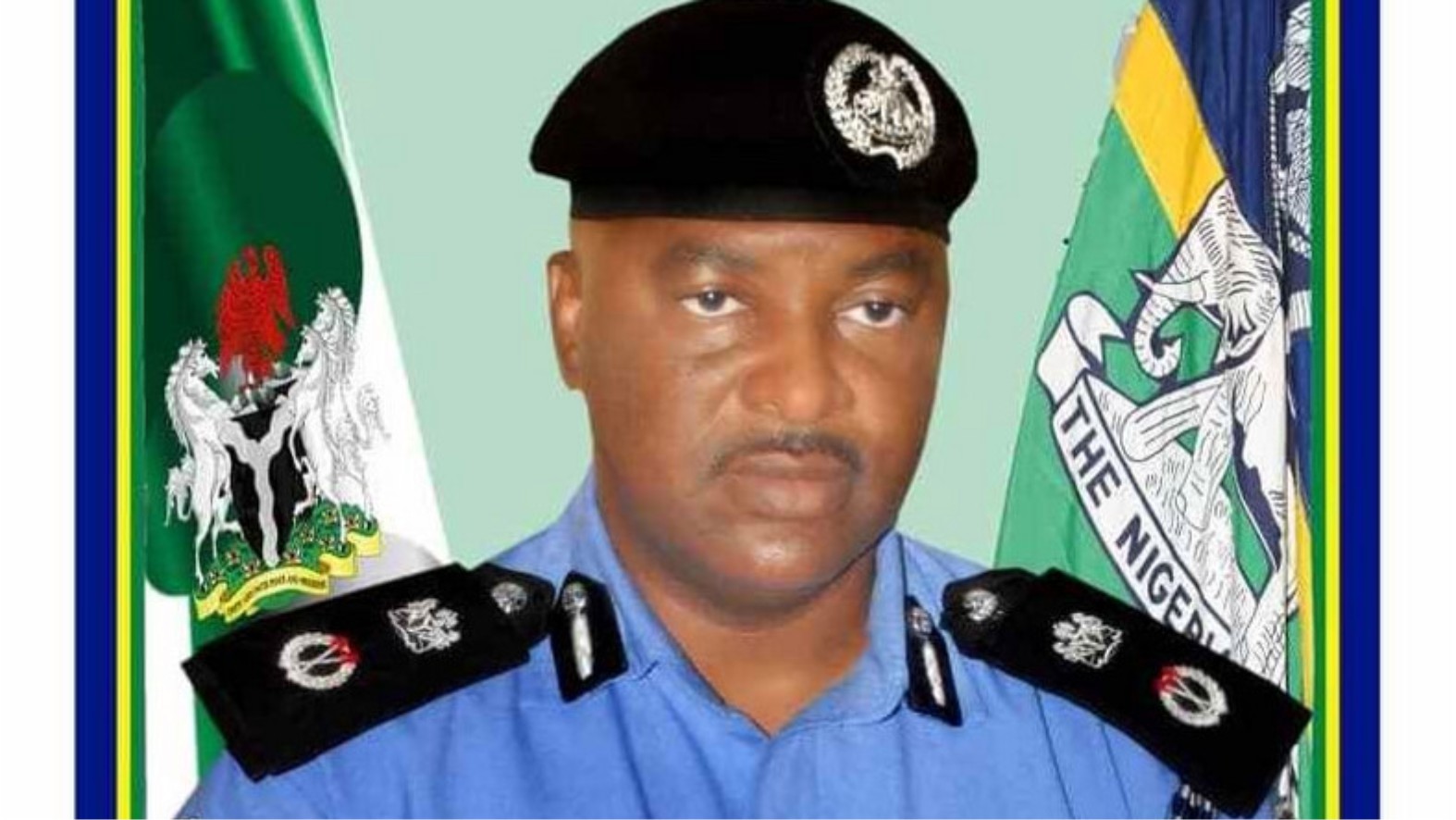
New CP Unveils Policing Plan In A’Ibom

Published

on

The newly appointed Commissioner of Police in Akwa Ibom, Edgal Imohimi  has unfolded a new policing plan for the state.
Imohimi gave the hint while inaugurating a new Divisional Police Station in Ikot Udota village in Eket Local Government Area of Akwa Ibom at the weekend.
The commissioner also inaugurated a community vigilance group that would aid the Nigerian Police Force spread their security tentacles to the remotest areas in Eket.
Imohimi, who was on a familiarisation tour to Eket Senatorial District, added that the reasons for his visit was to introduce his policing plan to the people that would  curb criminal activities in the state.
He said that his policing plan was powered by the strategy and philosophy of community policing and community partnership, which he said was a guide to police as a process and not as a function.
“My policing plan is powered by the strategy and philosophy of community policing and community safety partnership, “ he said.
The commissioner described policing as a grassroot item that begins and ends with the people and it is the people that can best police the community hence, the need for  the police to  communicate and partner with the people to have first hand information on security challenges in the community.
“Policing is a grassroot item and it is the people that can do that effectively, so the police has to partner with the people to get it right, “ he added.
Imohimi said he was aware that each local government in the state was being greeted with different security challenges and since the police could not  be everywhere in the remote areas, there was  need to invoke the clause of partnership in community policing and community safety to ensure that policing was pushed to the remotest of the grassroots.
He said that the vigilance group would be at the direct supervision of the Divisional Police Officer and it would be their responsibility to go ahead of the police under strict supervision.
. of the police, gather information and form a part of police operations in the remote areas.
The commissioner said that in forming the vigilance group, the modalities must be based on what were obtainable under the laws of the federation, which meant that they must operate without firearms or any lethal weapon and must not establish any detention center in their area of jurisdiction.
“We want to establish in Akwa Ibom, the people’s police and not the state police, a police force that belongs to the people, that partners with the people to find solution to their policing challenges, “ imohimi said.
He urged the communities to setup a Community Development Association that would create the needed room for interaction between the people and the police.
Earlier in his remark, the Eket Local Government Chairman, Frank Archibong,  said the visit of the commissioner was timely, owing to the fact that Eket was one region that needed security attention in terms of population, crime rate after Uyo Local Government.
He said that from the antecedents of the commissioner of police in service, he would not have difficulty fighting crime in Akwa Ibom, having been a commissioner in a state like Lagos.
“Security is everyone’s business, so everyone must rise up in collaboration with the police to ensure that in his or her community lives and property are protected,” he said.
Archibong, who is also the ALGON Chairman in Akwa’Ibom , said that the coastal nature of Eket had subjected the people to some sort of disadvantages as the waterways now served as an alternate and ready escape routes to criminals.
Archibong, who presented security gadgets to the vigilance group, appealed to the youths to rise in unison to address the trend of criminality in the area.  (NAN)

Continue Reading

Niger Delta

Eno Recommits To Private Sector Investments 

Published

on

Akwa Ibom State Governor, Umo Eno, says his administration will continue to promote private sector investments in order to enhance economic prosperity.
Eno, who stated this recently at the inauguration of a new Zenith Bank branch in Uyo, said private sector growth was critical to employment generation and the overall development of the State.
He said his long-standing business relationship with Zenith Bank exposed him to the critical roles that banks could play in supporting private sector growth.
“The bank played a laudable role in the growth of Royalty Hotels, a brand I pioneered and led until I joined public service.
“It is my hope that the bank will accord the same support to other private sector investments in the state, be it micro, small or medium-scale enterprise”, he said.
Earlier, the Group Managing Director,  Zenith Bank PLC, Dr. Adaora Umeoji, described the new business office as a significant milestone in the life of the bank.
She thanked successful administrations in the state for their support to the bank over the years, saying, ”We thank the Governor for creating a conducive environment for business to thrive.
“We opened our first branch in Akwa Ibom about 25 years ago, we have enjoyed a very good relationship with the government and people of the state.
“Akwa Ibom stands out as a major business friendly state. The state is clean, accommodating, and fast developing, we commend the government for this”, she said.
The Zenith Bank chief reiterated the bank’s commitment to sustain its partnership with the government and people of Akwa Ibom in order to make mutually impactful and meaningful progress.
She urged business owners in the state, especially women, to leverage the initiatives being offered by the bank to grow their businesses.
Continue Reading

Niger Delta

Delta Prioritises Primary Healthcare Over Flyover Projects

Published

on

The Delta Government has reaffirmed its commitment to strengthening primary healthcare services across the state, dismissing claims that it was focusing more on visible infrastructure projects than grassroots healthcare delivery.
The State Commissioner for Health, Dr Joseph Onojaeme, made the clarification while reacting to comments by health influencer, Aproko Doctor.
Aproko Doctor recently suggested on social media that political leaders often prioritised flyovers and modern hospitals while neglecting primary healthcare centres.
Onojaeme said the claim did not reflect the situation in Delta, noting that healthcare remained a central pillar of the Gov. Sheriff Oborevwori administration’s development agenda.
According to him, although road projects and flyovers are visible across the state, deliberate investments have also been made in healthcare infrastructure and services.
He said that within two years, the state government had renovated 150 primary healthcare centres across the three senatorial districts out of the 441 public health facilities in the state.
According to him, another 150 centres are already undergoing planning and preparation for renovation.
“The effort will bring the number of upgraded primary healthcare centres to 300, thereby improving access to quality healthcare at the community level and reducing pressure on secondary and tertiary hospitals,” he said.
The commissioner said that the state’s free maternal and under-five healthcare programme continued to yield positive results, including reductions in maternal and infant mortality, while easing financial burdens on families.
“Gov. Oborevwori recently approved the release of N2 billion to sustain the programme, alongside regular funding to strengthen Universal Health Coverage in the state,” he said.
Onojaeme also said that state-owned hospitals were  granted autonomy to retain and utilise their internally generated revenue, enabling them to procure drugs, maintain equipment and respond more efficiently to patient needs.
“In specialised healthcare delivery, dialysis machines have been installed in state hospitals, helping to reduce waiting time for treatment while lowering dialysis costs from about N70,000 to N45,000 per session,” he said.
He said that CT scan machines installed at Warri Central Hospital and Delta State University Teaching Hospital (DELSUTH), Oghara, were already improving diagnosis of conditions such as stroke and internal injuries.
“While newly procured echocardiography machines are strengthening early detection of heart-related conditions.”
The commissioner said the government had ordered three Magnetic Resonance Imaging (MRI) machines for installation at Asaba Specialist Hospital, Central Hospital Warri and DELSUTH, Oghara, ensuring coverage across the three senatorial districts.
“While some states do not have a single MRI machine, Delta State is procuring three at once, with delivery expected by April as site preparations are ongoing,” he said.
Onojaeme said the government was establishing a new College of Health Sciences in Ovrode, Isoko North Local Government Area, to complement the existing institution in Ofuoma and boost the training of middle-level health manpower.
“The long-abandoned Mother and Child Hospital in Ekpan was nearing completion, while another Specialist Hospital was being developed in Osubi, Okpe Local Government Area, modelled after the Asaba Specialist Hospital.
According to him, Delta remains the only state in the country with more than 60 functional government-owned hospitals, adding that the current administration is determined to further expand healthcare access.
On health insurance, Onojaeme said enrollment under the Delta State Contributory Health Scheme had surpassed 2.78 million residents as of January 2026, making it one of the leading state-supported health insurance programmes in the country.
He explained that the scheme covered both formal and informal sector workers, while prioritising vulnerable groups, including pregnant women, children under five and the elderly, through the Equity Health Plan.
The commissioner added that the scheme recently enrolled 10,000 widows and continues to register indigent residents across the state.
He also disclosed that the Delta State Contributory Health Commission had introduced facial recognition technology at accredited facilities to improve efficiency and transparency in service delivery.
Onojaeme reaffirmed the state government’s commitment to achieving Universal Health Coverage and delivering affordable and accessible healthcare services to residents across the state.
Continue Reading

Niger Delta

C’River Assembly Seeks Crackdown On Drug Abuse

Published

on

The Cross River State House of Assembly has urged the State Government to urgently enforce drug laws to curb the rising menace of substance abuse.
The resolution followed a matter of urgent public importance raised by Yakurr I lawmaker, Mr. Cyril Omini, during plenary in Calabar.
Omini cited a tragic incident in Ugep, Yakurr Local Government Area, involving a 23-year-old man allegedly under the influence of drugs.
He said the suspect, Ubi Bassey, allegedly beheaded his father, Bassey Okoi, on February 2.
“Drug abuse has become widespread among youths, with alcohol, cannabis, cocaine and tramadol commonly abused.
“In spite of warnings by health and government agencies, illicit drug trading and consumption persist across many communities”, Omini said.
According to him, the trend has led to early deaths and, in extreme cases, violent crimes against innocent persons.
Omini warned the incident had caused fear in Ugep, cautioning that failure to act decisively could worsen social decay.
He, however, commended the State Security Adviser, Maj.-Gen. Okoi Obono (rtd), for efforts to restore peace in the area.
Lawmakers called for sustained drug sensitisation, youth-focused campaigns, stronger partnerships with non-governmental organisations, and stricter enforcement against drug peddlers and users.
The Speaker, Elvert Ayambem, expressed sadness over the incident and urged prompt prosecution of the suspect to deter other youths.
Continue Reading

Trending